
There is an old saying that investors have borrowed, bent, and quoted so many times it has nearly lost its sharpness: a bird in the hand is worth two in the bush. Warren Buffett, characteristically, gave it a precise mathematical form. The value of any investment, he wrote, is determined by three questions: How many birds are in the bush? How sure are you they are there? And how long do you have to wait to get them out?
These three questions are deceptively simple. They sound like the kind of thing you’d read on a motivational poster. But sit with them long enough, and you realise they contain the entire architecture of rational investing. The first question is about magnitude — is the upside worth your time? The second is about probability — can you trust what you think you see? The third is about time — even if the first two pass, does waiting destroy the economics?
If any one of these fails, you pass. Full stop.
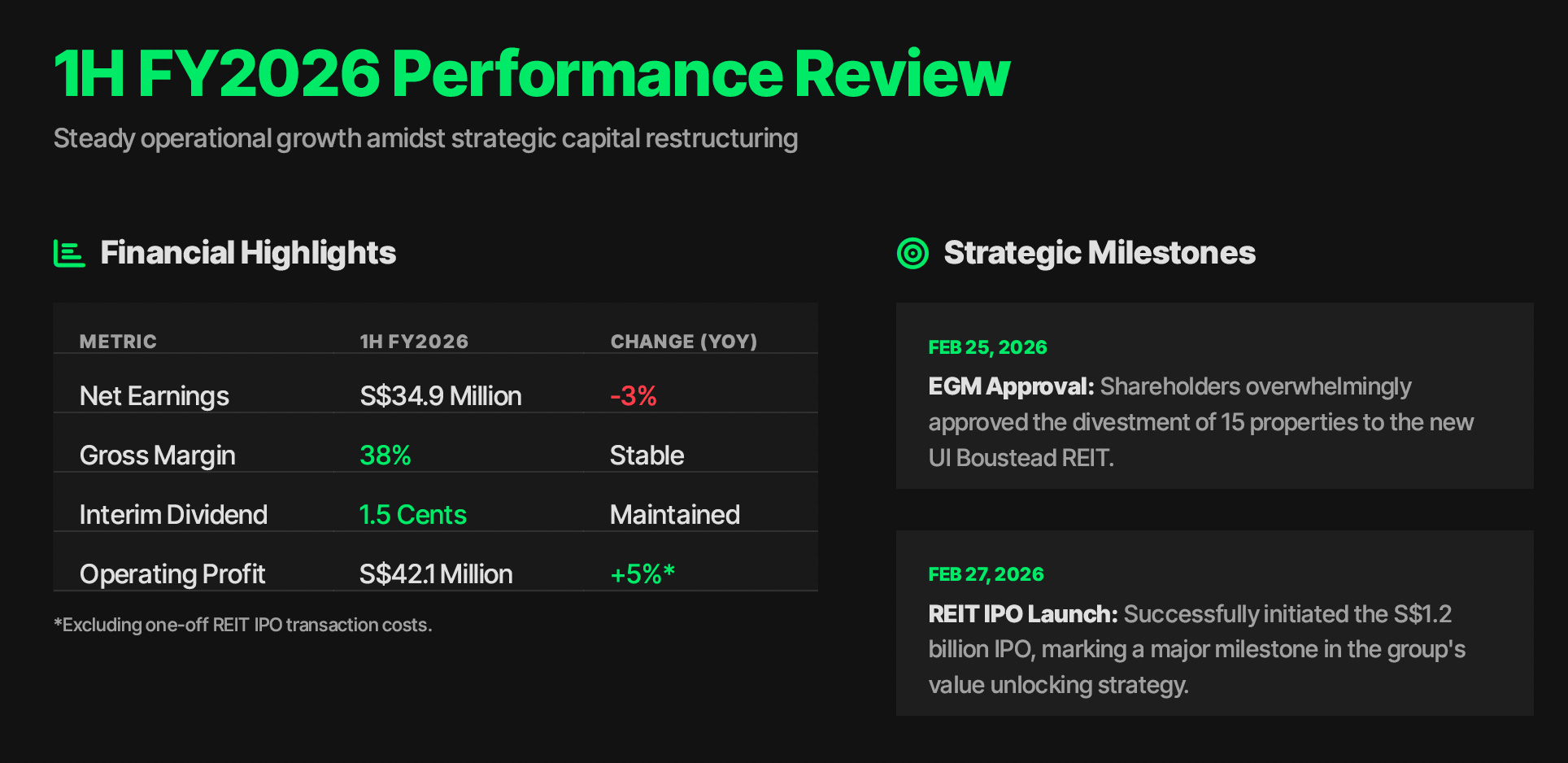
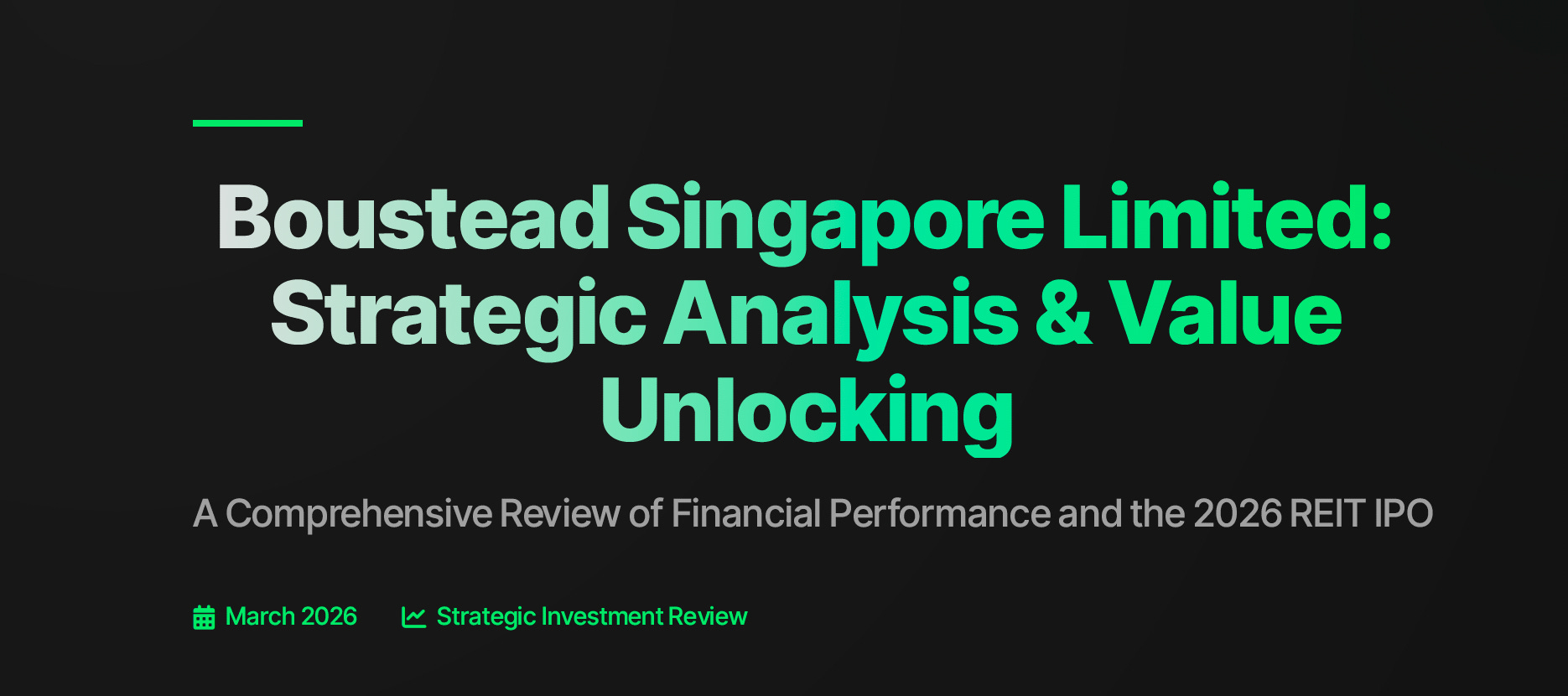
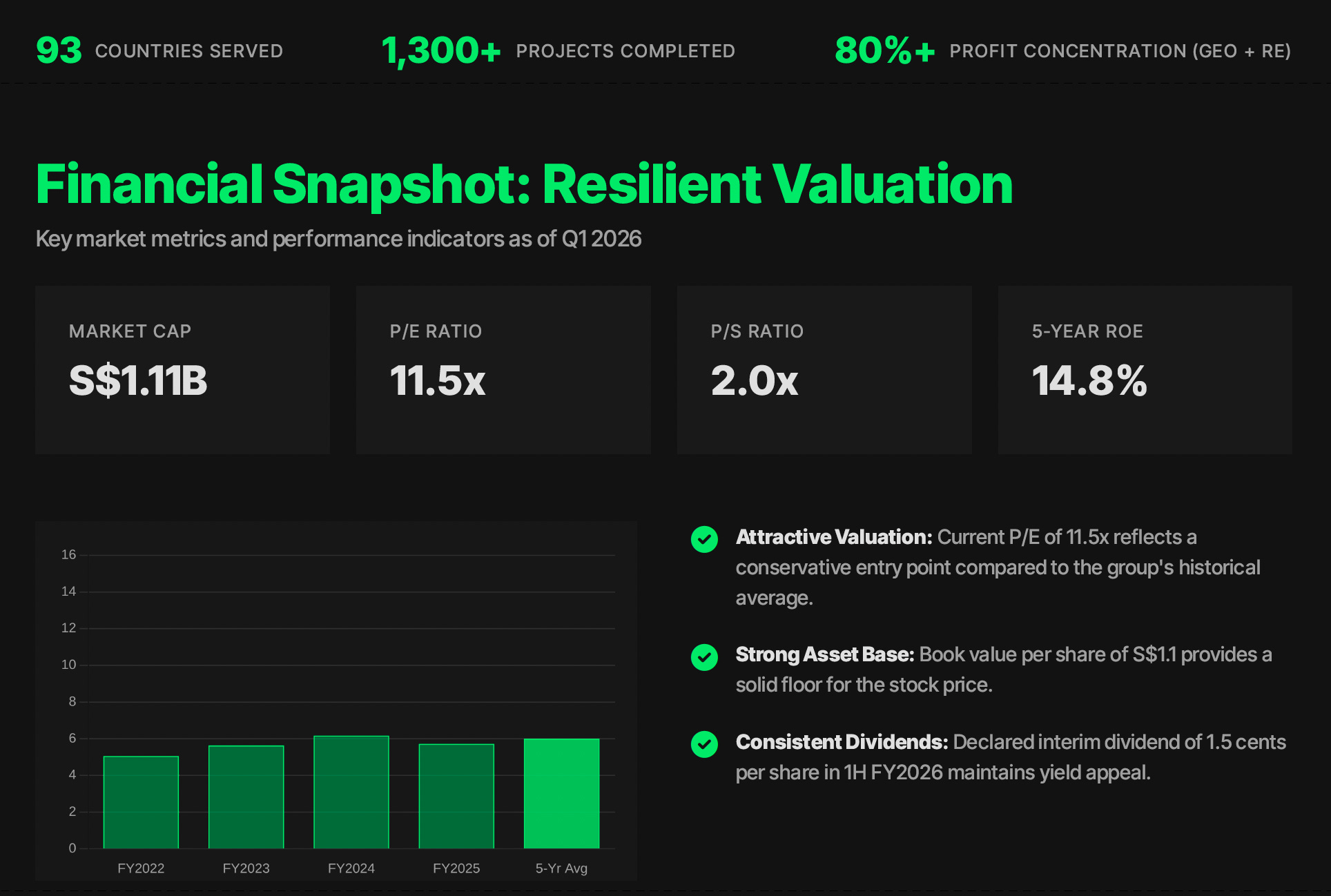
I spent time going deep on Boustead Singapore (SGX: F9D) — a 197-year-old company, Singapore’s oldest continuously operating business, trading at a seemingly modest P/E of 11.5x. What I found was a story that is genuinely interesting, occasionally fascinating, and ultimately one I chose to walk away from. Not because Boustead is a bad business — parts of it are quite remarkable — but because when I ran it through these three questions, the framework came apart at the seams.
Here is how I got there.
Part One: How Many Birds Are in the Bush?
The Gem Buried Inside the Conglomerate
To understand Boustead’s upside, you have to understand what its most valuable piece actually does. Strip away the energy engineering projects, the industrial real estate contracts, and the healthcare equipment distribution — and what you are left with is one of the most quietly formidable businesses I have come across in Southeast Asia’s listed universe.
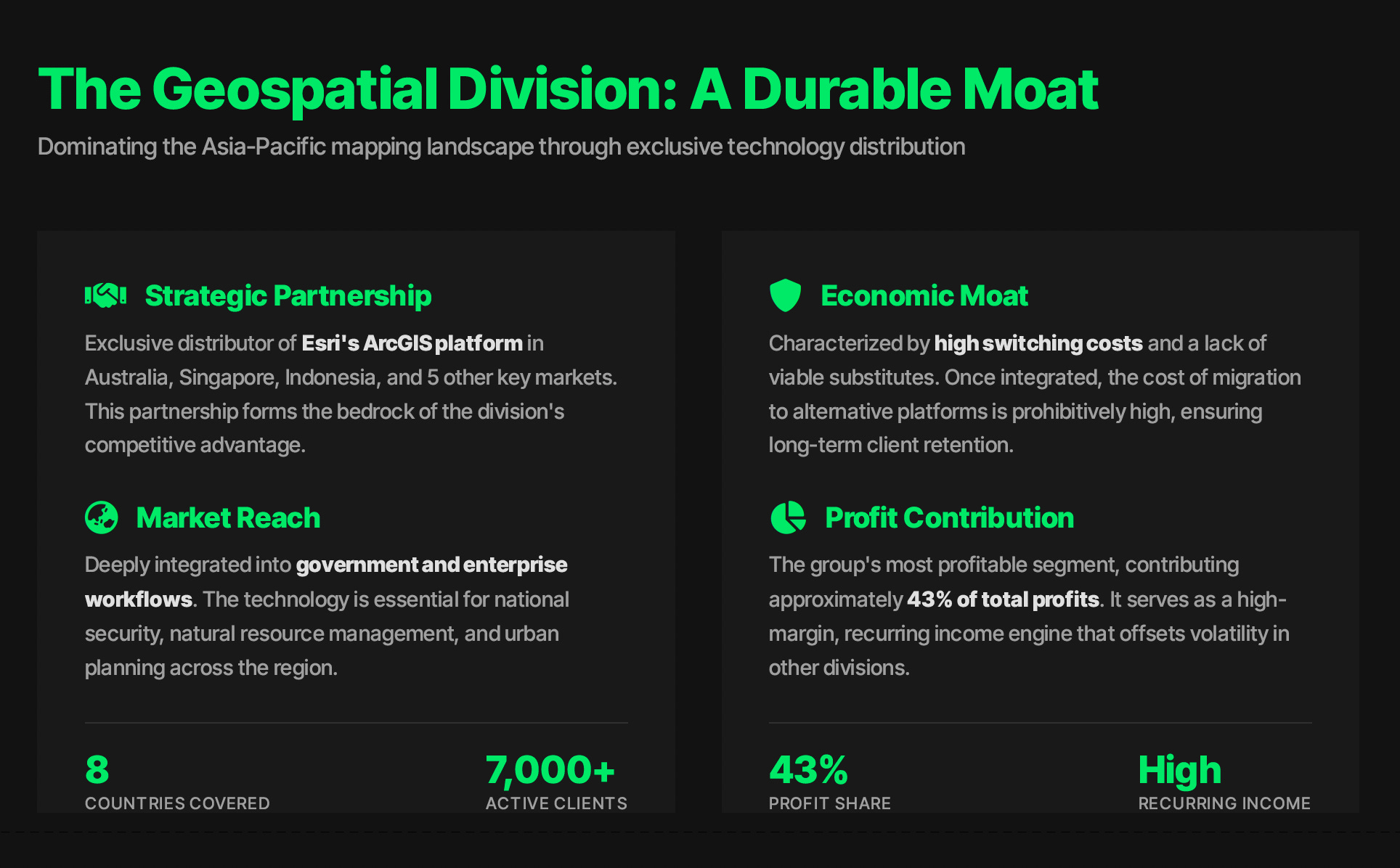
Boustead’s Geospatial Division is the exclusive regional distributor of Esri’s ArcGIS platform across eight Asia-Pacific markets including Australia, Singapore, Malaysia, Indonesia, and Bangladesh. ArcGIS is not just a product. It is, frankly, the operating system of how governments and large institutions understand the physical world. With roughly 43–45% market share, Esri is one of the world’s leading suppliers of GIS software, web GIS, and geodatabase management applications — and the nearest competitor holds just 11% market share. This is not a tight race. It is a rout.
As of 2024, Esri’s platform is used by over 350,000 organisations in 180+ countries. It supports 95% of U.S. state and local governments and plays a role in over 40,000 academic and enterprise GIS deployments globally. Think about that for a moment. When a government agency anywhere in the Asia-Pacific wants to map flood risk zones, track urban sprawl, plan infrastructure, or manage land titles, there is a near-certain chance ArcGIS is the platform they’re running it on. And if they are in Boustead’s eight markets, Boustead is who sells, trains, and services them.
The numbers at the division level reflect this. In FY2025, the Geospatial Division delivered record-breaking revenue of S$221.4 million — 4% higher year-on-year — with operating profit 28% higher at S$51.9 million. The division currently contributes approximately 43% of group profit, making it the single most important engine in the entire organisation.
The Market Behind the Business
The underlying market is not slowing down. The global GIS market is projected to grow from roughly USD 14.8 billion in 2024 to USD 31.2 billion by 2030, at a CAGR of 13.1%. What is more, the Asia-Pacific region is expected to exhibit the highest growth rate among all regions, at approximately 13.7% annually from 2024 to 2030, driven by urbanisation and increasing government investment in geospatial infrastructure. Boustead is positioned at the intersection of the world’s fastest-growing GIS region and the world’s most dominant GIS platform. On paper, that is a compelling place to be.
There is also a powerful structural tailwind at work. Governments across Southeast Asia and Australia are under increasing public pressure to adopt advanced GIS systems — for disaster response, urban planning, climate risk disclosure, and national security. Boustead’s own annual report notes that this pressure has directly driven the company to secure multiple Enterprise Agreements (EAs) with federal government accounts. These are multi-year recurring contracts, not one-off transactions. As of the latest reporting period, the division has 160 active enterprise agreements, and these are precisely the kind of sticky, annuity-like revenue streams that justify premium multiples in software businesses.
The Economics: Customer Acquisition Cost and Lifetime Gross Profit
Here is where the Geospatial division starts looking extraordinary from a business quality standpoint. ArcGIS has one of the most powerful natural moats I have seen in a B2B software context: the cost of finding an alternative, learning it, and migrating decades of institutional data is effectively prohibitive. There is no credible replacement on the horizon. As the CEO noted publicly, there is “no replacement in the foreseeable future.” When your product is that embedded, and when governments and utilities are your primary clients, customer churn approaches zero.
This has direct implications for the unit economics. The Customer Acquisition Cost (CAC) of new Geospatial clients is structurally falling — not because Boustead is cutting corners, but because of a deliberate partnership strategy. By embedding ArcGIS into enterprise platforms like Amazon Web Services, the cost of finding and acquiring new customers is increasingly borne by the partner ecosystem rather than Boustead itself. AWS or another cloud partner markets their integrated solution, and ArcGIS comes along for the ride. Boustead’s acquisition costs decline as the partner network expands — a dynamic that improves unit economics over time.
Meanwhile, the Lifetime Gross Profit per customer is rising. As Boustead deepens its relationships — focusing in managed services, climate analytics, digital twin consulting, and sector-specific GIS solutions (through partners) — the revenue per account compounds. A government agency that starts with a basic ArcGIS licence gradually becomes a client for professional services, training, custom development, and multi-year enterprise agreements. Each layer of integration increases the switching cost and deepens the revenue relationship. In other words, the products becomes more and more entrenched in the operations of other businesses (high switching and search costs).
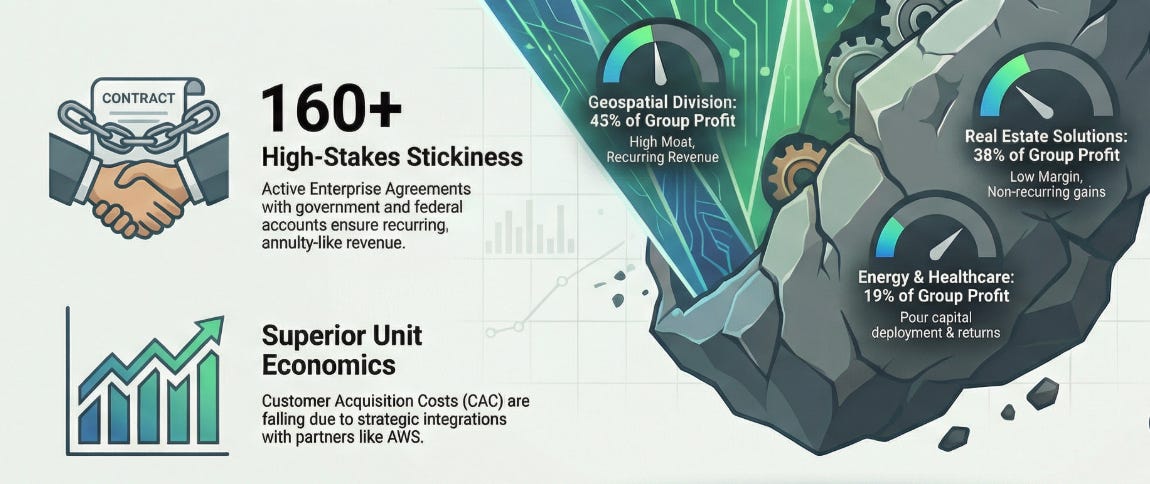
This is genuinely beautiful business model economics. Low CAC trending lower. High and rising customer lifetime value. Government clients who do not churn. A platform with 43% global market share and no credible challenger. If this were a standalone company, it would command a very different multiple than the 11.5x that Boustead trades at as a whole.
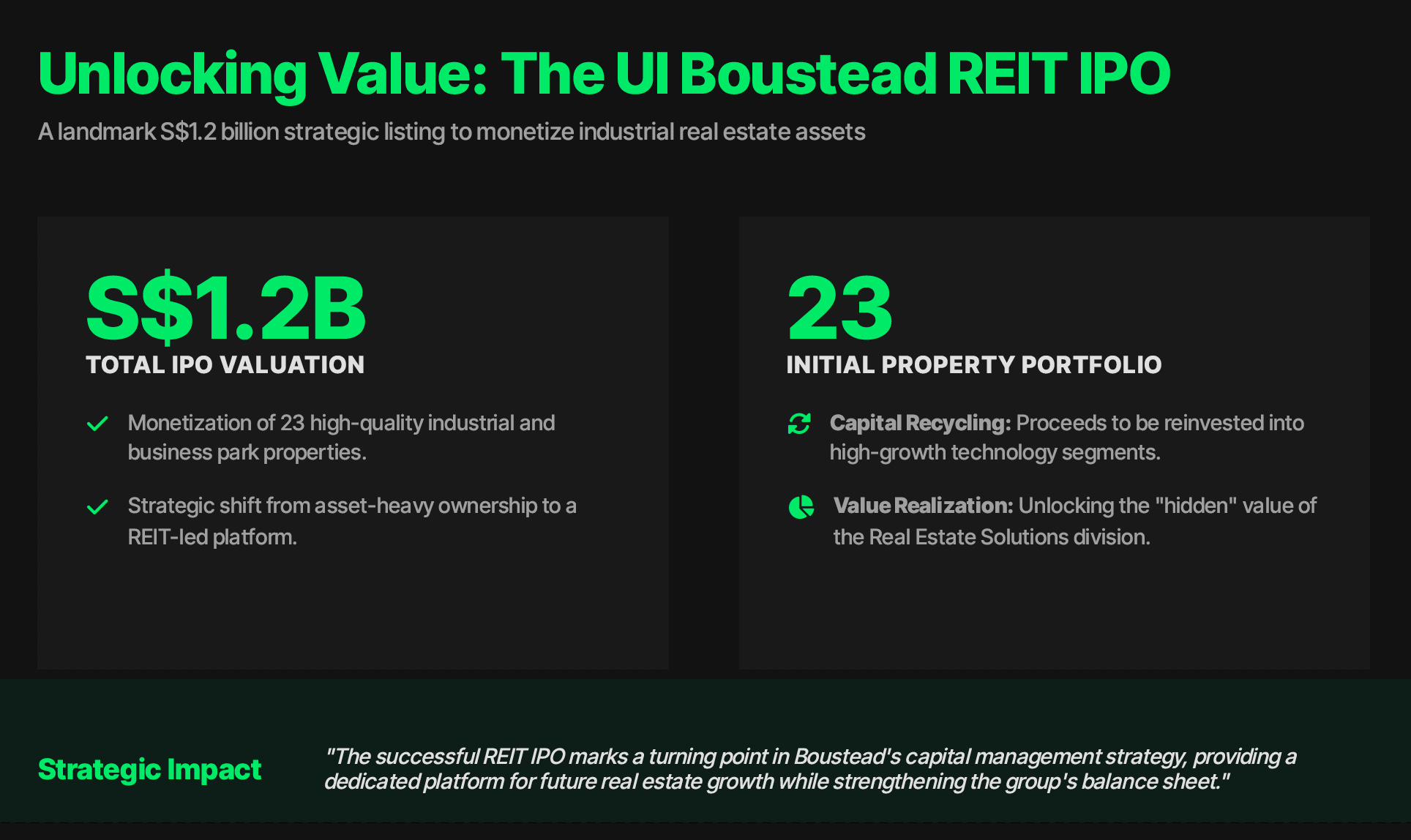
A catalyst that the market has also been waiting is their REIT IPO. Which honestly does not matter to me as I do not see it contributing significantly to the portion of the operating business I am looking at.
So then — how many birds are in the bush? There are birds. Real, valuable, compounding birds. The Geospatial division is a high-quality business with structural moats, excellent unit economics, and market tailwinds. On this question alone, the case is genuinely interesting.
But the second question changes everything.
Part Two: How Sure Are You?
The Problem with Owning a Gem Inside a Rock
Here is the uncomfortable reality. When you buy Boustead at $2.20 per share, you are not buying the Geospatial division. You are buying a conglomerate — and conglomerates have a well-documented tendency to destroy the value of their best parts.
This is not a rhetorical point. The conglomerate discount is one of the most empirically robust phenomena in corporate finance. In developed economies, the average conglomerate discount is around 13–15% relative to single-segment competitors — representing the market’s pricing of the inability of management to run diverse businesses as well as focused companies. The term gained prominence in the 1980s and 1990s, and contributed directly to an acceleration of “deconglomeration” — where large conglomerates began divesting or spinning off non-core businesses to enhance shareholder value. Think General Electric’s decades-long unwinding. Think Philips gradually shedding everything that wasn’t healthcare technology.
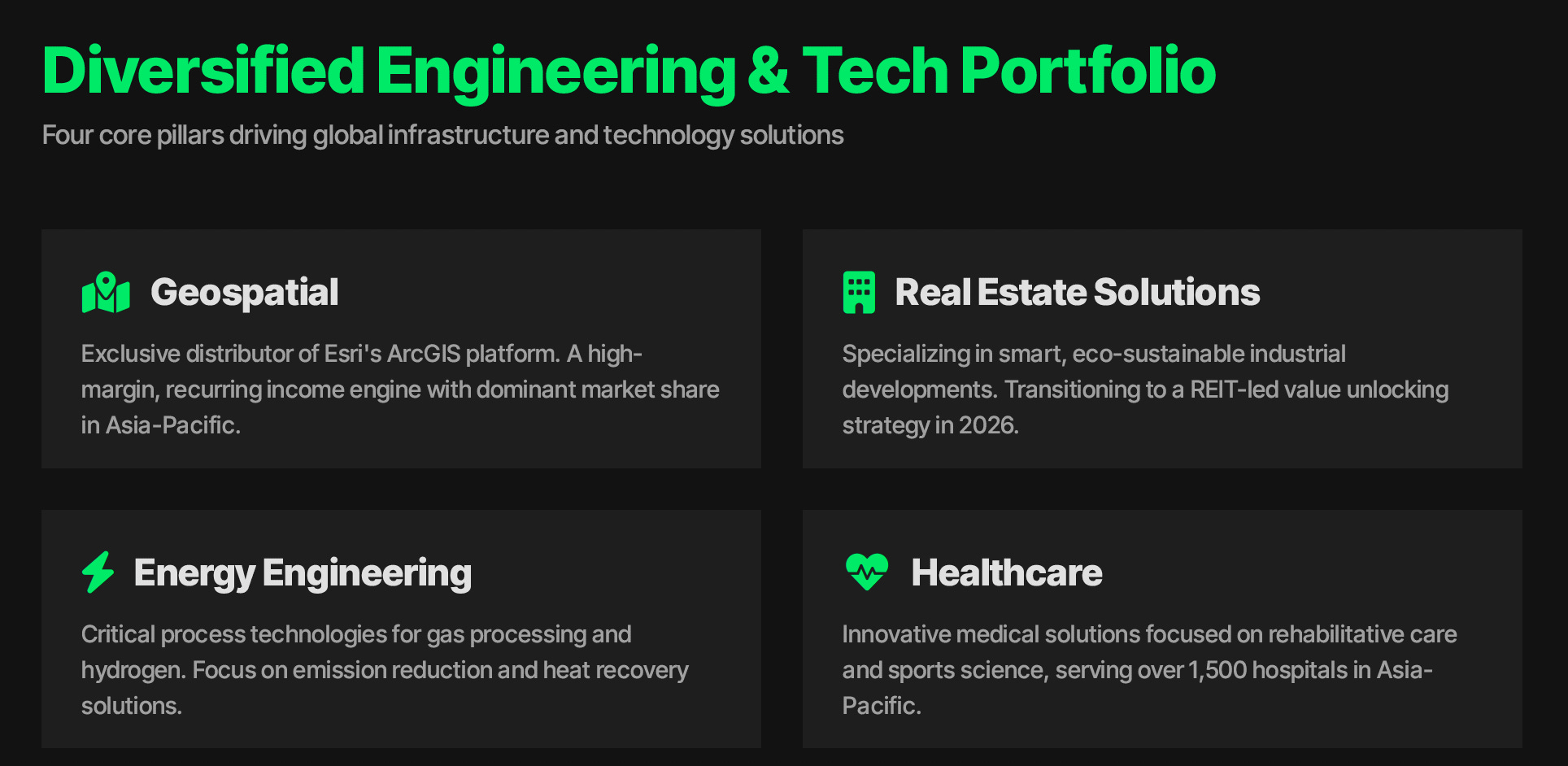
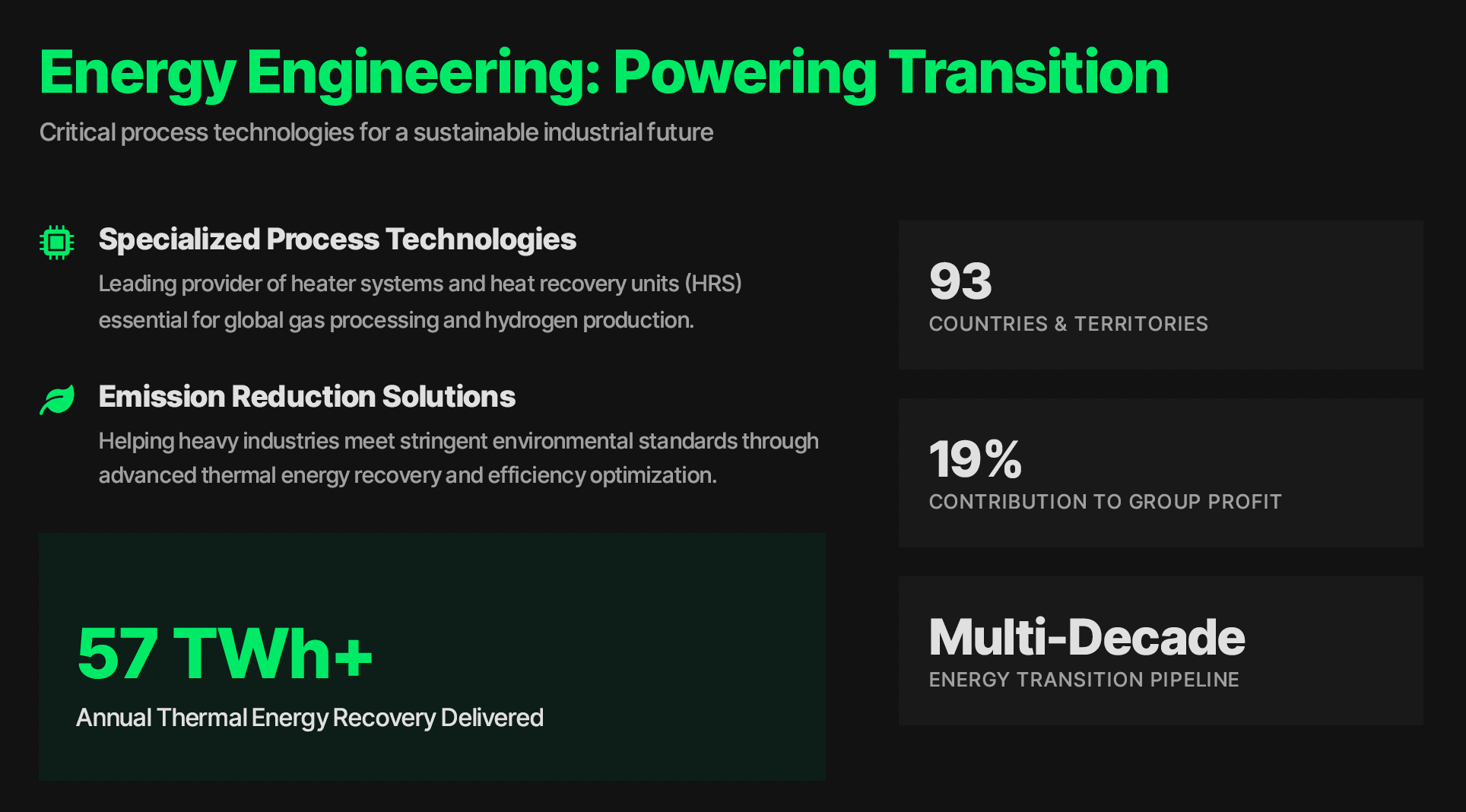
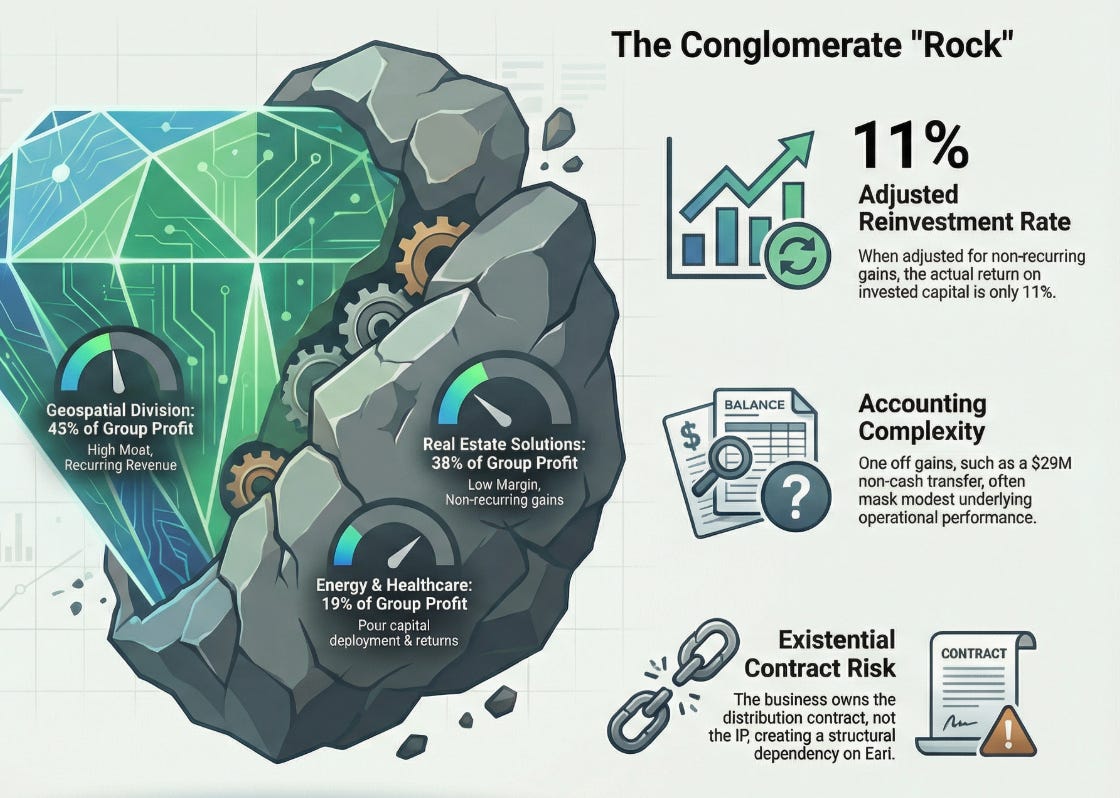
Boustead has four very different operating segments: Geospatial (43% of profit), Real Estate Solutions (38% of profit), Energy Engineering (19% of profit), and Healthcare (effectively negligible or loss-making). These segments do not share customers, do not share core technologies, and do not reinforce each other’s competitive positions in any meaningful way. You are not looking at a focused, coherent business. You are looking at a 197-year-old institution that has layered businesses on top of businesses over the decades, each rational at the time of inception, but collectively forming something that is harder to value, harder to manage, and harder to trust.
The Capital Allocation Problem: Where Earnings Go to Die
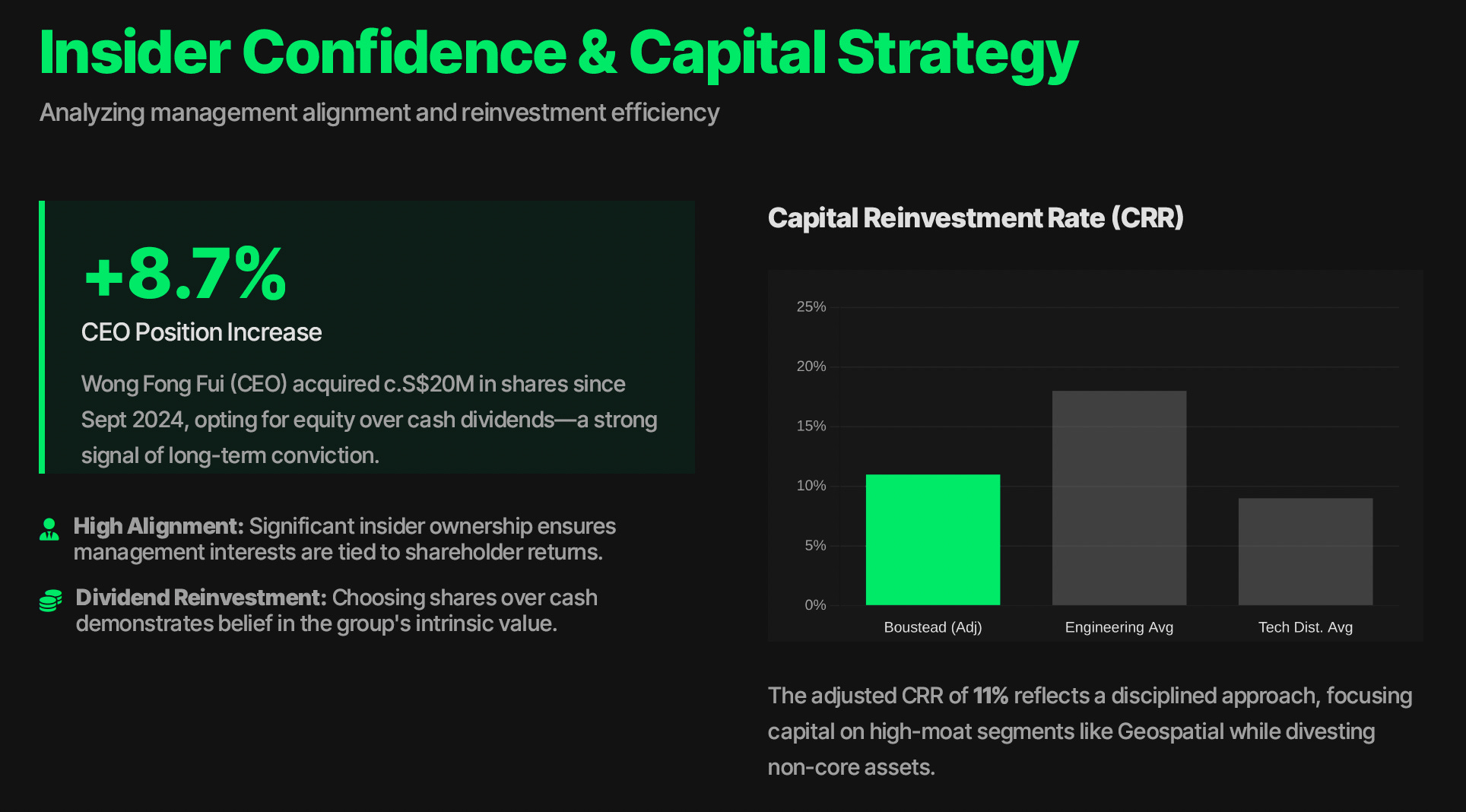
The most damning data point in my analysis is the Capital Reinvestment Rate (CRR), which measures how efficiently a business deploys each dollar it earns back into productive assets.
For Boustead, the adjusted CRR calculation is revealing. After stripping out non-recurring gains — property divestment profits, currency gains, disposal of JV interests, and the $29 million non-cash transfer of the real estate asset management business to UIB — the company only has a Capital Reinvestment Rate of 11% ($58.4m ÷ $523m = 11%). The company’s previous CRR figure of 57% looks considerably more flattering, but it is not the correct number — it includes the non-recurring gains that artificially inflate the numerator. Once you adjust, you are left with a business that is, on average across a full decade, generating an 11% return on its total invested capital base. That is not terrible, but it is not the kind of number that justifies the premium you are implicitly paying for the Geospatial component.

The diagnosis is clear: the Energy, Real Estate, and Healthcare segments are diluting the extraordinary economics of Geospatial. They are the rocks encasing the diamond. Every dollar of shareholder equity that goes into a real estate construction contract or a medical equipment distribution deal is a dollar not compounding in the high-margin, high-moat, software-and-services Geospatial business.
Earnings Quality: The Art of Disappearing Profits
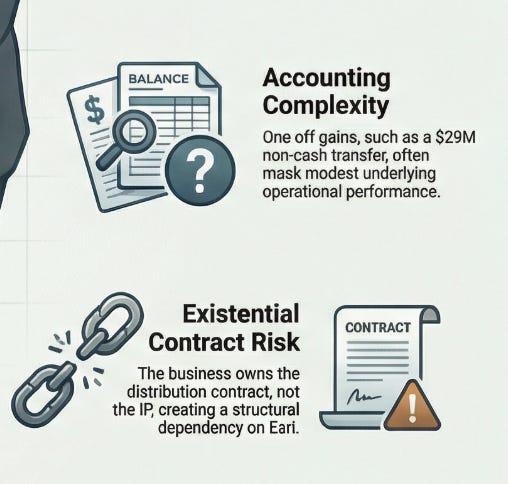
There is a further problem with the profit figures, and it requires a careful reading of the income statement. In FY2025, the Real Estate division reported that operating profit was 117% higher year-on-year — which sounds magnificent until you look at the footnotes. That 117% jump was almost entirely due to a one-off S$29 million non-cash gain from transferring the Boustead Projects real estate asset management and fund management business to UIB, a special-purpose vehicle formed with Unified Industrial. Strip out that single transaction, and the real estate segment’s operational performance was considerably more modest.
This is a pattern worth watching. The company’s 2021 profit also surged — and again, the surge was driven by a major property divestment. Non-recurring gains are not earnings. But when they are classified within operating profit, they can create an illusion of operational momentum that does not exist. For the investor trying to build a normalised earnings picture, this requires constant adjustment and vigilance. The company’s structure introduces complexity that makes clean analysis harder than it should be.
The Related Party Web
There is something else that gives me pause: the complexity of the corporate structure and the density of related-party transactions. Boustead operates through a web of subsidiaries, joint ventures, and associates — including holdings in UIB (the real estate SPV), the Boustead Industrial Fund, various Esri distribution subsidiaries, healthcare JVs, and more. Half of Boustead’s interest income in some years came from notes issued by associates — effectively the company lending to its own related parties and earning interest on those loans. The impairment losses in 2024 and 2025 have increased significantly, directly correlated to the growth in large engineering and construction contracts, which tend to carry lower-quality receivables.
None of this is necessarily fraudulent. But complexity and “diworsification” is the enemy of certainty in investing. When I cannot fully trust or wrap my head around the earnings number, I need a larger margin of safety to compensate for the uncertainty. That margin of safety does not exist at current prices.
The Critical Risk: The Exclusivity Question
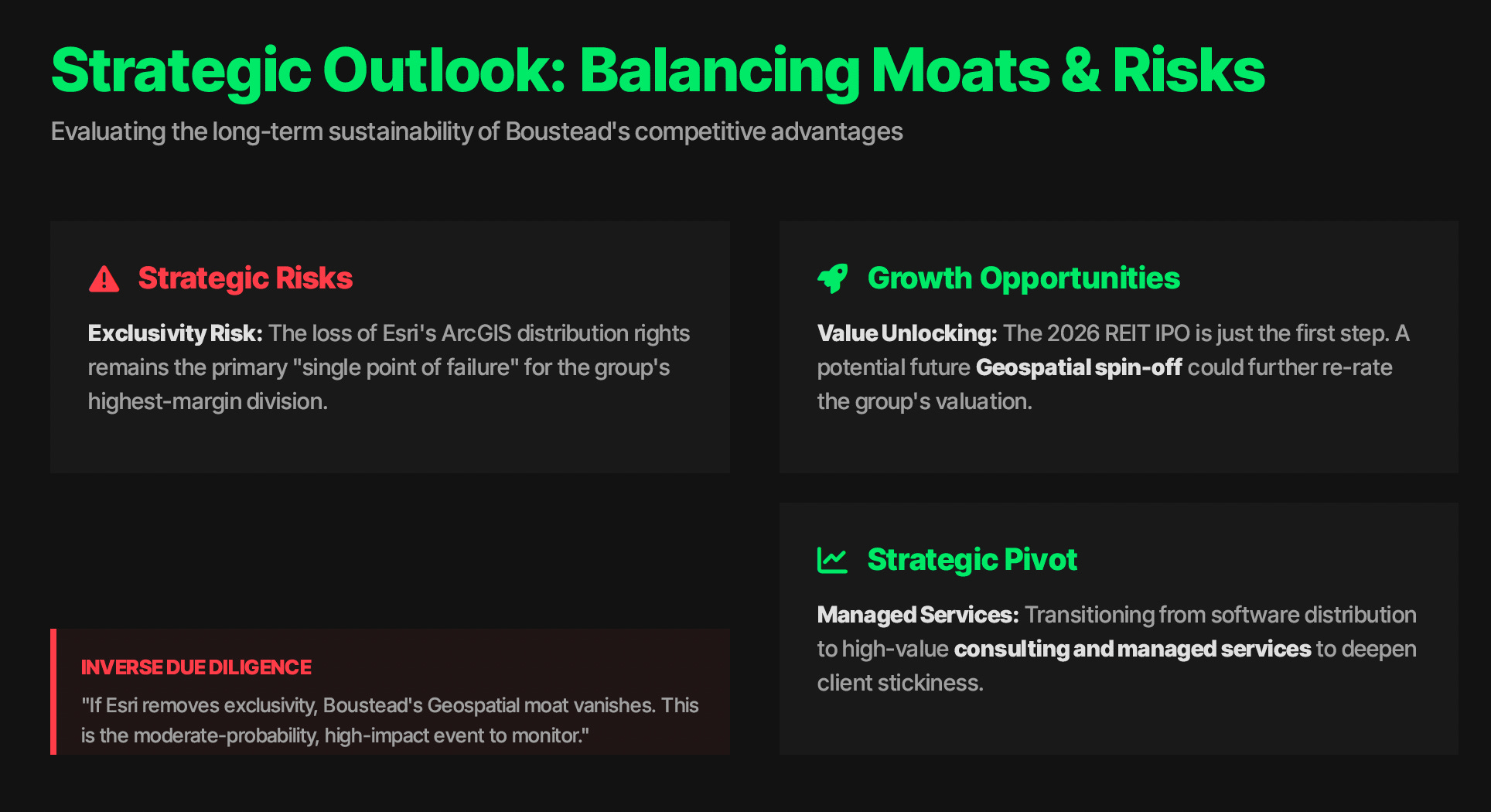
The most existential question for the Geospatial business is also the simplest: what happens if Esri decides not to renew Boustead’s exclusive distribution agreement?
Boustead does not own ArcGIS. It does not own the intellectual property. The patent rights belong to Jack and Laura Dangermond, the founders of Esri, and Esri remains entirely privately held. Boustead is, at its core, a distributor — and the golden goose of its business is a contract, not a capability.
The current relationship works because Esri needs Boustead. Building and managing a distribution network across eight diverse Asia-Pacific markets, training thousands of government GIS professionals, and developing local integrations requires exactly the kind of on-the-ground presence and relationship capital that Boustead has built over decades. Esri, as a Californian software company with 4,000 employees focused on product development, has neither the inclination nor the infrastructure to replicate this in-market.
But here is the long-term dynamic to think about: the stickier ArcGIS becomes in Boustead’s markets — the more deeply embedded it is in government workflows, cloud ecosystems, and institutional processes — the less Esri needs Boustead’s distribution muscle to maintain its position. The very success of Boustead’s strategy is, paradoxically, the mechanism by which the exclusivity arrangement becomes less valuable to Esri over time. This is not an imminent risk, and the existing commercial relationship appears stable. But it is a structural dependency that cannot be quantified from the outside, and that introduces a meaningful asymmetry: if exclusivity continues (along with an assessment on Jack and Laura Dangermond), Boustead’s Geospatial business compounds nicely; if it is removed or narrowed, the entire investment thesis collapses.
When I am paying for a business where the most valuable asset is a distribution contract I cannot independently verify, I need to be very sure. I am not.
Part Three: How Long Until You Get Them Out?
The Catalyst Question
Even if you believe the Geospatial business is excellent and the rest of Boustead is tolerable, there is a final question: what unlocks the value? How does the gap between what Boustead is worth and what it trades at get closed, and how long does that take?
The most obvious value-unlocking event would be a spin-off of the Geospatial division — separating it from the energy, real estate, and healthcare businesses, allowing it to trade as a pure-play GIS company in a market that loves recurring-revenue software businesses. A standalone Geospatial division, with 160 enterprise agreements, 7,000+ clients including government agencies across eight APAC countries, record revenue growth, and a structurally unchallenged market position, would command a meaningfully different multiple than 11.5x. The market assigns SaaS and enterprise software companies multiples ranging from 20x to 40x earnings, depending on growth profile and moat quality.
But here is the problem: there is no evidence this spin-off is coming. The CEO, Wong Fong Fui, spent approximately S$20 million of his own money purchasing additional Boustead shares between September 2024 and September 2025 — acquiring a further 8.7% of the company’s outstanding shares in the open market rather than accepting the equivalent value as a cash dividend. This is a meaningful signal. It says: the CEO believes the stock is undervalued as a whole. It does not say: the CEO is planning to break up the company to realise that value. In fact, a management team buying aggressively at current prices may have less incentive to pursue the structural changes that would release the conglomerate discount, precisely because they are comfortable owning the whole.
The company has been a conglomerate for most of its 197-year history. It re-merged Boustead Projects back into the parent company in 2024, rather than letting the real estate business operate independently at its own valuation. That is a move that adds complexity, not removes it. It is the opposite direction from the deconglomeration that would unlock value.
The Timeline is Undefined
There is a famous phrase in finance: “The market can remain irrational longer than you can remain solvent.” For Boustead specifically, the more accurate version might be: “The company can remain a conglomerate longer than your investment thesis requires.”
Capital is not free. The opportunity cost of holding a position in Boustead — even if the Geospatial division eventually trades at its intrinsic value through a spin-off or strategic sale — is the compounding you give up by not deploying that same capital in a business with a clearer and more proximate path to value realisation. If the catalyst is five years away, and the annual drag from capital misallocation in energy, real estate, and healthcare continues to dilute returns, the mathematical advantage of being early is erased by the cost of waiting.
For this question — how long until I get the birds out — the honest answer is: I don’t know, and there are no credible signals that the timeline is finite. That is not a position I am willing to take with my capital.
The Verdict: Three Questions, Three Incomplete Answers
Let me bring all of this together.
Question one: How many birds are in the bush? There are birds — genuinely good ones. The Geospatial division is a moat-y, recurring-revenue, low-CAC, high-lifetime-value enterprise software distribution business operating in a structurally growing market with government-level stickiness. That business, in isolation, is compelling.
Question two: How sure are you? Moderately sure about the Geospatial piece specifically. Considerably less sure about the consolidated entity. The non-recurring accounting noise, the complexity of the corporate structure, the related-party transaction density, the capital misallocation across Energy and Real Estate, and — most critically — the existential dependency on Esri’s continued exclusive partnership all introduce substantial uncertainty into the consolidated picture. And it is the consolidated picture that you actually own when you buy the shares.
Question three: How long until you get them out? Unknown. There is no credible catalyst for the value gap to close, no stated management intention to pursue a spin-off, and a corporate history that points toward diversification rather than focus. The CEO is buying — but buying as a long-term owner of the whole, not as a private equity manager engineering a restructuring.
The framework says no. Not because Boustead is a bad business. Parts of it are excellent. But because the opportunity does not clear all three bars — and you need all three to be met before the risk-reward justifies pulling the trigger.
A Closing Thought: What Would Change My Mind
The analysis above is not permanent. There is a version of this story where I would revisit the conclusion entirely.
If Boustead were to announce a spin-off of the Geospatial division — separating it as a standalone entity with its own listing and its own capital allocation discipline — that would be a transformative event. A pure-play Asia-Pacific Esri distributor with 160 enterprise agreements, record revenue, and government-level client stickiness would deserve to trade at a significant premium to where the current conglomerate valuation implies. The value creation in that scenario could be very meaningful.
Alternatively, if the Geospatial segment were to grow to such dominance within the group that the other segments became financially irrelevant — essentially reaching a point where the whole entity looks and trades like a geospatial technology company with some legacy engineering contracts on the side — the conglomerate discount would largely evaporate on its own.
Neither of those appears imminent. So for now, the analysis ends where it began: with appreciation for the quality of what Boustead has built in geospatial technology, and a reluctant decision to wait for a better-structured opportunity to own it.
The birds are in the bush. They are real birds. But the bush is complicated, the timeline is unclear, and there are better-structured opportunities elsewhere. When all three questions must be answered confidently, and one cannot be, the rational choice is simple.
Pass.
Disclosure: This article represents a personal investment analysis and should not be construed as financial advice. The author holds no position in Boustead Singapore (SGX: F9D).