
There is a classic scene in every heist movie. The detective walks into a room, sees the chalk outline, the scattered evidence, the broken window, and immediately knows something went terribly wrong long before anyone called the police. You do not need the full autopsy report to read the body.
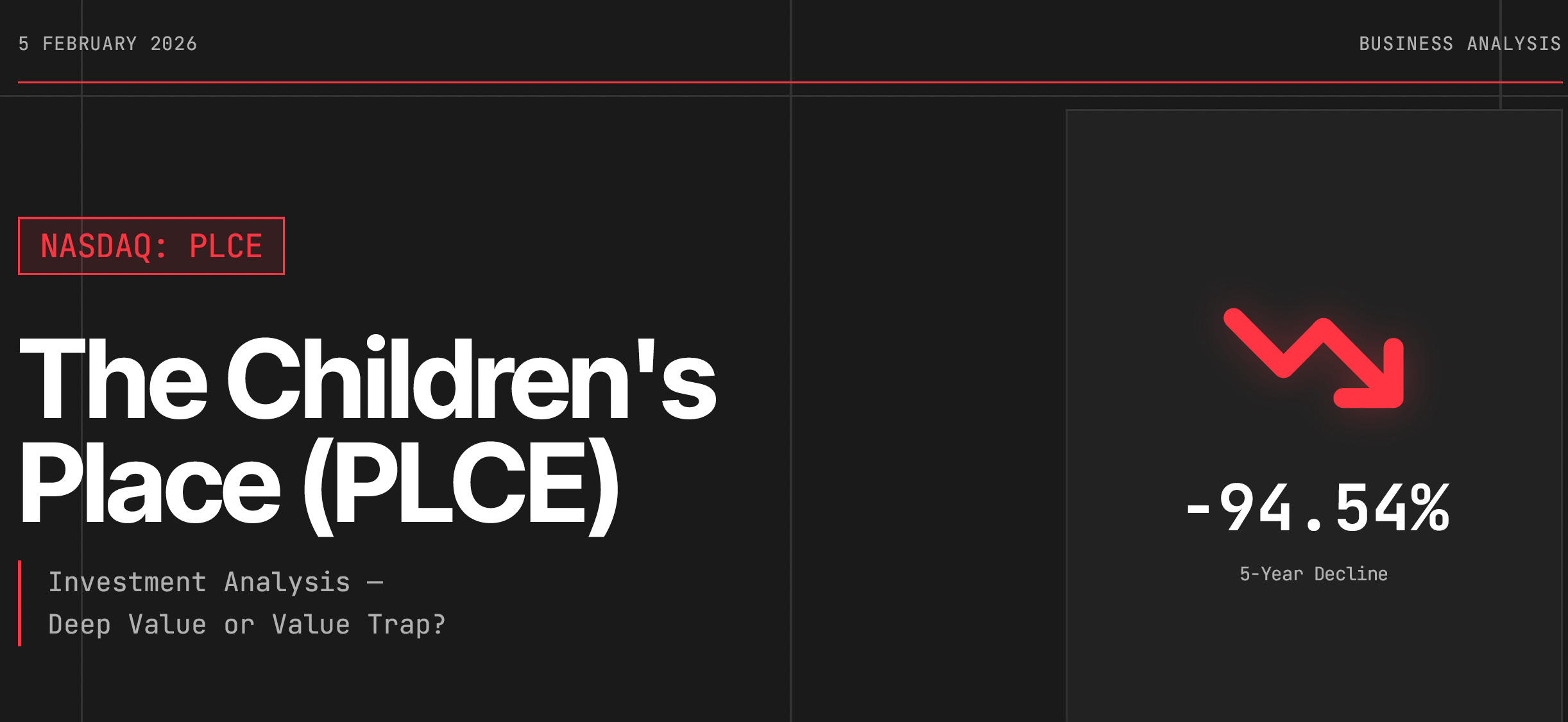
That is roughly what it felt like diving into The Children’s Place (NASDAQ: PLCE).
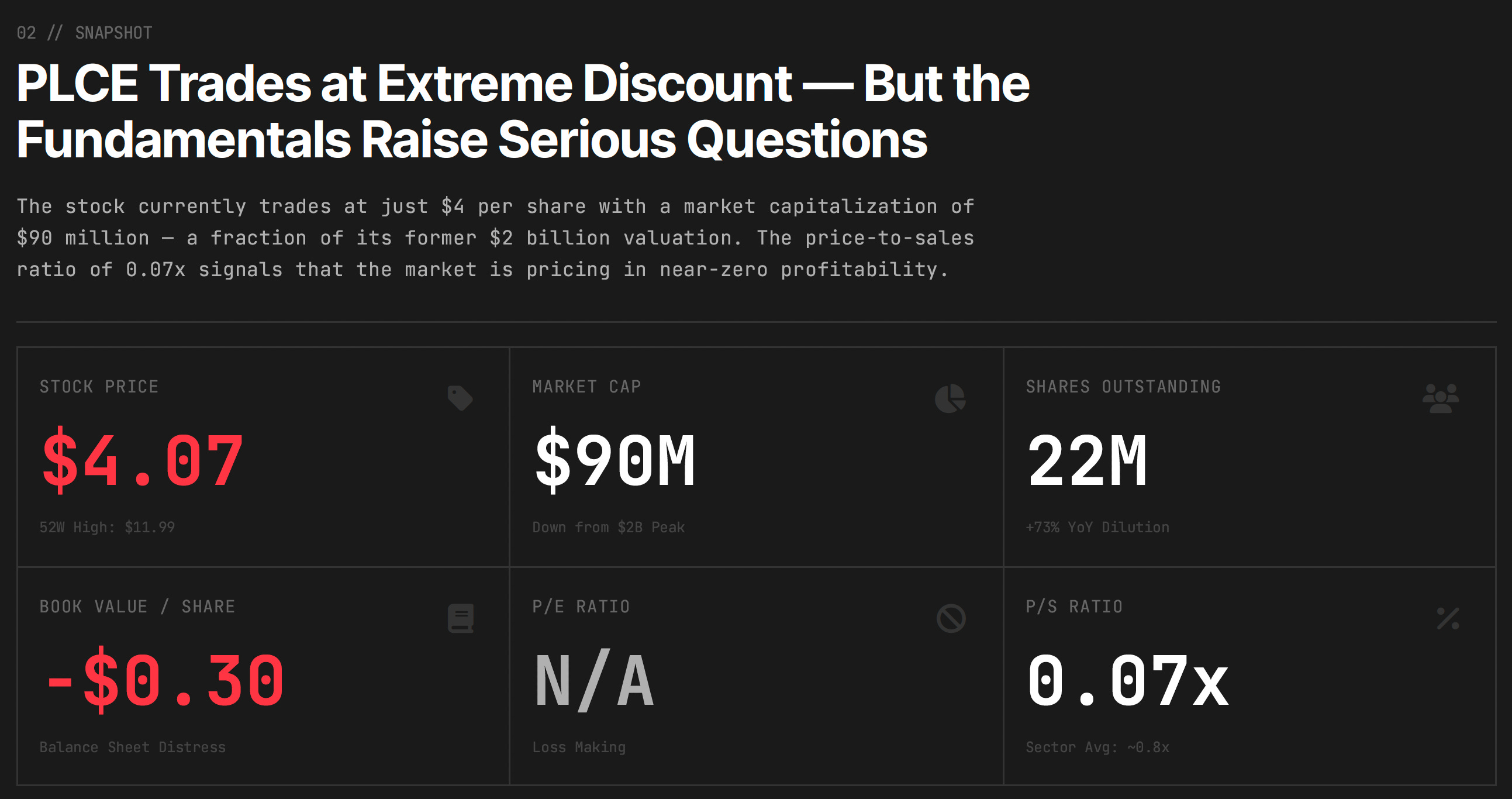
At $4 a share and a market cap of $90 million, the stock looks like someone threw a $2 billion company into a bargain bin and forgot to lock the door. The price-to-sales ratio is 0.07 — which, in plain English, means the market is willing to pay just 7 cents for every dollar of revenue this company generates. For context, the S&P 500 average hovers around 2–3x price-to-sales. Even distressed retailers typically trade at 0.3–0.5x. At 0.07x, the market is not just skeptical — it is practically assuming the company dissolves into thin air.
So naturally, I had to investigate.
What followed was one of the more interesting analytical exercises I have done — not because I found a hidden gem, but because I found a genuinely fascinating case study in what happens when a business gets stranded between two worlds, managed by people who are brilliant at reading spreadsheets and not so brilliant at selling kids’ clothing. The conclusion is No, but keep watching. Here is the full story of how I got there, built around the three questions I ask about every potential investment: How many birds are in the bush? How sure am I? And how long till I get them out?
How a $2 Billion Company Ended Up at $4 a Share
Before we get to the numbers, you need to understand the physics of what happened here, because the story of The Children’s Place is not unusual. It is actually a perfect specimen of a category of business failure that is going to repeat itself many more times in the next decade.
The Children’s Place was designed for a specific ecosystem: the American shopping mall. Not just conceptually — structurally. Its entire unit economics were built around the assumption that parents would physically walk into a mall, walk past the food court and the pretzel stand, and find themselves standing in front of 494 stores stocked with value-priced children’s clothing. It worked beautifully for decades. The company was doing over $1.8 billion in annual revenue at its peak. Management was collecting bonuses. Shareholders were happy.
Then two things happened simultaneously, and together they acted like a one-two punch to the jaw.
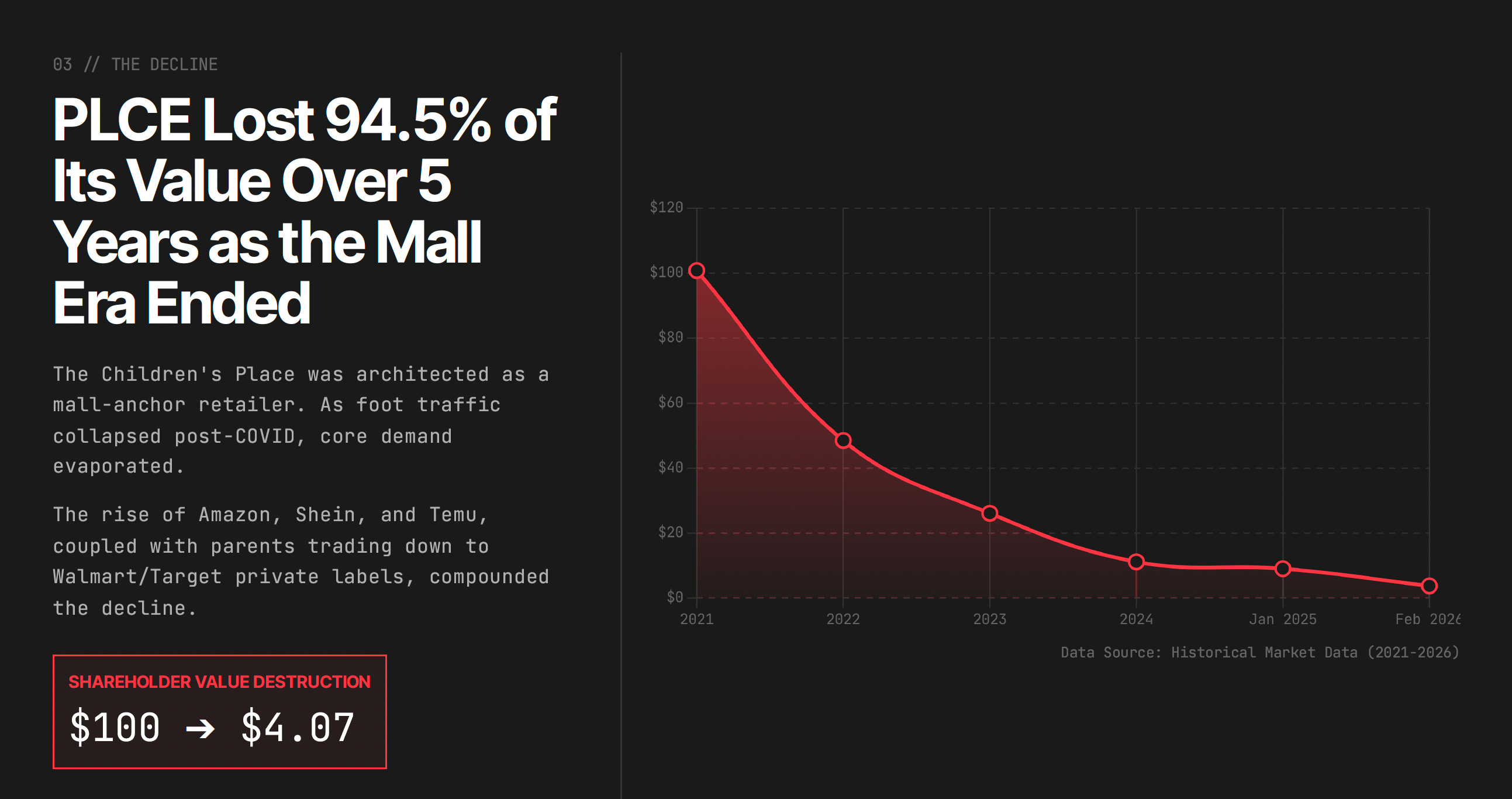
First, mall traffic collapsed. The decline was already underway before COVID-19, but the pandemic accelerated it by roughly a decade. Parents who had been vaguely meaning to shop online suddenly had no choice. They discovered it was easier, faster, and often cheaper. Many never came back to the mall. The company struggled to keep up with giants such as Amazon, Shein, and Temu, even after offering its products online — parents were trading down to private label brands or buying from mass retailers like Walmart and Target. And guess what’s worse…

Second, the competitive landscape for children’s clothing shifted in a way that is uniquely brutal. Children’s apparel is, at its core, a commodity. Kids grow fast, outgrow clothes in months, and the parents buying those clothes are inherently price-sensitive. This is not a luxury category. When Shein can produce a child’s t-shirt for $3 and Walmart can stock a full outfit for $12, competing on “value” pricing becomes a race to the bottom that a mid-tier specialty retailer simply cannot win.

The result? The stock plummeted 94.54% over five years. A company that was once worth $2 billion now has a market capitalization of $90 million. That chalk outline on the floor is real.
Part One: How Many Birds Are in the Bush?
The first question I ask about any investment is the simplest and the hardest: What is the potential upside, and is the math actually compelling?
Charlie Munger used to say a bird in the hand is worth two in the bush. Warren Buffett added the crucial qualifier: it depends on the interest rate and how certain you are those two birds are actually there. My version of this is simpler still. Before anything else, I want to know — if this turnaround works — how rich does it make me? Because if the answer is “not very,” there is no point doing the rest of the analysis.
The Theoretical Upside Is Genuinely Interesting
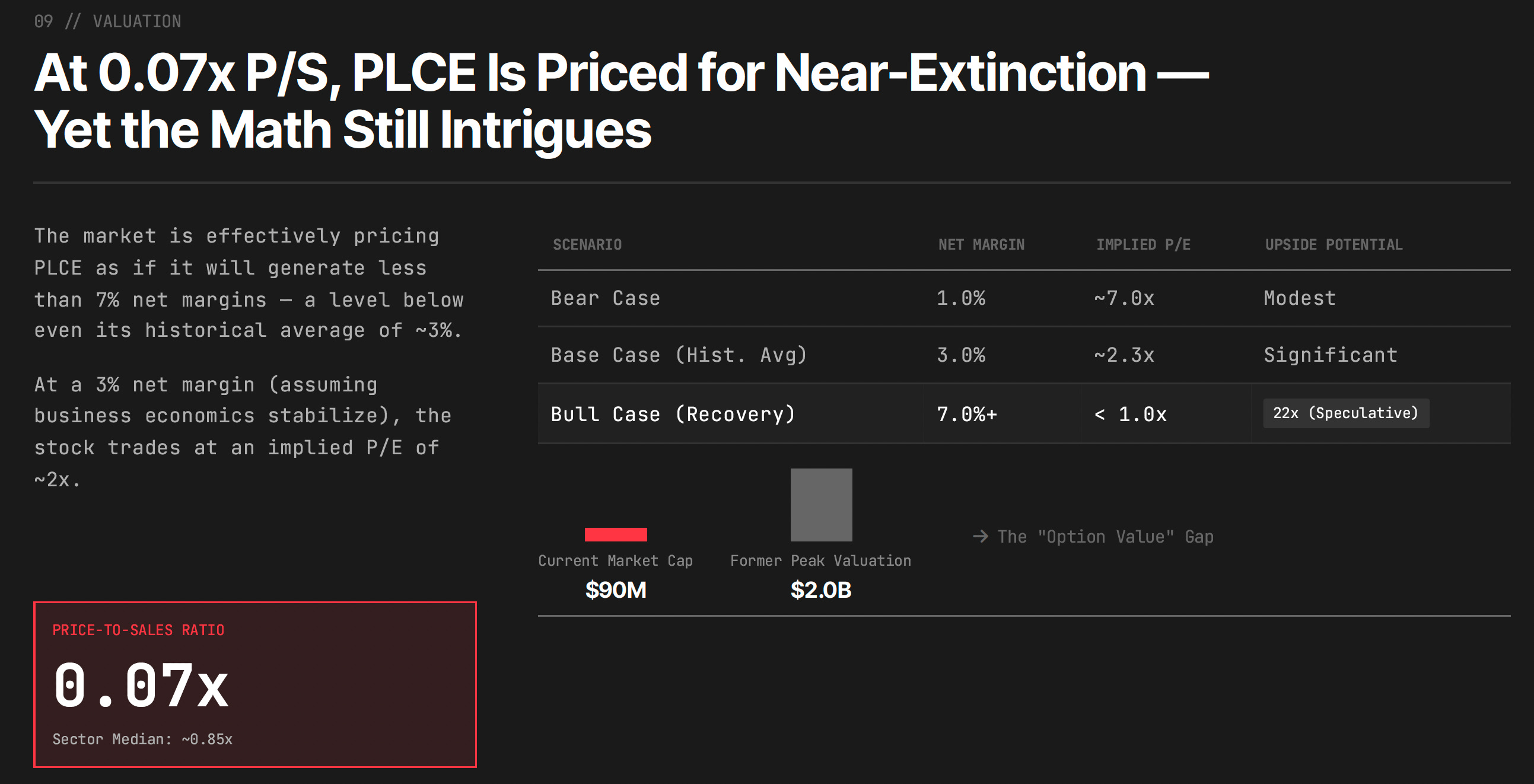
Here is the raw arithmetic. The company currently trades at a P/S ratio of 0.07. The average net margin for The Children’s Place over the past decade was roughly 3%. If we take the current revenue base — roughly $1.3 billion annually — and apply just a 3% net margin, you get approximately $39 million in net income. At a conservative 10x P/E multiple (modest even for a distressed retailer), that implies a market cap of $390 million. Against today’s $90 million, that is a potential 4x return from margin normalization alone.
Put differently: what the market is currently implying is that this company will never earn even 7 cents of net income for every dollar of revenue, ever again. That is a bold and arguably incorrect assumption. Even at the current depressed valuation trading at about 0.1 times trailing sales, it is noticeably below both the 0.5 times sales average for US specialty retailers and the 0.2 times sales level for peers.
The more interesting thought experiment is the upside scenario. The company was once a $2 billion business. If management can credibly execute a return to even $1.5 billion in revenue with a 5% operating margin — well within reach for a company with 50% e-commerce penetration and reduced physical footprint overhead — the math points toward something approaching a 20x return from current prices. That is not a promise. It is a calculation of what the market would have to believe for the stock to trade up.
But The Business Model Is Changing — Which Complicates Everything
Here is where it gets tricky, and where sloppy analysts make expensive mistakes. You cannot simply project historical margins onto a business that is structurally transforming itself.
The Children’s Place is moving from a physical-retail-first model to an omnichannel, digitally-led business. E-commerce now accounts for more than 50% of revenues. That is a profound shift in unit economics. Digital businesses have different cost structures — lower occupancy costs, but higher customer acquisition costs, higher logistics costs, and critically, a fundamentally different relationship with the customer.
This is where the concept of Customer Acquisition Cost (CAC) and Lifetime Gross Profit (LGP) becomes central to the analysis.
In a physical mall store, a customer walks in. You do not pay for that acquisition directly — it is baked into your rent. Your CAC is essentially amortized into your occupancy expense. In a digital business, you pay Google, Meta, TikTok, or Amazon for every eyeball and every click. Fashion and apparel brands often face higher CAC due to intense competition and the need for visually appealing marketing campaigns.
The gold standard for a healthy e-commerce business is an LTV:CAC ratio of at least 3:1 — meaning for every $1 you spend acquiring a customer, you eventually earn $3 in lifetime gross profit. This metric tells you if the lifetime value of a customer is higher or lower than the marketing and sales costs to acquire that customer.
The Children’s Place has a problem that makes this ratio structurally challenging: customer lifetime in children’s clothing is inherently short. A child is born. Parents buy toddler clothes for three years, then children’s sizes for another four or five years, and then the kid is old enough to have opinions about what they wear and suddenly wants Uniqlo or Supreme. You have roughly seven to eight years of natural customer lifetime, often interrupted mid-journey by cheaper alternatives.
The company’s own MD&A filings acknowledge this directly: customer lifetime value has been in constant decline for several years. That is not a peripheral data point. That is the central crisis. When your CLV is declining while your CAC is rising (because everyone is bidding for the same digital advertising space), the math of the business gets worse with every passing quarter. This is precisely why e-commerce sales continued to erode, and wholesale orders plummeted even as management was touting the digital transformation.

The P/S Math Still Suggests Undervaluation — With a Giant Asterisk
My honest assessment: the stock is statistically cheap. At 0.07x P/S, even the most pessimistic scenario produces a company worth more than $90 million. But “statistically cheap” and “good investment” are not the same thing. A falling knife is cheap when it is two feet from the floor. The question is whether it bounces or just embeds itself.
The birds are in the bush. There are a lot of them. But the bush is very thick, the distance is uncertain, and the path is poorly marked.
Part Two: How Sure Are You?
This is the section where most analyses skip over the qualitative and go straight back to spreadsheets. That is a mistake. The question of “how sure are you” is really a question about three things layered on top of each other: the quality of the moat, the quality of the management, and the quality of the execution so far.
All three matter. And in the case of The Children’s Place, all three give me pause.
The Moat Problem: Running on Empty
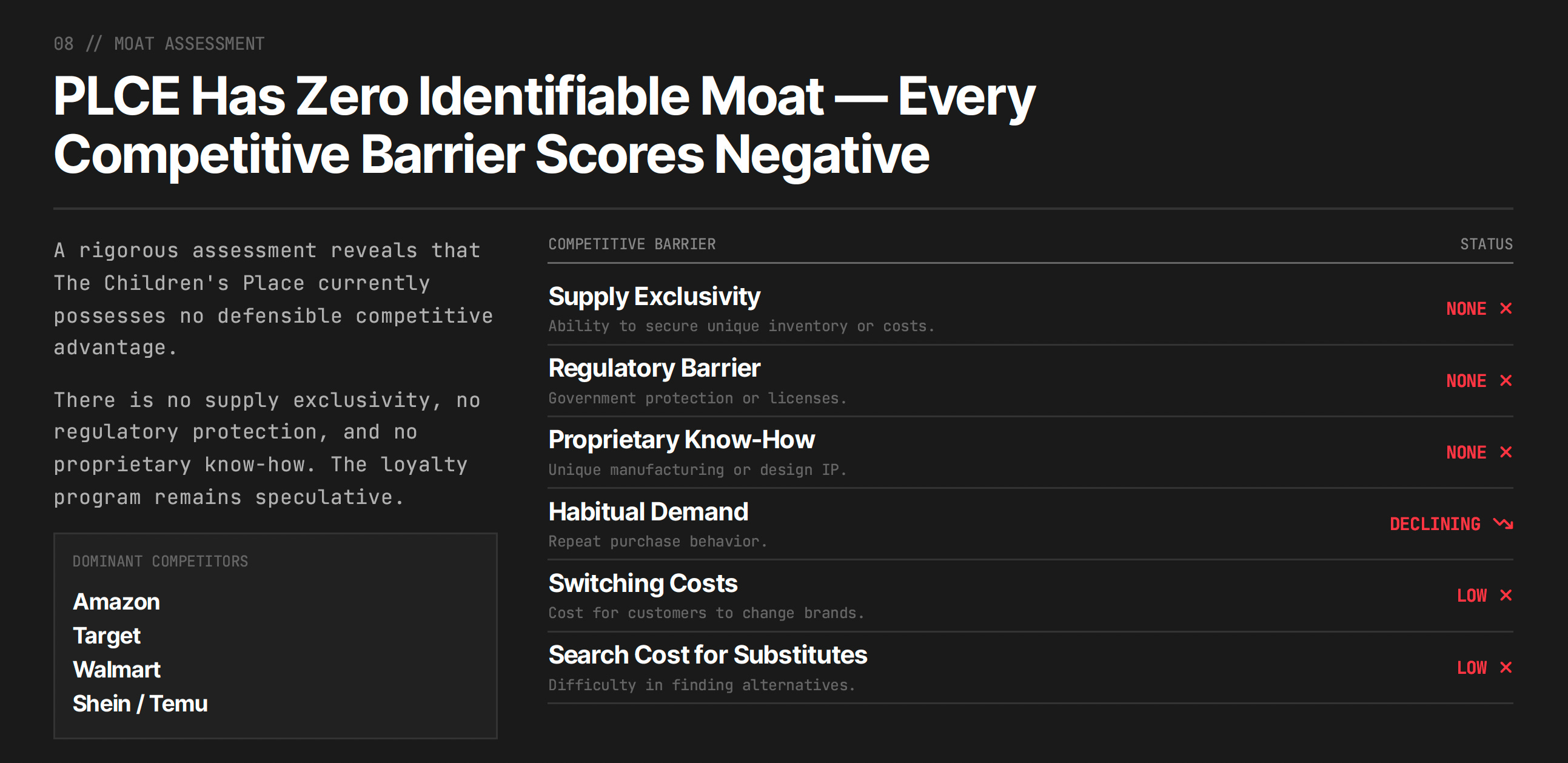
A moat, in the Buffett sense, is the thing that makes it hard for competitors to eat your lunch. It can be a brand, a patent, a network effect, a switching cost, or a regulatory barrier. When I ran PLCE through my moat checklist, the results were honest but uncomfortable:
Supply exclusivity? No. Government or regulatory barrier? No. High “know-how” barrier? No. Habitual demand? No. High cost of switching? No. High cost of searching for substitutes? No.
That is six consecutive no’s. In other words: nothing stops a parent from walking off your website and into Amazon, Walmart, Shein, Carter’s, or Old Navy in the time it takes to type a URL. The switching cost is literally zero.
The company does have one potential moat in development: its loyalty program, My Place Rewards. The idea is sound — tiered memberships, personalized rewards, gamification, integrated with their private label credit card. A well-executed loyalty program can create the kind of habitual demand and switching cost that would meaningfully improve customer retention and lifetime value. The management team acknowledged the current program is not user-friendly and is not integrated with their credit card. The company updated its My Place Rewards Program in October 2025, which is a step in the right direction.


But here is the problem: a loyalty program that might create a moat is not the same as a moat that exists. Right now, we are in pure speculation territory. Until the data shows improved repeat purchase rates, higher CLV, and measurably lower churn, this remains a hypothesis. As an investor, you cannot buy a hypothesis at a turnaround valuation and expect certainty.
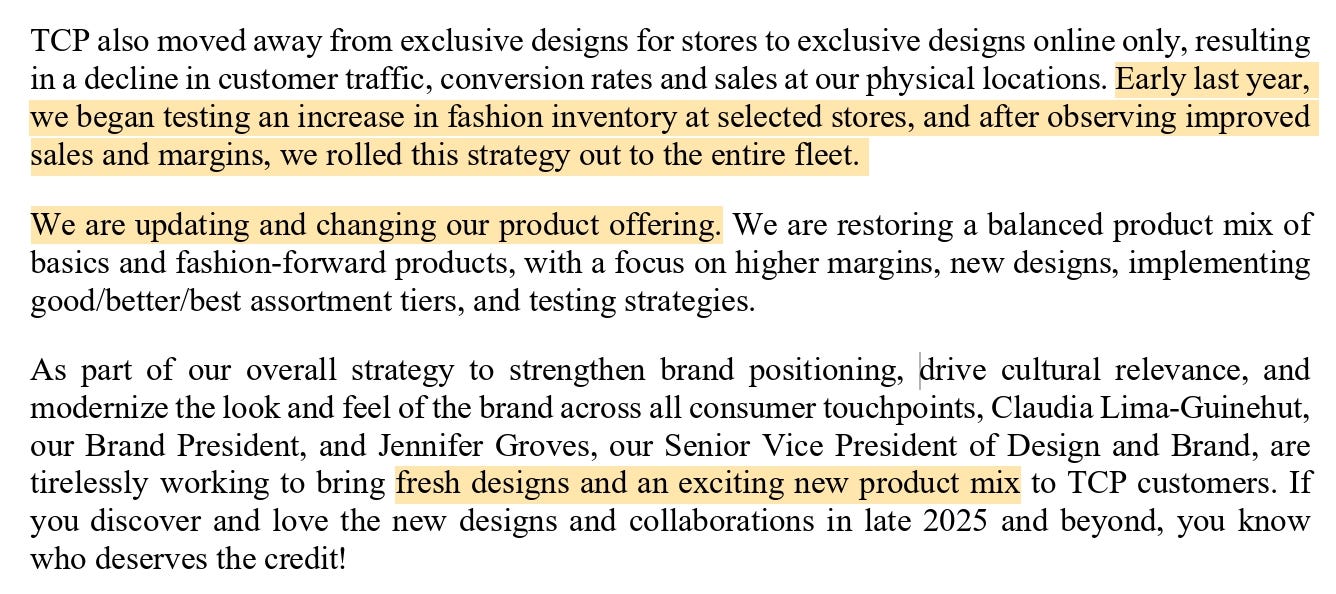
The company also seems to have discovered that fashion-forward inventory moves faster than basics. They tested it in select stores, saw improved margins, and are rolling it out to the full fleet. That is good management learning — genuinely. But fashion licensing from brands like Minecraft or Sanrio is easily duplicated by competitors with deeper pockets. Carter’s could license Hello Kitty tomorrow. Walmart already has Harry Potter. The apparel manufacturing business has notoriously low barriers to entry — anyone with access to Asian manufacturing and a website can compete. This is not like building a semiconductor fab or a pharmaceutical patent.
The Management Problem: The Right Diagnosis, The Wrong Doctor
This is the most important part of the analysis, and the part that most value investors underweight. Let me explain it with an analogy.
Imagine you have a sick patient. The patient needs a combination of surgery, physical therapy, and a completely revised diet and lifestyle. You hire a brilliant surgeon to run the recovery program. The surgeon correctly identifies all the problems, writes a beautiful treatment plan, and then... prescribes only financial metrics as the performance benchmark for recovery. No monitoring of the patient’s energy, social life, pain tolerance, or mental health. Just cash flow.
That is essentially what is happening at The Children’s Place.
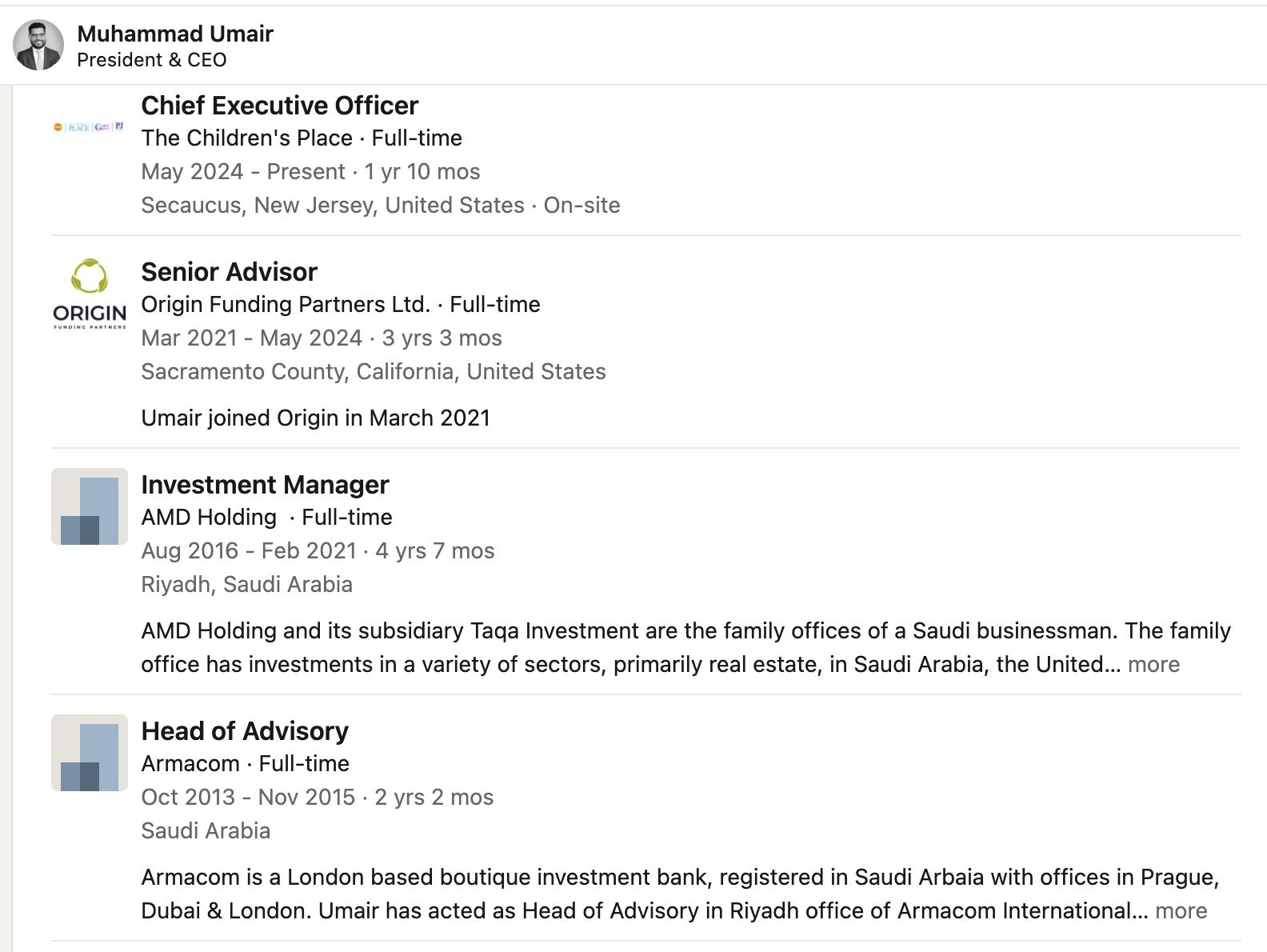
Mithaq Capital, the Saudi-based investment fund that now owns between 54.8% and 62% of the company’s outstanding shares, is a value-oriented turnaround specialist. They brought in Muhammad Umair as CEO in May 2024. Umair is, by all accounts, a sharp financial mind. His background is in investment management — at AMD Holding (a Saudi family office), then Origin Funding Partners, and now here. He is not a retailer. He is not a marketer. He has never built a consumer brand.
This is what Koch Industries calls the difference between conceptual knowledge and personal knowledge. Conceptual knowledge is knowing that customer lifetime value is declining and that the loyalty program needs to be fixed. Personal knowledge is knowing how to make a parent in Dallas feel an emotional connection to your brand strong enough that she comes back every season, tells her friends about it, and feels vaguely guilty shopping anywhere else. That knowledge lives in the gut, not in a spreadsheet.
Compare this with Under Armour, where founder Kevin Plank returned to the CEO role in 2024 after years of decline under professional management. Plank built UA from scratch with a visceral understanding of what athletes want and how to make them feel something. The turnaround under him has been notably more aggressive and brand-forward than anything PLCE has attempted. That is personal knowledge at work.
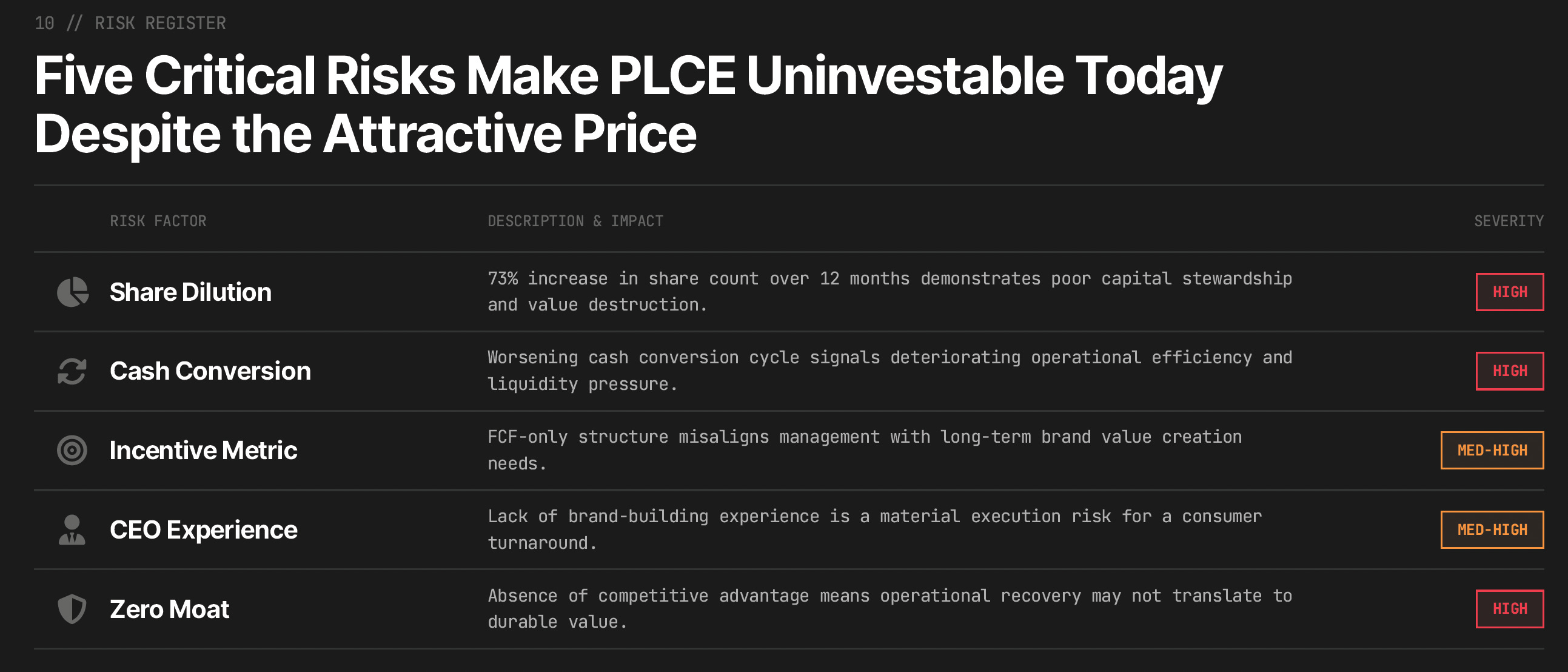
The compensation structure reinforces this concern. Performance metrics for management are 100% based on Adjusted Free Cash Flow — a metric that was first introduced in fiscal year 2024. The rationale in the proxy is that the business is “asset-light” and FCF is therefore the appropriate benchmark. That sounds reasonable on the surface. But for a company trying to rebuild brand equity, customer loyalty, and repeat purchase behavior — the things that actually create long-term value — FCF is arguably the worst possible single metric. It incentivizes cutting costs (good) but also cutting marketing spend, slowing the loyalty program investment, and deferring the very brand-building work the company desperately needs.
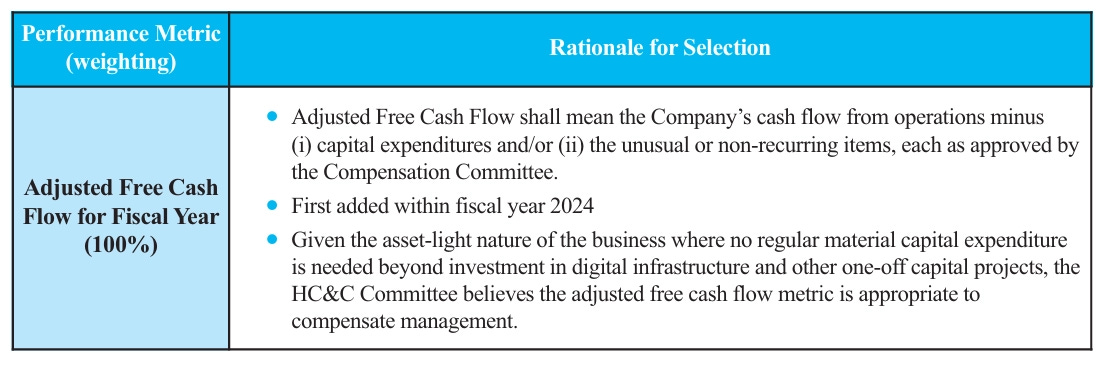
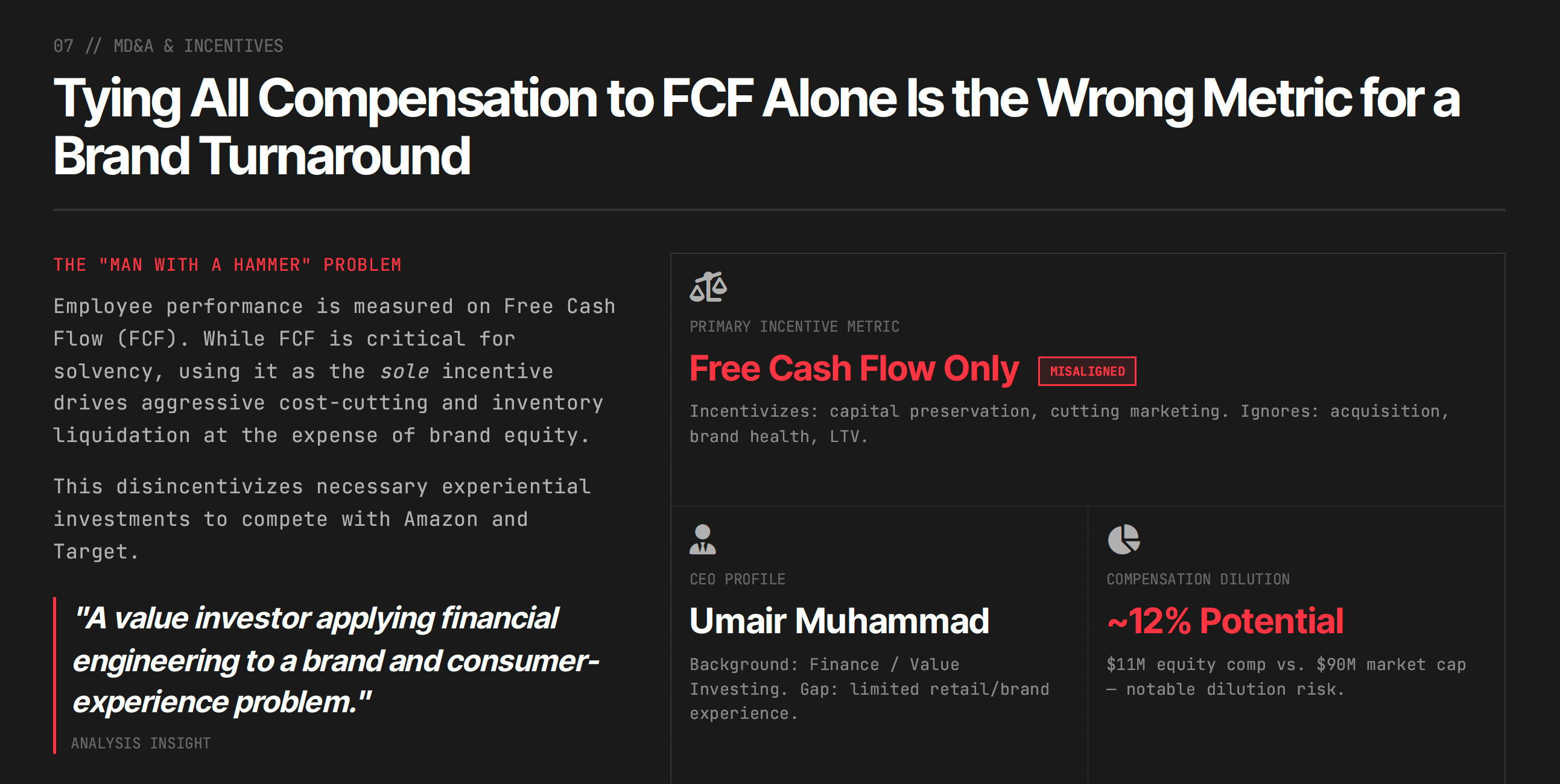
This is what the document described perfectly as a “man with a hammer” situation. When every metric is a financial one, every solution looks like a cost cut.
The team is also still being assembled. Only 3 out of the original 10 internal executives were retained after Mithaq took control. A new leadership team in retail takes time to build operating rhythm — shared assumptions, trust, and the kind of collective instinct that lets an experienced retail team feel the market before the quarterly data comes in.
The Dilution Warning: They Raised $90 Million and Still Stumbled
One of the more alarming data points is the capital raise history. Between January 2025 and January 2026, shares outstanding jumped from 12.8 million to 22.2 million — a dilution of roughly 73% in a single year. The company raised $90 million via a rights offering at $9.75 per share in early 2025. That is real money. It paid down debt and gave management runway.
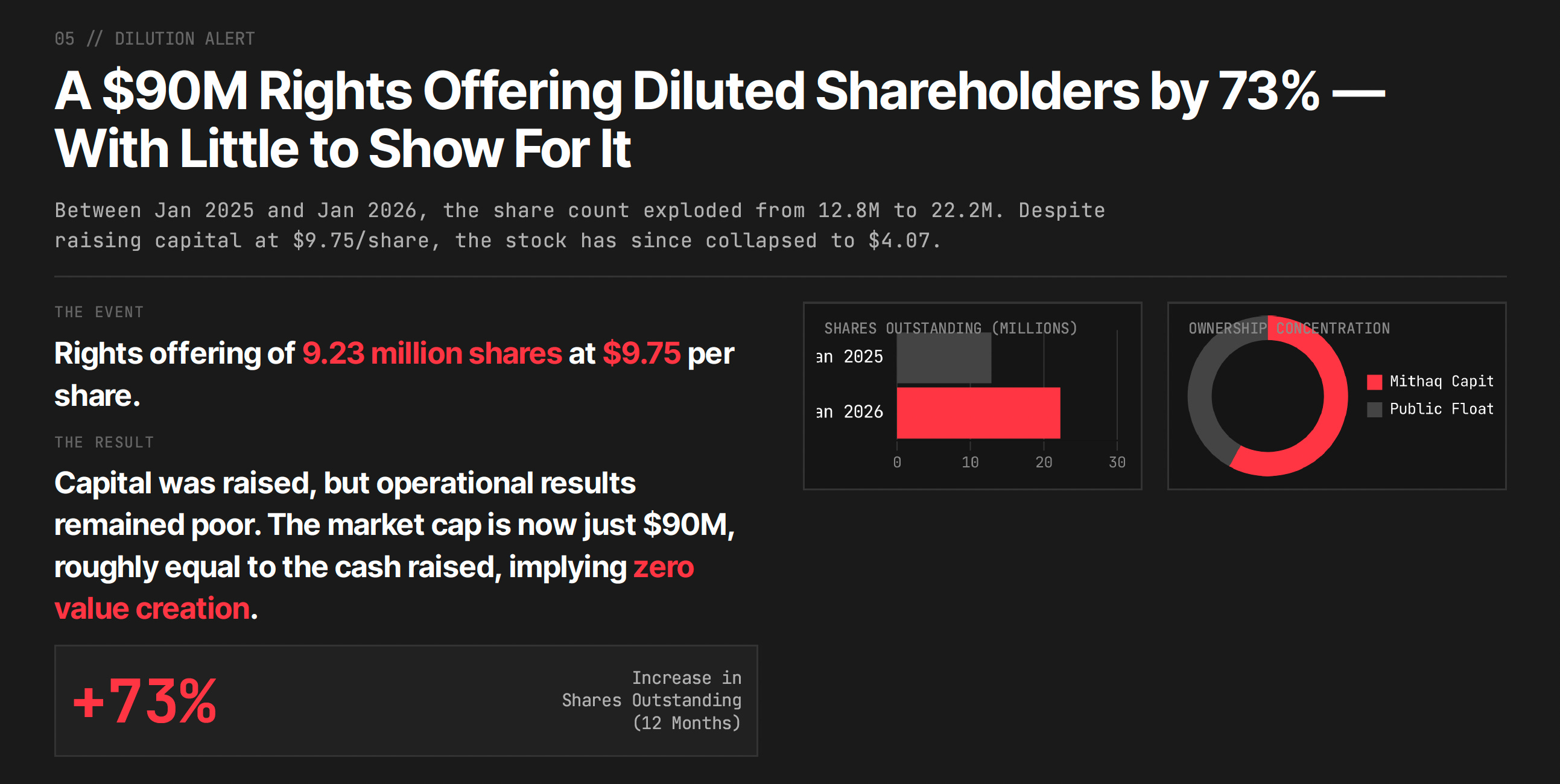

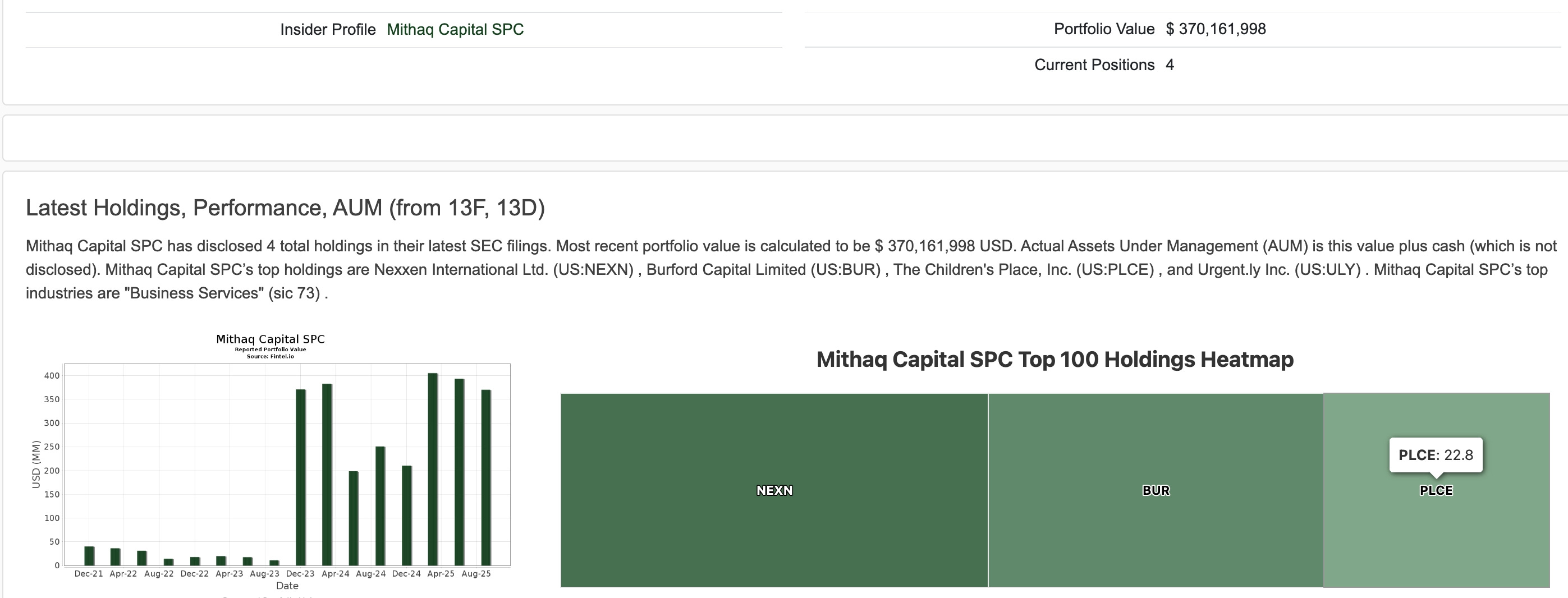
The $90 million raised through the rights offering was used: $29.8 million in cash proceeds to prepay the revolving credit facility, and $60.2 million to reduce the Mithaq term loan debt. That is defensible debt management. But the question you have to ask is: after raising $90 million, the stock still fell from ~$9.75 to $4. What does that say about execution confidence?
Q3 2025 net sales declined 13% to $339.5 million due to decreased e-commerce traffic and wholesale revenue. The company also acknowledged that marketing efficiency was impeded during the quarter in its transition to a new marketing agency and a heightened promotional strategy. Changing your marketing agency mid-turnaround is like changing your engine mid-flight. Sometimes necessary. Always turbulent.
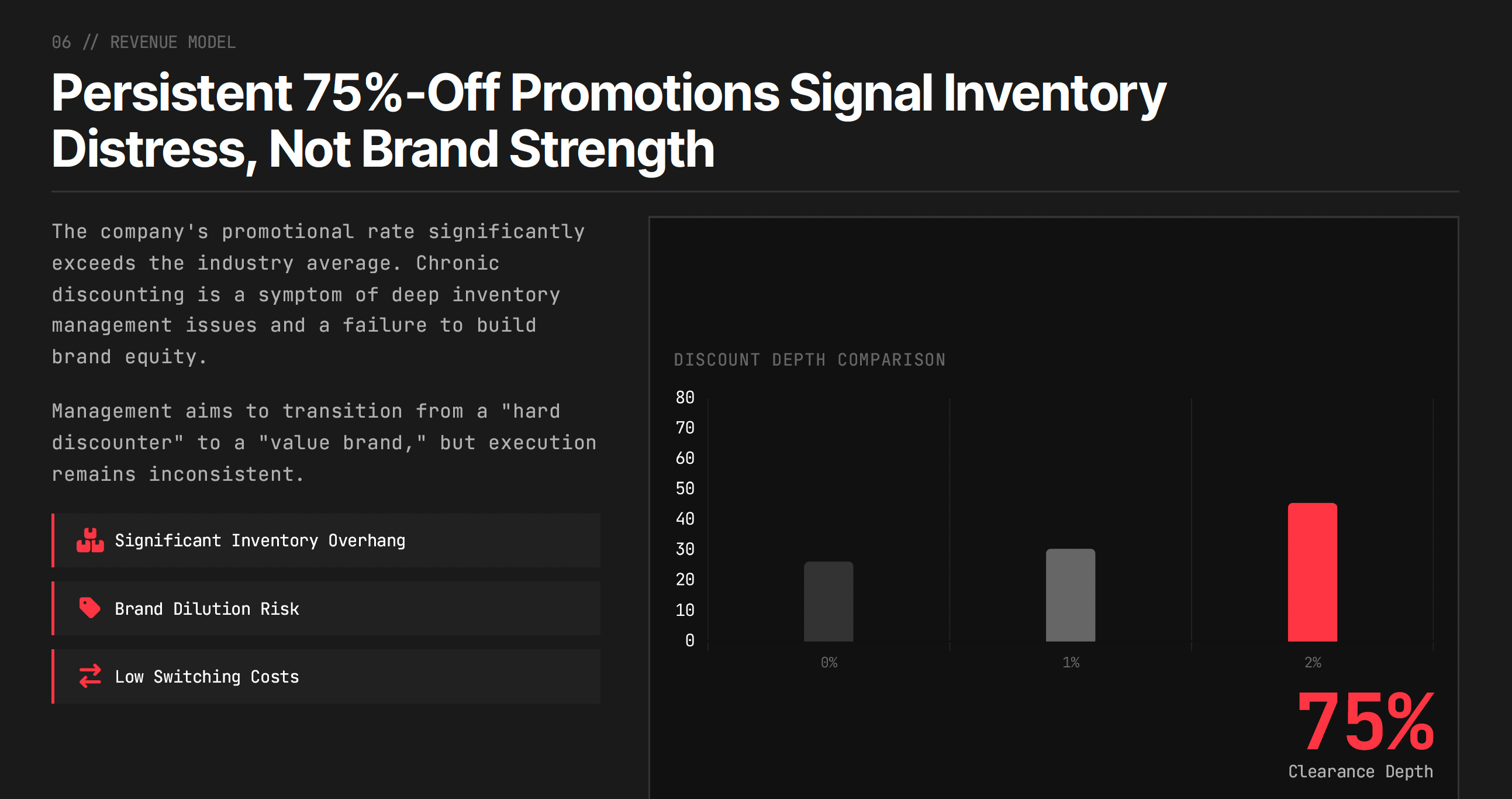
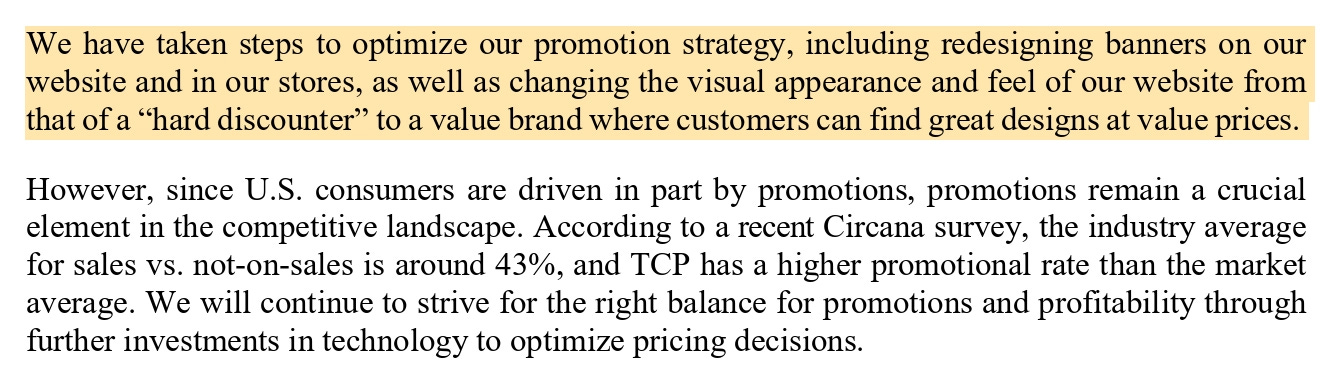

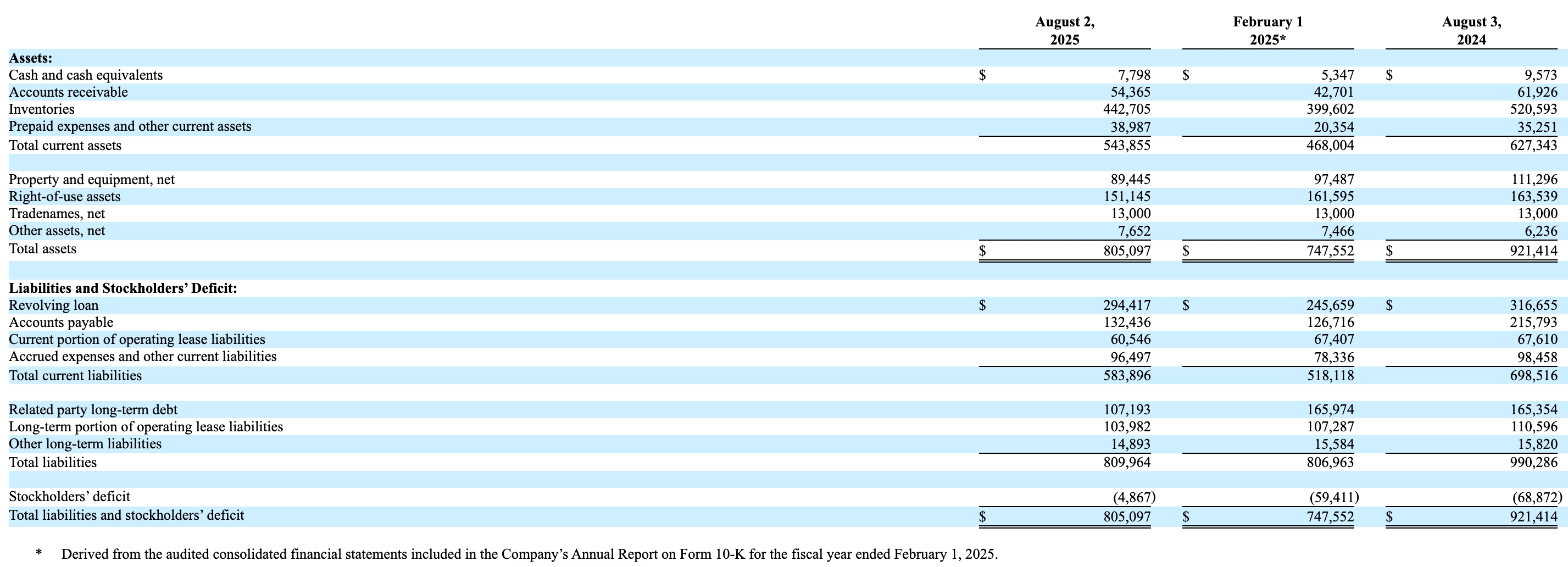
The cash conversion cycle is also getting worse, not better — going from 47 days in 2021 to 90.61 days in 2025. This is the operational equivalent of your arteries slowly hardening. It means inventory is sitting longer before being sold, receivables are taking longer to collect, and the whole operational engine is grinding more slowly with each passing period.

My confidence level here is low to moderate. The diagnosis is correct. The strategic direction is reasonable. But the execution is shaky, the management DNA is mismatched for the challenge, and the early data points are not yet giving us the green signal we need.
Part Three: How Long Till You Get Them Out?
This is the question that kills most turnaround thesis: not whether the company recovers, but when. Time is the silent tax on every investment. A 5x return over 10 years is a 17.5% annual return — impressive. The same 5x return over 20 years is barely 8.4% — mediocre. Timing matters enormously, and in turnarounds, it is almost always the hardest thing to predict.
The Operational Reality: No Near-Term Catalysts
Let me be direct. There are no obvious near-term catalysts for a re-rating of this stock.
The company is planning to open 15 to 20 new stores in the first half of fiscal year 2026, which is a reversal of the store-closure strategy that preceded Mithaq’s takeover. That is interesting — it signals management believes the physical store can be a customer acquisition channel, not just a cost center. But new stores take 12 to 18 months to ramp to mature unit economics. You are not going to see meaningful contribution to the P&L in the near term.
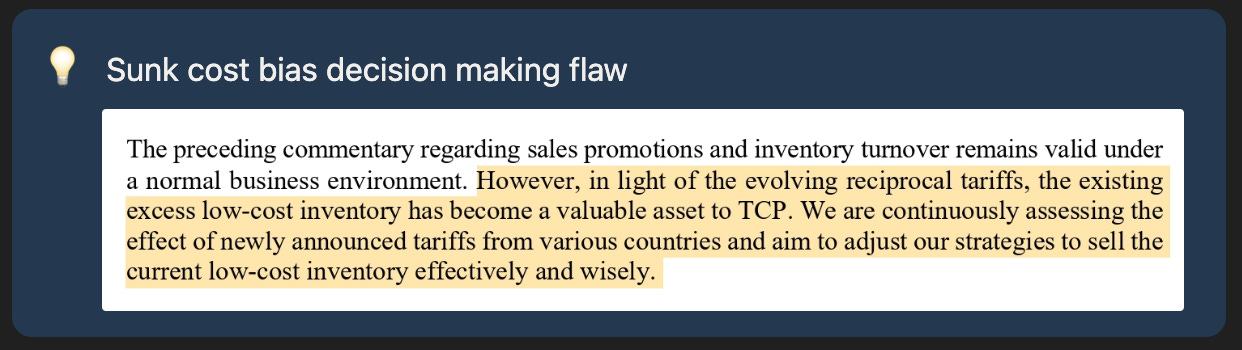
Tariff pressures continue to affect the bottom line, with an incremental impact of $25 million to $30 million expected in the first half of fiscal year 2026. This is a genuine headwind and not unique to PLCE — all apparel companies sourcing from Asia face it — but for a company with razor-thin margins operating at a loss, even $25 million in incremental costs is meaningful. Management believes they can mitigate most of it through sourcing diversification and vendor renegotiation, but execution on that in a short timeframe is difficult.
The debt situation is also a constraint. The company’s quick ratio of 0.17 reveals a severe lack of near-term liquid assets to cover short-term obligations. This is not a comfortable number for a company still generating net losses. The recent credit facility refinancing added liquidity, but it also added leverage — creating a precarious dynamic where growth requires debt, but debt requires growth to service.
The Marathon Problem
Here is the core issue I keep coming back to. A genuine turnaround of this nature — rebuilding brand equity, fixing the digital business, restructuring the loyalty program, opening new stores, managing tariffs, and rebuilding a management team — is a marathon, not a sprint. In the best case scenario, you are looking at 3 to 5 years before the operational improvements show up clearly and consistently in the financial statements.
And marathons require two things: the will to keep running, and the physical ability to keep running. The first I believe PLCE has — Mithaq has significant skin in the game. The second is less certain, given the leverage, the negative book value per share (-$0.3), and the ongoing losses.
There is also a profound competitive dynamics question. Carter’s is still the dominant brand in children’s apparel — better brand equity, better supply chain, and a loyalty program that actually works. Old Navy, H&M Kids, and Zara Kids are all competing aggressively on fashion. Amazon is competing on price and convenience. PLCE is trying to carve out a position as a “digital-first, value-priced, fashion-forward” children’s brand — which is a legitimate strategy, but it is also a lane where four or five competitors are already driving fast.
This is not like the Krispy Kreme situation, where there was a clear path from the old asset-heavy model to the new asset-light DTC model, and management had demonstrated the unit economics of the new model worked. Here, we genuinely do not know if the new model’s economics are better than the old one. The shift to e-commerce bringing over 50% of revenues sounds good on a slide, but e-commerce in apparel is notoriously expensive to operate — high return rates, high customer acquisition costs, and price comparison behavior that makes it hard to hold margin.
The timeline to exit is: highly speculative, minimum 3 years, more likely 5 or more.
The Verdict: A Fascinating Watch, Not a Buy
Let me bring this back to the three questions that frame every investment decision.
How many birds are in the bush? Potentially many. At 0.07x P/S and with the memory of a $2 billion business, there is genuine mathematical upside — perhaps 4x on margin normalization alone, more if the turnaround truly works. The valuation is statistically compelling.
How sure are you? Not very. The moat is absent or speculative. The management team is financially skilled but operationally mismatched for the challenge. The performance metrics are designed to optimize for financial discipline, not brand revival. The early execution data — declining e-commerce traffic, stumbling marketing transitions, worsening cash conversion — is not yet telling a confident story. Customer lifetime value is in structural decline, and the loyalty program that could reverse it is still under construction.
How long till you get them out? Unknown. No near-term catalysts. Marathon timeline. Tariff headwinds. Debt pressure. At least 3 years before the picture clarifies meaningfully.
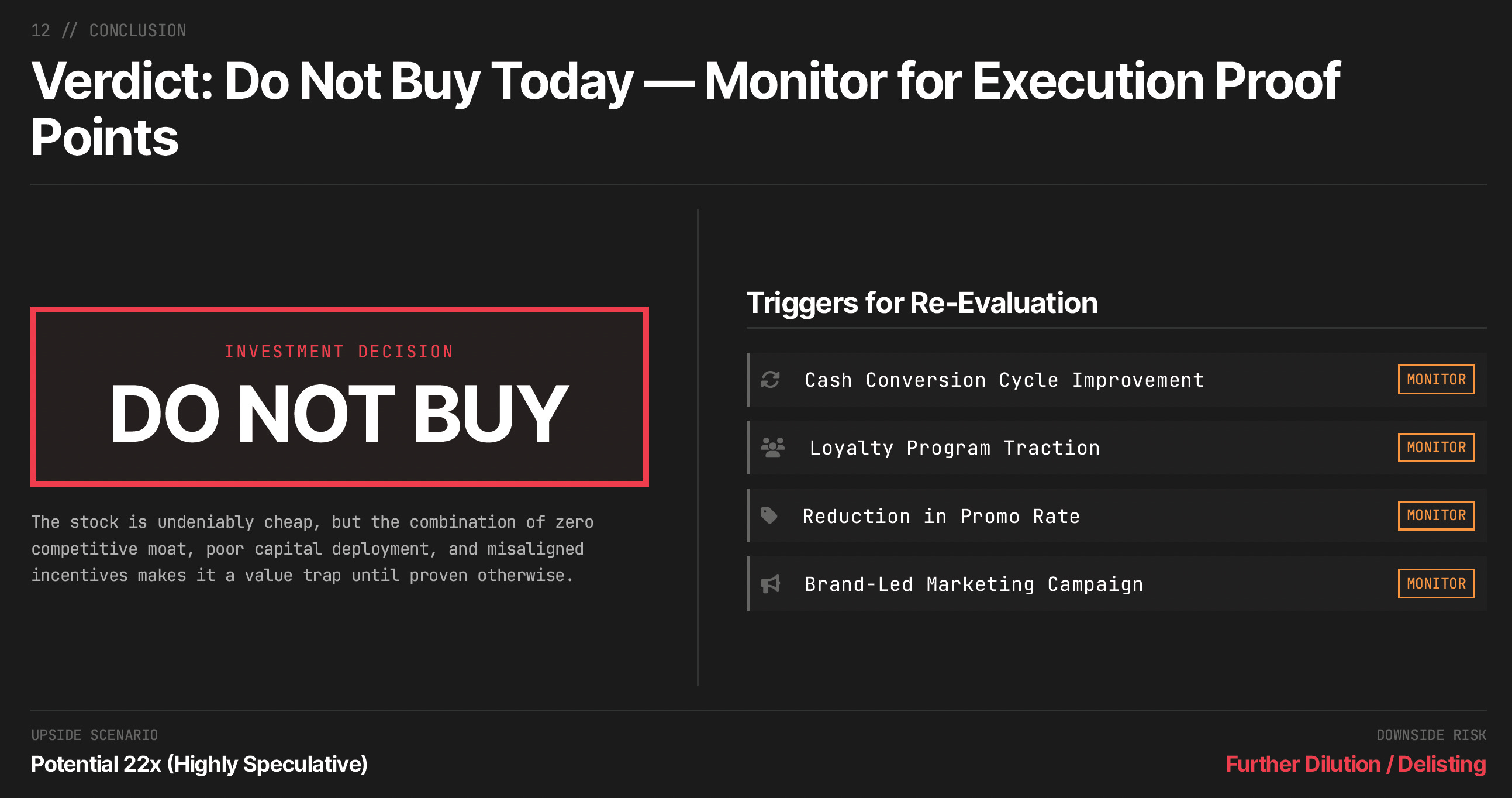
When I run the three-question framework honestly, it produces a result I can only describe as: interesting but not investable today. Two of the three questions have unsatisfying answers — confidence is low and timeline is long. That is a combination that makes even a statistically cheap stock an uncomfortable bet.
What would change my mind? I want to see the loyalty program launch with measurably improved repeat purchase rates. I want the cash conversion cycle to start improving — even a small improvement signals operational health returning. I want the CEO to bring in someone with real brand-building and retail experience at the C-suite level, perhaps a Chief Brand Officer or Chief Marketing Officer with a track record in consumer turnarounds. I want one or two quarters of positive comparable store sales growth across both channels, not just brick-and-mortar. And I want the tariff situation to clarify.
Until then, this goes on my watchlist — and off my buy list.
The stock market is a device for transferring money from the impatient to the patient. Buffett said that. But he also never said you had to hold through a turnaround you cannot time, executed by a team you cannot fully trust, in a moat you cannot see. Patience is a virtue. Knowing when to be patient and when to wait on the sidelines is a skill.
For PLCE, for now, I am on the sidelines — watching, learning, and waiting for the story to develop into something I can price with conviction.
Disclosure: This is a personal analysis for educational purposes and does not constitute financial advice. The author holds no position in PLCE at the time of writing.