
“The difference between successful people and really successful people is that really successful people say no to almost everything.” — Warren Buffett
Introduction: The Power of Subtraction
In the autumn of 1995, Steve Jobs returned to Apple and did something counterintuitive: he killed 70% of Apple’s products. Not because they were bad, but because they distracted from what mattered. This is the central paradox of value creation—the power lies not in what you do, but in what you refuse to do.
Warren Buffett keeps a list of companies he’s studied and rejected. Charlie Munger famously said his success came from “knowing the edge of my circle of competence.” Peter Lynch turned down hundreds of stocks for every one he bought. These aren’t stories about missing opportunities; they’re stories about the disciplined pursuit of only the best opportunities.
Sometimes, the companies we look at are perfectly fine companies at the wrong time or wrong price. A few are fascinating turnarounds that need more time. But all of them failed to answer three brutally simple questions satisfactorily:
1. How many birds are in the bush? (What’s the magnitude of return if the thesis works?)
2. How sure are you? (What’s the probability the thesis actualizes?)
3. How fast till you get them out? (What’s the realistic time horizon?)
For a LEAPs strategy—buying long-dated call options 12-24 months out—I need high conviction on all three. If any answer is unsatisfactory, the idea gets rejected. Period.
What follows is a detailed forensic examination of each rejection, complete with financial analysis, probability assessments, and the specific mechanical failures that killed each thesis. Think of it as a masterclass in what Charlie Munger calls “the psychology of misjudgment”—except here, we catch ourselves before the mistake.
Let’s begin.
WIMI: The Holographic House of Cards
Date Analyzed: September 15, 2025
Current Price: ~$2.92 | Market Cap: $37.5M
The Initial Attraction
WiMi Hologram Cloud presents itself as an augmented reality technology provider focused on holographic solutions. The numbers looked compelling at first glance: approximately $197 million in cash and receivables against minimal liabilities, suggesting a liquidation value around $233 million—a potential 6.2x return against the $37.5 million market cap.
The company operates three business segments:
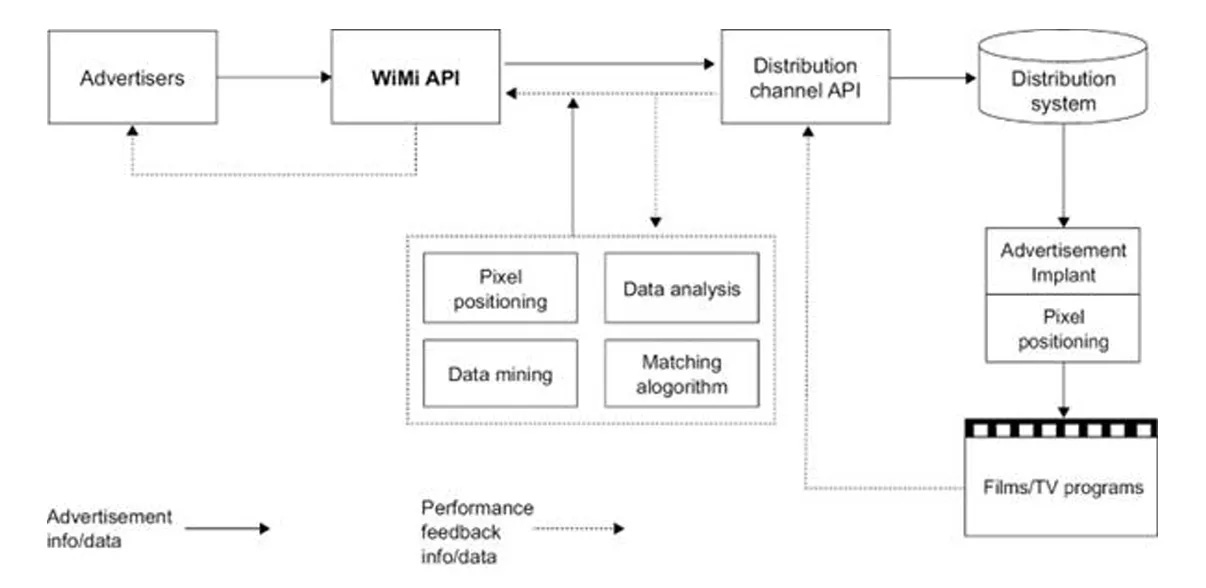
AR Advertising Services (100% of 2024 revenue): Embedding 3D holographic objects into video content
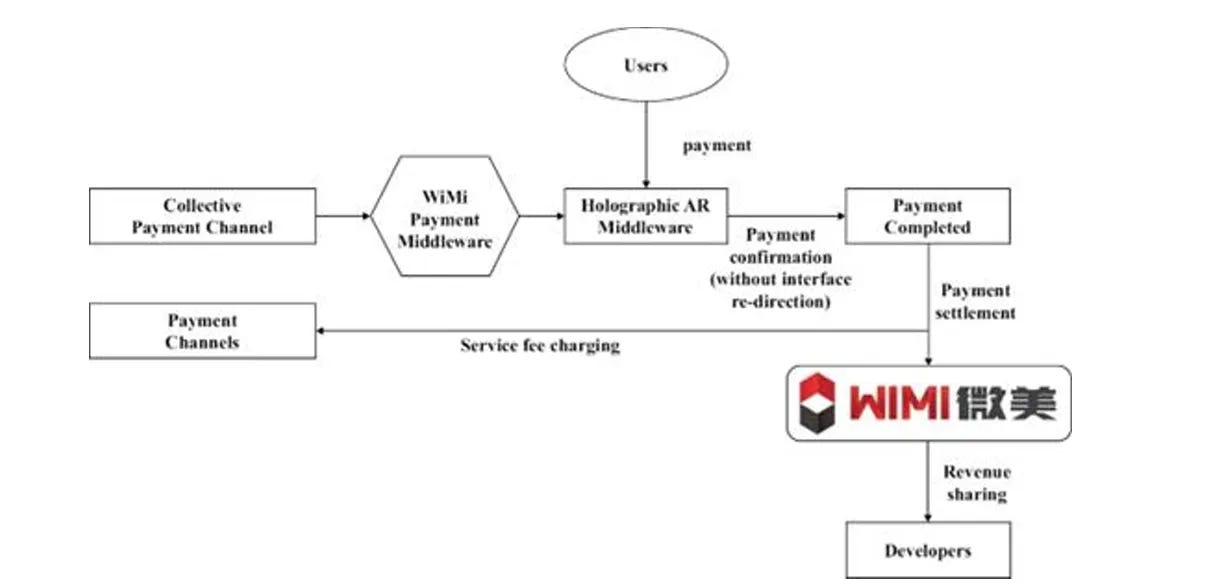
AR Entertainment Products: Payment middleware, game distribution (the “233 Game Platform”), and mixed reality software
Semiconductor Business: Central processing algorithm services
The Deep Dive: When the Numbers Lie
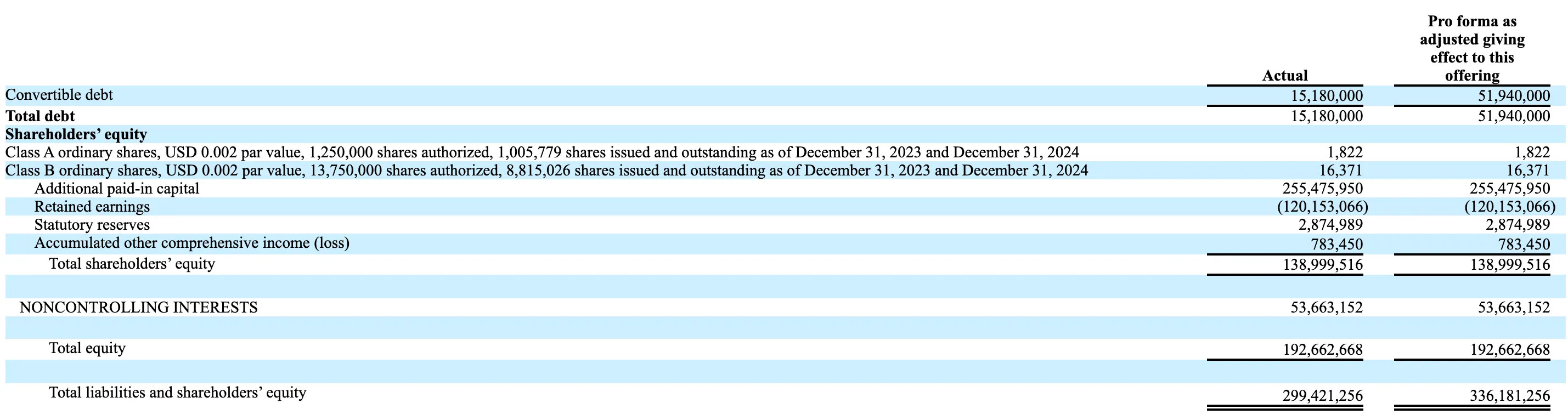
Here’s where due diligence saved me from disaster. On May 23, 2025, WiMi issued the first $10 million of a planned $40 million convertible note offering—nearly equaling their entire market capitalization. The terms were predatory:
Convertible Note Mechanics:
Face Value: $40 million
Discount at Sale: 8% (so only $36.78 million cash received)
Conversion Price: 70% of the lowest closing price in the 90 trading days preceding conversion
Maturity: 360 days (expires around May 18, 2026)
Let me translate what this means using actual numbers. If WiMi’s stock trades down to $2.00 during any 90-day period, investors can convert at:
$2.00 × 70% = $1.40 per share
That’s a 30% built-in discount to an already-depressed price, with unlimited downside protection for note holders and catastrophic dilution for existing shareholders.
Real-World Example from Sister Company:
WiMi’s playbook is visible in their treatment of subsidiary MicroAlgo Inc. (MLGO). In June 2025, WiMi issued MicroAlgo a $35 million convertible note at a 60% discount to the 60-day low—even more aggressive than their own notes. MicroAlgo’s stock subsequently collapsed from $6.90 to under $0.23, creating a conversion price around $0.09 per share. The note holders received 152 million shares for their $32.2 million—an effective price of $0.21 per share while other shareholders watched their ownership get diluted by 800%.
The Management Red Flag
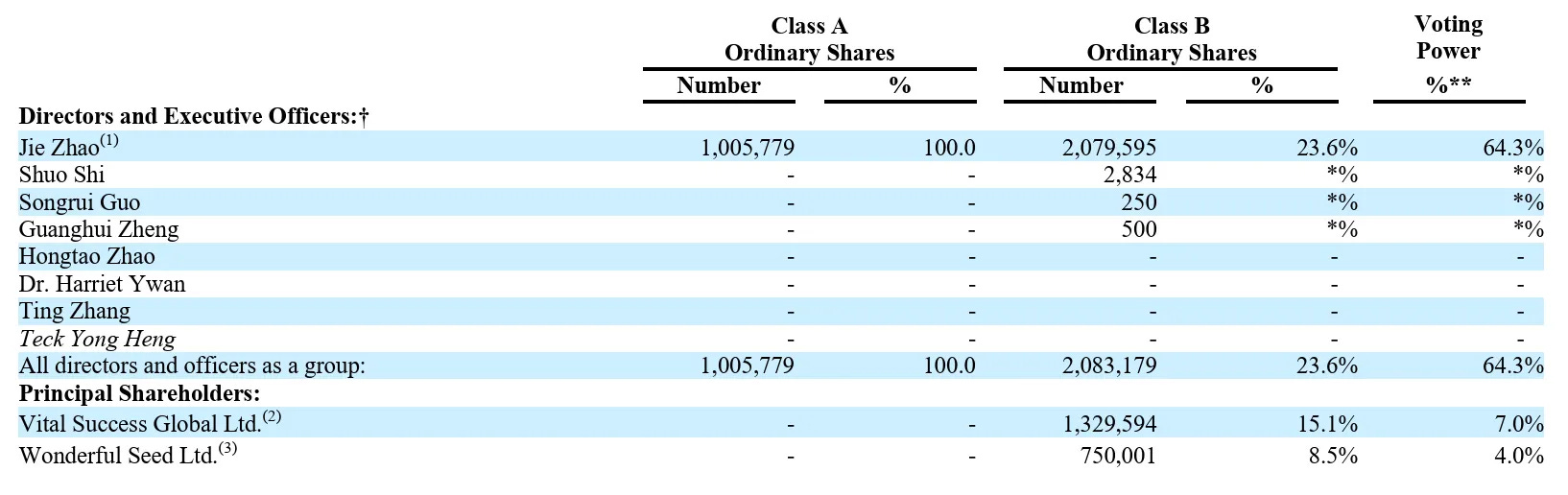
CEO Jie Zhao owned 23% of WiMi as of early 2025. By June, he’d reduced his direct holdings significantly, though interestingly, he restructured ownership through multiple institutional entities he controls. When I see this corporate shell game—maintaining voting control while minimizing direct ownership—alarm bells ring.
As Munger would say: “Show me the incentive, I’ll show you the outcome.” When management structures compensation to benefit from dilution rather than share price appreciation, you’re not investing in a company—you’re financing a capital extraction scheme.
The VIE Structure Double Whammy
WiMi operates through a Variable Interest Entity (VIE) structure in China. For the uninitiated, this means:
Foreign investors don’t actually own the operating company
You own shares in a Cayman Islands holding company
That holding company has “contractual arrangements” with the Chinese operating entity
These contracts are of questionable enforceability under Chinese law
The Chinese government has increasingly scrutinized VIE structures. In 2021-2022, Beijing’s regulatory crackdown on tech companies showed these structures can be nullified overnight. You’re buying a contract that promises you profit participation, not actual ownership.
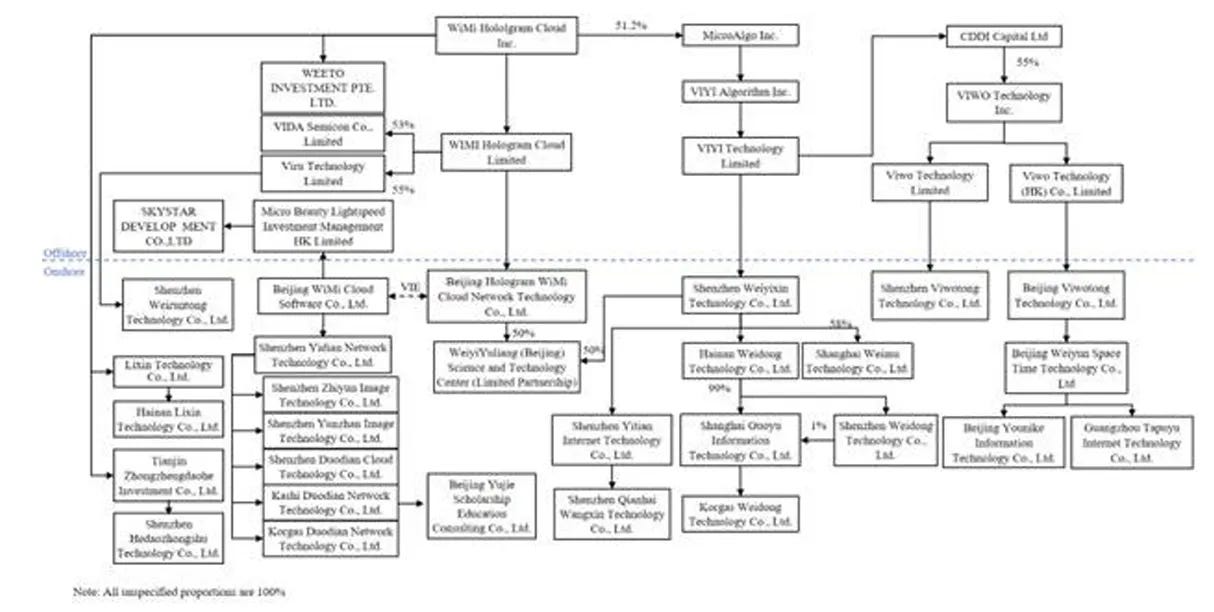
Not to forget… a highly complex organization structure - that’s a red flag.
The Math of Disaster:
With $40 million in new notes convertible at 30% discounts to 90-day lows, potential dilution could range from 40-100 million new shares depending on where the stock trades. Current outstanding shares: approximately 12.8 million. That’s 3-8x dilution.
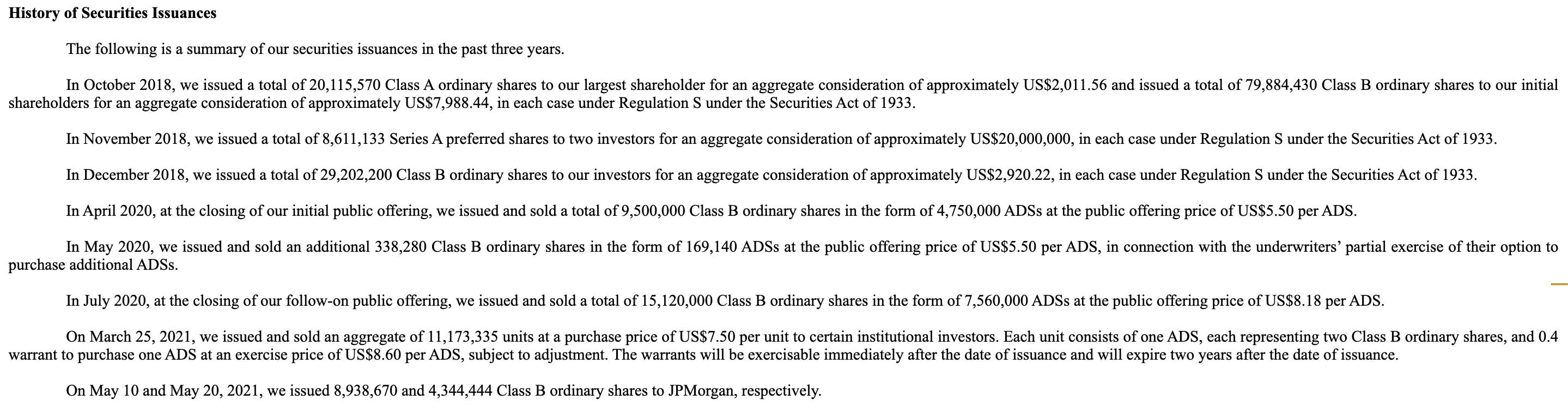
New liquidation value: $233M + $36.78M (net proceeds) = $269.78M New shares outstanding: 12.8M + 70M (midpoint estimate) = 82.8M shares Liquidation value per share: $269.78M ÷ 82.8M = $3.26 per share
Current price: $2.92
Birds in the Bush: 1.12x maximum (and that’s best case)
Probability of Success: 15%—assumes no further dilution and liquidation actually happens
Time Horizon: Unknown; likely never
The Fatal Flaw
The financial engineering here isn’t designed to build shareholder value—it’s designed to extract it. Each convertible note round creates a new floor of holders who profit from price declines through their conversion discount. It’s a death spiral financing dressed up in holographic AR buzzwords.
Verdict: Hard pass. When the balance sheet looks great but management keeps issuing securities that destroy per-share value, you’re watching legalized fraud in slow motion.
Learnings To Stick To
1. Dilution is Value Destruction
It doesn’t matter if a company has $200 million in cash if they’re issuing $300 million in equity at pennies on the dollar. Per-share value is what matters, not absolute value.
2. Debt is Fragility
Interest coverage below 3x means one bad year could trigger covenant breaches. Below 2x is playing with fire. Below 1.5x is suicidal.
3. Insiders Always Know First
When CEOs, CFOs, and directors sell 60-80% of vested RSUs immediately, they’re voting with their wallets. Listen.
4. Business Models Matter More Than Operations
You can’t cost-cut your way to success if the fundamental value proposition is obsolete.
5. Timing Is Everything (For Options)
e.g. MDU Resources and Krispy Kreme might be great investments... in 2027. But for LEAPs expiring in 2026, the timeline doesn’t work.
6. Regulatory Red Flags Are Never False Alarms
When annual reports are encrypted, when revenue collapses without explanation, when short sellers publish specific fraud allegations—walk away. The risk isn’t worth the reward.
7. Pandemic Winners Are Usually Losers
Mean reversion is brutal. Companies that benefited from temporary behavioral shifts rarely maintain those gains.
The Philosophy of “No”
Charlie Munger said: “The art of being wise is the art of knowing what to overlook.”
In investing, success comes from:
Saying yes to the right opportunities (important)
Saying no to the wrong opportunities (more important)
Saying no to marginal opportunities (most important)
This article is about #3. None of these companies were obviously terrible (well, maybe CHR and WIMI). Most had legitimate businesses, real assets, and plausible turnaround stories.
But “plausible” isn’t “probable.”
And “interesting” isn’t “investable.”
The Buffett-Munger Standard
Before investing, ask:
Do I understand this business? (Circle of competence)
Does it have a sustainable competitive advantage (Moat)/ does it have a legitimate working business model (for LEAPs)?
Is management trustworthy and aligned? (Stewardship)
Is the price attractive relative to intrinsic value? (Margin of safety)
What could go wrong? (Risk analysis)
For LEAPs specifically, add: 6. Will value be realized in 12-24 months? (Timing) 7. Is the expected return 2x+ to compensate for time decay? (Return threshold)
If the answer to ANY of these is “no” or “uncertain,” walk away.
The Opportunity Cost Mindset
Every dollar invested in these marginal opportunities is a dollar not available for exceptional opportunities.
Your capital is finite. Your attention is finite. Your time is finite.
Protect all three zealously.
When I reject companies, I’m not losing opportunities—I was preserving capital and attention for better opportunities yet to come.
In investing, a 0% success rate at finding investments can be a 100% success rate at avoiding disasters.
Full transparency. I understand about ohhh 10% of that. I have an individual portfolio and I also have a retirement fund. My father worked for Merrill for about 30 years so generally I’ve just listened to what he told me. That said, lately I’ve been trying to invest on my own and I don’t have a clue about strategy. That said, I still found this very informative! Even though I didn’t understand the financial jargon, the theory is sound. The questions you lay out make sense and it reminded me a bit of the line from Gordon Gekko in Wall Street. “I look at a hundred deals a day. I choose one.”” I’ll definitely be engaging with more of your work as my understanding increases. Also any recommendations on where a novice should start would be greatly appreciated. Excellent work!