
Question 2: How Certain Are You?
The second question in our framework addresses certainty - how confident can we be that those birds in the bush will actually materialize? This is where we assess competitive moats, business risks, and operational execution.
Management Quality and Capital Allocation
Evaluating management quality matters enormously in answering how certain are you? After all, a mediocre manager can destroy value in even the best businesses, while great managers compound it.
Ultrapar’s incentive structure reveals management priorities. The company operates three compensation programs:
Tenure-based retention (aligns with long-term company building)
50% retention plus 50% financial performance targets (balances stability with results)
Board compensation with two-year vesting PLUS an additional two-year blocking period (prevents short-term thinking)

The stated objectives explicitly align with long-term value creation: to align executives and shareholders interests based on the principle of sharing risks and rewards and a long-term view of value creation, and to align individual objectives with the long-term strategy and sustainability of the Company.

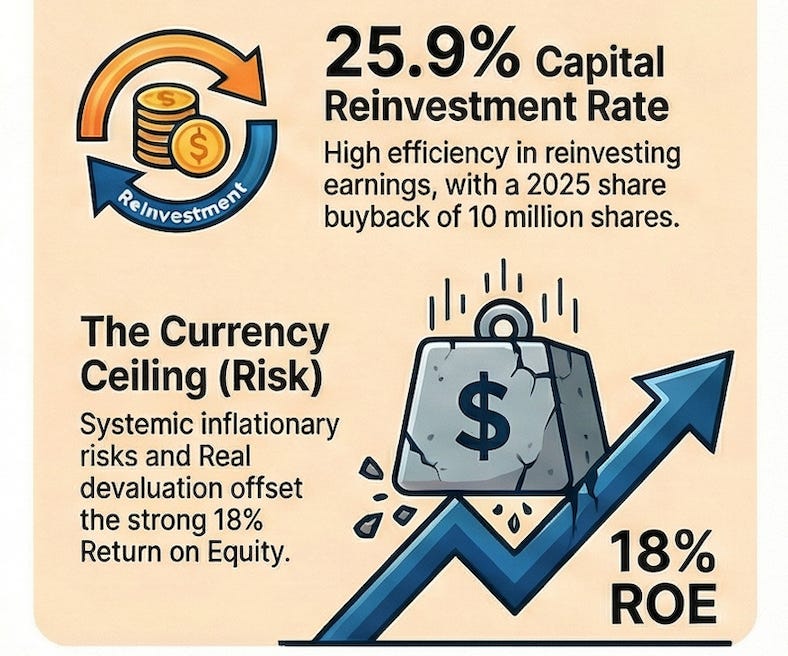
Capital allocation has been disciplined. In 2025, the company executed share buybacks of approximately 10 million shares at $3.22 per share. Critically, this was described as an accretive purchase, meaning management bought back shares below intrinsic value. This is textbook Buffett wisdom: repurchase shares when selling below intrinsic value.
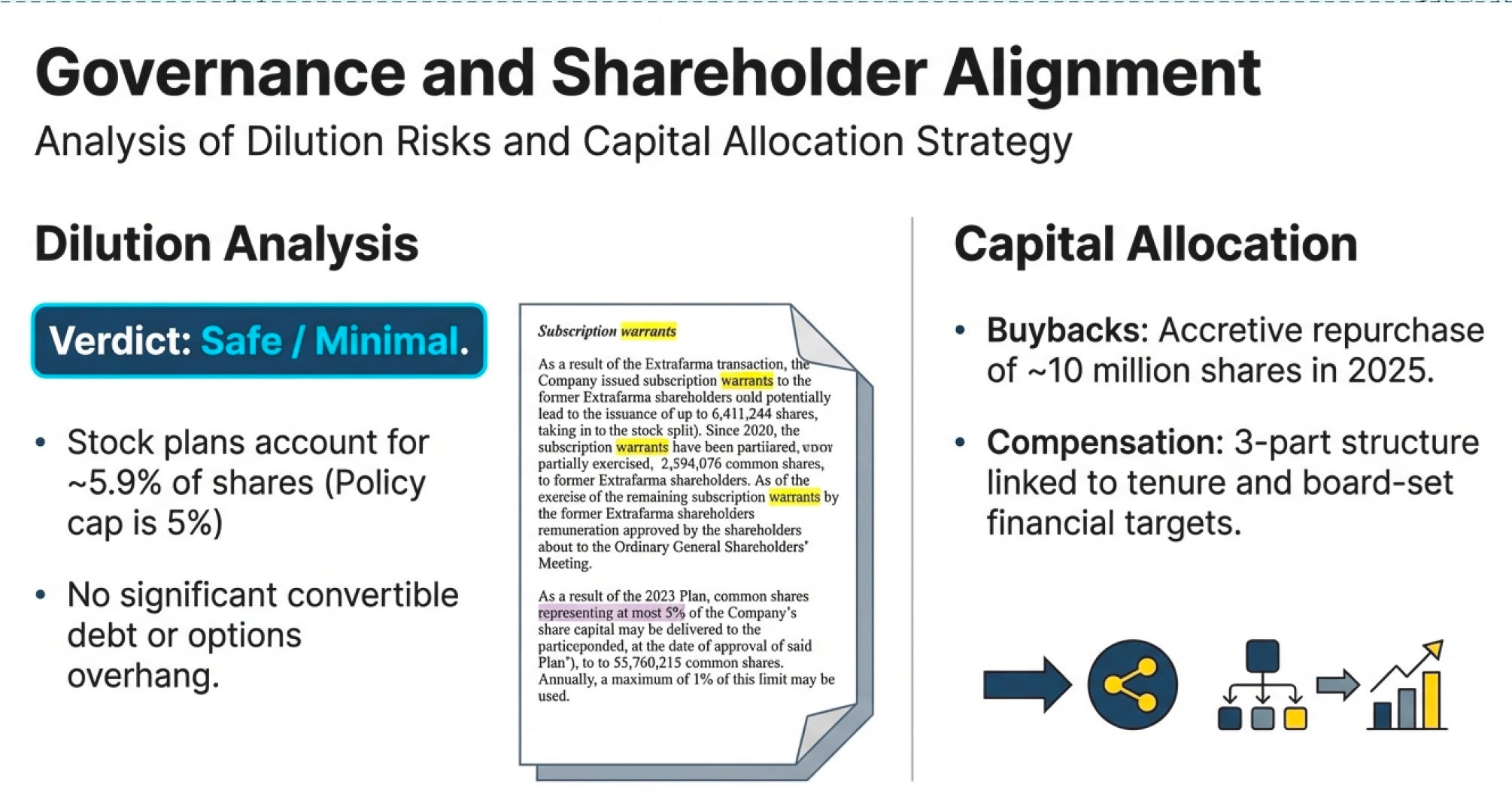

The dilution policy is equally shareholder-friendly. Outstanding stock plans amount to approximately 67 million shares out of 1,117 million total, which is 5.9%. Crucially, the company commits to no more than 5% total dilution. This discipline protects shareholder interests. Management is not freely printing shares to compensate themselves.

The remaining subscription warrants from former Extrafarma shareholders could potentially lead to issuance of up to 3,006,641 additional shares worth approximately $9.2 million USD, which is nominal relative to the $5.16 billion market cap.
The Verdict: High Certainty on Business Quality
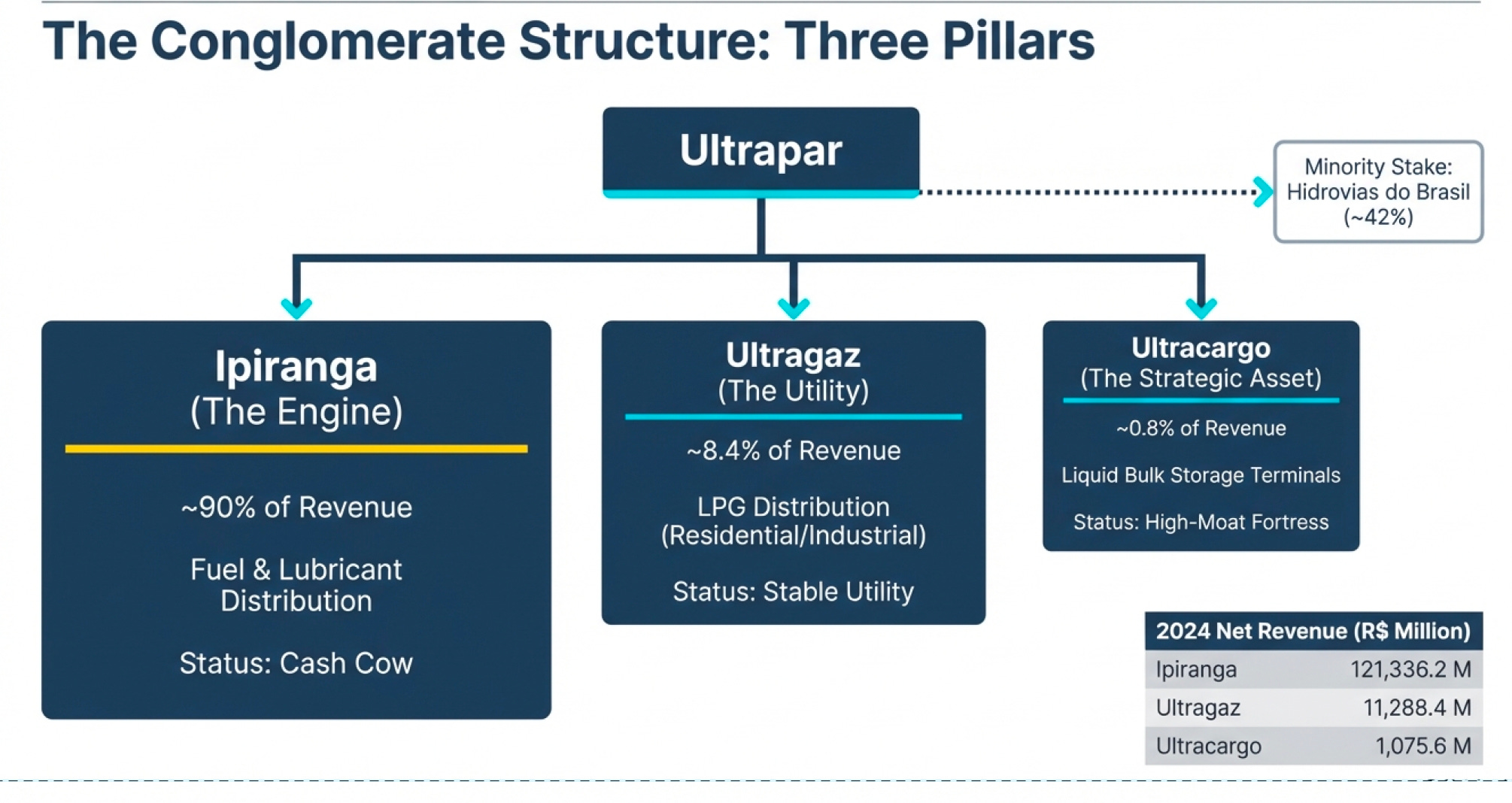
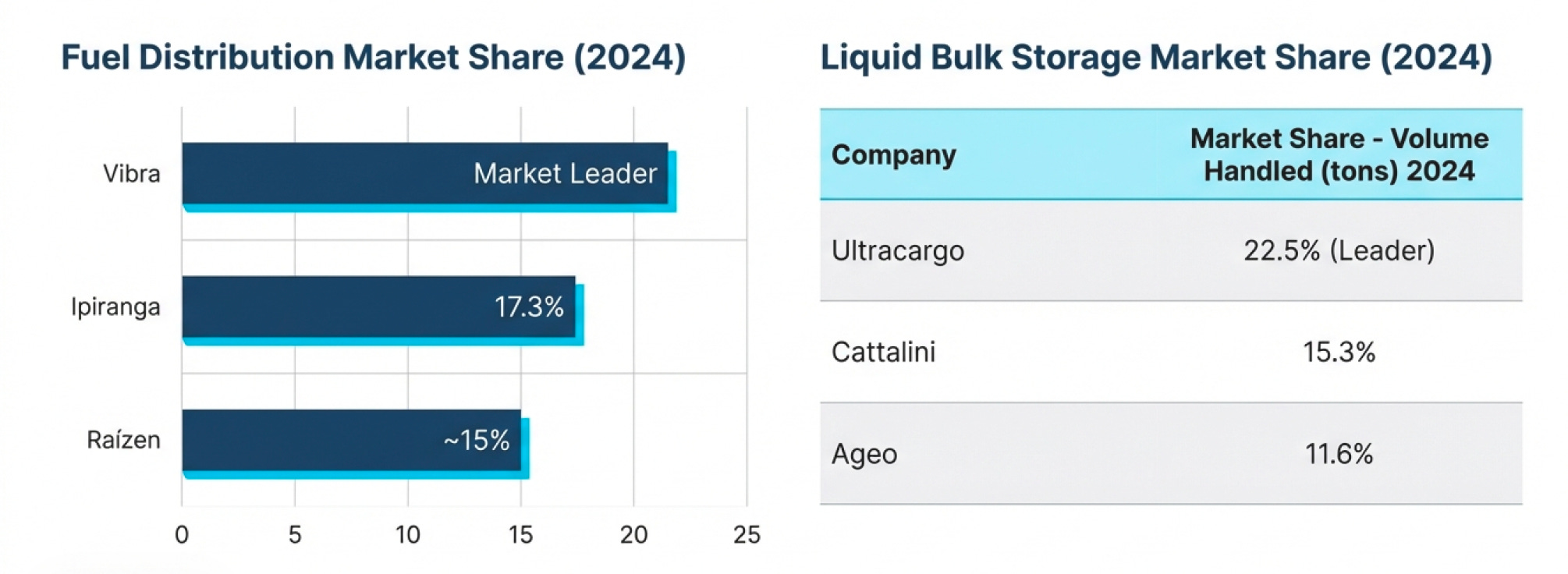
How certain am I that Ultrapar’s business will continue generating strong returns? Quite certain. The company has genuine competitive moats through infrastructure positioning, operates in a regulated industry with structural barriers to entry, has demonstrated management discipline in capital allocation, and benefits from Brazil’s unique flex-fuel pricing dynamics that reduce volatility.
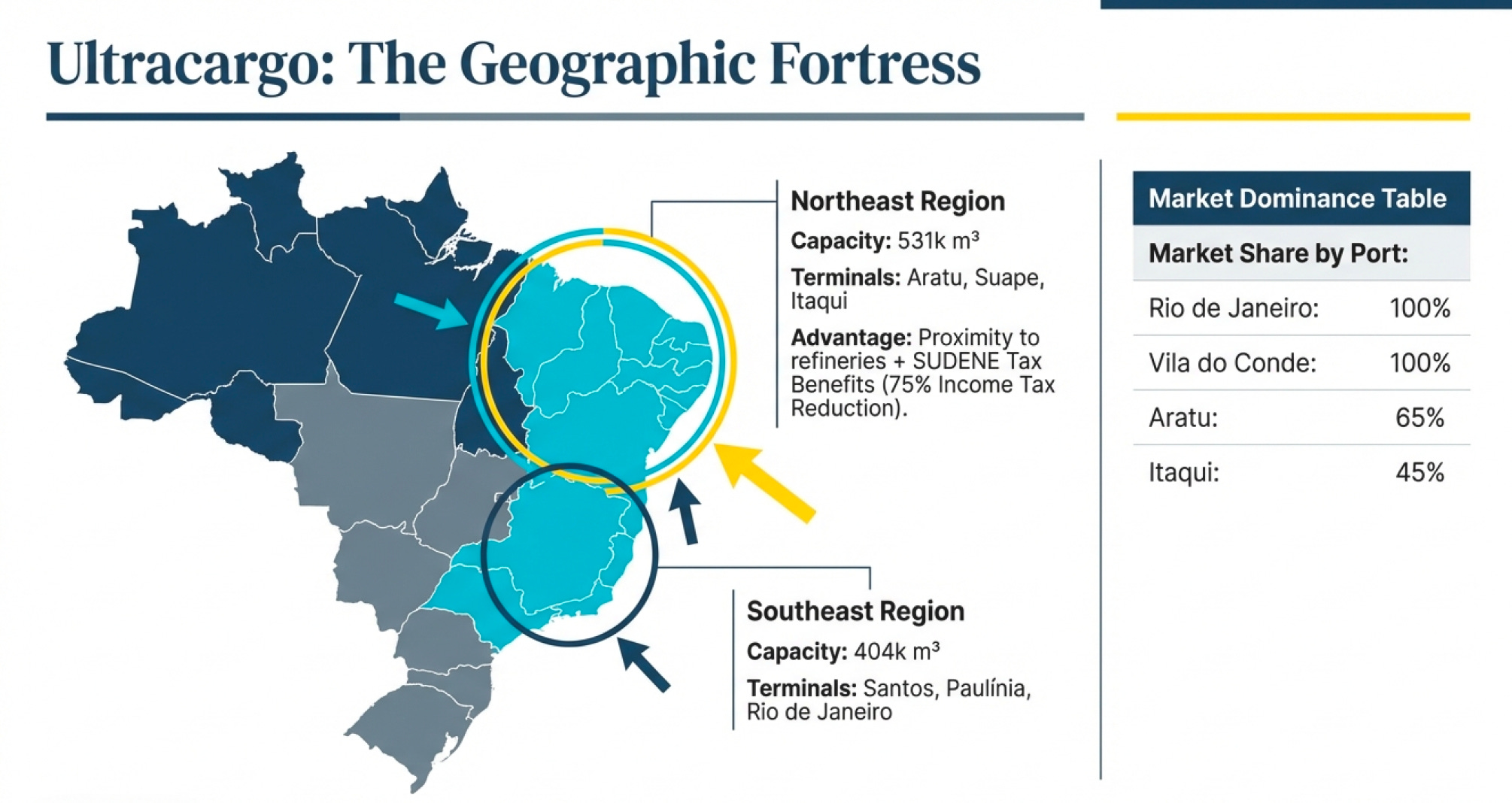
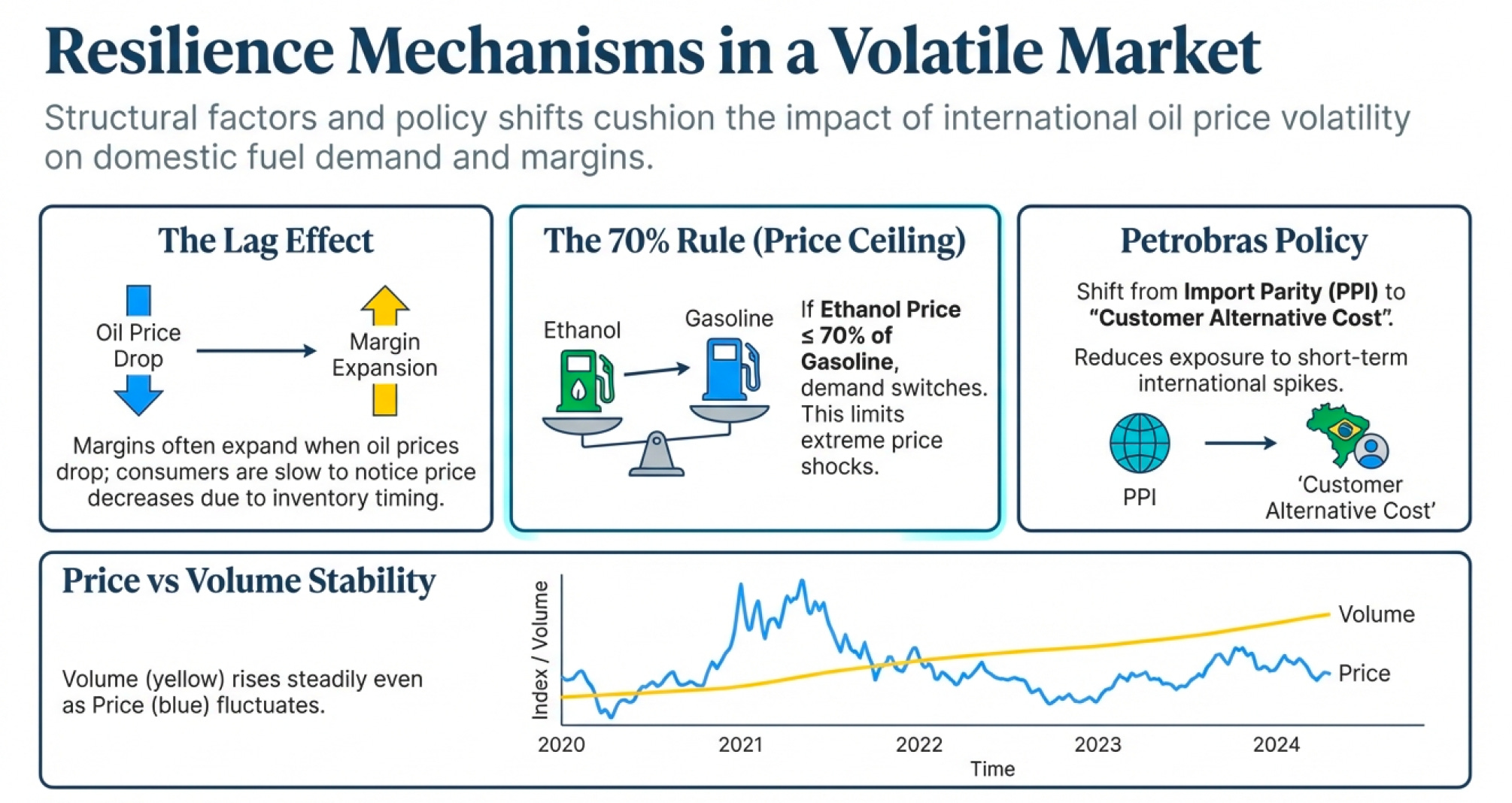
The risks that exist - competition from Vibra and Raizen, long-term EV adoption, Petrobras supply changes - are either long-dated, industry-wide, or manageable through scale advantages. On the second question about business quality and execution certainty, Ultrapar scores well. The company will likely continue performing.
But business quality is not the same as investment quality. Which brings us to question three.
Question 3: How Long Till You Get Them Out? (The Deal-Breaker)
This is where the Ultrapar investment thesis collapses. Not because the company is flawed, but because of a fundamental issue that has nothing to do with the business itself: currency risk.
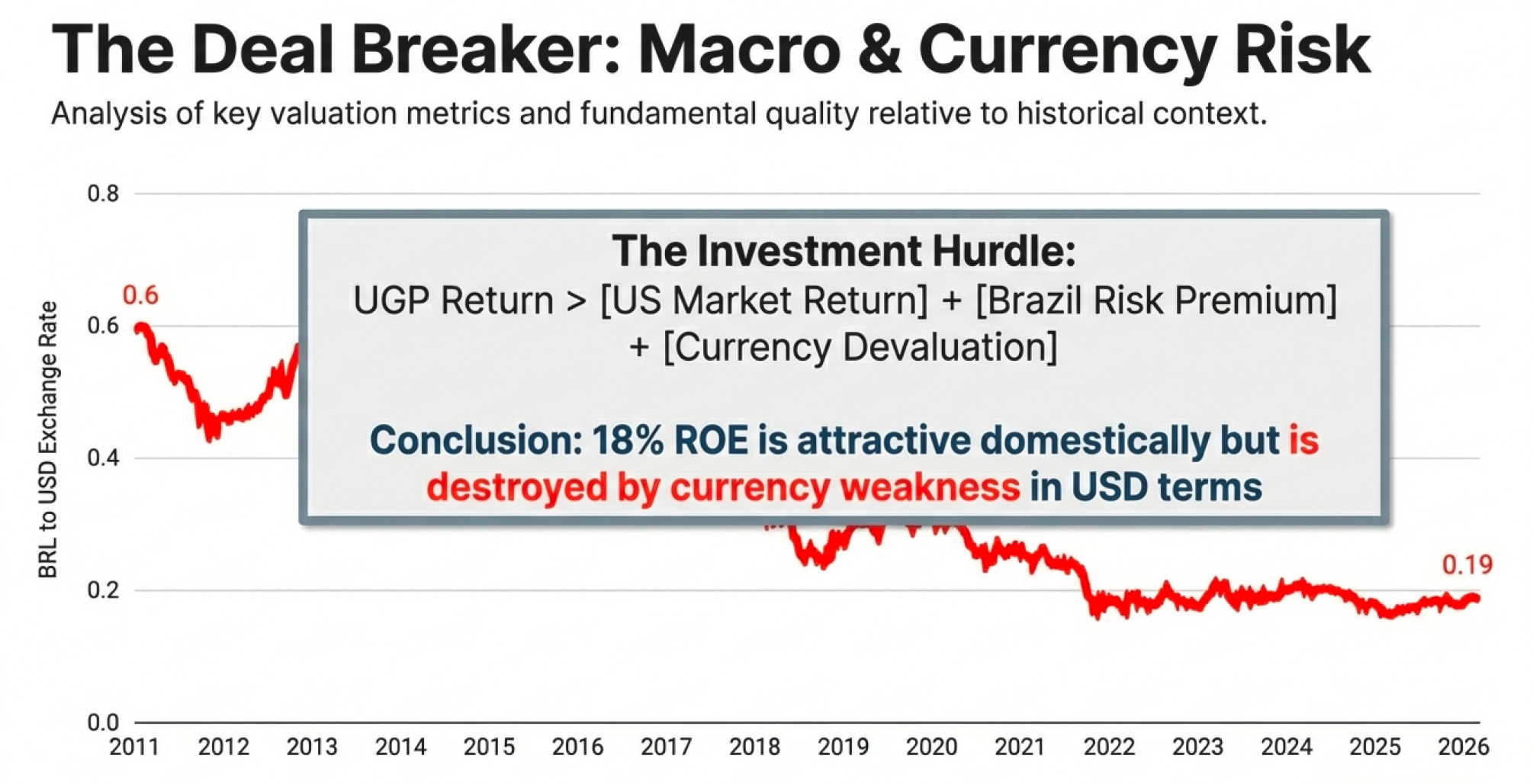
The Currency Problem: Growth That Evaporates
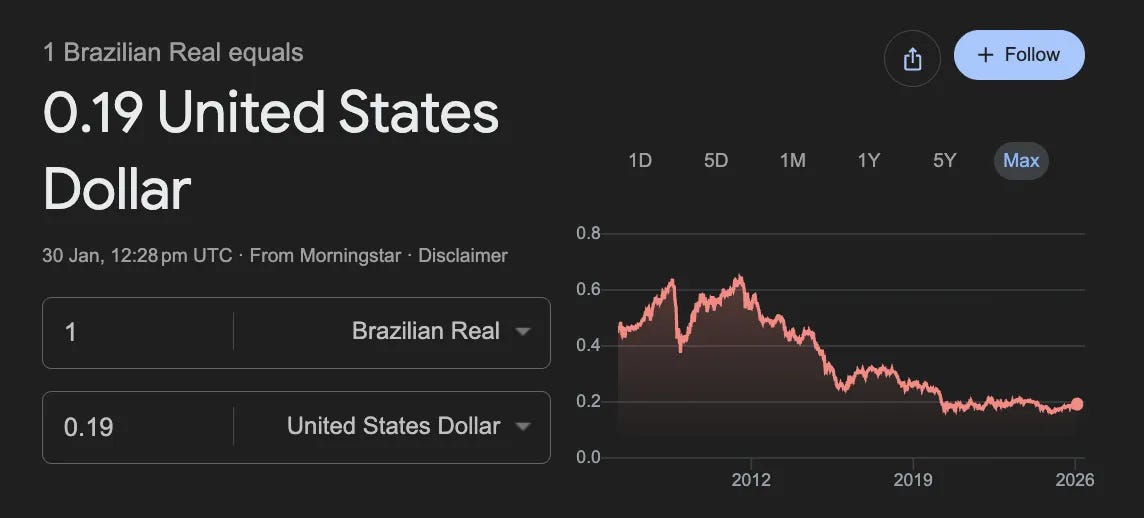
Here is the uncomfortable truth that makes all those attractive metrics significantly less attractive: Ultrapar conducts substantially all its business operations in Brazilian Reais. While the company has hedged its U.S. dollar debt, the far larger risk is the depreciation of operational cash flows denominated in Reais.
To understand why this matters, we need to grasp a concept that often gets lost in Excel spreadsheets: when you invest in a foreign company, you are not just betting on the business. You are betting on the currency.
Let us say Ultrapar grows earnings at 8% annually in Real terms, a perfectly respectable growth rate. But if the Brazilian Real depreciates 5% annually against the U.S. dollar, your actual return as a dollar-based investor is only 3% (8% minus 5% equals 3%). That 18% ROE suddenly does not look so impressive when 5-6% of it evaporates in currency translation every single year.
This is not theoretical speculation. This is Brazil’s documented historical pattern.
Brazil Inflation Reality: The Numbers Do Not Lie
Brazil has a well-documented history of currency instability and high inflation. Let us look at the recent data that should terrify any dollar-based investor:
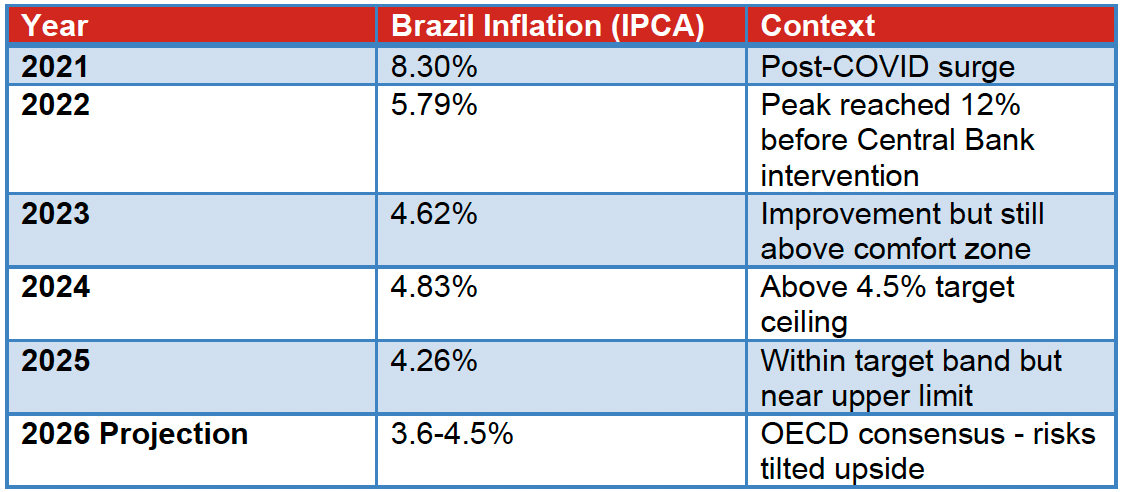
Brazil’s Central Bank targets 3.0% inflation with a tolerance band of 1.5-4.5%. As of December 2025, inflation came in at 4.26%, within the target band but notably near the upper limit. This might seem acceptable until you examine the trajectory:
2022 saw inflation PEAK at 12% before aggressive Central Bank intervention brought it down
The Central Bank raised rates to 11.25% in November 2024, with further increases to 11.75% projected for early 2025
Despite rate hikes, inflation expectations remain unanchored - market participants do not fully believe inflation will return to the 3% target
Housing costs rose 6.79% in 2025, education 6.22%, and residential electricity jumped 12.31%
Services inflation shows persistence given strong growth and currency depreciation
The OECD projects inflation will gradually ease to 3.6% by 2026, but explicitly acknowledges inflation risks are tilted to the upside with services inflation potentially proving more persistent than expected.
The Fiscal Time Bomb
The inflation problem is not just cyclical. It is structural, rooted in Brazil’s deteriorating fiscal position. Here are the facts that should keep investors awake at night:
Public debt projected to reach 79.6% of GDP by 2028, up from 76.5% in 2024
Brazil Independent Fiscal Institute estimates primary surpluses of 2.4% of GDP are needed for debt stabilization, requiring what they explicitly describe as inconceivable spending cuts
The government committed to a fiscal framework targeting budget surplus by 2026, but recent measures have expanded spending beyond existing fiscal rules
Automatic backward-looking price indexation maintains pressure on social expenditures, requiring further squeezes of discretionary spending
The Brazilian Real has depreciated over 13% against the U.S. dollar in 2024, with currency weakness directly fueling inflation through higher import costs
EFG International warns: Uncertainty over fiscal management could pose headwinds to the central bank effort to control inflation and stabilise the currency. Any perception of fiscal laxity or failure to meet fiscal targets can trigger Real depreciation and increased inflationary pressures.
Read that again. The fiscal situation is so precarious that market PERCEPTION of failure can trigger currency crises and inflation. This is not a stable macroeconomic environment. To put this into context:
During the COVID-19 crisis, while the price of a barrel fell, the Brazilian Real depreciated significantly against the dollar in 2020. This currency devaluation offset the savings from the lower oil price, making imported fuel (or locally produced fuel priced at international parity) more expensive in local currency. This nearly 23% nominal depreciation over the year was driven by a combination of aggressive monetary easing, fiscal instability, and the dual shocks of the COVID-19 pandemic and falling oil prices.
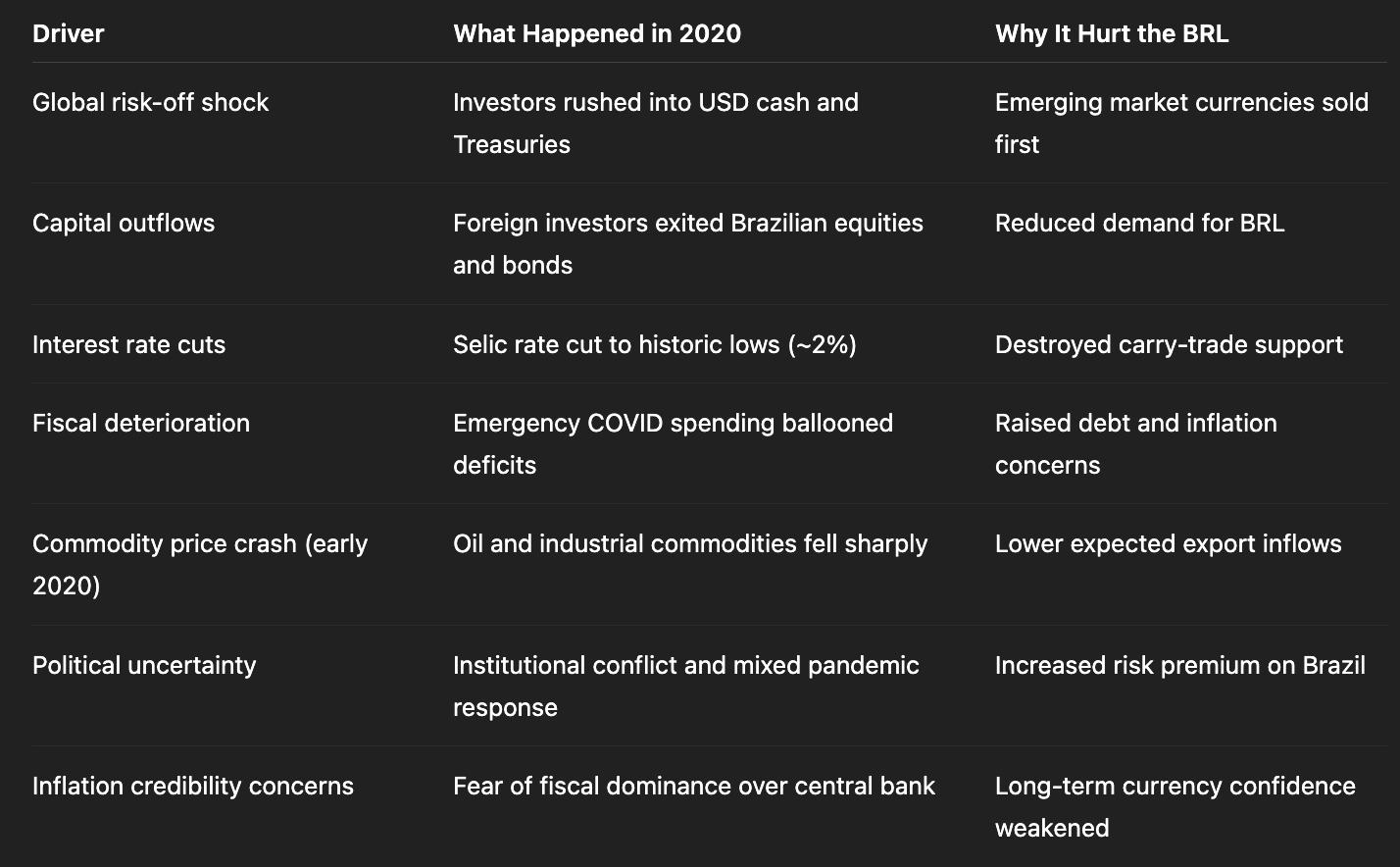
The table above shows the exact causes of what happened, and it just seems like the country itself is structurally at a disadvantage. This economic uncertainty is something which I personally do not wish to speculate in nor have the expertise to.
The Purchasing Power Erosion
To grasp the magnitude of Brazil’s currency problem, consider this startling statistic that puts everything in perspective: R$ 100 in 1980 would require R$ 62,499,778,978,461.70 in 2024 to have equivalent purchasing power.
That is not a typo. Let me write it out: sixty-two TRILLION, four hundred ninety-nine billion Reais.
The Brazilian Real experienced an average inflation rate of 85.39% per year between 1980 and 2024. While the currency has stabilized dramatically since the 1994 Real Plan, the structural factors driving inflation have not disappeared. They have merely been suppressed through aggressive monetary policy that cannot be sustained indefinitely without crushing economic growth.
Even the good inflation years of 4-5% compound viciously over time. At 4.5% annual inflation, purchasing power halves every 16 years. At 5%, it halves every 14 years. This is not theoretical hand-waving. This is mathematical certainty.
Why This Destroys the Investment Case
Here is the cold arithmetic that makes Ultrapar uninvestable despite its attractive fundamentals. Pay close attention to this table, because it encapsulates everything:

Even if Ultrapar executes PERFECTLY - growing revenue 6-8% annually, maintaining its 18% ROE, defending market share, expanding margins, optimizing the franchise network, everything goes right - a U.S. dollar-based investor might see total returns of 0-2% after currency depreciation. That is effectively zero real return once you account for U.S. inflation.
Compare this to simply buying an S&P 500 index fund with a historical real return of 7% annually, or even a 10-year Treasury bond yielding 4-5%. Why would any rational investor accept Brazilian political risk, fiscal uncertainty, currency volatility, and business execution risk for returns you can beat with U.S. government bonds?
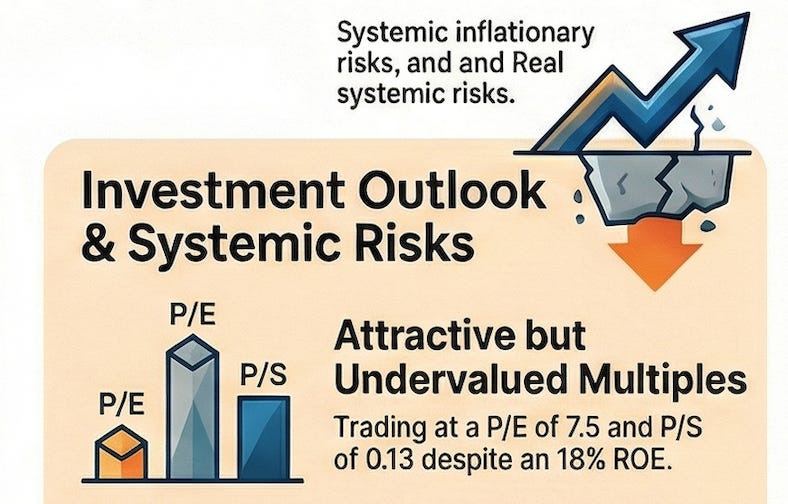
The analysis states it plainly: The growth rate of the company is being offset by potential systemic inflationary risks, weakening of currency, thereby reducing the present value of the capital we are investing. For the investment to make sense, the company must generate a return not just above the general US market performance but also the risk premium due to the inflationary pressures of the Brazilian market.
At current ROE of 18% and a capital reinvestment rate of about 25%, better opportunities exist that do not require you to bet against Brazil’s fiscal trajectory.
The Brazil Will Outperform Speculation
Some might argue: But what if Brazil’s economy strengthens? What if fiscal reforms succeed? What if the Real appreciates?
This is possible. Brazil has surprised before. The 1994 Real Plan was a triumph of economic policy that tamed hyperinflation. Brazil could surprise again.
But investing based on macroeconomic speculation violates fundamental value investing principles. As Buffett says, I never have an opinion on the market because it would not be any good and it might interfere with the opinions we have that are good.
The problem with betting on Brazilian macroeconomic improvement is that you are adding an additional layer of uncertainty on top of business risk. Not only must Ultrapar execute well, which I believe it will, but Brazil must ALSO reverse decades of fiscal indiscipline, stabilize currency, overcome structural inflation drivers, and maintain political will for painful reforms.
That is speculation, not investing.
The analysis notes: Although there is a potential for Brazil to outperform, that is still very speculative and carries an additional risk which I personally do not understand.
Munger’s principle applies here: If you do not understand it, do not invest in it. I understand Ultrapar’s business. I understand its competitive advantages. What I do not understand, and what no one can reliably predict, is whether Brazil’s currency will strengthen or continue weakening over the next 5-10 years. Since that uncertainty eliminates most of the investment returns, it is a pass.
The Discount Rate Problem
Let us approach this from another angle: discount rates. When valuing any business, you (THEORETICALLY) discount future cash flows back to present value using a discount rate that reflects the risk-free rate plus an appropriate risk premium.
For a U.S.-based business, you might use a 7-10% discount rate, roughly 4% risk-free rate plus 3-6% equity risk premium. But for Ultrapar, you need to add:
Country risk premium for Brazil: approximately 3-4%
Currency depreciation: approximately 3-4%
Inflation differential: approximately 2-3%
Political and fiscal uncertainty: approximately 1-2%
Suddenly, your discount rate is 16-23%. At those rates, even a fantastic business generating 18% ROE barely creates value. The hurdle is simply too high.
This is the cruel mathematics of emerging market investing: the very factors that make valuations look cheap, low P/E ratios, exist precisely because the required returns are so high that most businesses cannot clear the bar even with strong fundamentals.
The Verdict: The Birds Are in a Depreciating Cage
How long till you get the birds out? That is the wrong question. The right question is: What is the point of getting birds out if they are worth progressively less each year you hold them?
The Brazilian Real’s structural weakness transforms what should be a compounding machine into a treadmill. You are running hard just to stay in place. For a dollar-based investor, the juice simply is not worth the squeeze.
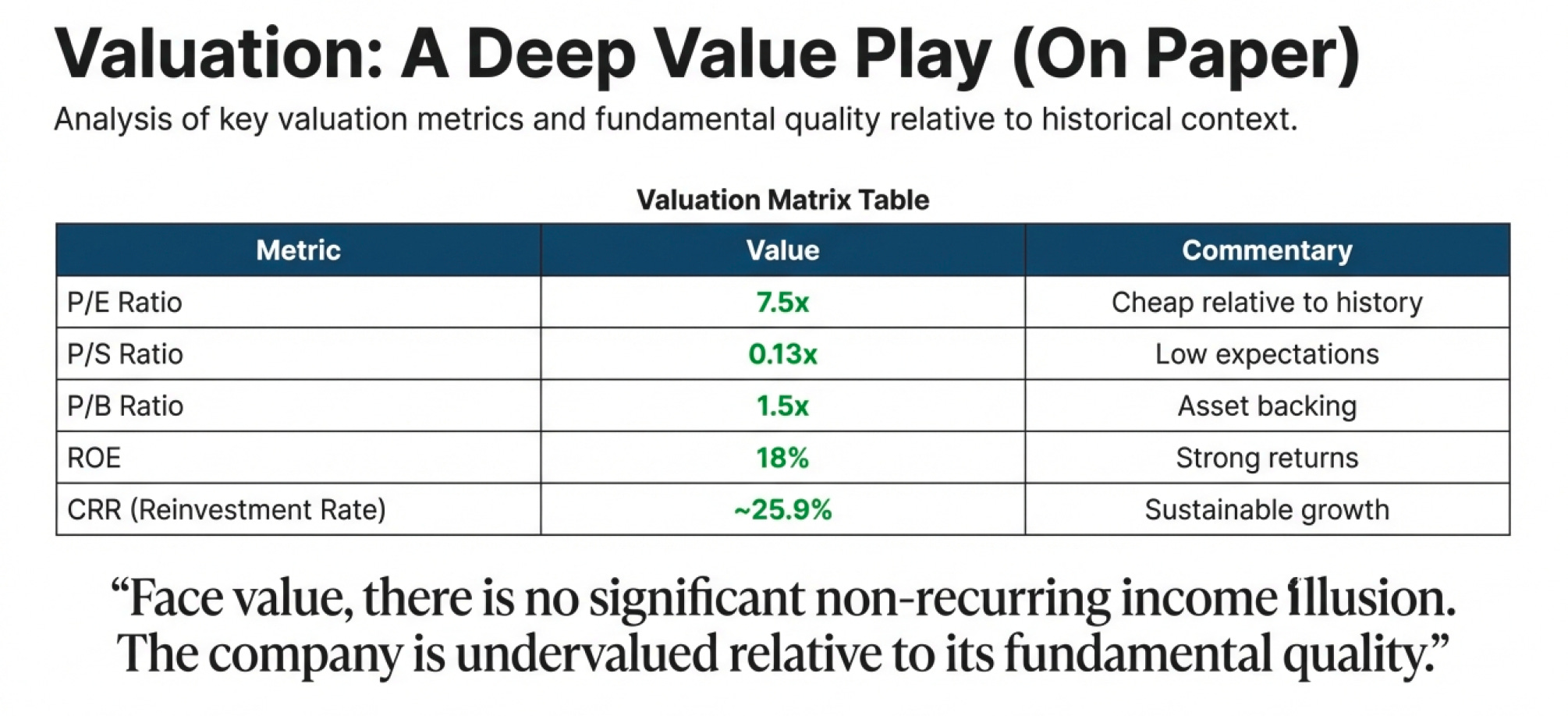
Ultrapar Participacoes S.A. is a well-run business with genuine competitive advantages, strong market positioning, disciplined management, and attractive valuations on surface metrics. The P/E of 7.5, ROE of 18%, and dominant infrastructure assets would make this an immediate buy in almost any other currency denomination.
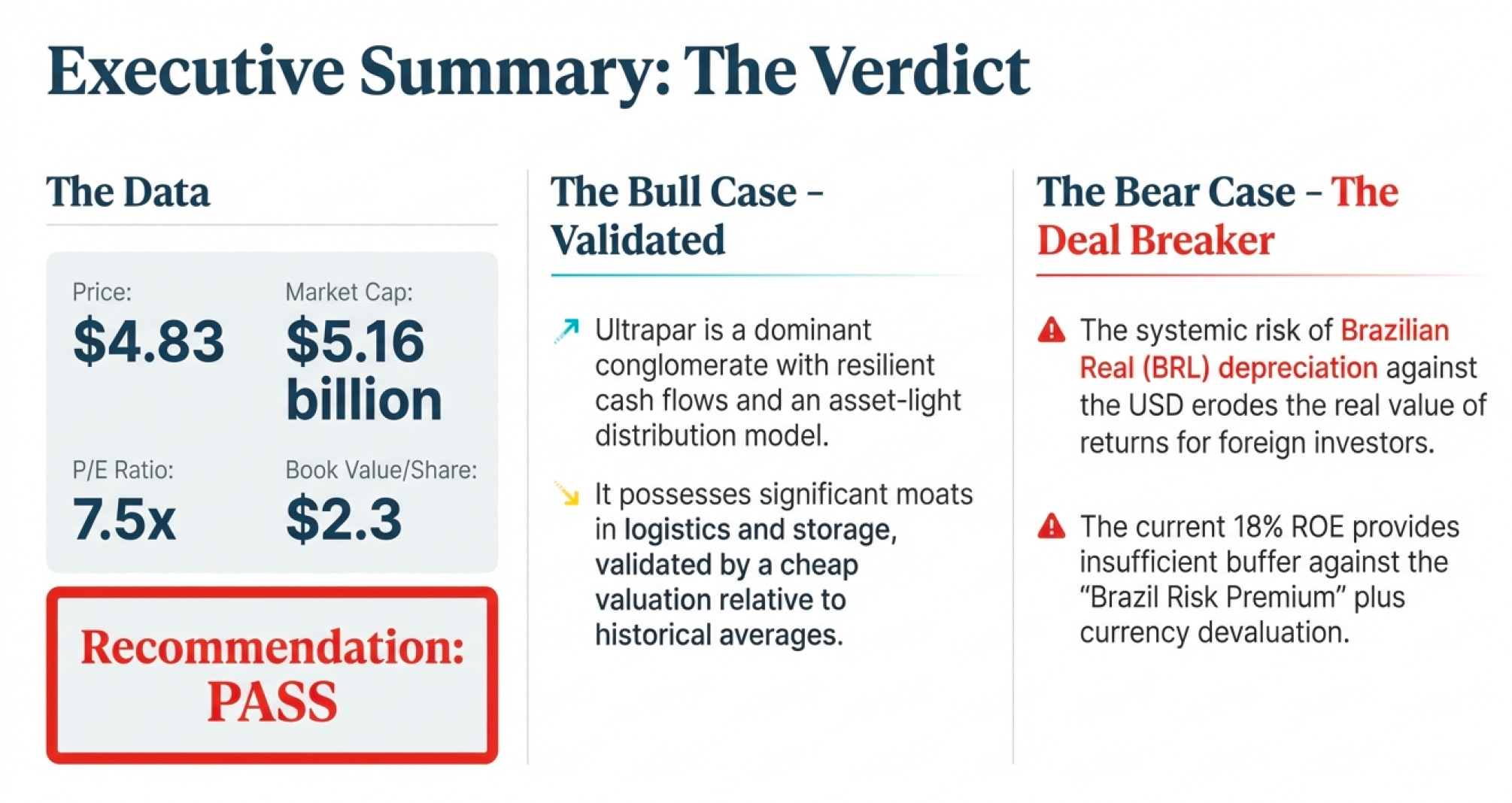
But investing is not about finding good businesses. It is about finding good businesses at prices and in circumstances where you can actually make money as a shareholder. The three-question framework reveals the problem:
1. How many birds are in the bush?
Many. Ultrapar has strong fundamentals, sustainable competitive advantages through infrastructure and franchises, consistent revenue growth despite commodity volatility, and an ecosystem model that maximizes customer lifetime value while minimizing customer acquisition costs. The franchise economics are exceptional. The flex-fuel market provides natural price stability. The company executes well.
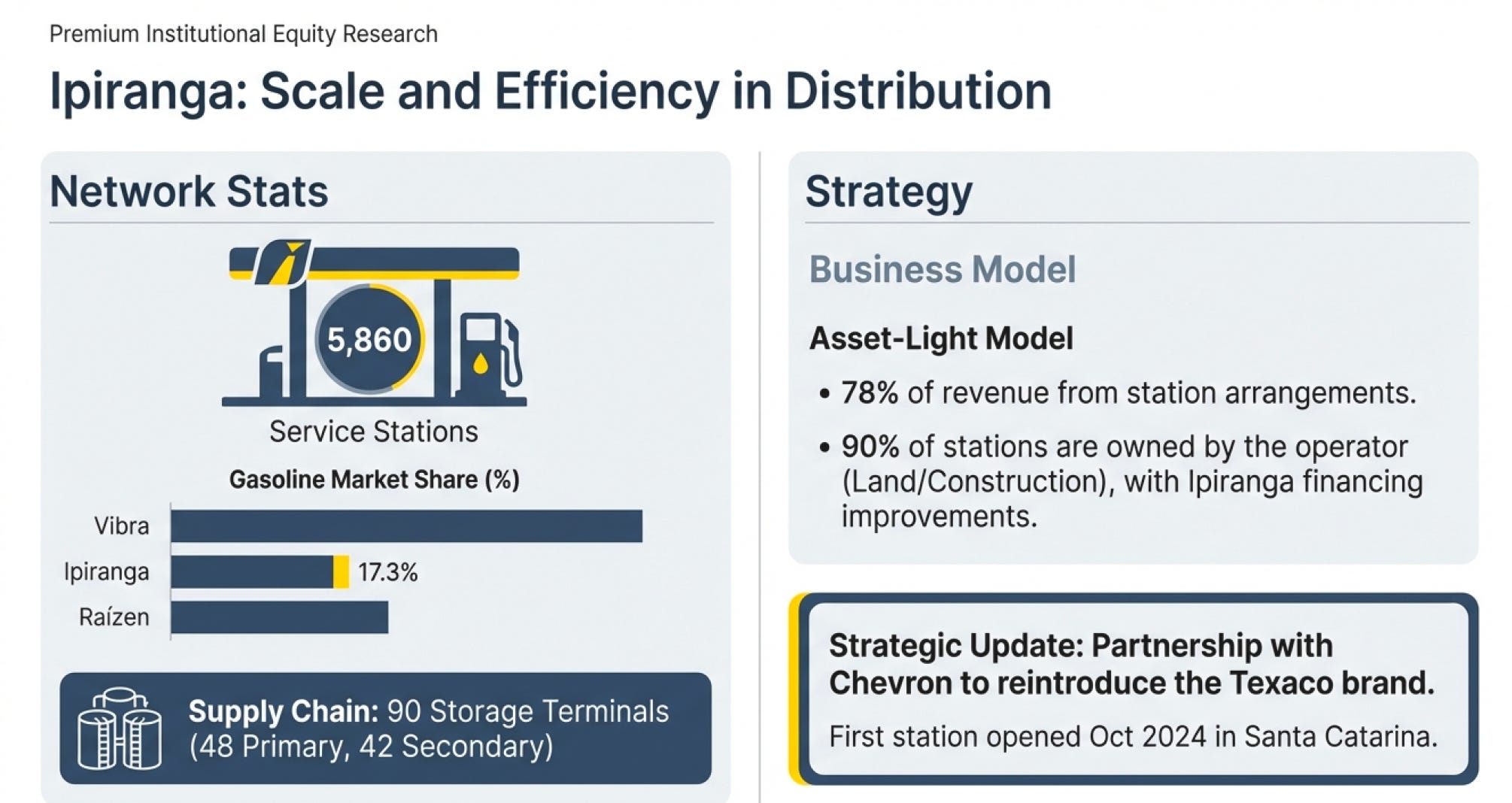
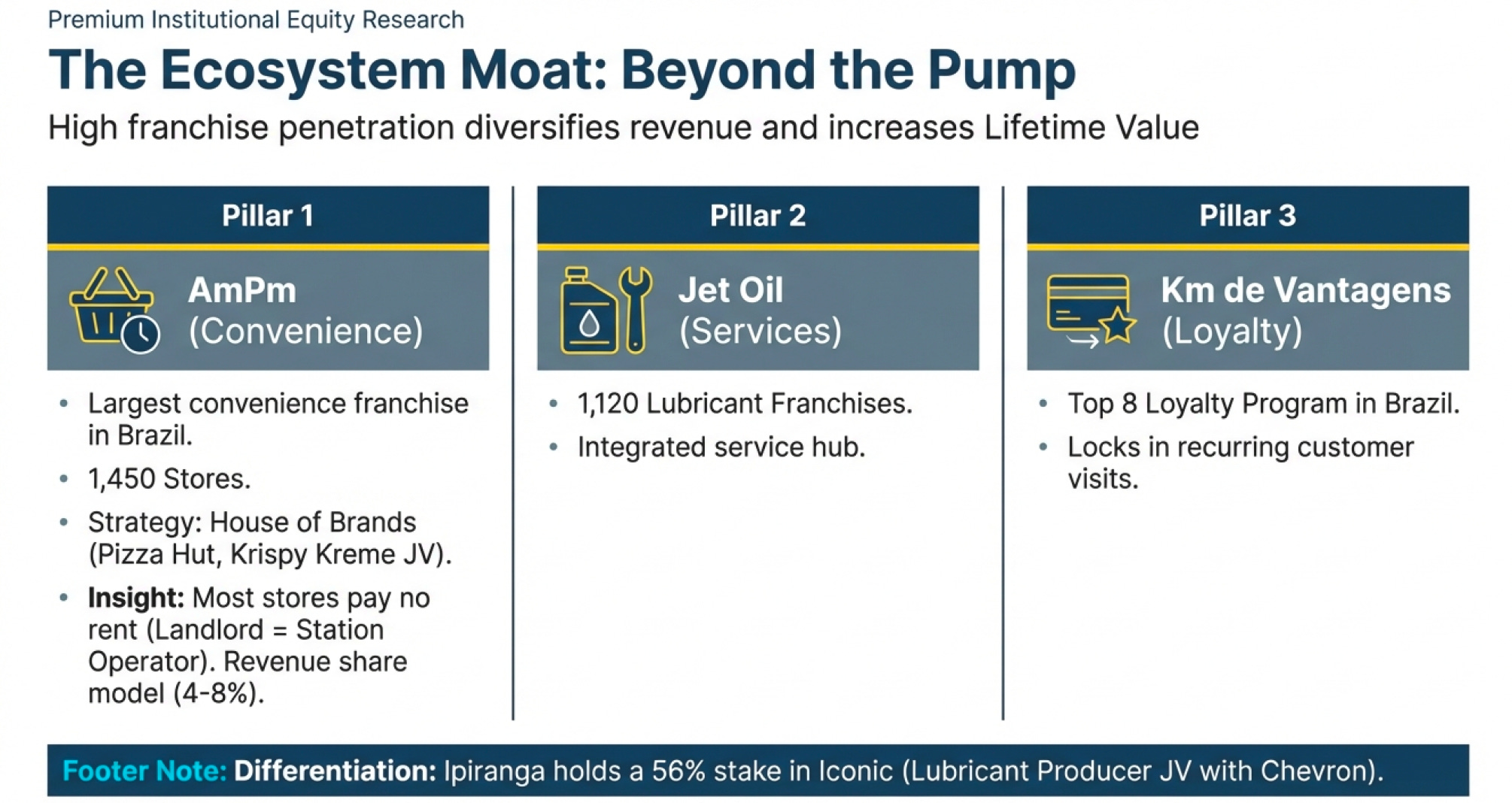
2. How certain are you?
Quite certain. The company operates in a regulated industry with high barriers to entry through ANP authorization requirements, has demonstrated execution capability with disciplined capital allocation including accretive buybacks, maintains a shareholder-friendly dilution policy, and benefits from Brazil’s unique fuel pricing dynamics that reduce volatility. The competitive moats are real and durable. Management is aligned with shareholders.
3. How long till you get them out?
This is where it falls apart. The birds are in a cage that is depreciating 3-5% annually due to Brazilian Real weakness driven by structural fiscal problems and persistent inflation. Even if the business compounds at 6-8% annually in Real terms, currency depreciation and inflation erase most of those gains for dollar-based investors. The net result is 0-2% real returns after accounting for currency translation.
The ultimate lesson here is not about Ultrapar specifically. It is about the importance of understanding all the variables that affect investment returns. Many investors get excited about finding cheap stocks in emerging markets without fully accounting for currency risk, inflation differentials, and country-specific discount rates.
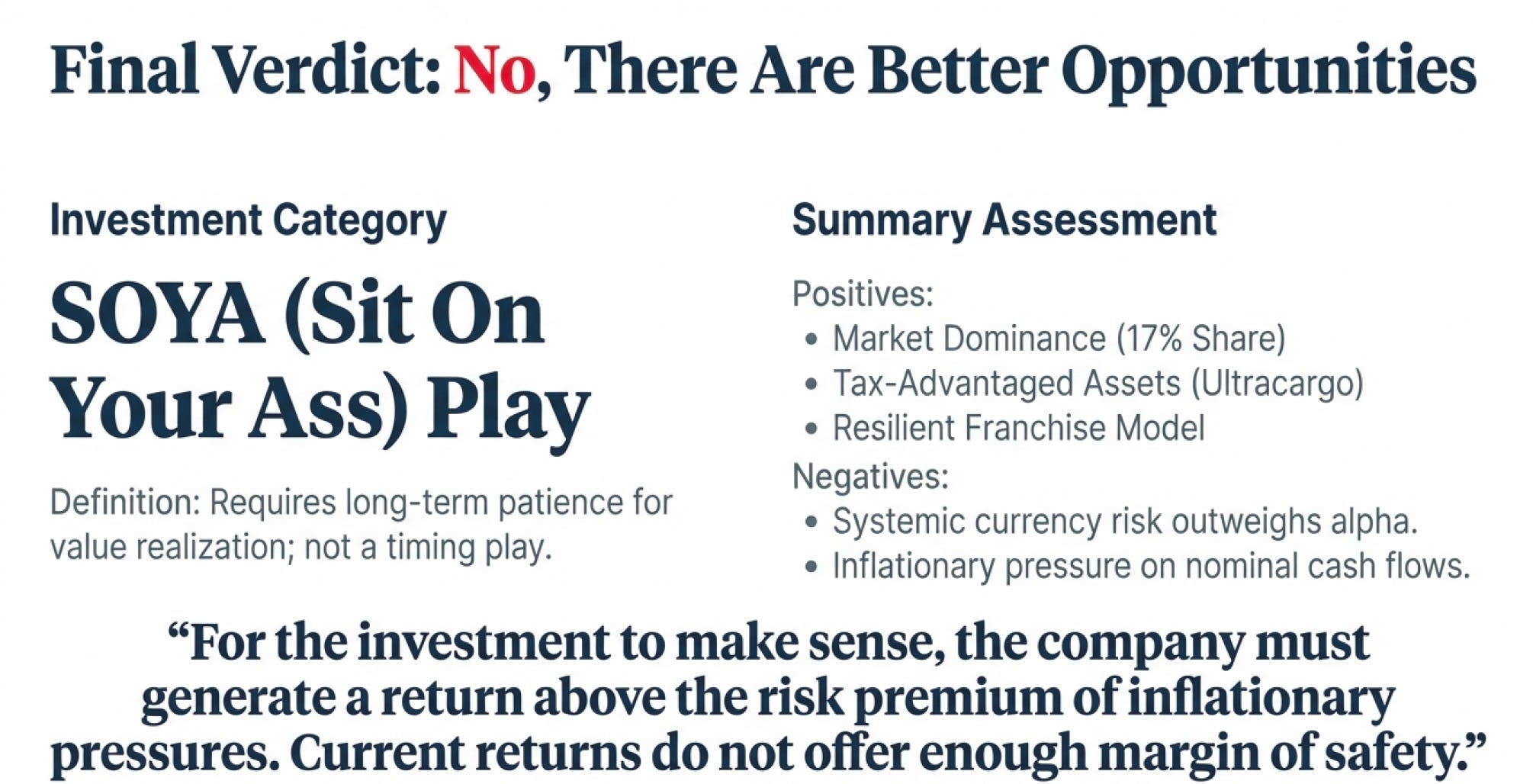
As Munger would say, it is not supposed to be easy. Anyone who finds it easy is stupid. Ultrapar looks easy: great company, cheap valuation, strong moat, good management. But the hard part is recognizing that those surface attractions do not overcome the fundamental structural headwind of currency depreciation.
The analysis concludes: At current ROE of 18% and CRR of about 23%, I see better opportunities because, although there is a potential for Brazil to outperform, that is still very speculative and carries an additional risk which I personally do not understand.
This is investing wisdom distilled to its essence: know what you know, know what you do not know, and only invest when you understand both the business AND the full context in which it operates. Ultrapar fails that test not because the business is flawed, but because the currency context creates a structural headwind I am unwilling to bet against.
Sometimes the best investment decision is deciding not to invest. This is one of those times.