
When a Founder’s Return Isn’t Enough
A story about birds in bushes, certainty in chaos, and the hardest word in investing: “No.”
Date Analyzed: November 18, 2025
Market Cap: ~$1.77B
In March 2024, Kevin Plank returned as CEO of Under Armour after Stephanie Linnartz stepped down just one year into a three-year turnaround plan. The stock was trading around $4. The founder was back. Insiders were buying shares at what looked like generational lows. The company was trading below book value. Every contrarian bone in my body wanted to scream “BUY!”

And that’s precisely why I’m writing this article about why I’m not buying.
You see, investing isn’t about finding good stories—it’s about finding good stories with good endings that you can actually predict with reasonable certainty. Under Armour has the first part down cold. It’s the other two that keep me up at night.
Let me explain using a framework that Charlie Munger might have appreciated: three simple questions that, if you can’t answer all three convincingly, should have you running for the hills. Or at least, staying put where you are.
Part I: How Many Birds Are in the Bush?
The Setup: A $4 Stock With $13-19 Dreams
Here’s where Under Armour gets interesting, and I mean really interesting. The company is currently trading at approximately $4.09 per share with a market cap hovering around $1.7 billion. This is significantly lower than the past 5 year average of c.$5.5 billion.

AND…that’s a stunning Price-to-Sales ratio of about 0.4x on trailing twelve-month revenues of $5.1 billion.
To put this in perspective: Nike’s market cap is roughly 2x its current revenue, while Under Armour is selling for about 0.4x. It’s as if the market is saying, “We don’t just doubt your ability to make money—we doubt you’ll even keep making sales.”
But here’s where the story gets spicy. Let’s look at what’s hidden inside this beaten-down stock:
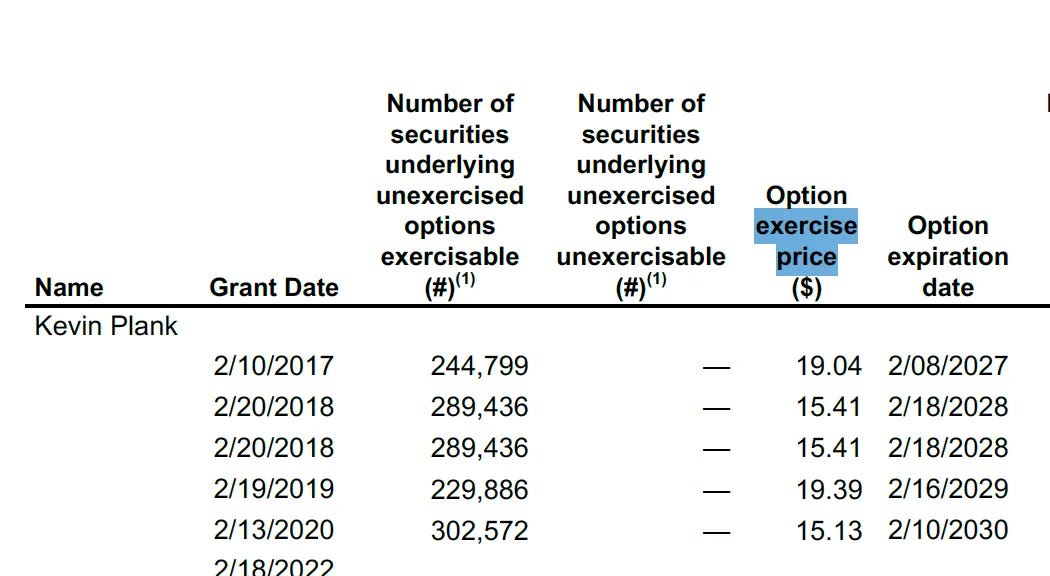
Executive Compensation Structure (The Incentive Archaeology)

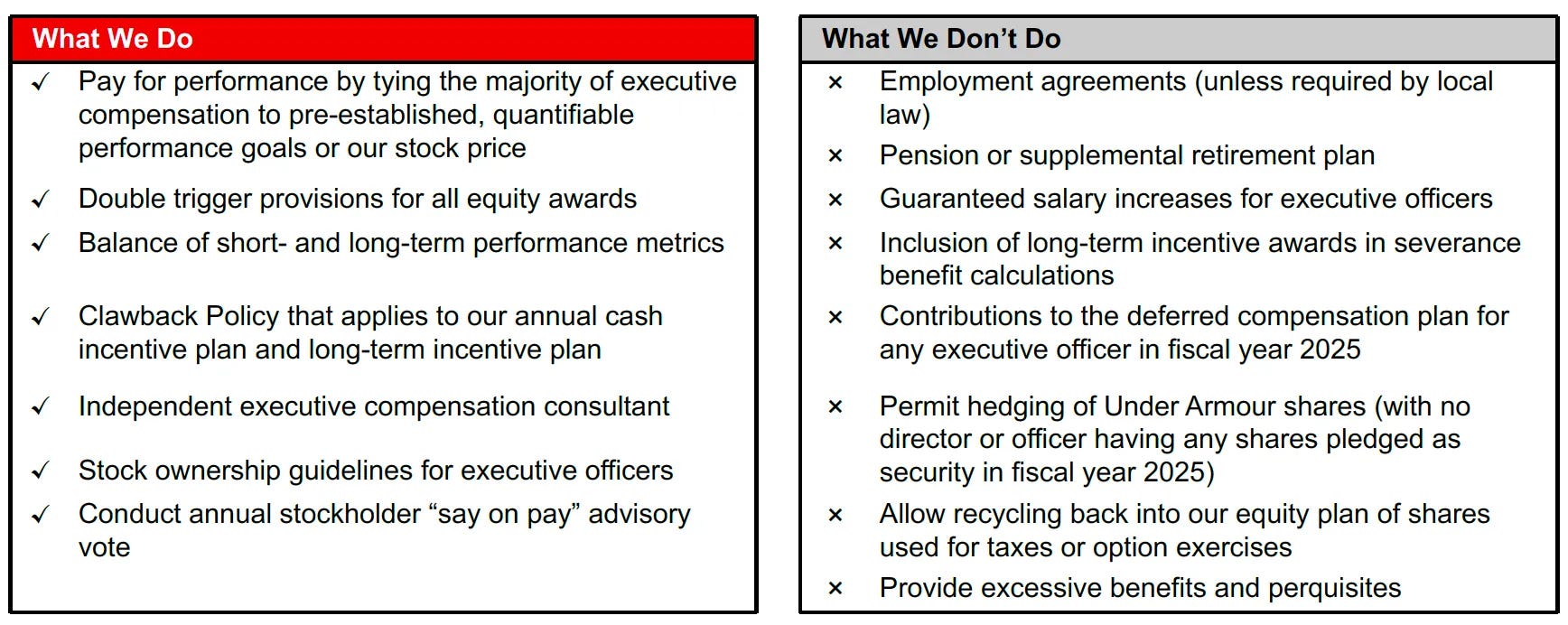
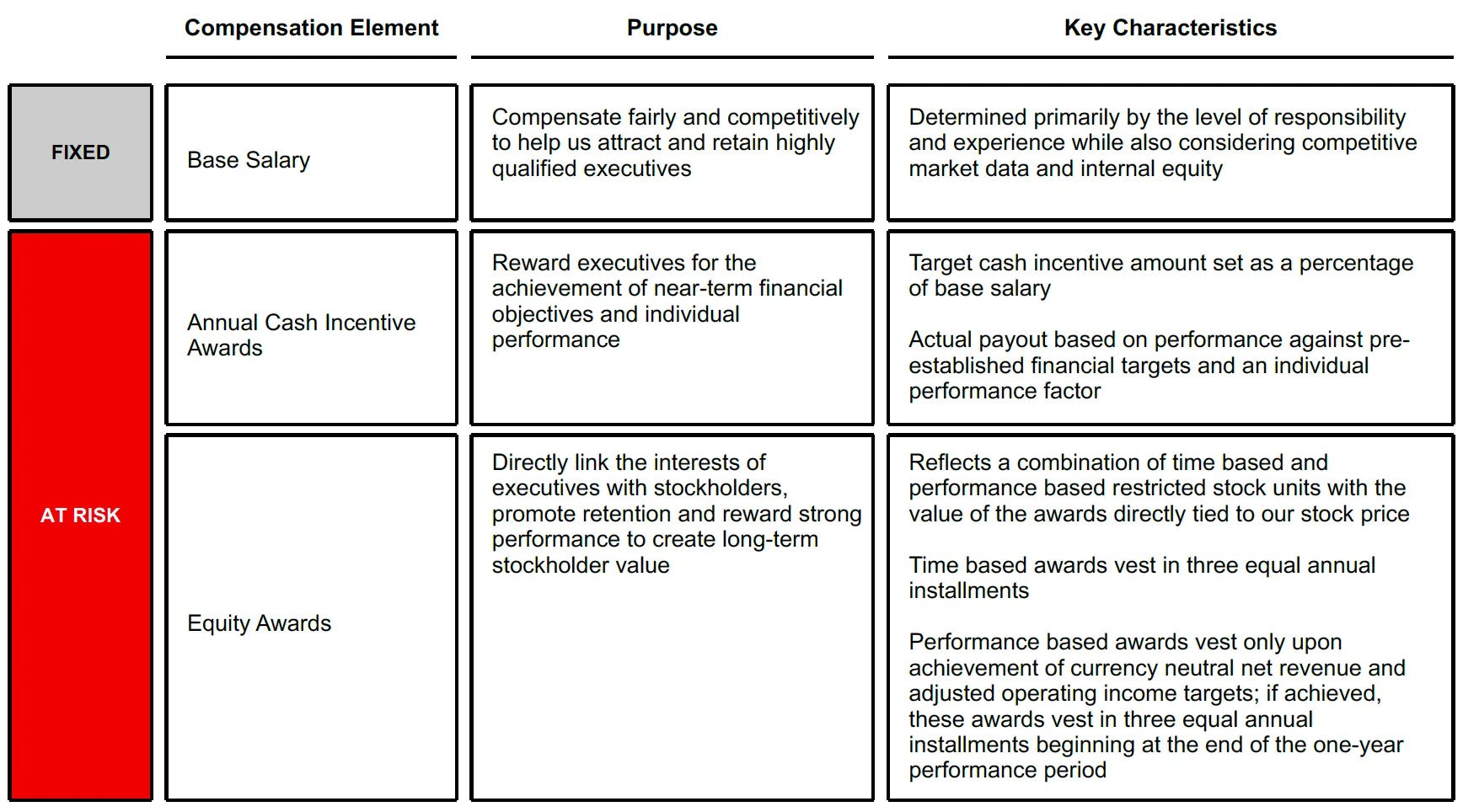
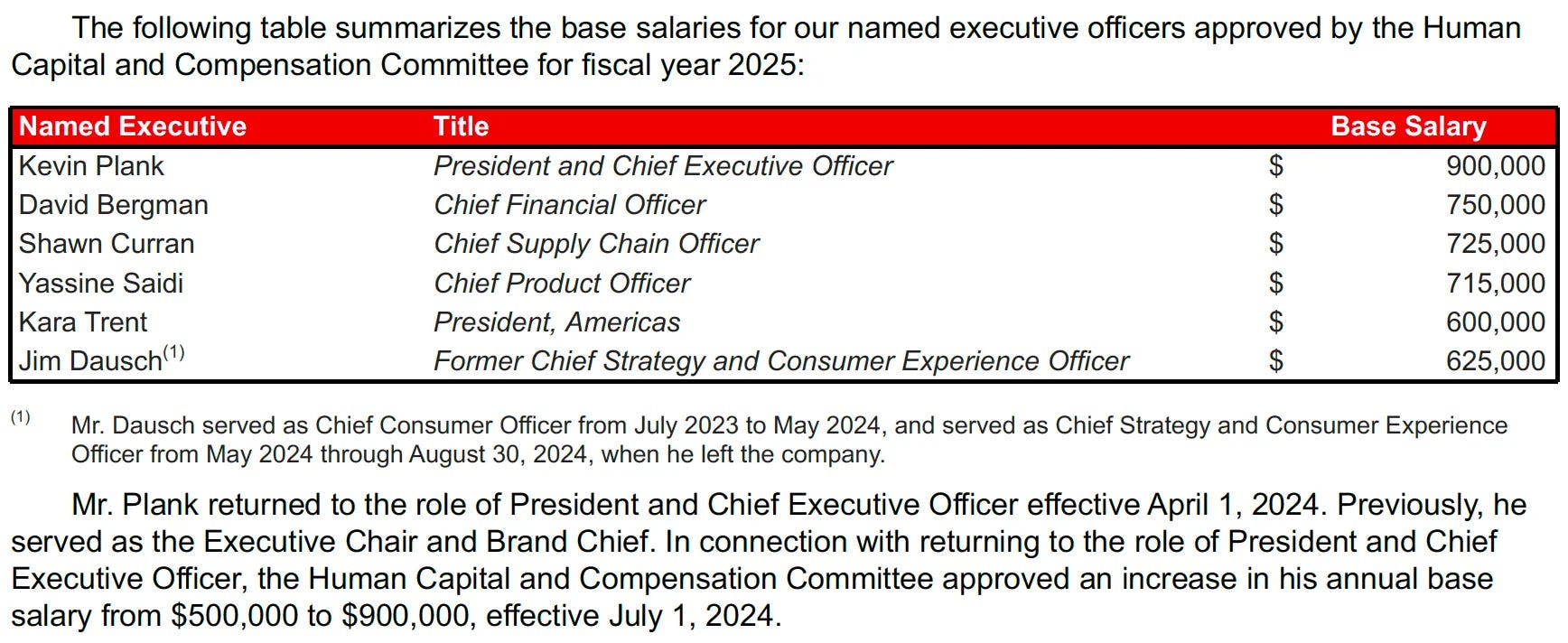
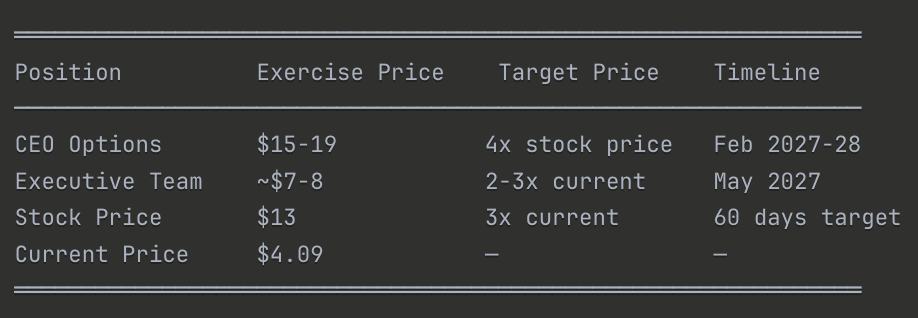
Now, before you accuse me of reading tea leaves in executive compensation tables, consider this: Kevin Plank owns 65% of Under Armour’s voting shares. When a founder with total control grants himself stock options at $15-19, and then returns as CEO (for the second time, mind you), he’s either delusional or he knows something.
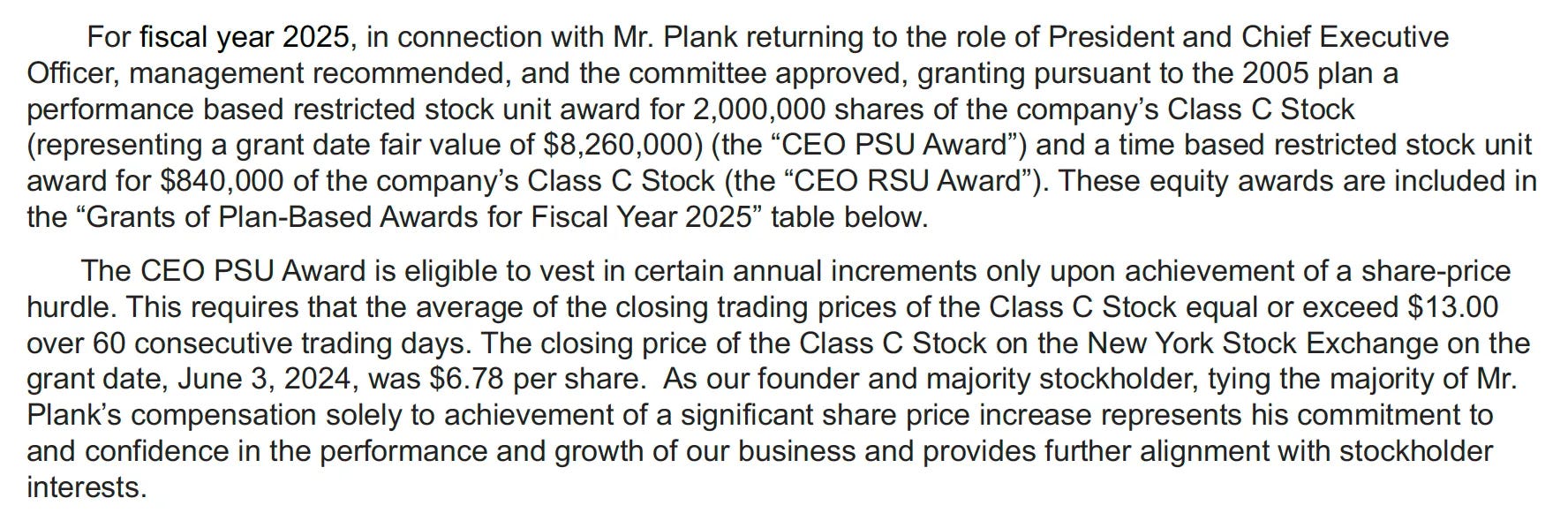
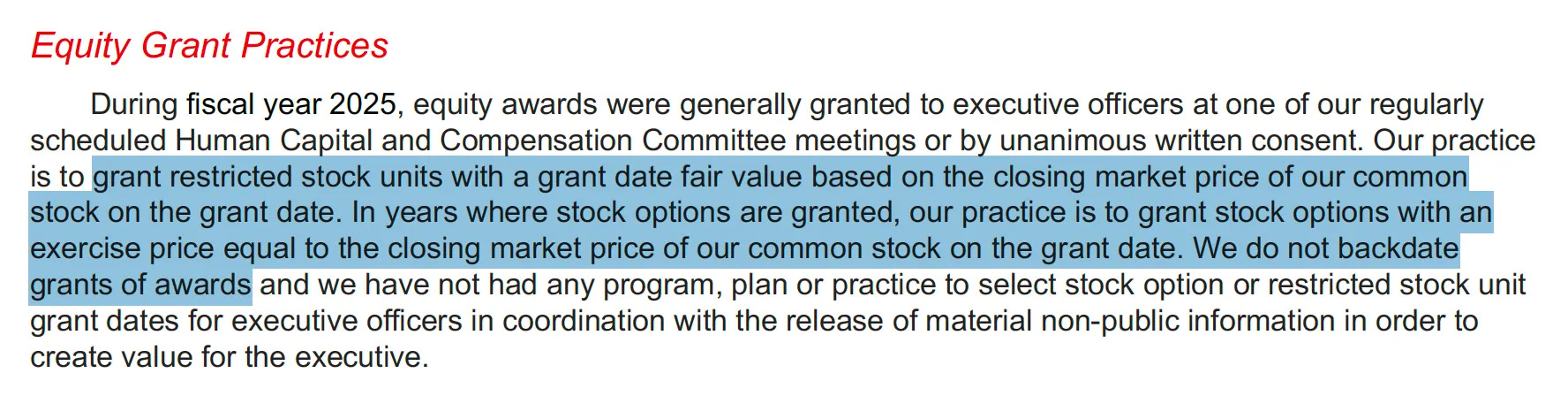
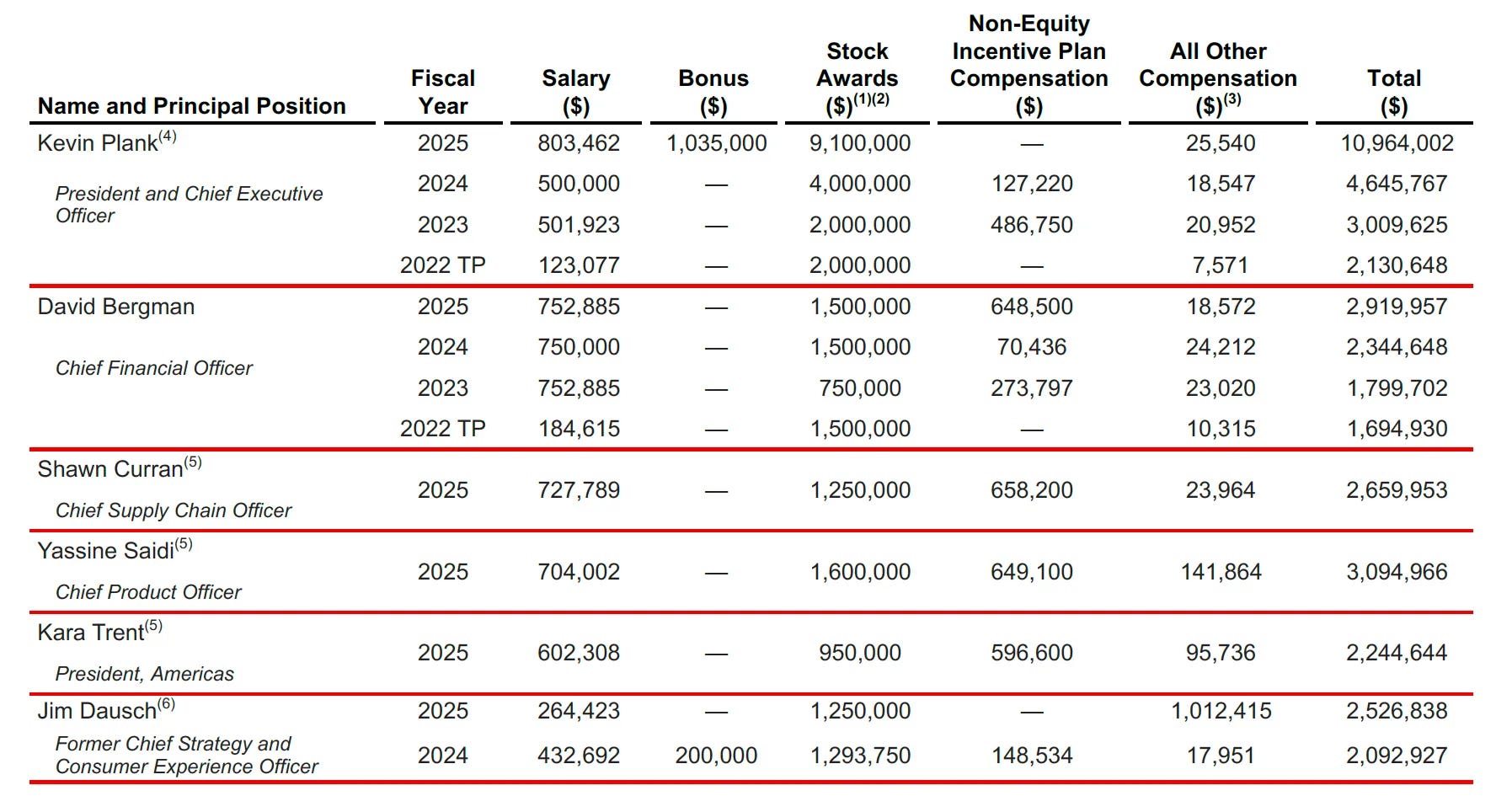
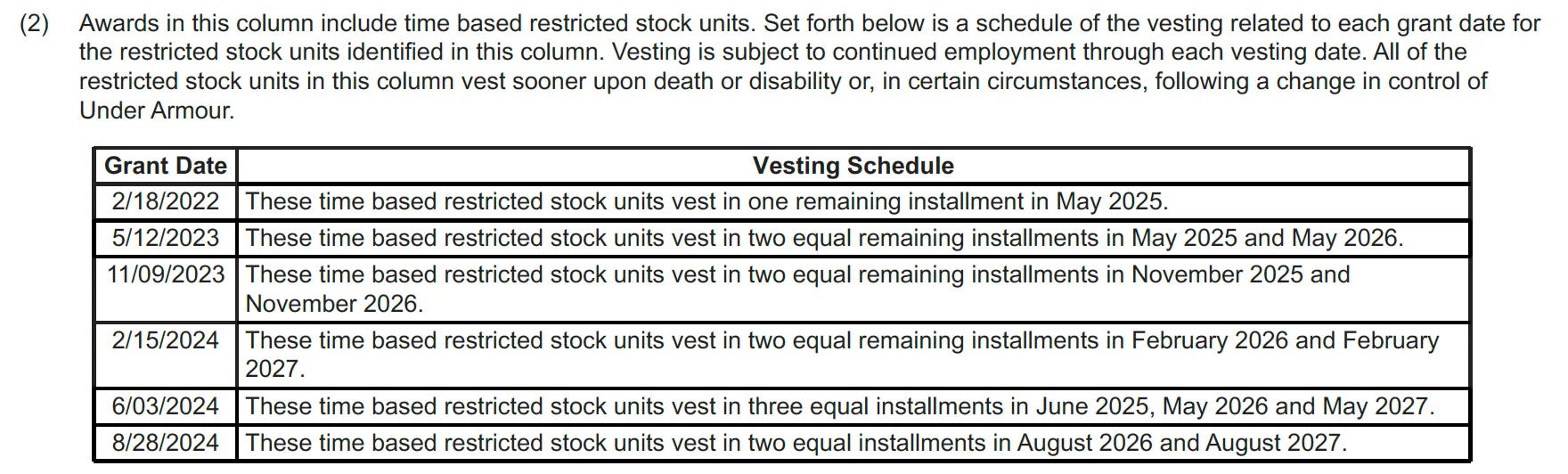
Quite a significant amount of stock options and RSU are granted on 6 March 2024. Taking the compensation guidelines above, their option exercise price is c.$7-8 and this expires on May 2027 - they’re incentivized to 2x the price by May 2027
The Hidden Value Proposition
The company is sitting on some genuinely interesting fundamentals that Wall Street seems to be ignoring:
Balance Sheet Snapshot
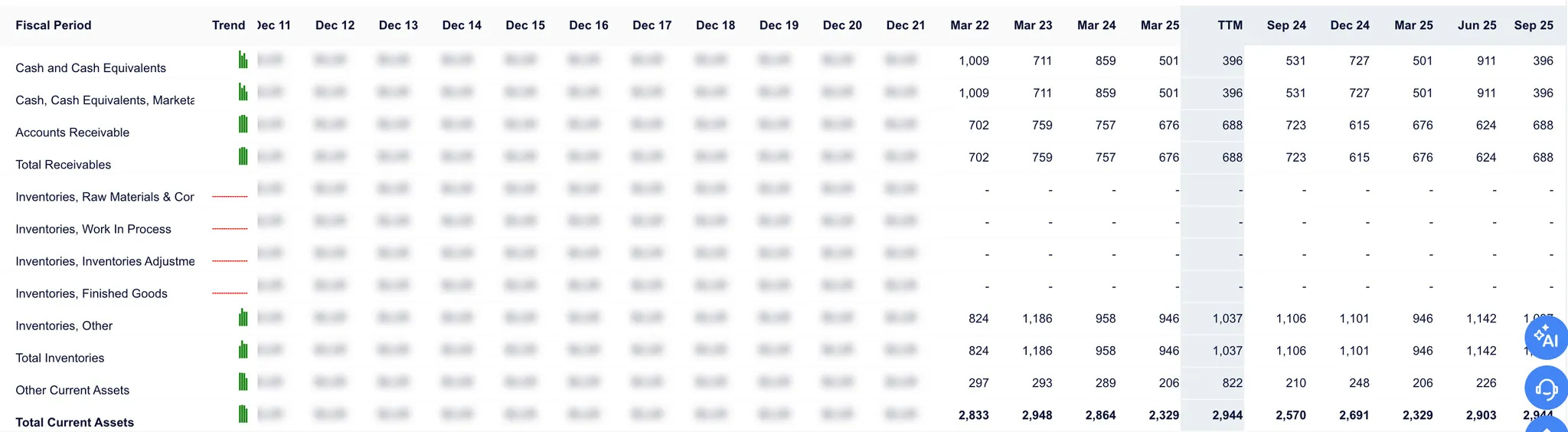
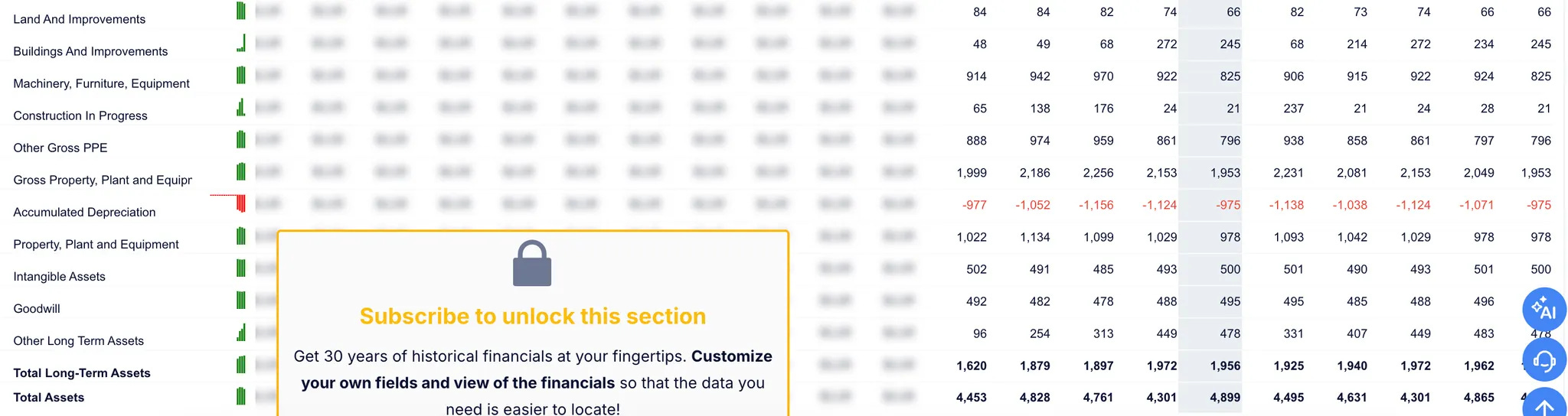
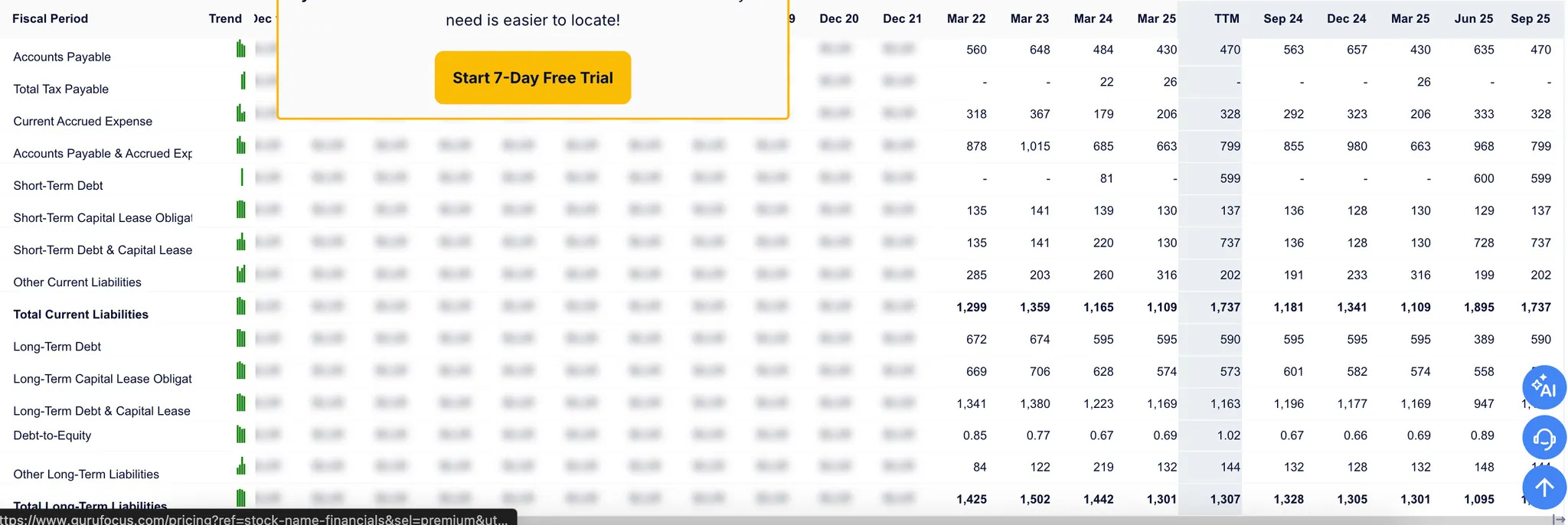
The company has $1.0 billion in PP&E (Property, Plant & Equipment), including its new global headquarters in Baltimore. They have $676 million in receivables against $456 million in payables. The adjusted working capital requirement sits at about $1.25 billion. And here’s the kicker: In fiscal 2025, Under Armour generated $5.05 billion in revenue with a gross profit of $2.39 billion, representing a gross margin of 47.9%.
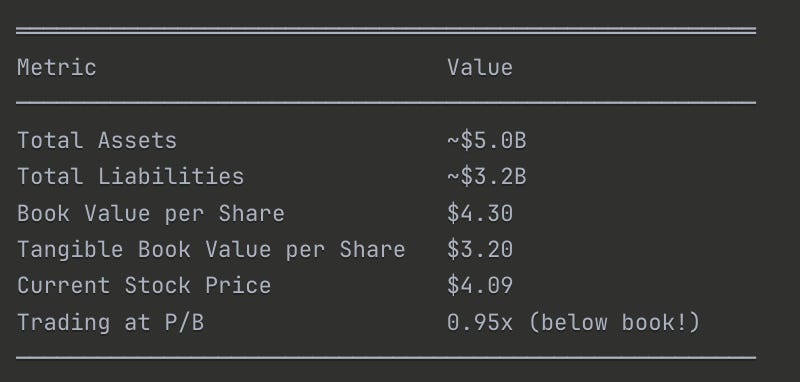
Total assets can almost offset all total liabilities. And the company is selling below book value (mainly due to its huge inventory and PP&E). P/B = $4.3, and tangible P/B = $3.2. Business is selling at $4.09 per share (without getting into too much details of the likelihood of scavenging at least 50% of the value from inventory.etc).
The Buyback Bonanza
In May 2024, Under Armour’s board approved a three-year, $500 million share buyback program—that’s worth about 23% of the current market cap. As of March 31, 2025, the company had already repurchased $90 million worth of shares, retiring 12.8 million shares.
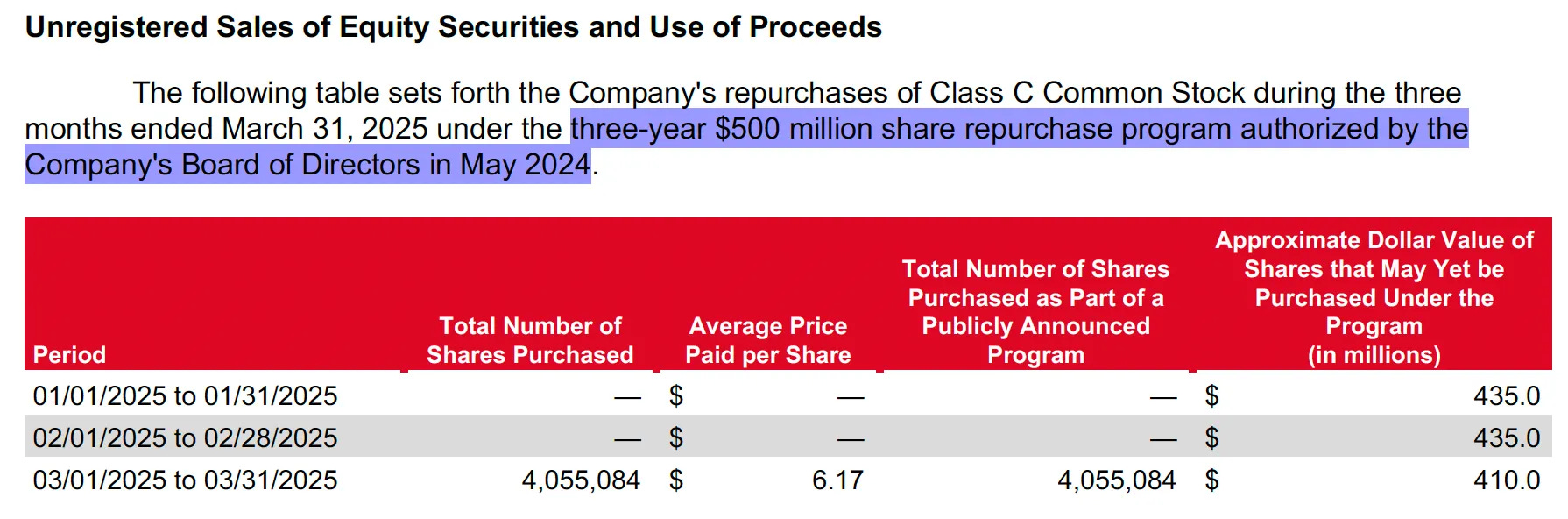
Think about this for a moment: When a company trading at 0.4x sales and below book value announces they’re buying back nearly a quarter of their market cap, that’s not financial engineering—that’s a statement. It says, “We think our stock is absurdly undervalued, and we’re willing to bet hundreds of millions of dollars on it.”
The Customer Evangelism Angle (Where Build-A-Bear Comes In)
Let me take you on a brief detour to explain why customer evangelism matters so much in retail, particularly in branded apparel.
But first, let’s take a look at another business. Build-A-Bear Workshop perfected something magical: they created an experience so memorable that customers become unpaid marketers. When a child builds a bear, they don’t just buy a product—they create a memory. That child then drags friends, cousins, and eventually their own children to Build-A-Bear stores. The Customer Acquisition Cost (CAC) for that second customer? Essentially zero. The Lifetime Value? Sky-high.
The economics are beautiful:
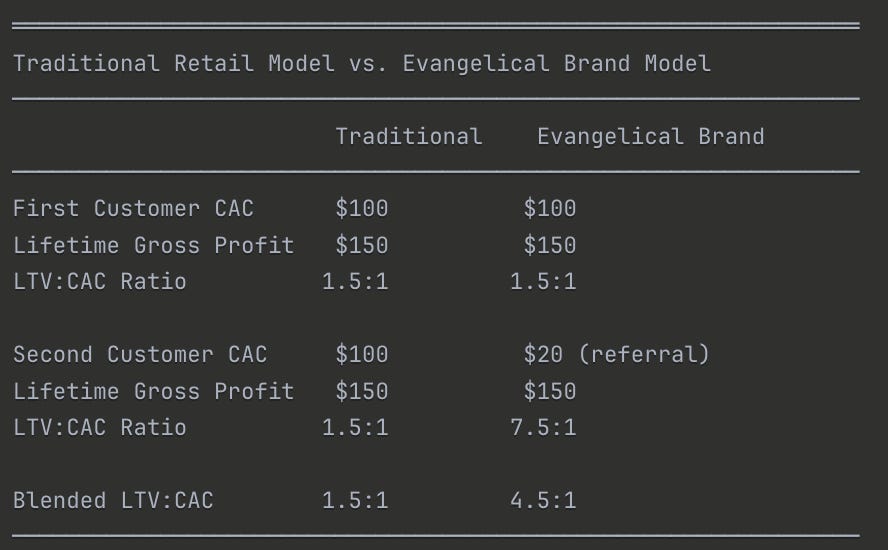
A healthy LTV:CAC ratio is generally considered to be 3:1 or higher. Evangelical brands can achieve 5:1 or even 10:1 ratios because every satisfied customer becomes a distribution channel.
Under Armour once had this. In the early 2000s, if you were a serious athlete, you wore Under Armour compression gear. It was a badge of honor, a signal that you were about that life. Athletes told other athletes about it. The product sold itself.
And mind you, i was a huge fan being an athlete myself
Then something happened: Under Armour got greedy. They flooded the market, discounted heavily, and ended up everywhere from Dick’s Sporting Goods to Marshall’s clearance racks. The evangelical fervor died. Customer acquisition costs went up. Margins compressed. The magic disappeared.
The Turnaround Thesis: Getting Religion Back
Before we get started, its important we understand the company’s revenue split:
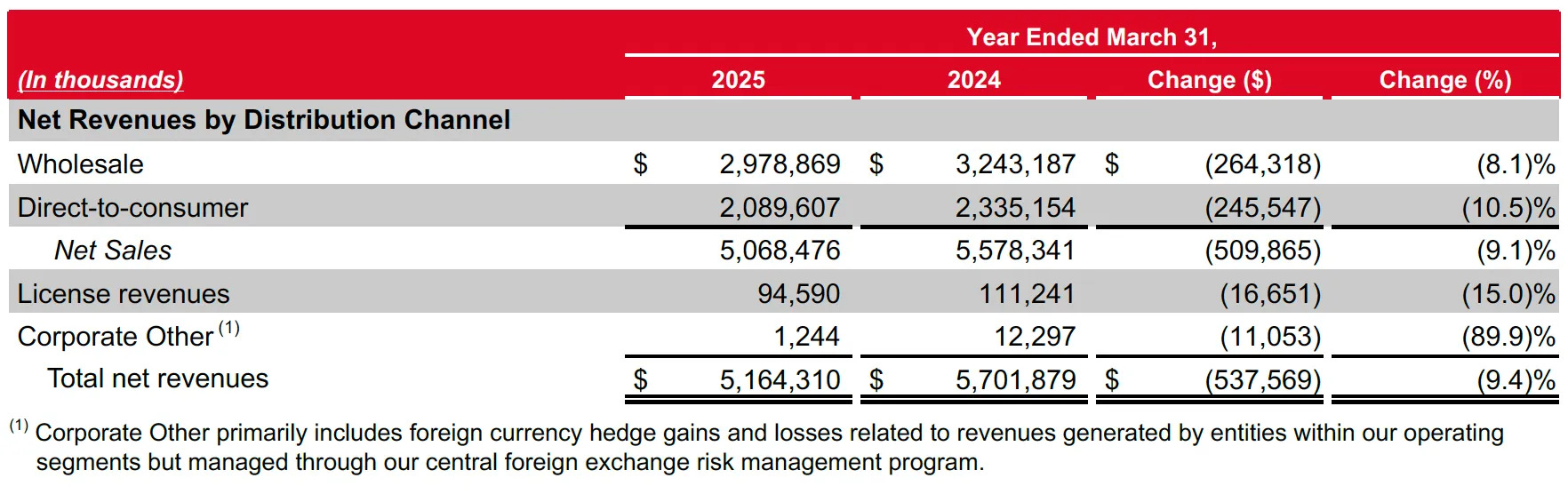
58% of sales: Sale of products globally to national, regional, independent and specialty wholesalers and distributors
40% of sales: Sale of products through D2C sales channel, which includes UA’s owned Brand stores and Factory House stores (serves an important role allowing UA to sell excess, discontinued and out-of-season products, while maintaining the pricing integrity of the brand in other distribution channels. The factory house also includes specialized products only available in factory house stores.) and e-commerce websites
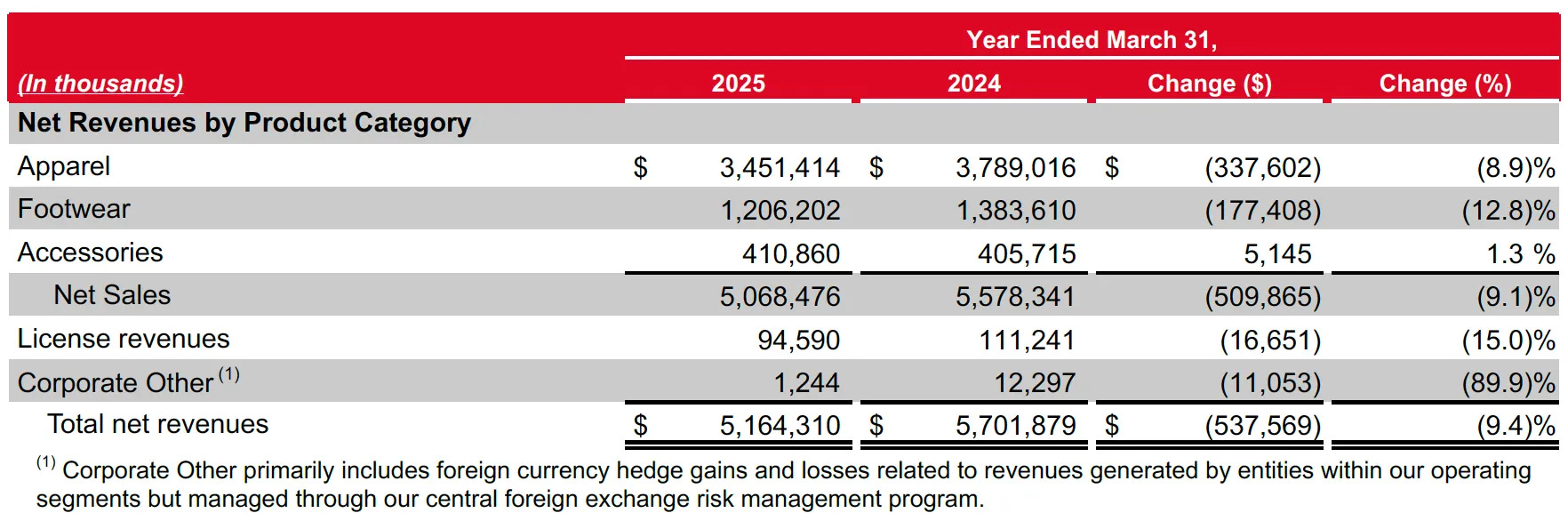
Apparel = 67% (COLDGEAR®, COLDGEAR INFRARED®, HEATGEAR®, UA Iso-Chill™, UA RUSH™, UA SMARTFORM™ and UA STORM™)
Footwear = 23% (Charged Cushioning®, UA Flow™, HOVR® and UA Micro G®)
Accessories = 8%
Licensing = 2%
Here’s Under Armour’s plan to recapture that evangelical customer base:
SKU Reduction: The company cut its product lineup by 25%, focusing on “better and best offerings” while eliminating heavily discounted “good” products
Premium Positioning: Moving away from the outlet-store, discount-heavy model. Gross margins are expected to increase 75 to 100 basis points driven by material reductions in promotional and discounting activities
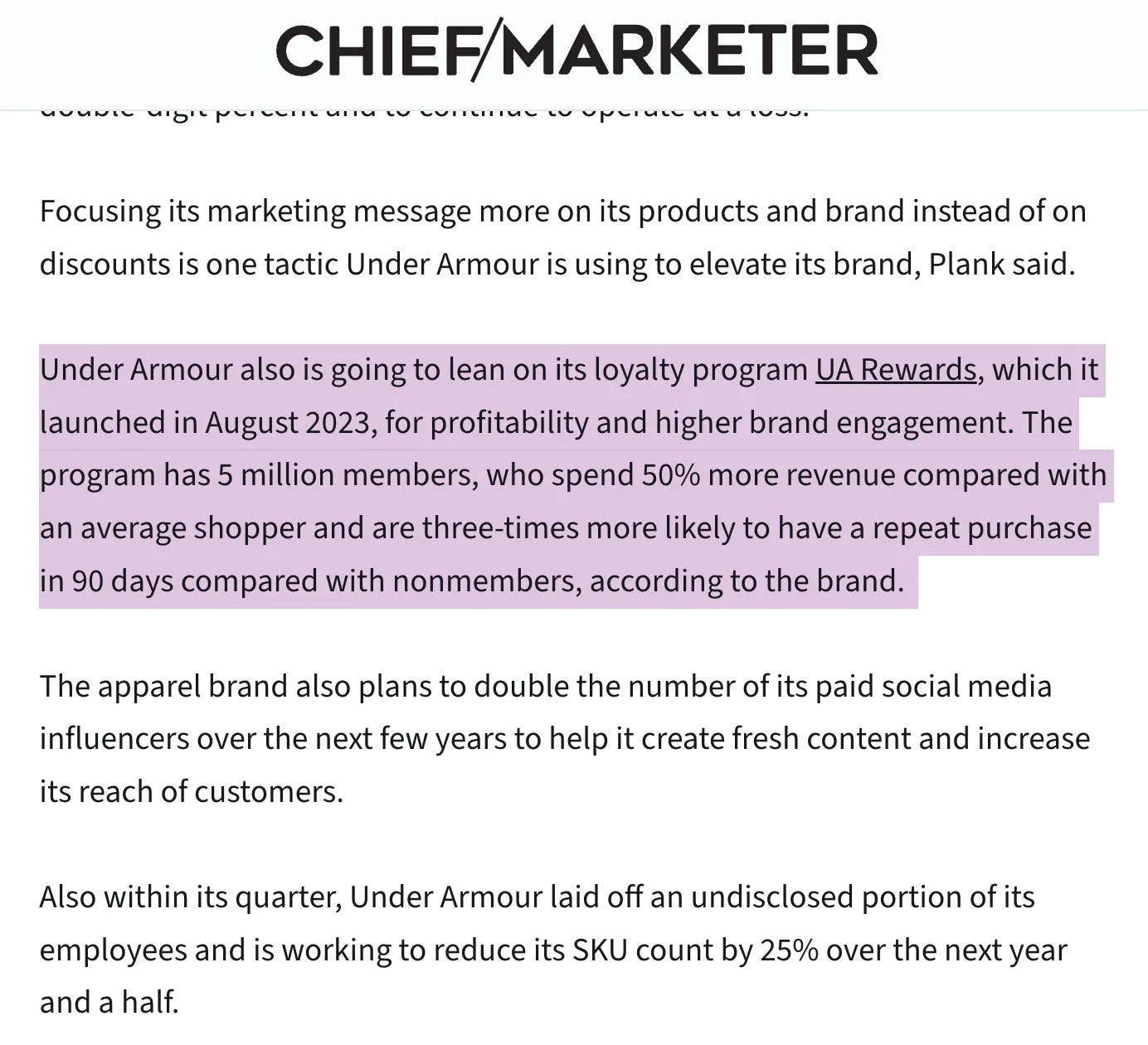
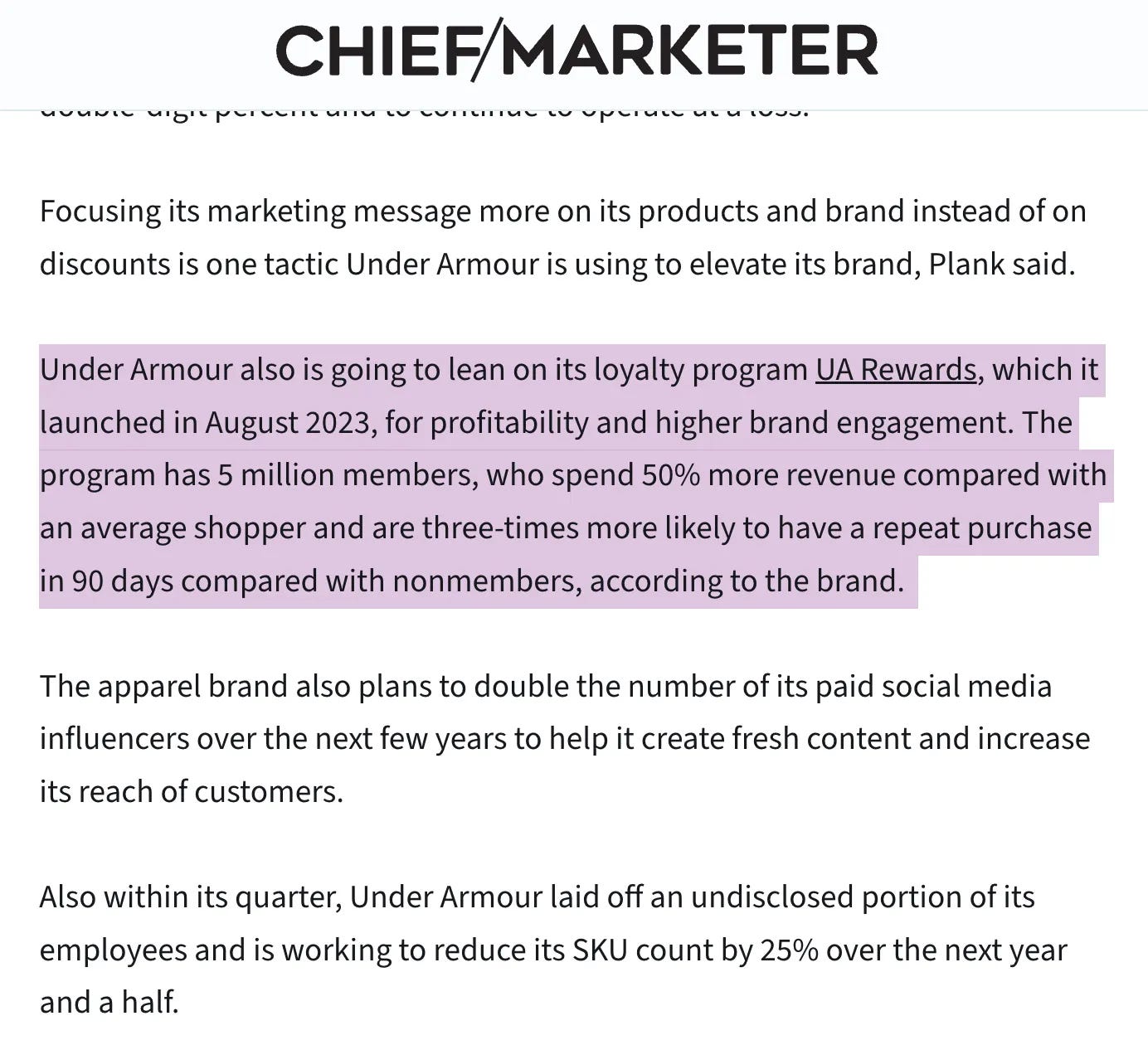
Loyalty Program Success: Members and advocates now make up 50% of Direct-to-Consumer purchases—a cohort that likely has a much healthier LTV:CAC ratio than wholesale customers
The “Underdog” Brand Identity: Under Armour is repositioning itself not as a Nike competitor trying to be everything to everyone, but as the brand for athletes who have to earn it—those putting in the 10,000 hours
Plank does not believe consumers are "mad at us," but the company has to "give them a reason to want to engage with us again” - in other words, the customer base is already there, they just have to make quality out of it (promoting more customer evangelism):
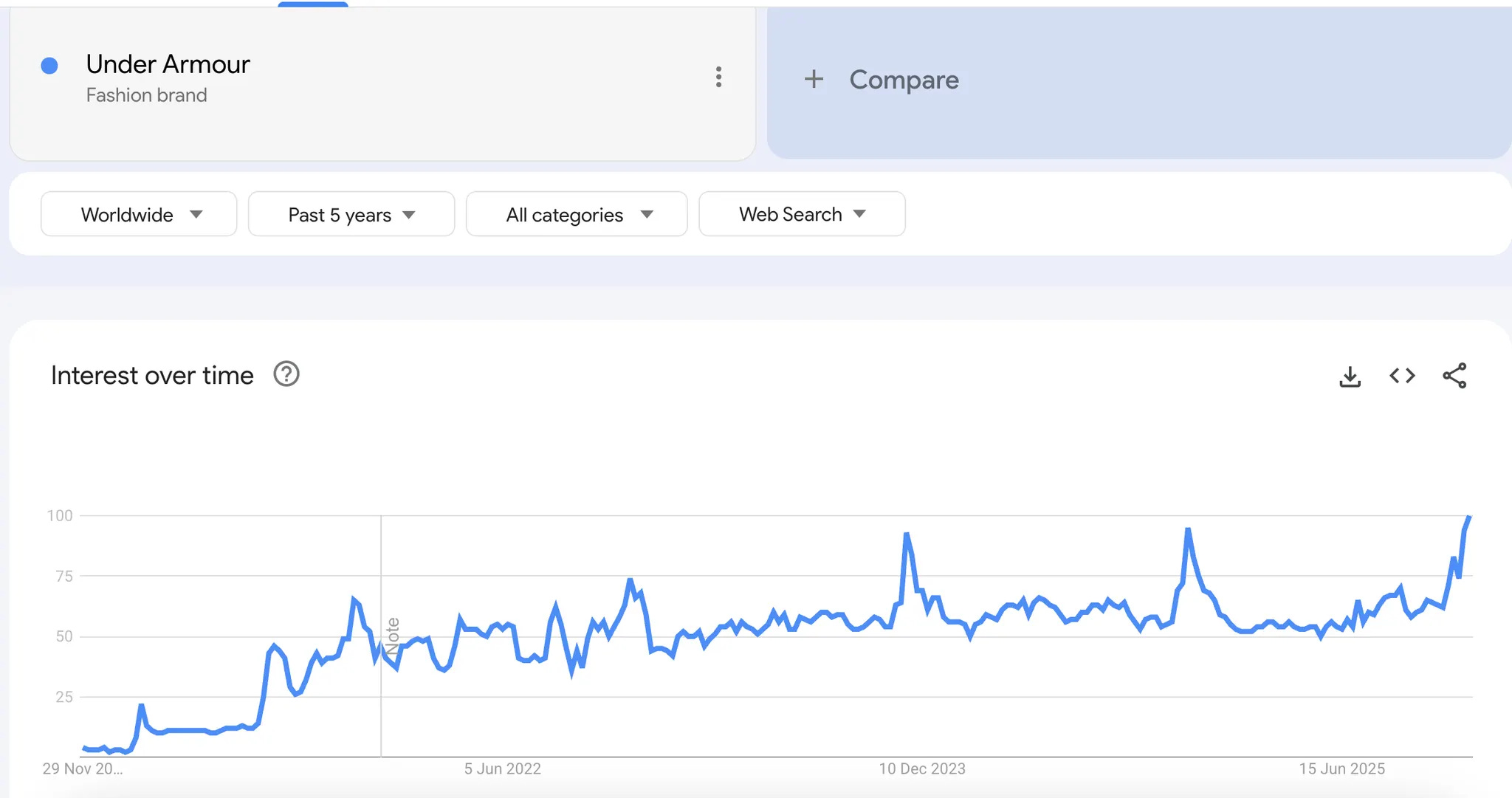
Sentiment between 18-34 year old at highest levels since 2022 sitting at 80%.
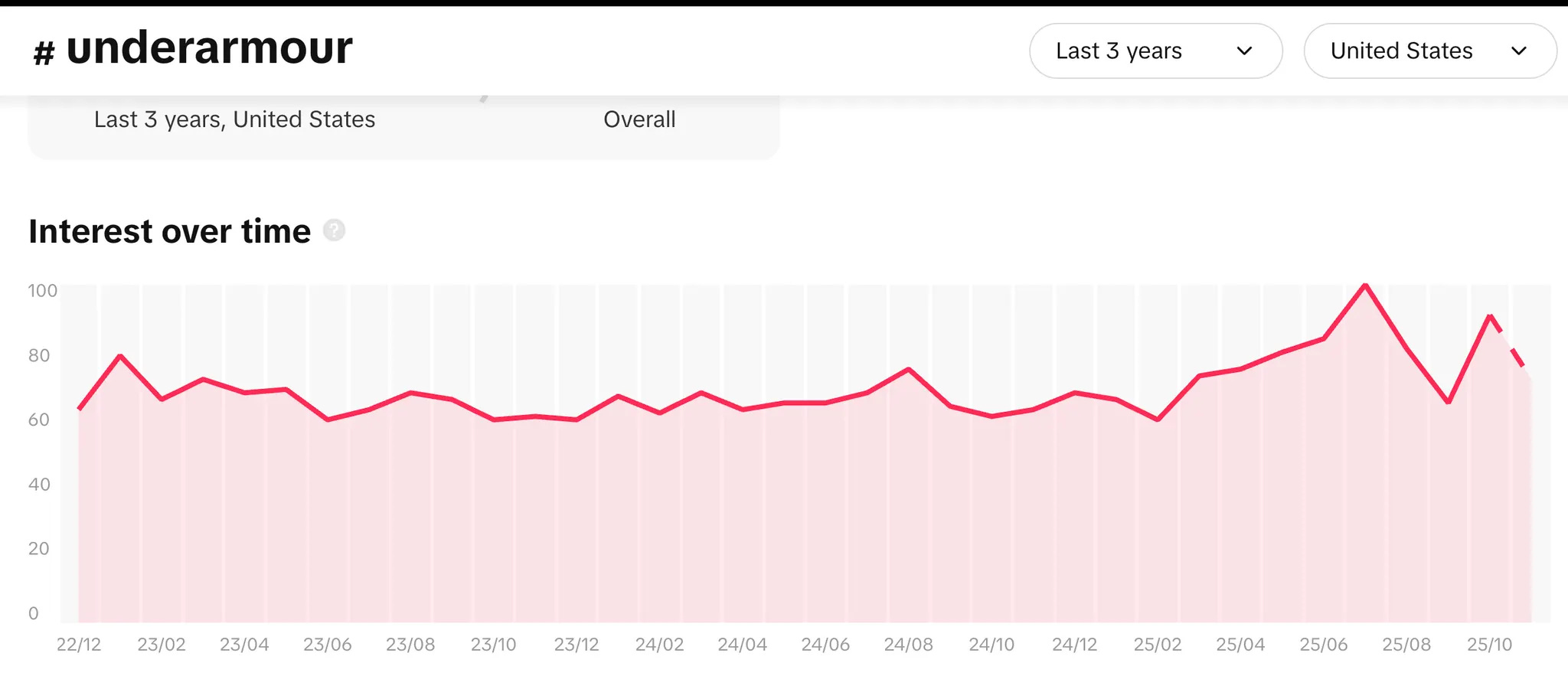
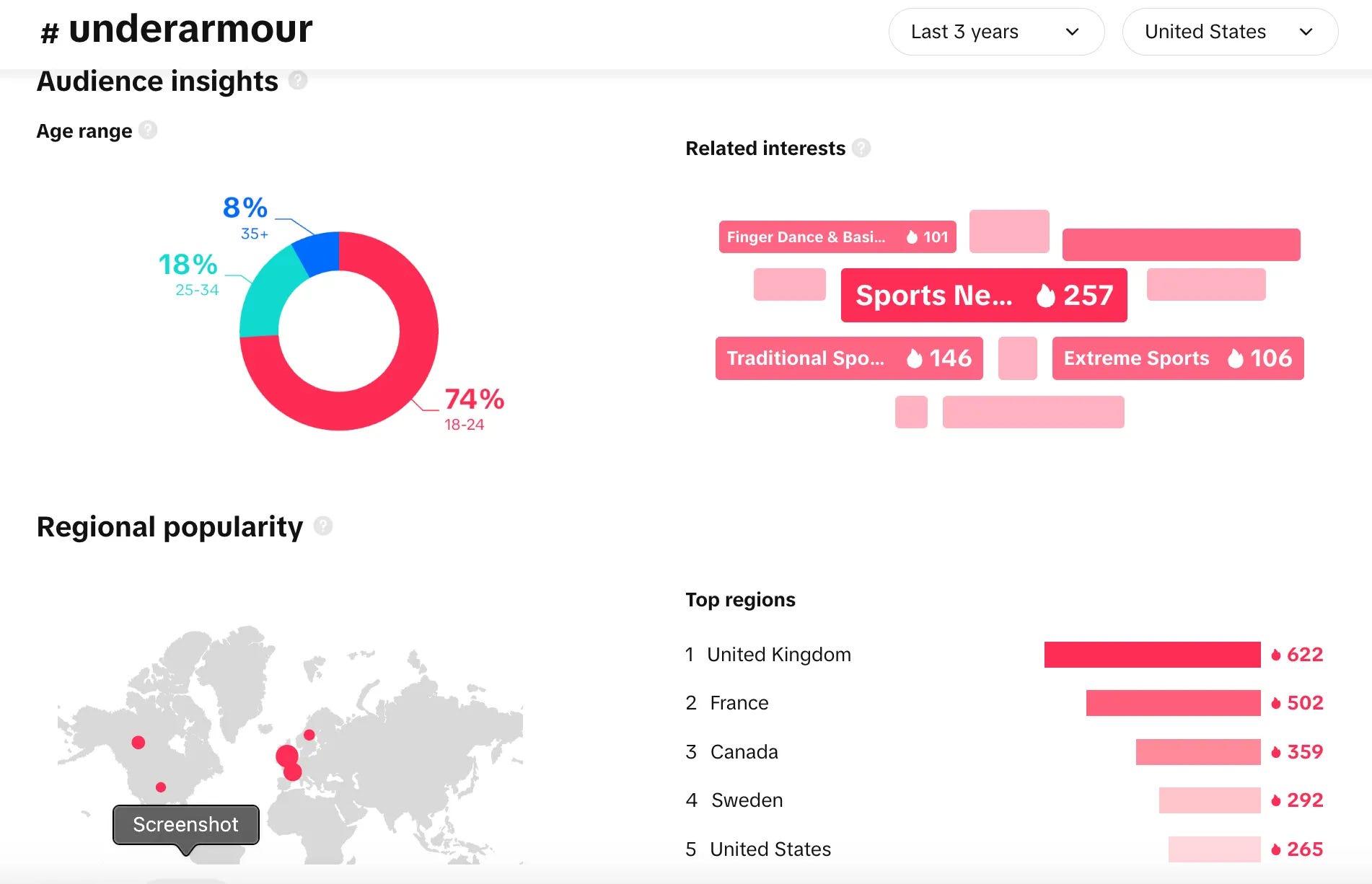
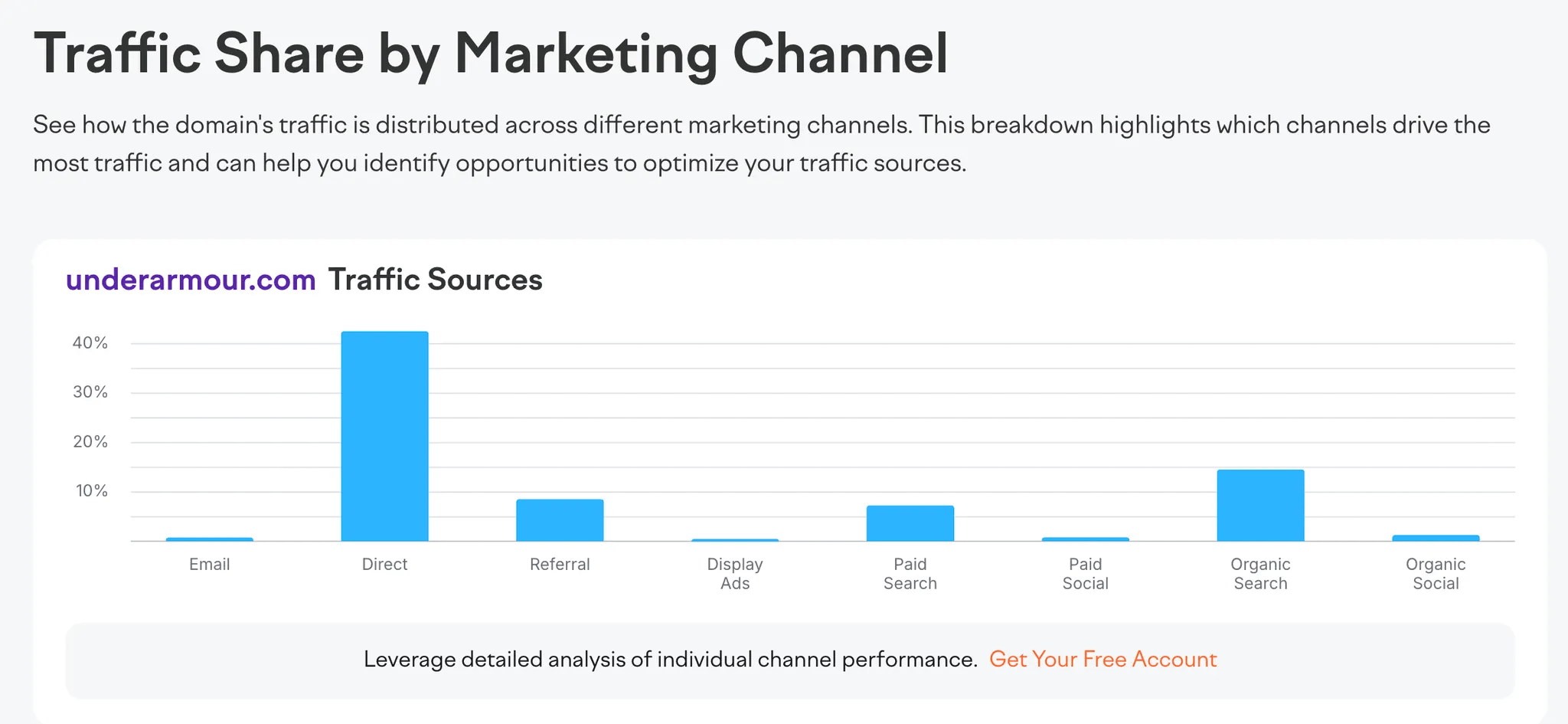
And a majority of their customers are not acquired through paid/ advertising means.
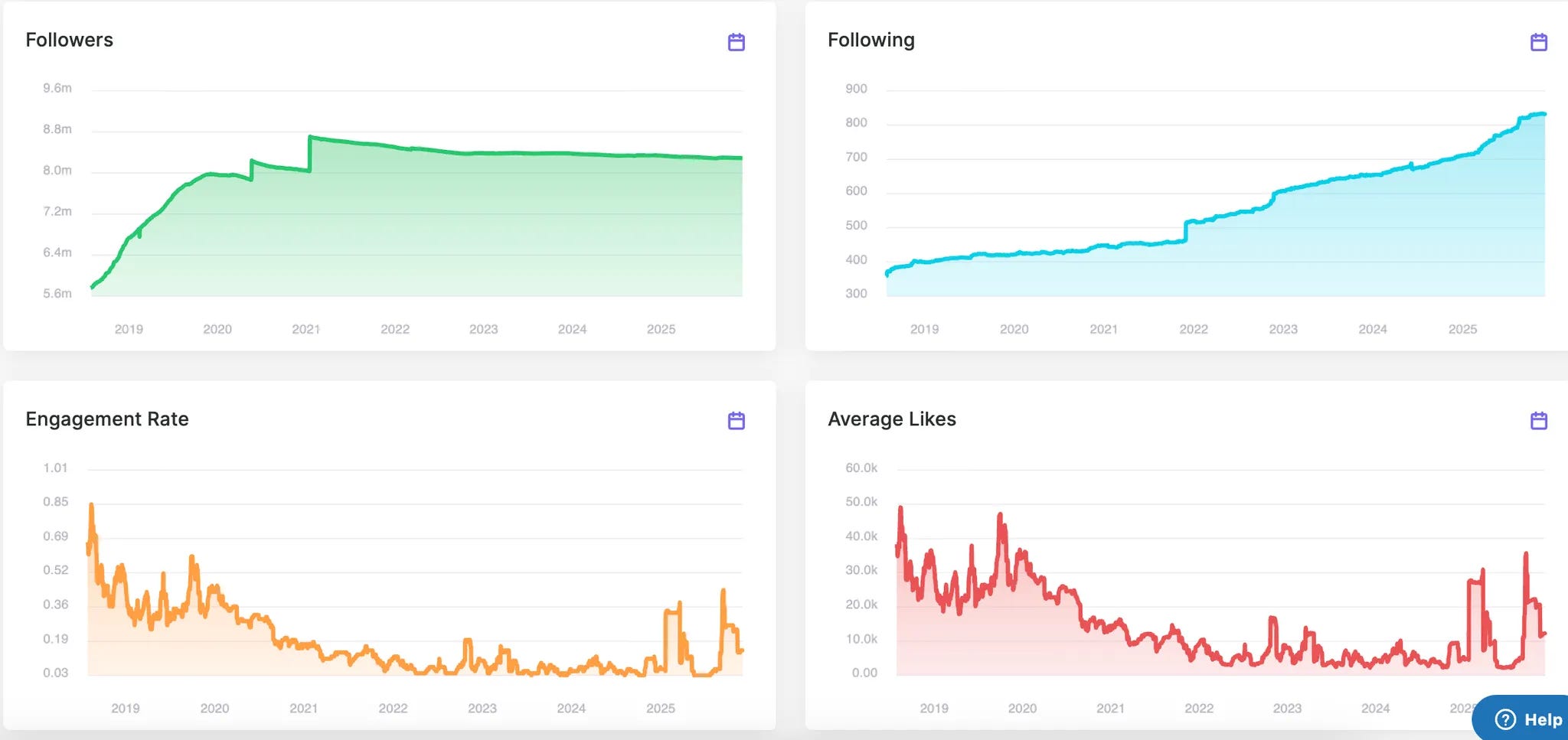
We see engagement improving as well - which also tells us that the brand identity is slowly improving and robust.
So How Many Birds?
If we take management at their word and assume they can execute their restructuring plan, here’s the upside case:
Scenario A: The Conservative Case
Revenue: $5.1B (current run rate, flat)
Target Net Income: $414M (8% net margin target)
P/E Multiple: 7x (2023 trough levels)
Implied Stock Price: ~$7-8
Upside: 70-95%
Scenario B: The Executive Compensation Case
Stock Price Target: $13-19 (based on option exercise prices)
Timeline: May 2027 - Feb 2028
Upside: 220-365%
But here’s the thing about birds in bushes: they have wings. And they fly away. Which brings us to our second question...
Part II: How Sure Are You? (Or: The Part Where I Talk Myself Out of This)
The Margin Math Problem
Let’s do some basic arithmetic that keeps me up at night.
In fiscal 2025, Under Armour’s operating income was just $36 million on $5.05 billion in revenue. That’s an operating margin of 0.7%. Not 7%. Not even 1.7%. Zero point seven percent.
To hit their target of $414 million in Net income (the 8% net margin goal management is shooting for in order to attract the share price they want), they need to improve this by... checks calculator ...approximately 100% on operating income of $222 million (yes! We’re comparing operating income since they have been net negative). So let’s ask ourselves, how practical is that?!?
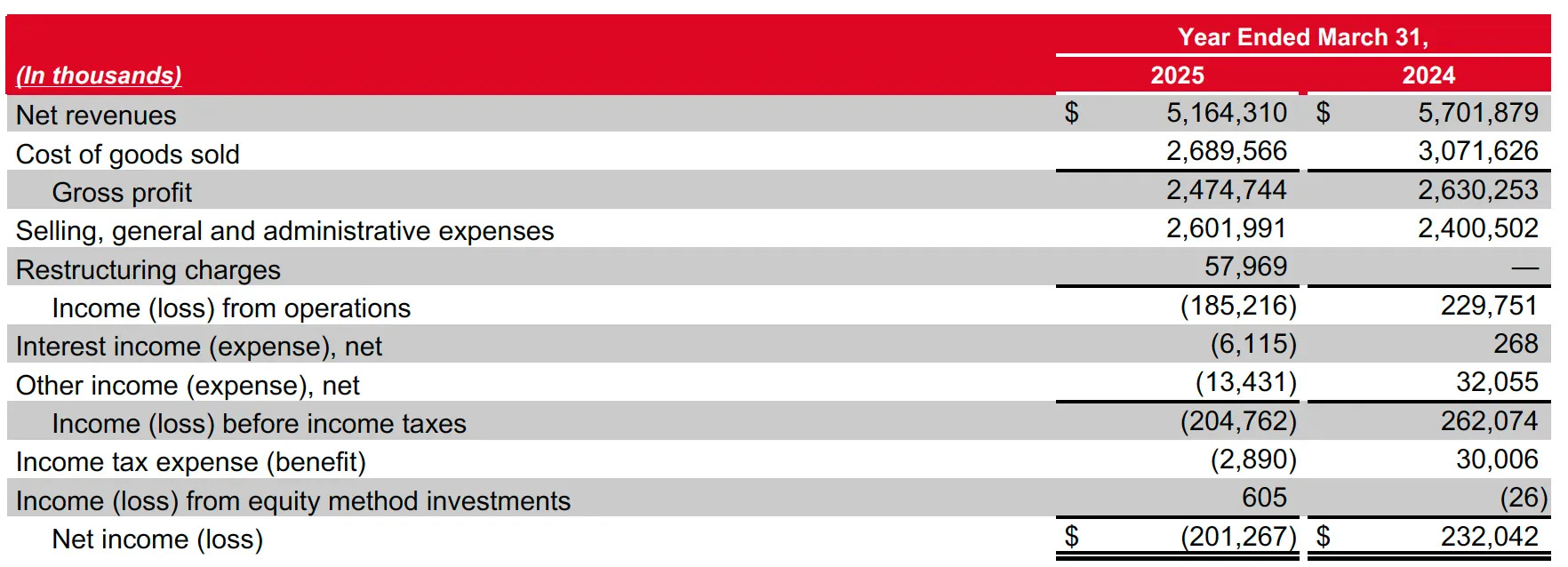
On the bright side: Under Armour have posted 6-8% net margins in their good years.
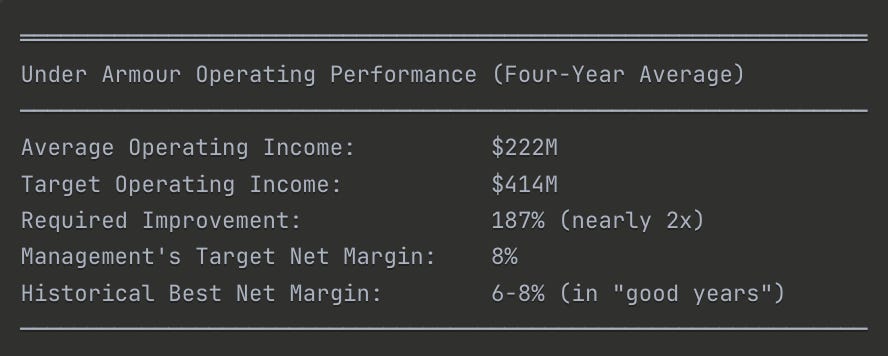
Now, management’s argument is also reasonable tho: “We just need to cut 16% from either SG&A or COGS.” That sounds doable, right? It’s not like they need to revolutionize physics or discover cold fusion - the only question is how likely?
The Competitive Hellscape
Let’s talk about the neighborhood Under Armour lives in. It’s not friendly.
Athletic Apparel Profit Margins Comparison (2024-2025)
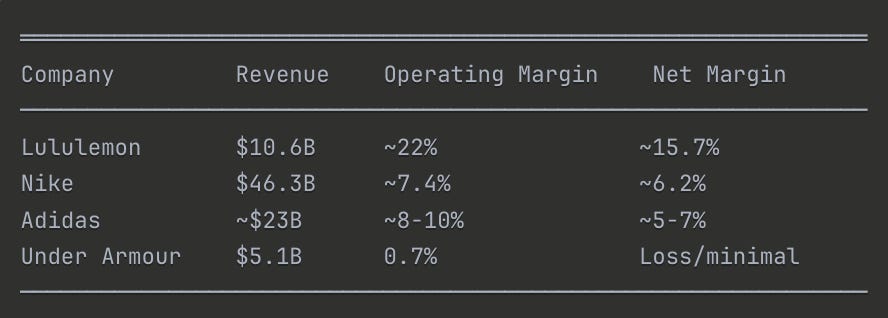
Lululemon maintains operating margins near 22% and net margins around 15.7%, while Nike has operating margins of 7.4% and net margins of 6.2%. Meanwhile, Under Armour is barely profitable.
What makes this particularly painful is that Lululemon competes in the same premium athletic apparel space that Under Armour is trying to reclaim. And Lululemon didn’t get to 22% operating margins by accident—they got there by:
Never heavily discounting (protecting brand value)
Cultivating evangelical customers (strong LTV:CAC)
Maintaining pricing power
Controlling distribution
Innovating constantly
All the things Under Armour stopped doing in their growth-at-all-costs phase.
The CEO Carousel Problem
Here’s a fun fact that should concern you: Under Armour has had four CEOs in four years. Let that sink in. Four CEOs. Four years.
CEO #1: Kevin Plank (stepped down in 2019) CEO #2: Patrik Frisk (lasted 2 years) CEO #3: Stephanie Linnartz (lasted 1 year) CEO #4: Kevin Plank (returns in 2024)
When Charlie Munger was asked about CEO turnover, he said something like: “If you want to know if a restaurant is good, look at the line outside. If you want to know if a company is well-run, look at how long CEOs stay.”
The Macro Headwinds
Remember how I said birds have wings? Well, right now there’s a hurricane coming.
The Tariff Tornado Lululemon expects approximately $240 million in gross profit headwinds from higher tariffs. Under Armour manufactures in many of the same countries—Vietnam, Cambodia, Indonesia, Jordan. While they have 39 contract manufacturers to work with (giving them some flexibility), tariffs are going to squeeze margins exactly when they need to expand them.
The Consumer Pullback Lululemon’s CEO Calvin McDonald noted that “U.S. consumers are being cautious and intentional about their buying decisions”. Under Armour’s customer base—middle-income Americans who are price-sensitive—is even more vulnerable to economic downturns.
The Inventory Overhang Under Armour’s working capital situation isn’t terrible, but they have $676 million in receivables against inventory they need to move. In a promotional environment where everyone’s discounting, maintaining price discipline becomes exponentially harder.
The Demand Destruction Risk
Here’s the scenario that terrifies me: Under Armour successfully cuts SKUs, reduces discounts, and repositions as premium. And then... nobody shows up to buy.
Why would this happen? Because brand perception doesn’t change overnight. For years, consumers have associated Under Armour with:
Outlet malls
Heavy discounts
“Good enough” athletic wear
The brand your aunt buys you for Christmas
Changing that perception requires:
Time (years, not quarters)
Money (massive marketing investment)
Product innovation (real, meaningful differentiation)
Distribution discipline (saying “no” to easy revenue)
Patience from shareholders (good luck with that)
The “Evidence vs. Hope” Problem
Warren Buffett has a great line: “What the wise do in the beginning, fools do in the end.”
Under Armour’s turnaround plan is textbook: ✓ Reduce SKUs ✓ Cut discounting ✓ Focus on premium ✓ Improve margins ✓ Invest in brand building
It’s what Lululemon did. It’s what Nike did decades ago. It’s what every turnaround consultant recommends.
But here’s the brutal truth: Textbook and easy are not the same thing.
Companies fail at turnarounds not because the strategy is wrong, but because execution is hard. And I have no concrete evidence—none—that Under Armour can execute this plan. I have:
A founder who came back (possible sign of commitment OR inability to let go)
Executive compensation aligned with ambitious targets (good OR delusional)
Margin targets that require near-doubling performance (possible OR fantasy)
A premium positioning play in a skeptical market (potentially successful OR dead on arrival)
This is hope. Not evidence.

Moreover, here’s what I see: Cash Conversion Cycle becoming worse.
Part III: How Long Till You Get Them Out?
The Timeline Trap
The 2025 restructuring plan is expected to be substantially complete by the end of Fiscal 2026. Management’s incentives guide them toward May 2027. So we’re looking at roughly 2-3 years for this thesis to play out - but what if it doesn’t?
The Opportunity Cost Killer
This is the silent assassin of investment returns: Not the money you lose, but the money you don’t make while waiting.
In the base case, you make an extra 40% versus the index. Cool. But you also took on significantly more risk, spent significantly more mental energy, and tied up capital in a single-company bet.
Was it worth it? Maybe. Maybe not.
The “Good Enough” Problem
Charlie Munger had this concept of “good enough.” He’d say something like: “In investing, you don’t need to hit home runs. You just need to not strike out.”
Under Armour could be a home run. But it could also be a strikeout. And here’s the thing: I already have a perfectly good alternative that’s pretty much guaranteed to be a double or triple. Why would I risk the strikeout when I have a perfectly serviceable double waiting for me?
Conclusion: Why I’m Saying No (And Why That’s Okay)
Look, I get the appeal. I really do. Under Armour at $4 looks like a screaming buy. Founder’s back, trading below book value, huge buyback program, clear turnaround plan, massive upside if it works.
But investing isn’t about finding opportunities—it’s about finding opportunities you can actually capitalize on with confidence.
Let me bring this full circle with the three questions:
1. How Many Birds Are in the Bush?
Answer: A lot. Potentially 2-3x upside over 2-3 years if everything works.
2. How Sure Are You?
Answer: Not sure enough. The margin improvement required is massive. The competitive environment is brutal. The execution track record is poor. The macro environment is uncertain. I have hope, but not evidence.
3. How Long Till You Get Them Out?
Answer: 2-3 years of white-knuckle uncertainty with significant opportunity cost.
And here’s the thing: When you can’t confidently answer all three questions, the right answer is “pass.”
This isn’t about Under Armour being a bad company. It’s about me being an investor with specific criteria. I need:
High certainty of a good outcome (not just possible, but probable)
Clear timeline with minimal opportunity cost
Concrete evidence of execution capability, not just hope
Under Armour fails #1 and #2 for me. Maybe it works. Maybe someone smarter than me sees something I don’t. Maybe Kevin Plank pulls it off (which i wouldn’t be surprised)
But I’m not investing in maybes. I’m investing in high-probability outcomes where I can sleep at night and compound capital with confidence.
The Lesson: Customer Evangelism Can’t Fix Everything
Remember that Build-A-Bear detour? Here’s the painful lesson: Customer evangelism is the result of executing well, not a substitute for it.
Build-A-Bear doesn’t just have evangelical customers because they want them. They have evangelical customers because they:
Deliver a consistently excellent product/experience
Never dilute the brand
Don’t chase growth at the expense of quality
Maintain pricing integrity
Execute flawlessly, year after year
Under Armour had evangelical customers once. They lost them by doing the opposite of everything above. Now they want them back. That’s great! But wanting and getting are different things.
Until I see concrete evidence—not plans, not targets, not hopes, but actual evidence—that Under Armour can execute at Lululemon levels while competing against Nike’s scale and Adidas’s brand, I’m staying on the sidelines.
Sometimes the hardest word in investing is “no.” But it’s also the most important one. Because every “no” to a mediocre opportunity is a “yes” to your next great one.
P.s. My hands actually got itchy because i’m a fan of Under Armour. On December 4th, I ended up entering into a very very small Call position of $1.36 ending 2028 January with a strike price of $5
Last Words
Marketing campaign quality and audience targeting quality have significantly improved. Resonance is one important word that every under armour advocate seeks
Update: Exited the small position in January 2026 with a 50% profit as price reached a level i am uncomfortable with and unable to justify
Update: in Singapore, noticed that Under armour is still heavily discounting their products and attempting to clear inventory (hence, full inventory value will not be realized). This might also result in the brand taking longer to turnaround since it is still taking actions that lead to low perceived value/ positioning of their products