
“The difference between successful people and really successful people is that really successful people say no to almost everything.” — Warren Buffett
Introduction: The Power of Subtraction
In the autumn of 1995, Steve Jobs returned to Apple and did something counterintuitive: he killed 70% of Apple’s products. Not because they were bad, but because they distracted from what mattered. This is the central paradox of value creation—the power lies not in what you do, but in what you refuse to do.
Warren Buffett keeps a list of companies he’s studied and rejected. Charlie Munger famously said his success came from “knowing the edge of my circle of competence.” Peter Lynch turned down hundreds of stocks for every one he bought. These aren’t stories about missing opportunities; they’re stories about the disciplined pursuit of only the best opportunities.
Sometimes, the companies we look at are perfectly fine companies at the wrong time or wrong price. A few are fascinating turnarounds that need more time. But all of them failed to answer three brutally simple questions satisfactorily:
1. How many birds are in the bush? (What’s the magnitude of return if the thesis works?)
2. How sure are you? (What’s the probability the thesis actualizes?)
3. How fast till you get them out? (What’s the realistic time horizon?)
For a LEAPs strategy—buying long-dated call options 12-24 months out—I need high conviction on all three. If any answer is unsatisfactory, the idea gets rejected. Period.
What follows is a detailed forensic examination of each rejection, complete with financial analysis, probability assessments, and the specific mechanical failures that killed each thesis. Think of it as a masterclass in what Charlie Munger calls “the psychology of misjudgment”—except here, we catch ourselves before the mistake.
Let’s begin.
RIG: The Deepwater Driller Drowning in Debt
Date Analyzed: October 4, 2025
Current Price: ~$4.50 | Market Cap: ~$3.7B
The Survivor with a Debt Problem
Transocean is the last man standing in deepwater drilling—literally. During the 2014-2016 oil downturn, competitors went bankrupt while Transocean survived. This suggests either:
Superior management
Better assets
Creditor relationships
All of the above
The company operates the highest-specification floating offshore drilling fleet globally: 32 mobile units (24 ultra-deepwater floaters + 8 harsh environment floaters).
The Bullish Case (On Paper)
Insider purchases
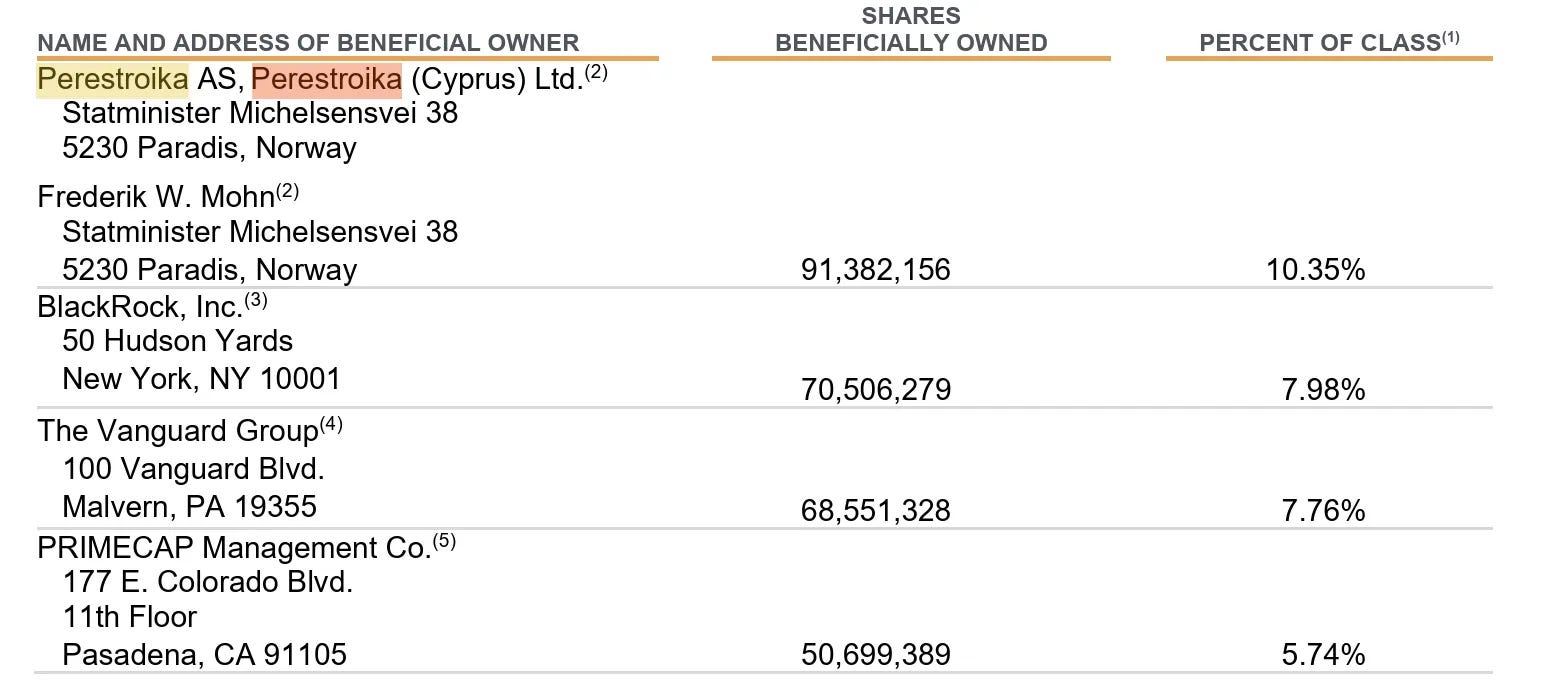
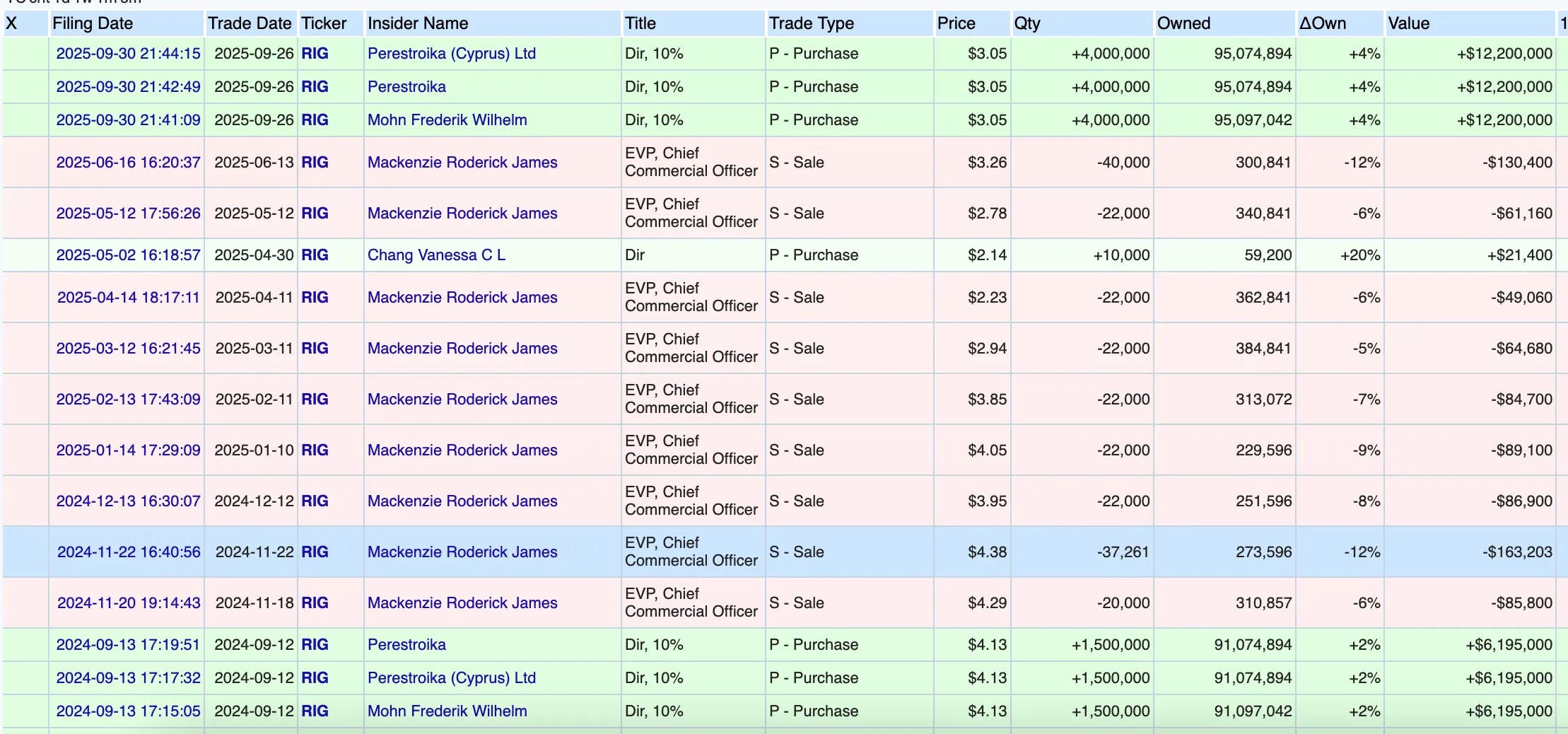
Massive $12million purchase by Director Perestoika and Mohn Frederik each!
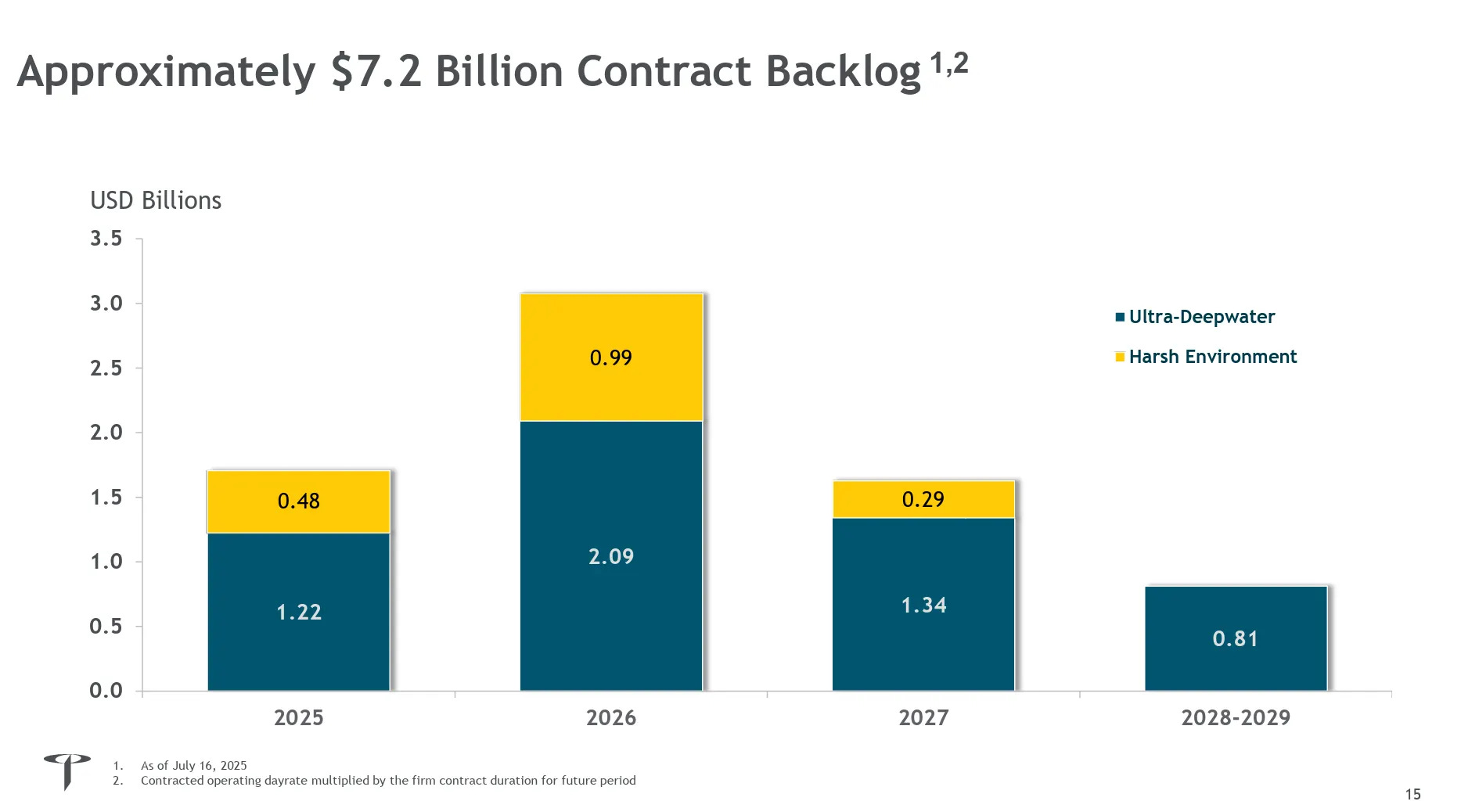
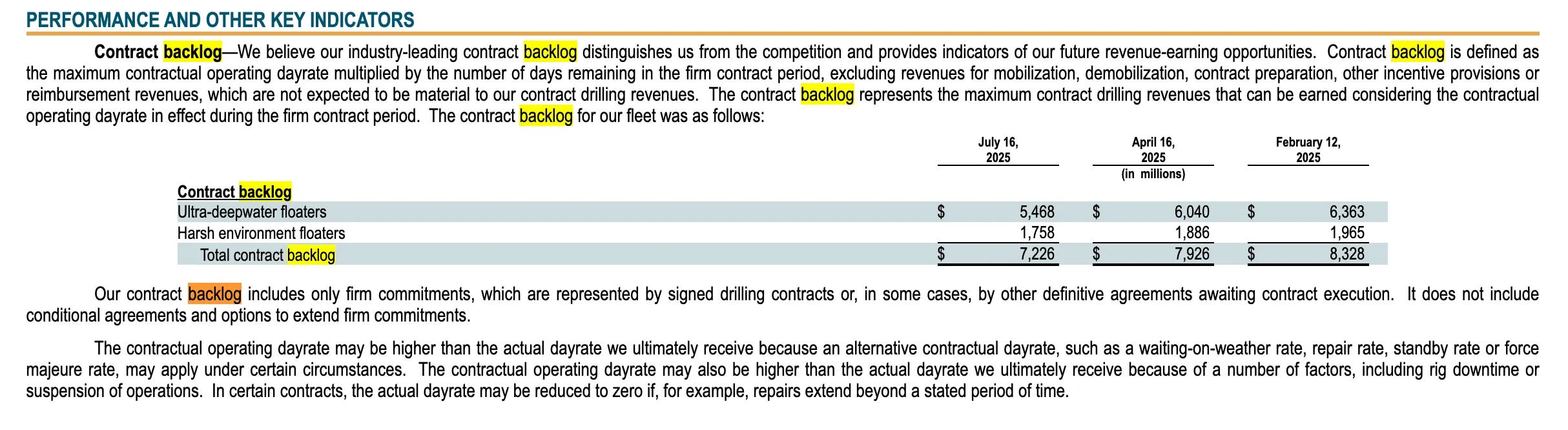
Contract Backlog: $8.3 billion (updated from my analysis date; was $7.2B)
Current Market Cap: $3.7 billion
The backlog exceeds market cap by 2.2x. If they execute that backlog profitably, massive value gets unlocked.
Historical EBITDA Margins: 26.8% (5-year average)

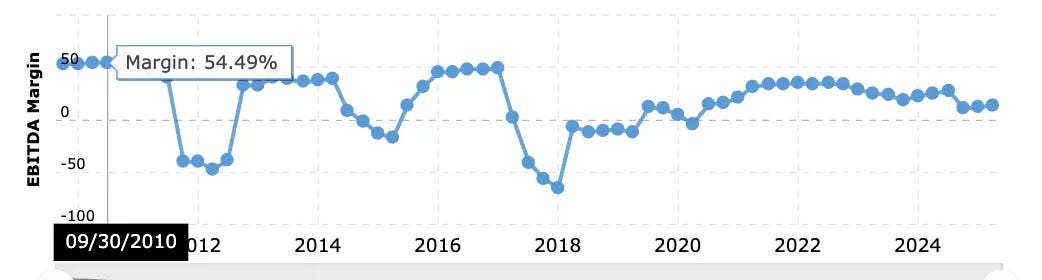
Pro Forma Earnings Calculation:
$8.3B backlog × 26.8% EBITDA margin = $2.2 billion in potential EBITDA
Add to existing assets (which perhaps i should not have done):
Current book value: ~$11 billion (net of goodwill)
Plus backlog EBITDA: $2.2 billion
Theoretical value: $13.2 billion
Current market cap: $3.7 billion
Implied upside: 3.6x
That’s enormous! So why did I reject it?
The Debt Anchor
Total Debt: ~$6.875 billion long-term + $1.582 billion current liabilities
Cashflow stability: Business model is solid with consistent Operating Cash Flow
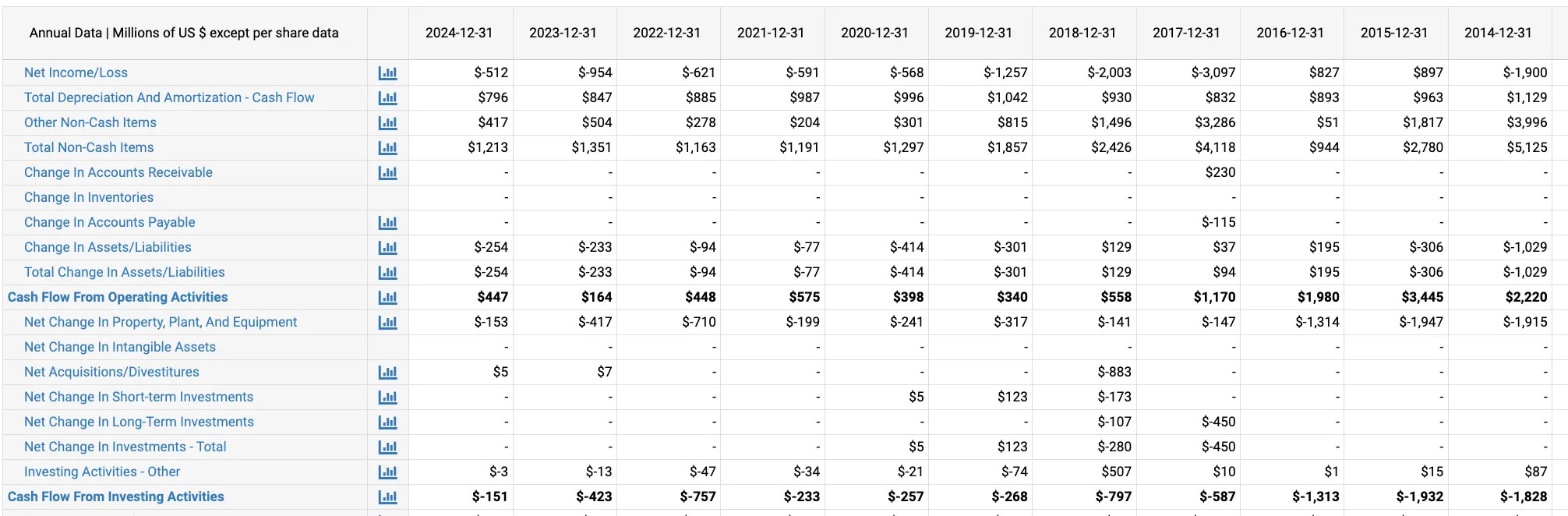
Interest Expense: ~$450-500 million annually (estimated at current rates)
EBITDA (recent): ~$1.2 billion annually
Interest Coverage Ratio: $1,200M ÷ $500M = 2.4x

That’s barely acceptable. For context:
Below 1.5x: Default risk zone
1.5-2.5x: Fragile, vulnerable to downturn
3.0x+: Comfortable
5.0x+: Strong
At 2.4x, a 20% decline in EBITDA drops them to 1.9x—dangerously close to covenant breach territory.
The Asset Analysis
The Fleet:
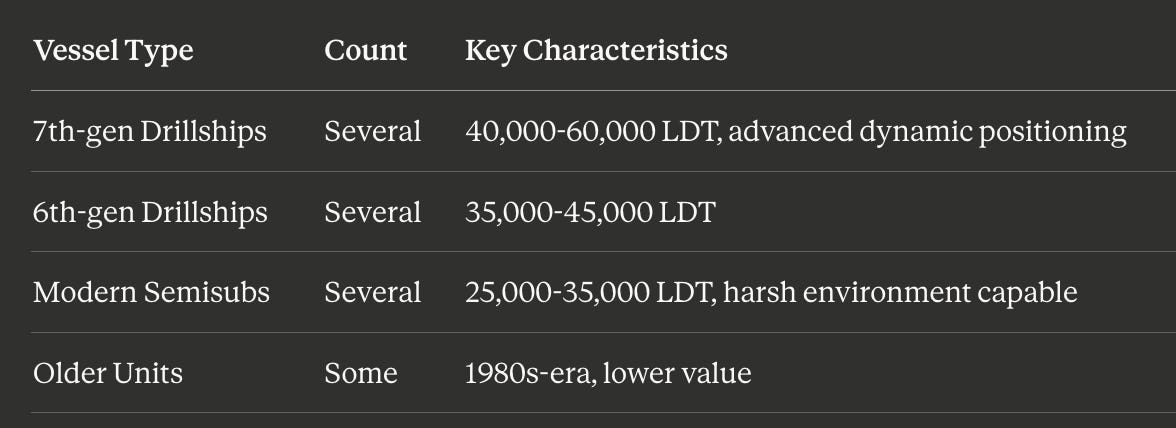
Geographic Distribution (as of February 2025):
US Gulf of Mexico: 9 units
Greece: 7 units (harsh environment North Sea)
Brazil: 6 units (Petrobras contracts)
Norwegian North Sea: 4 units
Other (Malaysia, Australia, Angola, Canada, India, Romania): 6 units
Customer Concentration:
Petrobras: 24% of backlog, 21% of revenue
Shell: 17% of backlog, 27% of revenue
Equinor: Significant
This concentration is both good and bad:
Good: Major oil companies with strong balance sheets
Bad: Loss of any major customer is catastrophic
The Liquidation Value Exercise
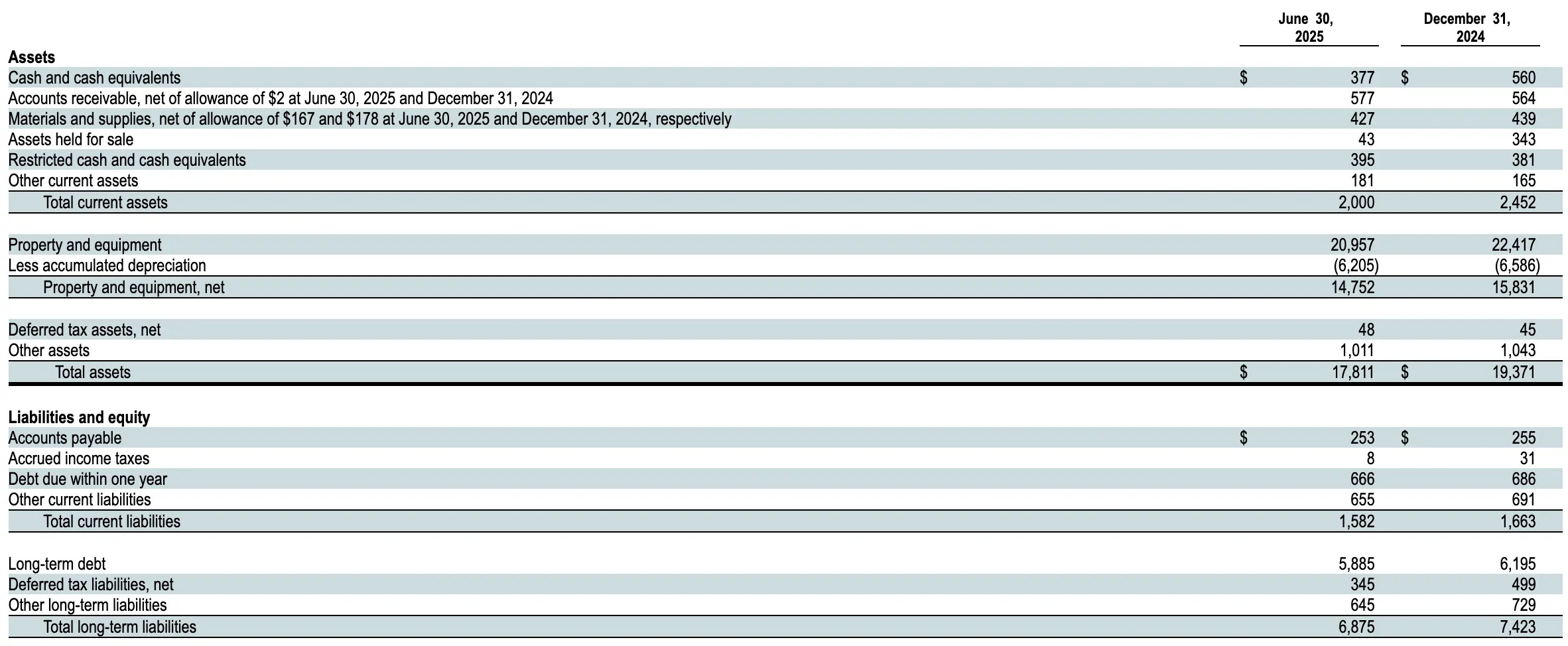
What if everything goes wrong and they need to liquidate?
Liquidation Assets:
Cash: $377 million
Accounts receivable (90%): $520 million
Restricted cash: $395 million
Vessels at scrap value
Vessel Scrap Value Calculation:
Industry benchmarks:
Drillship: ~50,000 LDT average
Semisubmersible: ~30,000 LDT average
Scrap steel price (2024-2025): $450/ton
Demolition costs: ~$3 million per rig
Math:
26 drillships × 50,000 LDT = 1,300,000 LDT
8 semisubs × 30,000 LDT = 240,000 LDT
Total: 1,540,000 LDT
Gross scrap value: 1,540,000 × $450/ton = $693 million
Less demolition: 34 rigs × $3M = -$102 million
Net scrap value: $591 million
Total Liquidation Value:
$377M cash + $520M AR + $395M restricted cash + $591M vessels - $6,875M long-term debt - $1,582M current liabilities = -$6.57 billion
Wait. The liquidation value is negative?
Yes. If Transocean liquidated today at scrap values, equity holders get zero. Debt holders take a massive haircut.
The Going Concern Value
Obviously, the vessels are worth more than scrap if the business continues operating. The question is: how much more?
Replacement Cost Approach:
A modern 7th-generation drillship costs $600-700 million to build new. Transocean has 24 ultra-deepwater floaters with book values reflecting historical costs.
Net PP&E: $17.8 billion (2024)
Accumulated depreciation: Unknown (not disclosed separately)
If we assume vessels are worth 50-60% of replacement cost (reflecting age, wear, and market conditions):
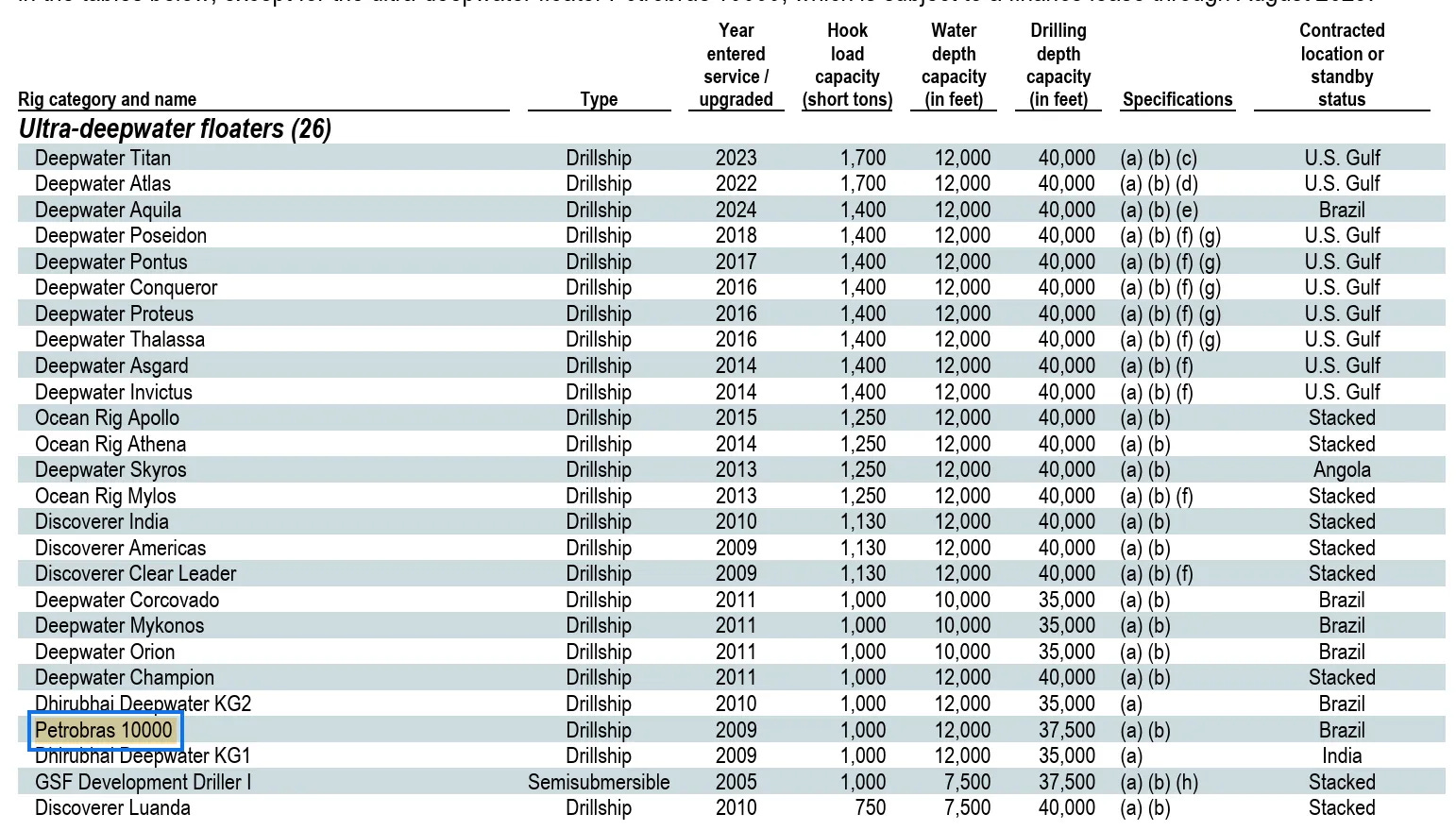
24 ultra-deepwater floaters × $600M replacement cost × 50% depreciation factor = $7.2 billion
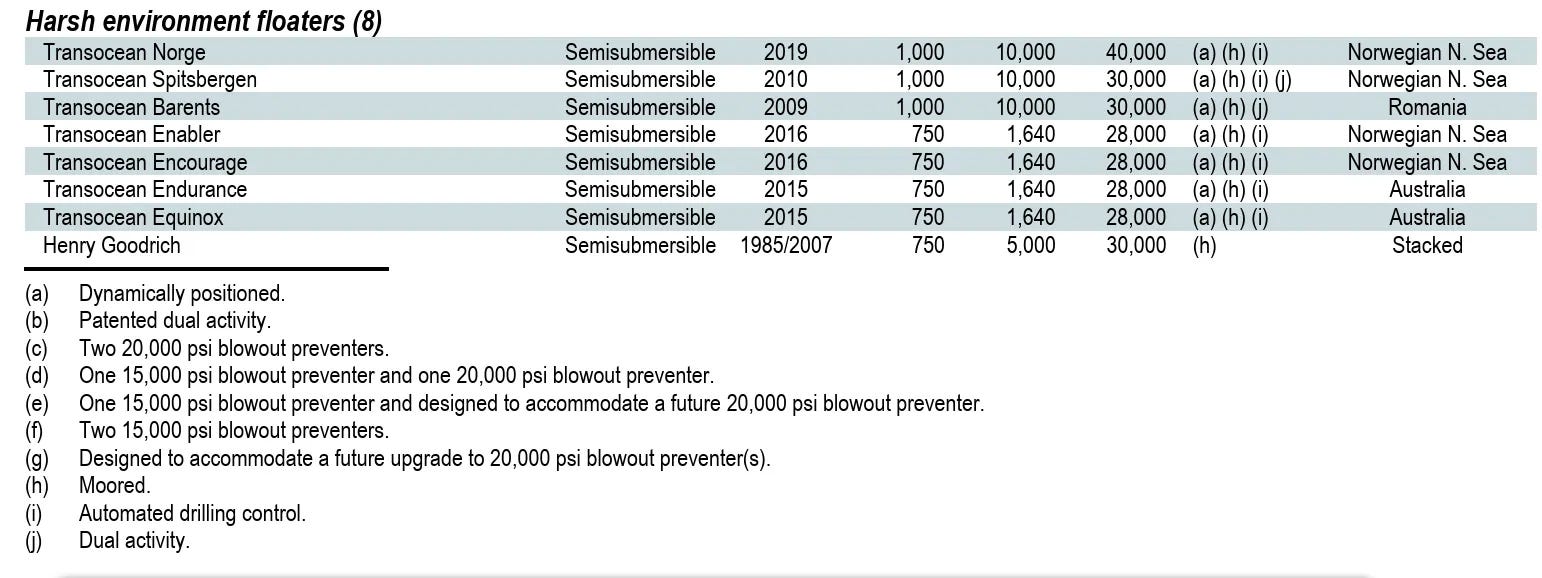
8 harsh environment floaters × $400M replacement cost × 50% = $1.6 billion
Total vessel value: $8.8 billion
Going Concern Valuation:
$8.8B vessels + $1.3B working capital - $6.875B debt = $3.2 billion equity value
Current market cap: $3.7 billion
The market is valuing them ABOVE going concern value, betting on the backlog being executed profitably.
The Commodity Exposure Problem
Offshore drilling is a leveraged bet on oil prices. Here’s the transmission mechanism:
Oil Price > $80/barrel:
Oil companies drill aggressively
Dayrates increase (supply/demand)
Utilization increases
Transocean thrives
Oil Price $60-80/barrel:
Selective drilling (only best prospects)
Dayrates moderate
Utilization steady but not growing
Transocean survives
Oil Price < $60/barrel:
Drilling collapses
Dayrates crater
Utilization plummets
Transocean faces distress
Current Oil Market (Q4 2025):
Brent crude: ~$73-78/barrel
WTI: ~$70-75/barrel
OPEC+ production increases expected
US shale production increasing
Demand growth questions (China slowdown, EV adoption)
Near-term (24 months) outlook: Oversupply concerns = pressure on oil prices
The 2025 Fleet Utilization
According to the company: 96.9% active fleet utilization for 2025 secured through 22 new contract awards in 2024.
That’s excellent! But there’s a catch: what happens in 2026-2027?
The $8.3 billion backlog is great, but:
Average dayrate implied: $8.3B ÷ (32 rigs × 365 days × utilization) ≈ $425,000/day
Breakeven dayrate: ~$300,000-350,000/day (estimated)
Cushion: Comfortable at current oil prices
But if oil drops to $60 and dayrates fall to $350,000/day:
Revenue impact: Revenue falls 18%
EBITDA impact: EBITDA falls 30%+ (operating leverage)
Interest coverage: Drops from 2.4x to 1.7x (danger zone)
The “Only Survivor” Moat
During 2014-2016, deepwater drillers went bankrupt en masse:
Seadrill: Restructured
Ocean Rig: Merged with Transocean (2018)
Atwood Oceanics: Acquired by Ensco (now Valaris)
Others: Liquidated
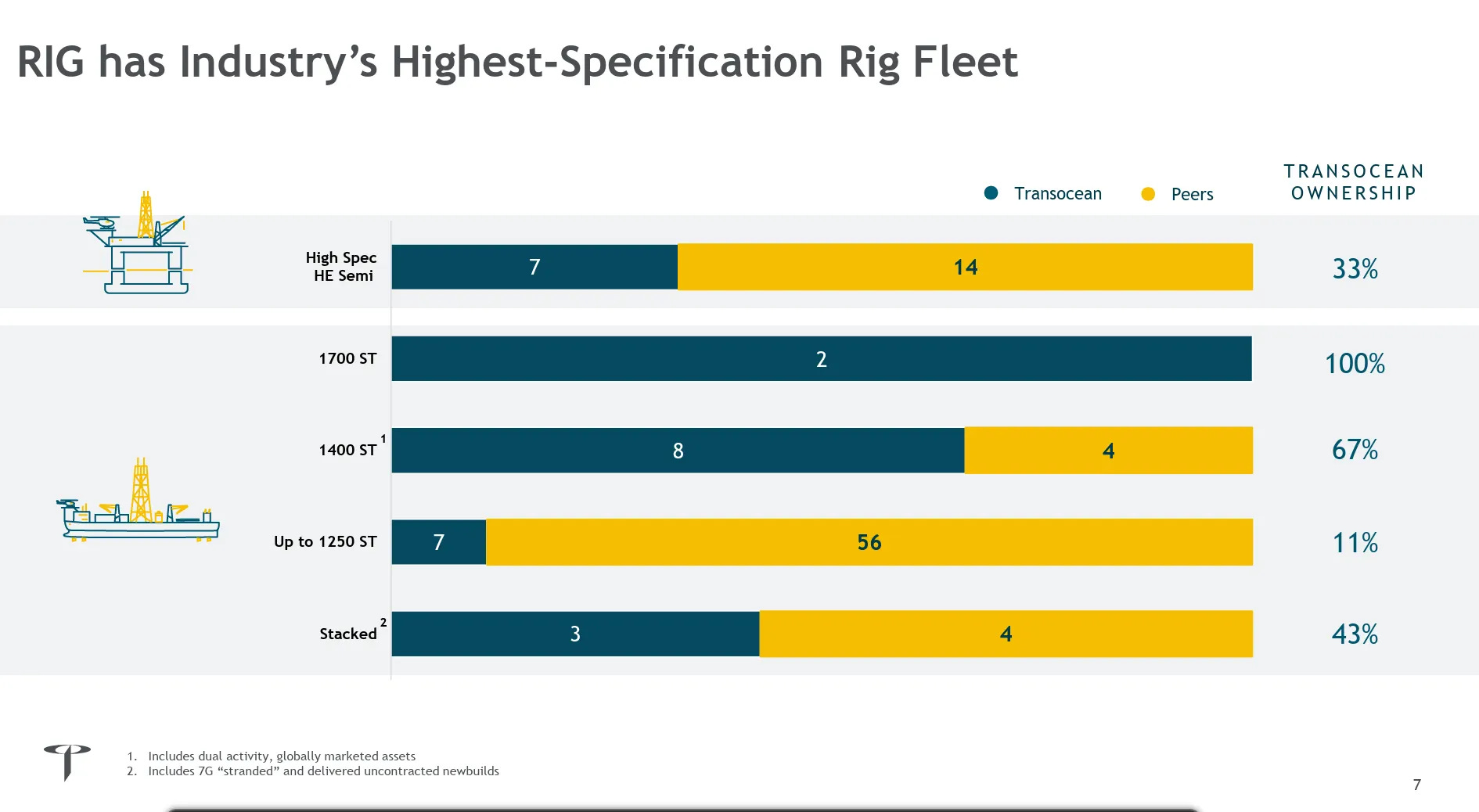

Transocean survived. This creates an oligopolistic market structure—fewer competitors means better pricing power.
But moats erode:
New entrants can’t easily enter (building drillships costs $600M+ and takes 3-4 years), but:
Existing players can reactivate cold-stacked rigs
Consolidation continues (Transocean itself could be acquisition target)
Technology changes (subsea technology might reduce need for floaters)
The Expected Value Calculation
Best Case (15% probability):
Oil stays above $75/barrel
Backlog executed at 26%+ EBITDA margins
Stock reaches $15-18
Return: 3.3-4.0x
Base Case (50% probability):
Oil ranges $65-75/barrel
Backlog executed at 20-24% EBITDA margins
Moderate dayrate environment
Stock reaches $7-9
Return: 1.6-2.0x
Bear Case (35% probability):
Oil drops below $65/barrel
Dayrates compress
Utilization falls
Potential covenant breach or debt restructuring
Stock falls to $2-3
Return: 0.4-0.7x
Expected Value: (0.15 × 3.6) + (0.50 × 1.8) + (0.35 × 0.55) = 1.53x
With LEAPs time decay, risk-adjusted return drops to ~1.2-1.3x
Birds in the Bush: 3.5x best case, 1.5x realistic case
Probability of Success: 50%—highly dependent on oil markets
Time Horizon: 2-4 years (full backlog execution)
The Lesson: Cyclical + Leverage = Danger
The formula for disaster:
Cyclical business (offshore drilling)
High operating leverage (fixed costs dominate)
High financial leverage (interest coverage barely 2x)
Commodity exposure (oil prices)
When any one goes wrong, the others amplify the damage.
Thought Experiment:
Imagine oil drops from $75 to $60 (20% decline). What happens?
Dayrates drop 25% (leverage effect)
Utilization drops from 96% to 85% (customers defer drilling)
Revenue falls 35-40%
EBITDA falls 50%+ (operating leverage)
Stock falls 60-70%
Your “3.5x upside” thesis evaporates, replaced with 70% losses.
The Asymmetry Problem:
Upside: 3.5x if everything goes right
Downside: -70% if things go wrong
Probability: 15% vs. 35%
Expected value might be positive, but the risk of ruin is too high for a concentrated position.
As Buffett says: “Rule No. 1: Never lose money. Rule No. 2: Never forget Rule No. 1.”
Transocean violates this by exposing you to potential 70% drawdowns in a bear case that has 35% probability.
Verdict: Rejection. The upside is seductive (3.5x!), but the downside is catastrophic (-70%) and more probable than the upside. This violates Kelly Criterion principles—the optimal bet size is negative (meaning don’t bet at all).
Learnings To Stick To
1. Dilution is Value Destruction
It doesn’t matter if a company has $200 million in cash if they’re issuing $300 million in equity at pennies on the dollar. Per-share value is what matters, not absolute value.
2. Debt is Fragility
Interest coverage below 3x means one bad year could trigger covenant breaches. Below 2x is playing with fire. Below 1.5x is suicidal.
3. Insiders Always Know First
When CEOs, CFOs, and directors sell 60-80% of vested RSUs immediately, they’re voting with their wallets. Listen.
4. Business Models Matter More Than Operations
You can’t cost-cut your way to success if the fundamental value proposition is obsolete.
5. Timing Is Everything (For Options)
e.g. MDU Resources and Krispy Kreme might be great investments... in 2027. But for LEAPs expiring in 2026, the timeline doesn’t work.
6. Regulatory Red Flags Are Never False Alarms
When annual reports are encrypted, when revenue collapses without explanation, when short sellers publish specific fraud allegations—walk away. The risk isn’t worth the reward.
7. Pandemic Winners Are Usually Losers
Mean reversion is brutal. Companies that benefited from temporary behavioral shifts rarely maintain those gains.
The Philosophy of “No”
Charlie Munger said: “The art of being wise is the art of knowing what to overlook.”
In investing, success comes from:
Saying yes to the right opportunities (important)
Saying no to the wrong opportunities (more important)
Saying no to marginal opportunities (most important)
This article is about #3. None of these companies were obviously terrible (well, maybe CHR and WIMI). Most had legitimate businesses, real assets, and plausible turnaround stories.
But “plausible” isn’t “probable.”
And “interesting” isn’t “investable.”
The Buffett-Munger Standard
Before investing, ask:
Do I understand this business? (Circle of competence)
Does it have a sustainable competitive advantage (Moat)/ does it have a legitimate working business model (for LEAPs)?
Is management trustworthy and aligned? (Stewardship)
Is the price attractive relative to intrinsic value? (Margin of safety)
What could go wrong? (Risk analysis)
For LEAPs specifically, add: 6. Will value be realized in 12-24 months? (Timing) 7. Is the expected return 2x+ to compensate for time decay? (Return threshold)
If the answer to ANY of these is “no” or “uncertain,” walk away.
The Opportunity Cost Mindset
Every dollar invested in these marginal opportunities is a dollar not available for exceptional opportunities.
Your capital is finite. Your attention is finite. Your time is finite.
Protect all three zealously.
When I reject companies, I’m not losing opportunities—I was preserving capital and attention for better opportunities yet to come.
In investing, a 0% success rate at finding investments can be a 100% success rate at avoiding disasters.