
Market Cap: ~$1.9B USD (as of analysis date)
Book Value: ~$1.9B USD
Price/Book: ~1.0x
Enterprise Value: Includes $350M convertible notes
Why I’m Walking Away From China’s “Netflix”
There’s a peculiar sort of theater that plays out in the stock market every day. An investor spots a company trading at what appears to be a fraction of its intrinsic value—maybe 10 cents on the dollar, maybe less. The numbers look absurd. The opportunity feels obvious. And then comes the crucial moment: the decision to buy or walk away.
I’m walking away from iQiyi (NYSE: IQ).
Not because it’s a bad company. Not because the stock might not double or triple from here. I’m walking away because after weeks of analysis, I’ve come to understand something Warren Buffett figured out decades ago: it’s not enough to find birds in the bush. You need to know exactly how many there are, how certain you are they’ll stay put, and how long you’ll wait to catch them.
iQiyi fails on all three counts. Let me show you why.
The Setup: A Company That Shouldn’t Exist at This Price
Picture this: You’re at an auction where HBO—yes, that HBO, the network that gave us Game of Thrones and The Sopranos—is being sold for roughly 10% of its perceived value. The audience is four times larger than the U.S. market. The infrastructure is built. The content library is substantial.
Would you bid?
That’s essentially the pitch for iQiyi. With 102.73 million household penetration and annual revenue of approximately 32 billion yuan ($4.5 billion) in 2023, iQiyi stands as China’s second-largest streaming platform, trailing only Tencent Video’s 110.10 million households. Yet the market values this entire operation at roughly $1.9 billion—about the price of a mediocre Silicon Valley startup with no revenue and a compelling PowerPoint deck.
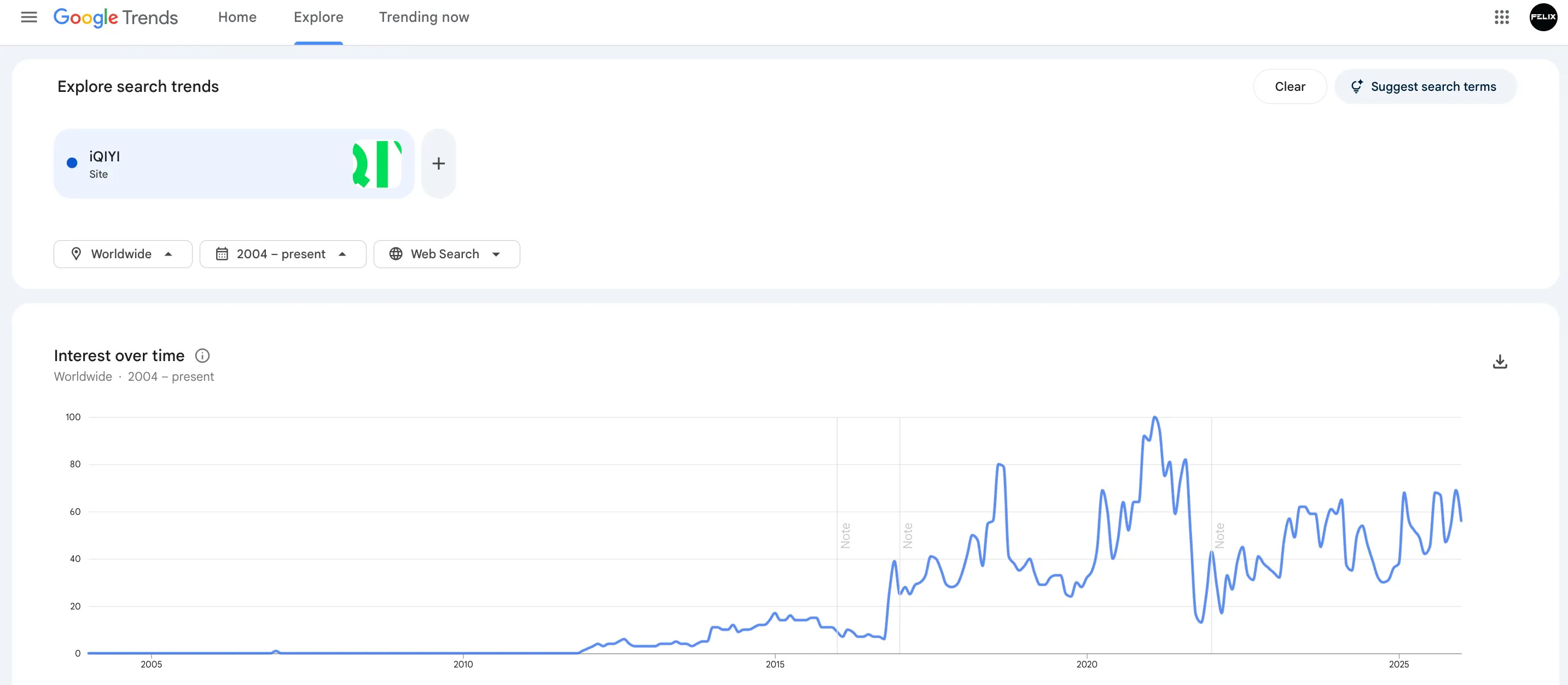
Here’s where it gets interesting: According to my analysis, the company was previously valued for potential sale at around $7 billion.
Let’s look at something similar: Warner Bros., which houses HBO, was acquired by AT&T and later merged with Discovery, creating a media giant where HBO contributed to a substantial portion of profits. If we generously assume HBO might be valued at around $10 billion within that structure, then iQiyi—serving a market over four times the size of the U.S.—trading at less than 20% of that valuation seems absurd.
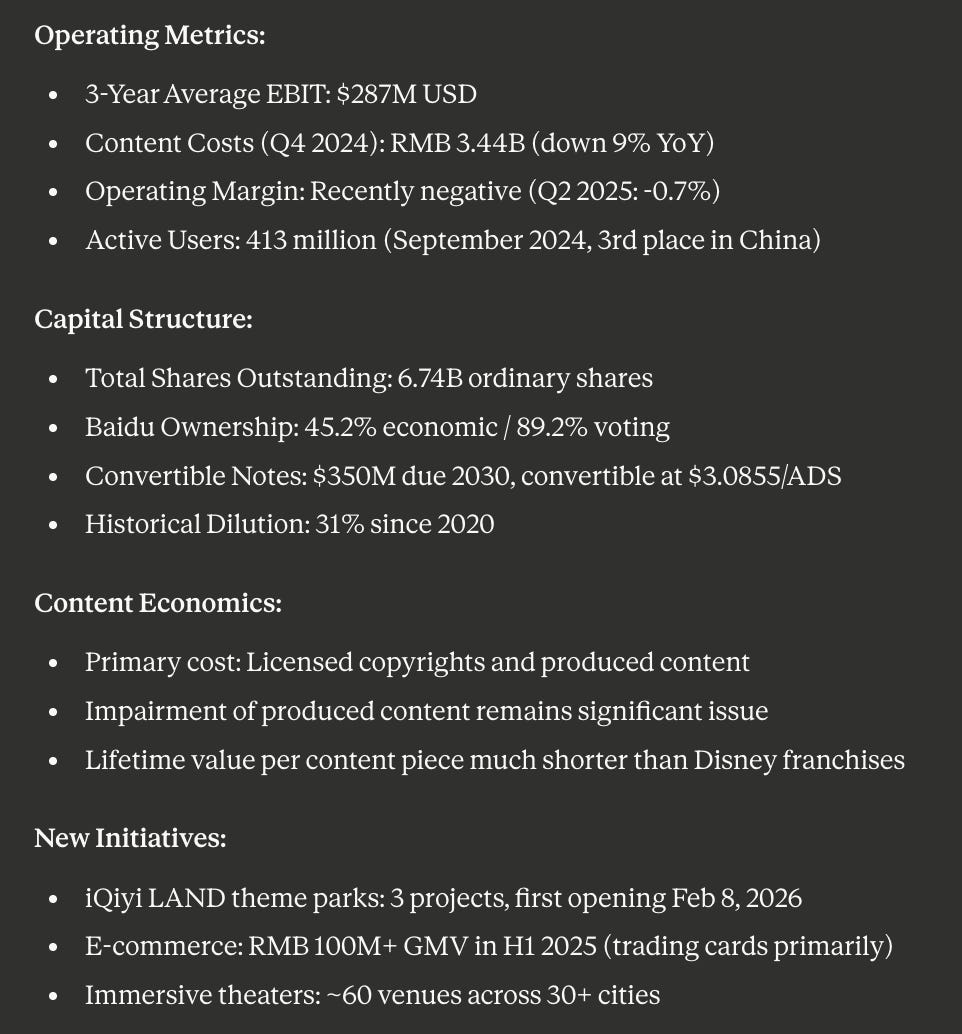
But here’s the thing about absurdities in the stock market: they’re usually absurd for a reason.
Question 1: How Many Birds Are In The Bush?
The Disney Dream (Or Delusion?)
iQiyi’s management has been telegraphing a fascinating transformation. They’re not content being China’s Netflix—a subscription streaming service burning cash on content. Instead, they’re pivoting toward Disney’s model: a “light asset, strong operations” approach where they provide IP, creative planning, and operational systems while local governments and commercial partners handle construction and capital investment.
On February 8, 2026—just days from now as I write this—iQiyi will open iQIYI LAND, its first global offline entertainment park in Yangzhou, Jiangsu province. Positioned as a next-generation indoor theme park, it blends advanced technology with iconic Chinese intellectual property to bring popular stories to life through immersive, interactive experiences.


The park features seven themed zones, including immersive theaters, interactive light-and-shadow spaces, live stage performances, and character interactions. Building on the success of operating nearly 60 immersive theater venues in more than 30 cities, iQIYI is now advancing with two additional iQIYI LAND projects currently in development.
The market opportunity appears substantial. China’s theme park sector reached RMB 60 billion (USD 8.2 billion) in 2023 and is projected to surpass RMB 110 billion (USD 15 billion) by 2028, according to China Insights Consultancy.
Let’s do some napkin math. If iQiyi successfully transitions to a Disney-like model, and Disney typically trades at around 2x book value, then with iQiyi’s current book value of roughly $1.9 billion, we might expect a market capitalization around $3.8 billion—a potential 2x return from current levels.
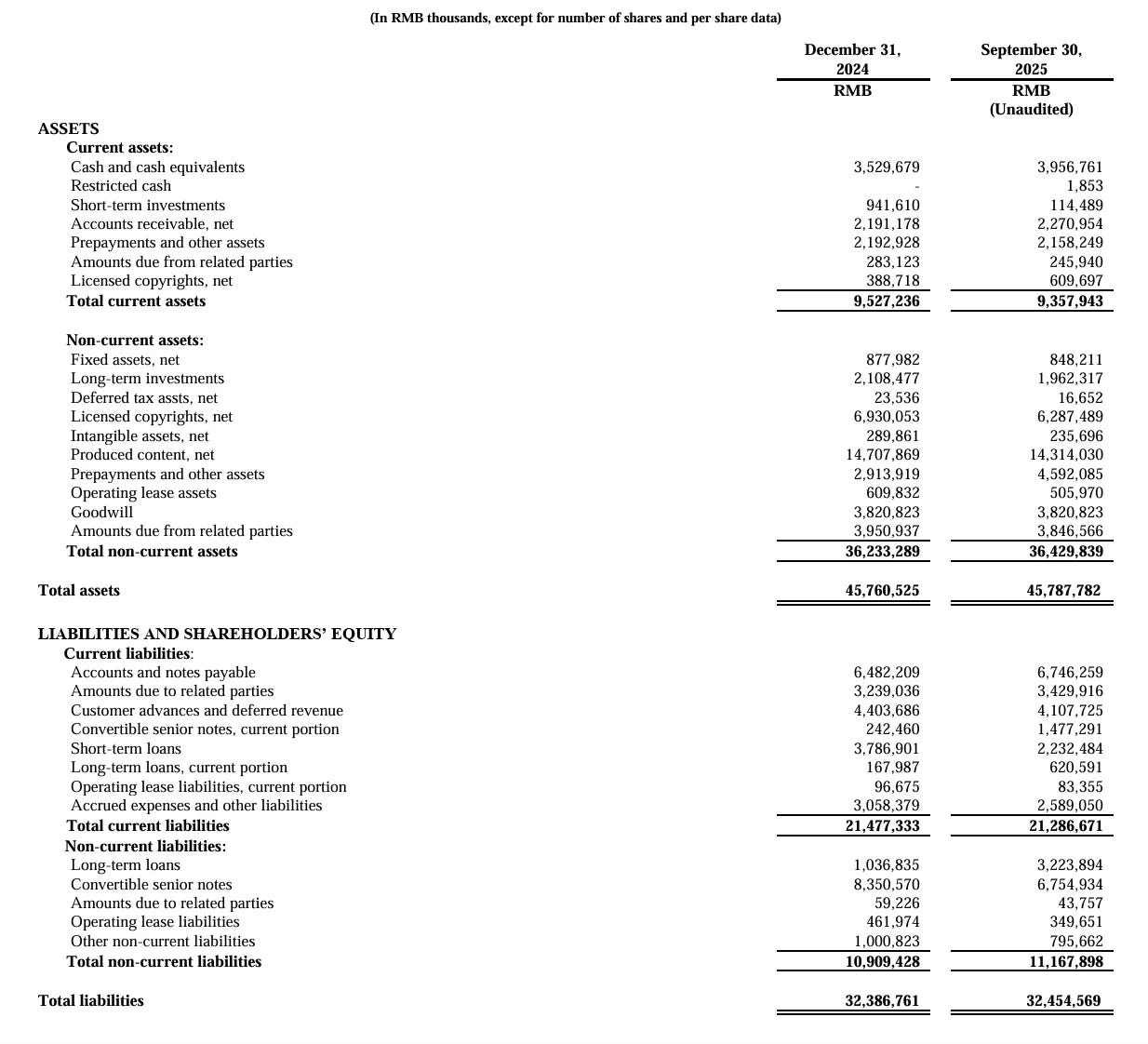

Add to this their e-commerce initiative (where viewers can purchase products featured in dramas during streaming), and you have multiple new revenue streams coming online in 2026.

Sounds great, right?
Here’s where the cracks start to show.
The Capital Reinvestment Mirage
On paper, iQiyi boasts an impressive Capital Reinvestment Rate of 27.3%. This metric—calculated by dividing their 3-year average EBIT of $287 million by their adjusted working capital and operational assets of $1,049 million—suggests high operating leverage.
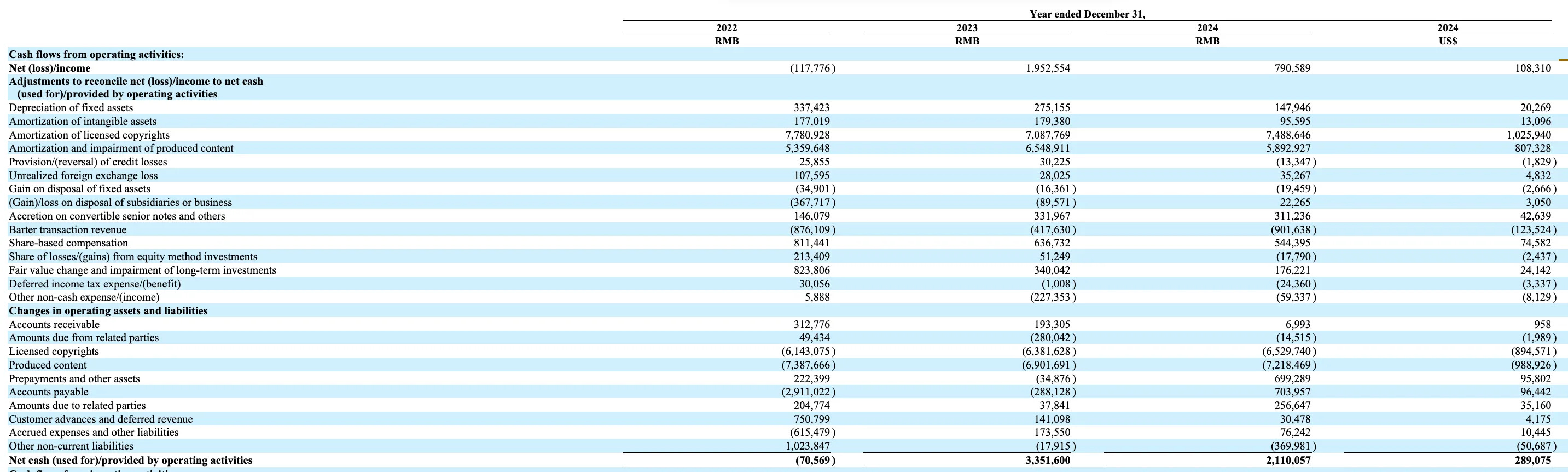
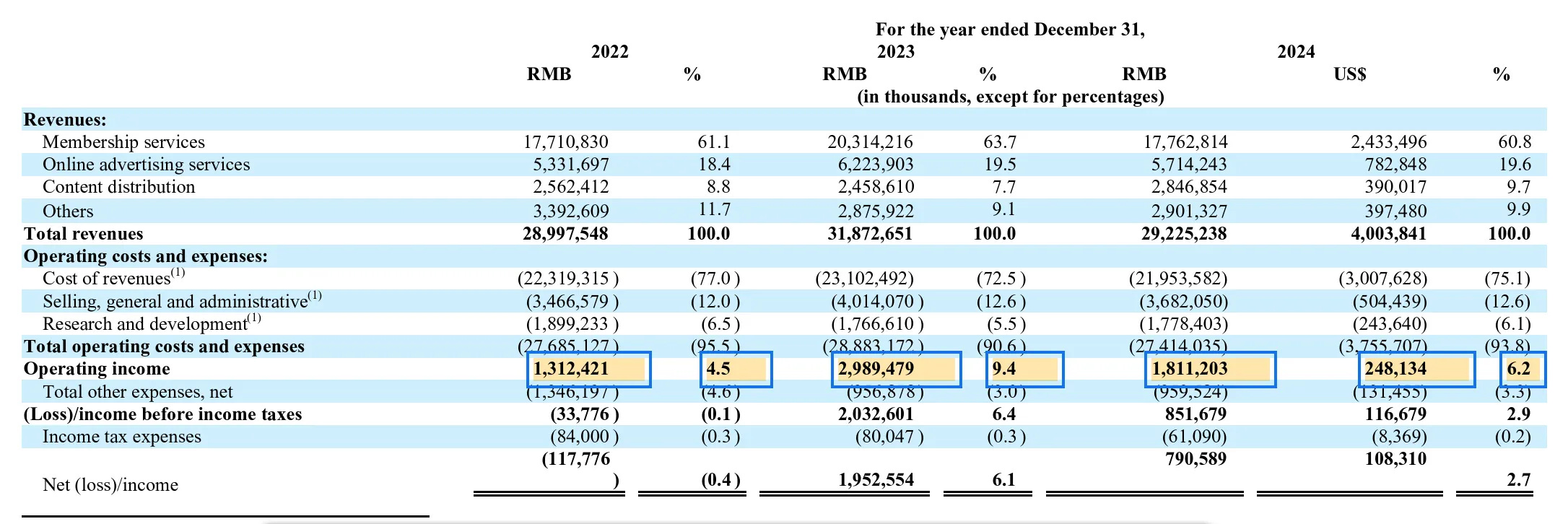
But let’s pause and think about what this number actually means.
A high capital reinvestment rate in a SaaS business is magical. You invest a dollar, and software economics give you recurring revenue with near-zero marginal costs. That’s the beauty of bits, not atoms.
iQiyi’s situation is different. Their largest cost component isn’t software development or server infrastructure—it’s content. And content has two nasty characteristics that make it a uniquely challenging business:
It depreciates rapidly: A drama that cost $50 million to produce might generate strong viewership for a few months, decent viewership for a year, and then largely fade from relevance. Unlike Disney’s Frozen (which can sell merchandise for decades), most streaming content has the shelf life of fresh bread.
It must be continuously replenished: You can’t just make one great show and coast. iQIYI reported mixed Q2 2025 financial results, with total revenues declining 11% year-over-year to RMB6.63 billion (US$925.3 million). The company swung to an operating loss of RMB46.2 million (US$6.4 million) compared to an operating income of RMB342.1 million in Q2 2024. Key metrics showed weakness across major segments: membership services revenue fell 9% due to a lighter content slate.

Notice that phrase: “lighter content slate.” When iQiyi slows content production, revenues decline. It’s a treadmill, not a flywheel.
The Franchise Problem: iQiyi’s Missing Moat
Here’s where we need to get brutally honest about intellectual property.
Disney owns Mickey Mouse. Warner Bros. owns Harry Potter. Marvel owns Iron Man. These aren’t just characters—they’re franchise-level brand assets with multi-generational staying power.
What does iQiyi own? According to Enlightent, a big data platform for the entertainment industry, iQIYI has ranked No. 1 in drama viewership share for three consecutive years. In 2023, iQIYI broadcast seven out of the top 10 most-viewed new dramas in the Chinese market.
That’s impressive! But look at the titles from my research:
Strange Tales of Tang Dynasty
The Bad Kids, The Long Night
War of Faith
Mysterious Lotus Casebook
The Rap of China
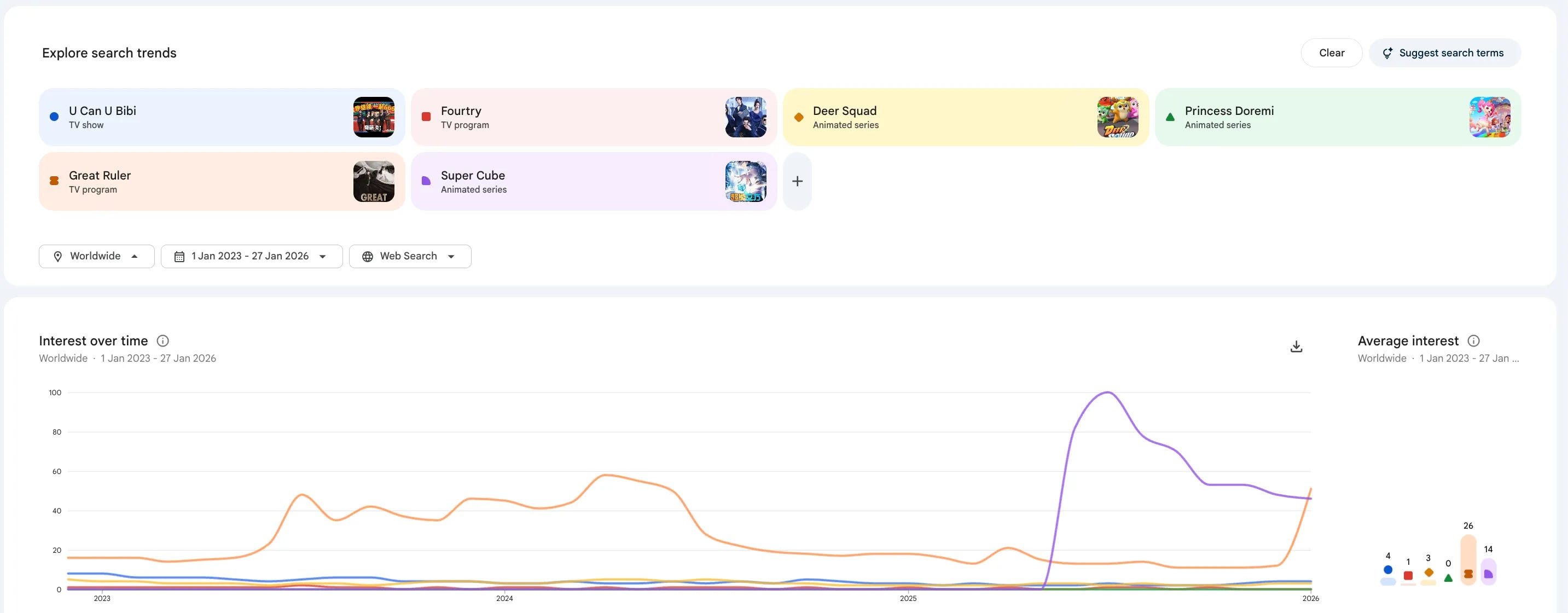
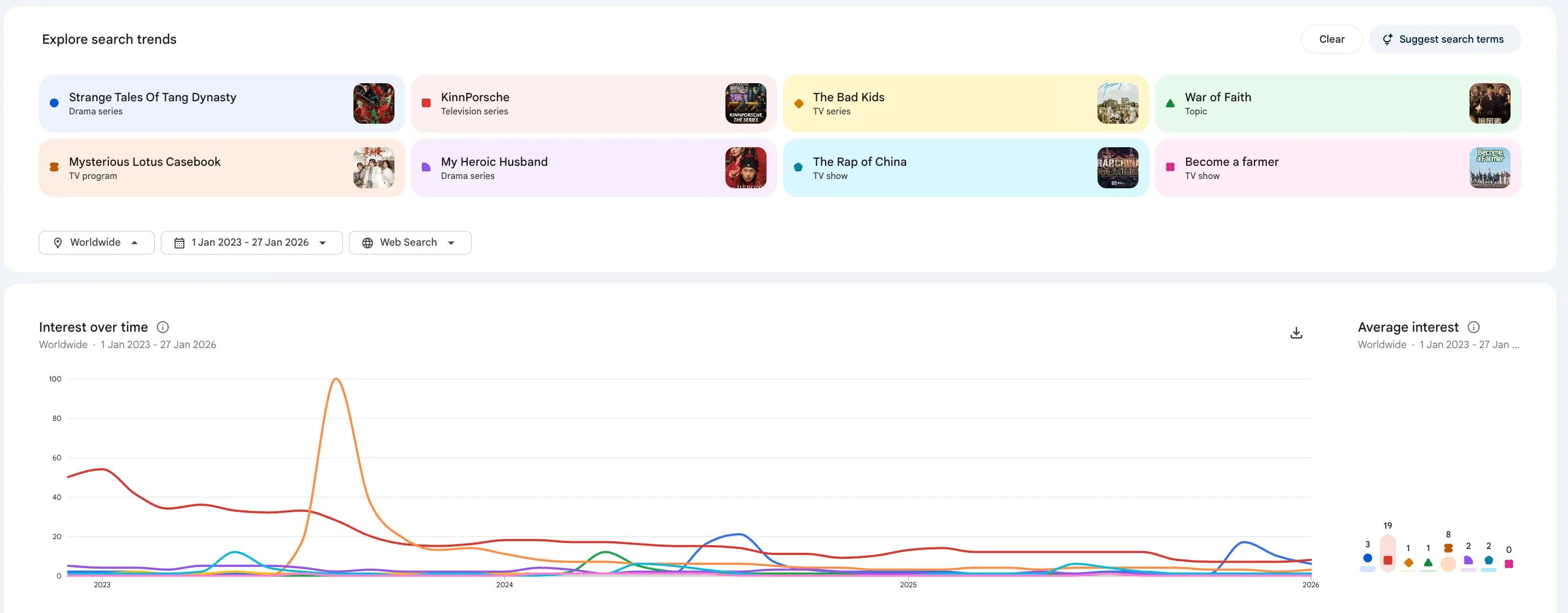
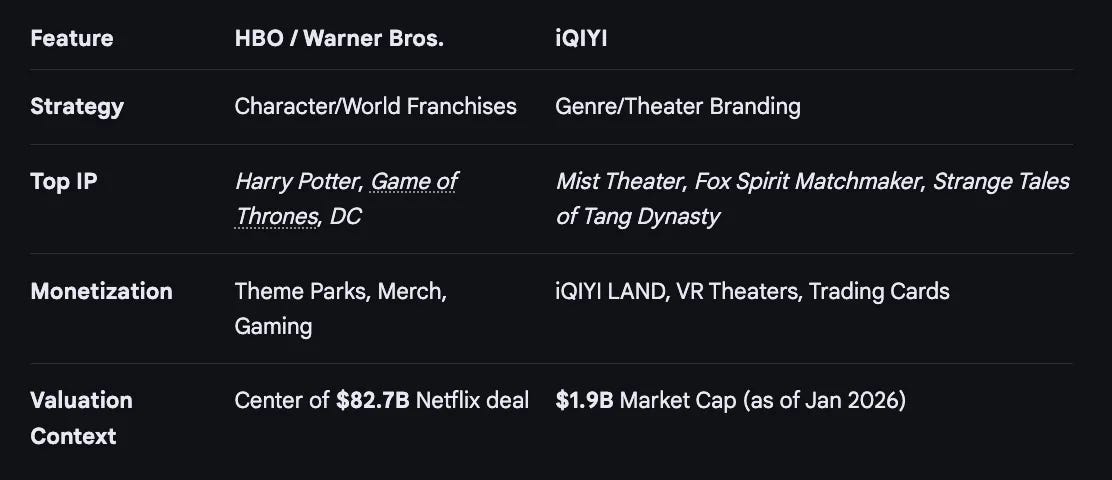
Now, quick question: Which of these titles could you license to a theme park in Malaysia? Which ones could anchor a $100 million attraction in Dubai? Which ones will people care about in 10 years?
Compare this to Disney’s playbook. Disney’s acquisition of Lucasfilm, Pixar, and Marvel Entertainment gave it access to some of the most lucrative IP in entertainment history. These brands now anchor attractions across its global parks, with Avengers Campus and Star Wars: Galaxy’s Edge among the most ambitious examples of IP-driven park design.
The difference isn’t just scale—it’s durability. Star Wars has been generating revenue for nearly 50 years. Harry Potter’s first book came out in 1997, and the franchise is stronger than ever. These are assets that appreciate over time as more people discover them and nostalgia compounds.
iQiyi’s content strategy, by contrast, is explicitly designed around volume and velocity, not building enduring franchises. They must “consistently launch a wide variety of new content to capture audience trends and retain subscribers, rather than banking on one franchise for years like HBO.”
In other words: they have more volume of assets with lower lifespan—the exact opposite of what you want when building a theme park business.
The Theme Park Economics: Why “Light Asset” Might Be “Light Returns”
Let’s talk about Disney’s theme park business model, because the comparison iQiyi is inviting requires understanding what they’re actually trying to replicate.
Disney reported $54.7 billion in global retail sales of licensed consumer products in 2018, up $1.7 billion from 2017, earning it the No. 1 spot on License Global’s annual Top 150 Global Licensors report. The Disney Parks, Experiences and Products business was up five percent in revenue as of Q2 2019 to $6.2 billion, bolstered by growth in its theme parks, resorts and cruise line.
Disney’s magic isn’t just that people visit the parks—it’s that the parks create a self-reinforcing flywheel:
Popular movie releases → Drive park attendance
Park experiences → Create emotional connections with IP
Emotional connections → Drive merchandise sales
Merchandise visibility → Keep IP in cultural consciousness
Cultural relevance → Make sequels and new content more valuable
Repeat from step 1
Now let’s examine iQiyi’s “light asset” model more carefully. Yes, they avoid heavy capital expenditures by having local governments and partners fund construction. But consider what they’re not capturing:
Real estate appreciation: Disney owns the land. As the park succeeds and the surrounding area develops, Disney’s asset value compounds.
Operating leverage: Disney controls ticket prices, hotel rates, food pricing. They capture the full economic surplus from a great guest experience.
Negotiating power: When you own the park, you negotiate from strength. When you’re licensing IP to someone else’s park, you’re at their mercy on renewal terms.
That being said, i do personality align with iQIYI’s “asset light” licensing model. However IP licensing only works if your IP has enduring value that justifies ongoing royalties.
The only time you prefer the royalty is when you have so many licensing opportunities that you couldn’t possibly build them all yourself. Disney can do this because Mickey Mouse works in Tokyo, Paris, Shanghai, and Orlando. Can the same be said for “Mysterious Lotus Casebook”? And can the same be said in 10 years?
Question 2: How Sure Are You?
This is where the investment thesis really starts to unravel. Let’s examine the evidence with the cold eye of a forensic accountant.
The Customer Acquisition Cost Problem
Here’s a number that should make any investor pause: Netflix’s customer acquisition cost has been estimated at $88.60 per subscriber, with an average lifetime value of $837, achieving almost a 10x ROI on retention-driven growth.
What about iQiyi? The company doesn’t disclose CAC directly, but we can back into some concerning indicators.
iQIYI’s Q1 2025 results showed total revenues decreased 9% YoY to RMB7.19 billion. Net income attributable to iQIYI was RMB182.1 million, lower than RMB655.3 million in the same period last year. The company maintained profitability despite challenges, with cost of revenues decreasing 4% YoY to RMB5.41 billion.
Let’s focus on what happened with content costs. According to the analysis, Q4 2024 content costs dropped approximately 9% YoY to RMB3.44 billion, “primarily due to improvement in content strategy, as well as a lighter content slate.”
Wait. Content costs dropped 9%, and revenue dropped 9-11%? That’s not operating leverage—that’s revenue directly tied to content spending. It’s the treadmill I mentioned earlier.
Compare this to Netflix’s model. Netflix has a 98.2% retention rate and an average subscription length of 4.6 years. Even when Netflix reduces content spending, subscribers don’t immediately cancel because they’re anchored to the service’s overall value proposition and extensive back catalog.
iQiyi doesn’t have that luxury. When they cut content, subscribers notice immediately because they’re primarily there for new content, not rewatching old shows.
The Revenue Mix That Reveals Everything
Let’s look at iQiyi’s revenue breakdown with the skepticism it deserves:
Q2 2025 Revenue Segments:
Membership services: -9% YoY
Online advertising: -13% YoY
Content distribution: -37% YoY
Other revenues: +16% YoY
That “other revenues” growth sounds promising until you realize it’s growing from a small base while core businesses contract. It’s like celebrating that your lemonade stand’s sticker sales are up 50% while lemonade sales collapse.
But here’s the really concerning part: The company swung to an operating loss of RMB46.2 million (US$6.4 million) compared to an operating income of RMB342.1 million in Q2 2024.
Let me translate: iQiyi went from profitable to unprofitable while cutting content costs. That’s the opposite of what should happen if they truly have improving unit economics.
The Competitive Moat: Does It Actually Exist?
Many bulls point to iQiyi’s data capabilities as a competitive advantage. “They know what Chinese viewers want!” the argument goes. “They can use data to create better content more efficiently!”
Let’s test this hypothesis against reality.
If iQiyi’s data advantage was truly sustainable, we’d expect to see:
Improving content efficiency (lower cost per hit show)
Increasing pricing power (ability to raise subscription prices)
Growing market share (taking subscribers from competitors)
What’s actually happening?
In September 2024, Youku was the leading long-formed video streaming app in China with about 443 million monthly active users. Tencent Video trailed with almost 422 million active users while iQIYI secured its third place with around 413 million active users.
iQiyi is in third place and not gaining ground. Despite all their data, despite their #1 position in drama viewership, they’re behind Youku and Tencent Video in total active users.
Why? Because in content businesses, data is helpful but not sufficient. You still need:
Creative talent to make great shows
Marketing to drive awareness
Continuous investment to refresh the library
Pricing discipline in a competitive market
None of these create lasting advantages. As my analysis notes: “consumer behaviours change really fast. Hence, data set is not a sustainable moat.” Moreover, the type of data they are getting and using, is easily accessible to their competitors.
The Real Moat iQiyi Needs (But Doesn’t Have)
Here’s what a sustainable moat looks like in media:
Franchises create negative cost of capital. When Disney makes a new Star Wars movie, they’re not just creating a film—they’re creating merchandise opportunities, theme park attractions, video games, and more. Third parties pay Disney for the privilege of making Star Wars products, which then advertises Star Wars to new audiences, which makes the next Star Wars project more valuable.
That’s negative cost of capital: you get paid to build your asset.
Does iQiyi have anything close to this? Not yet. Could they build it? Perhaps. But remember—Disney took decades to build these franchises. Marvel Comics existed for 40+ years before the Marvel Cinematic Universe became a phenomenon. These things take time, consistency, and avoiding the temptation to maximize short-term revenue at the expense of long-term brand building.
iQiyi, under pressure to show quarterly results and compete with Tencent and Youku, doesn’t have the luxury of multi-decade brand building. They need hits now. And hits-now strategies rarely create lasting franchises.
Question 3: How Long Till You Get Them Out?
This is where the rubber meets the road. Even if we accept iQiyi’s transformation story, even if we believe the theme parks will succeed, we need to ask: When does this thesis play out, and what are the risks along the way?
The February 8, 2026 Test
iQiyi LAND Yangzhou opens in just days. This is the company’s big bet—their proof of concept that IP can drive offline experiences.
What should we watch for? Not just attendance numbers (though those matter). The real questions are:
Revenue per visitor: Theme parks make money through tickets + food + merchandise. Disney excels at all three. Can iQiyi command premium pricing, or will they compete on discounts?
Repeat visitation: A truly successful theme park draws locals multiple times per year. Will people visit iQiyi LAND once for novelty, or build it into their entertainment rotation?
IP merchandising: Can they sell enough “Mysterious Lotus Casebook” merchandise to justify the economics? Or will guests take photos and leave?
Early social media feedback has been mixed (Xiao Hong Shu & WeChat). From my research: “There are comments on social media that the prices are expensive. Whilst others mention that it is much more valuable than a live-action role-playing (LARP) party game which costs much more expensive (LARP is currently trending in China).”
In other words: iQiyi is trying to convince customers they’re getting LARP-quality experience at LARP-level prices. That’s a tough sell when the IP isn’t established enough to command premium pricing on its own merits.
The E-Commerce Wildcard
iQiyi’s other 2026 initiative is content-driven e-commerce—letting viewers purchase products featured in shows during streaming.
The experience business (IP commerce) is growing: in H1 2025 iQIYI reported RMB 100+ million GMV from self-operated IP trading-card products. Merchandise and licensing deals are scaling up: managers highlighted consumer goods tie-ins (collectible cards, co-branded merch) that “resulted in stronger audience loyalty”.
RMB 100+ million in GMV sounds impressive until you realize:
GMV (Gross Merchandise Value) isn’t revenue. iQiyi’s cut is typically 10-30% depending on the model.
H1 2025 means six months, so annualized we’re talking RMB 200-300 million GMV, or maybe RMB 30-60 million in actual revenue.
Their total quarterly revenue is around RMB 6-7 billion. This new initiative is a rounding error.
Could e-commerce scale significantly? Sure. But look at the competition. Douyin (China’s TikTok) is already the dominant player in social commerce. Alibaba’s Taobao has content-driven shopping embedded. Tencent has WeChat’s ecosystem. Now, all the customer has to ask is “whose platform can help me to convert sales better relative to the cost i am paying?” - notice that its a race to the bottom?
That’s not a focused strategy. That’s desperation diversification.
The Dilution Time Bomb
Here’s something that doesn’t get enough attention: iQiyi’s capital structure is a mess.
From my analysis:
6.74 billion shares outstanding
45.2% ownership and 89.2% voting control held by Baidu
$350 million in convertible senior notes issued in February 2025, convertible at $3.0855 per ADS
The company has faced 31% dilution since 2020. While management claims dilution risk is low because only 4% of Class A shares are reserved for future issuance, that convertible note is a landmine.

Current price (as of my analysis): around $2.09-2.50 per ADS
Conversion price: $3.0855 per ADS
If the stock rallies above $3.09, those notes convert and dilute existing shareholders. If it doesn’t rally, iQiyi has to repay $350 million in 2030 (c.12%)—cash they might need for content or theme park expansion.
It’s a beautiful piece of financial engineering from the company’s perspective: heads they dilute you, tails they constrain growth. Either way, existing shareholders lose.
The China Risk No One Wants to Discuss
Let’s address the elephant in the room: this is a Chinese company, controlled by another Chinese company (Baidu), operating in a heavily regulated industry (media), during a period of increased geopolitical tension.
“But wait,” you might say, “entertainment is less regulated than semiconductors or finance. Consumer businesses are safer!”
Are they though?
Remember when China’s government essentially shut down the for-profit tutoring industry overnight in 2021? Companies like TAL Education and New Oriental saw their stock prices crater 90%+ because Beijing decided the industry wasn’t aligned with government priorities.
Entertainment might seem safer, but content is fundamentally about shaping narratives and influencing culture. The Chinese government has already shown willingness to intervene in entertainment: limiting gaming time for minors, restricting celebrity worship, cracking down on “effeminate” male celebrities, and tightening content approval processes.
Could iQiyi face similar pressure? Consider:
Theme parks require local government approval and cooperation
Content must pass censorship review
Business model changes might affect employment (politically sensitive)
Competition with state-backed platforms (Mango TV) adds political complexity
I’m not saying regulatory crackdown is certain. I’m saying it’s a non-zero risk that doesn’t show up in financial models but should significantly discount the valuation you’re willing to pay.
The Final Verdict: Why I’m Passing
Let me bring this home with a story.
Imagine you’re offered a chance to invest in a lemonade stand. The kid running it shows you impressive numbers: revenue is up, costs are down, margins are improving. There’s just one catch—the stand is located in a park where the ranger can shut you down at any moment, there are three other lemonade stands fighting for customers, and your success depends on buying fresh lemons every single day at volatile prices.
Oh, and the kid wants to expand into selling cookies too, and maybe building a small playground, all while the existing lemonade business is still figuring out how to stay consistently profitable.
Would you invest?
That’s iQiyi in a nutshell.
Let’s return to Buffett’s three questions:
1. How many birds are in the bush?
Maybe 2x upside if everything goes right. The Disney comparison suggests $3.8B market cap vs. current $1.9B. But this assumes successful theme park execution, stable content costs, no regulatory headwinds, and IP that can actually drive offline experiences.
2. How sure are you?
Not very. iQiyi has:
Weak IP compared to Disney’s franchises
Revenues tied directly to content spending (treadmill, not flywheel)
Third-place market position in a competitive industry
Unproven offline entertainment model
Complex capital structure with dilution risk
China regulatory uncertainty
The chance all these variables align favorably? I’d put it at maybe 20-30%.
3. How long till you get them out?
Unknown. Theme park opening is February 2026, but meaningful revenue impact won’t show up until late 2026 at earliest. Full transformation to Disney-like model would take years. Meanwhile, you’re sitting in a stock that might be range-bound or decline if execution stumbles.
Closing Thoughts: The Discipline to Walk Away
The hardest thing in investing isn’t finding ideas. It’s saying no to ideas that look good but aren’t quite good enough.
iQiyi is a good company. It might even be a good investment for someone with different criteria, time horizon, or risk tolerance. But for me, it fails the fundamental test that Buffett and Munger have drilled into students of value investing for decades:
Can I know with reasonable certainty how many birds are in the bush, trust they’ll stay there, and estimate when I can collect them?
For iQiyi, the answer is no on all three counts.
And in investing, three nos make a pass—no matter how cheap the stock looks.
The next time you encounter a similar situation—a company trading at seemingly absurd valuations—resist the urge to immediately buy. Instead, ask the three questions. Work through the analysis with intellectual honesty. And remember that the best investment is often the one you don’t make.
22 Feb 2026 Update: a certain research had gotten me to relook at this opportunity