
The Siren Song of Cheap Value
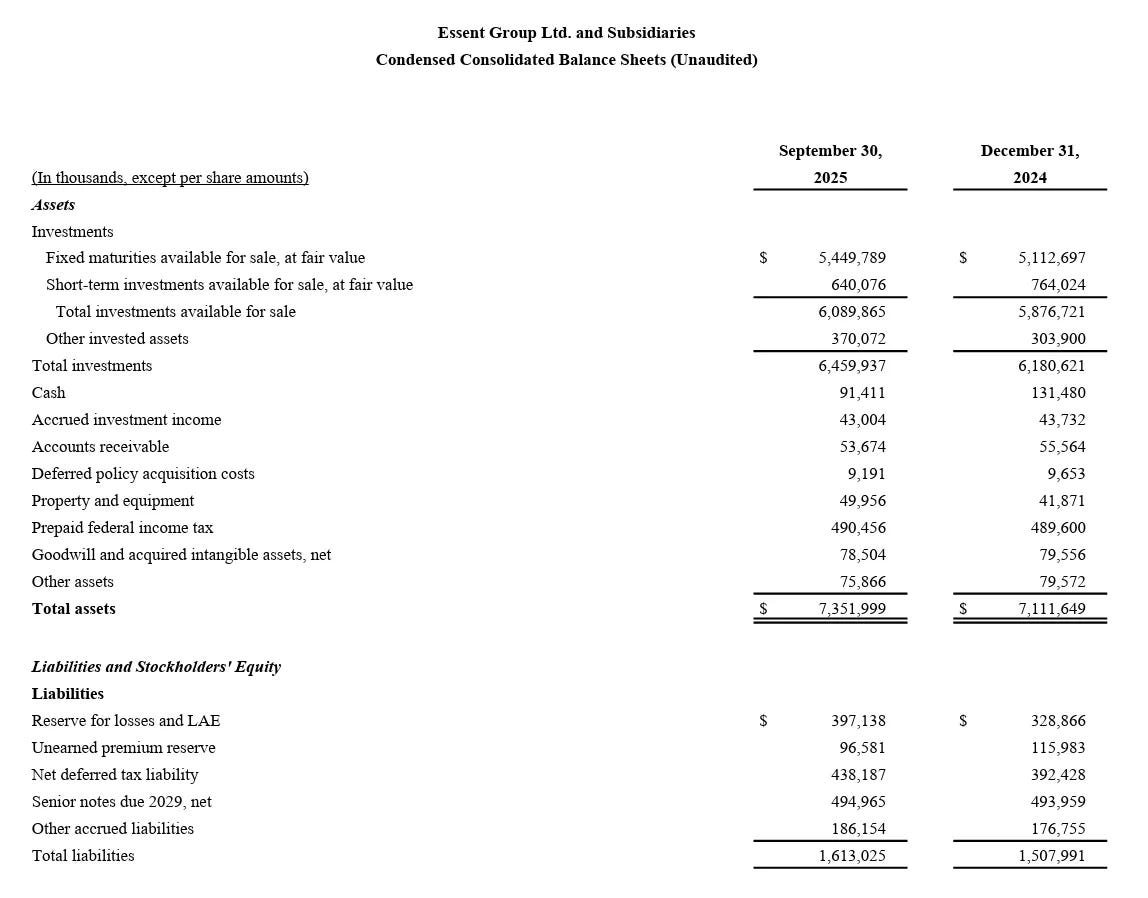
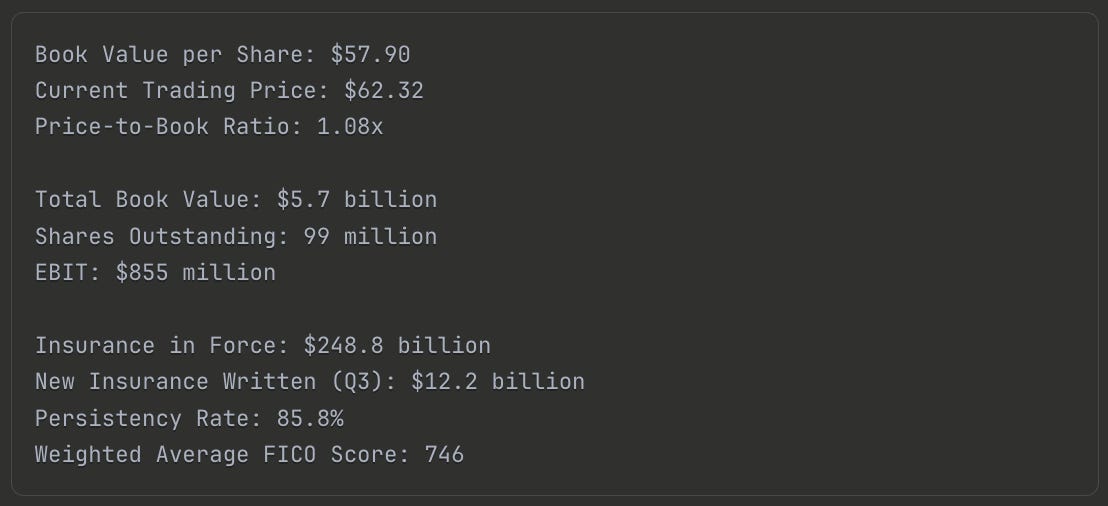
Picture this: You’re scrolling through your investment screens, and there it is—a company trading at $62.32 with a book value of $57.90 per share. A price-to-book ratio barely above 1.0. Return on equity consistently north of 15%. Operating cash flows that would make a plumber jealous. An $855 million EBIT sitting on what appears to be negative working capital of $166 million, yielding a theoretical return on capital that breaks your calculator (negative 515%, if you’re keeping score).

Your value investing spider-sense starts tingling. This is it, you think. The market has mispriced this gem.
But then you pause. You remember what Warren Buffett actually said about insurance companies: “In insurance, the unthinkable always happens.” And you remember what he didn’t say—but showed through decades of actions—about mortgage insurance specifically: he stayed away.
This is the story of Essent Group (NYSE: ESNT), a company with numbers so attractive they could grace a magazine cover, and why those numbers tell only half the story. More importantly, it’s about asking three simple questions that separate investment from speculation:
1. How many birds are in the bush? (What are you really getting?)
2. How certain are you those birds exist? (What could go wrong?)
3. How long until you can get them out? (What’s your timeline and exit?)
By the time we’re done, you’ll understand why sometimes the hardest word in investing isn’t “sell”—it’s “pass.”
Part I: The Setup — Understanding the Creature We’re Dealing With
What Essent Actually Does (And Why It Matters)
Essent Group, founded in 2008 in the smoldering aftermath of the Great Financial Crisis, provides private mortgage insurance to lenders. The company serves the housing finance industry by providing private capital to bear mortgage credit risk, enabling lenders and mortgage investors to make mortgage financing available for homeowners.
Here’s the business model in plain English: When you buy a house with less than 20% down payment, your lender requires you to purchase private mortgage insurance (PMI). This insurance doesn’t protect you—it protects the lender if you default on your mortgage. PMI typically costs between 0.46% to 1.50% of the original loan amount per year, and that’s where companies like Essent make their money.
As of September 30, 2025, Essent had $248.8 billion in insurance in force. Think about that number for a moment. Quarter of a trillion dollars in exposure. The company collects premiums upfront, invests that money (the “float” that Buffett loves so much in insurance), and pays claims when homeowners default.
Sounds simple, right? Collect premiums, invest wisely, pay out less than you collect. The classic insurance playbook.
Except mortgage insurance has one fatal flaw that distinguishes it from almost every other form of insurance: correlation risk.
The Correlation Trap: Why Mortgage Insurance Isn’t Like Car Insurance
When Berkshire Hathaway owns GEICO, Warren Buffett sleeps soundly knowing that car accidents are largely independent events. Your fender-bender in Phoenix has nothing to do with someone running a red light in Pittsburgh. These risks are uncorrelated—they don’t happen together.
Mortgage defaults? They’re the exact opposite.
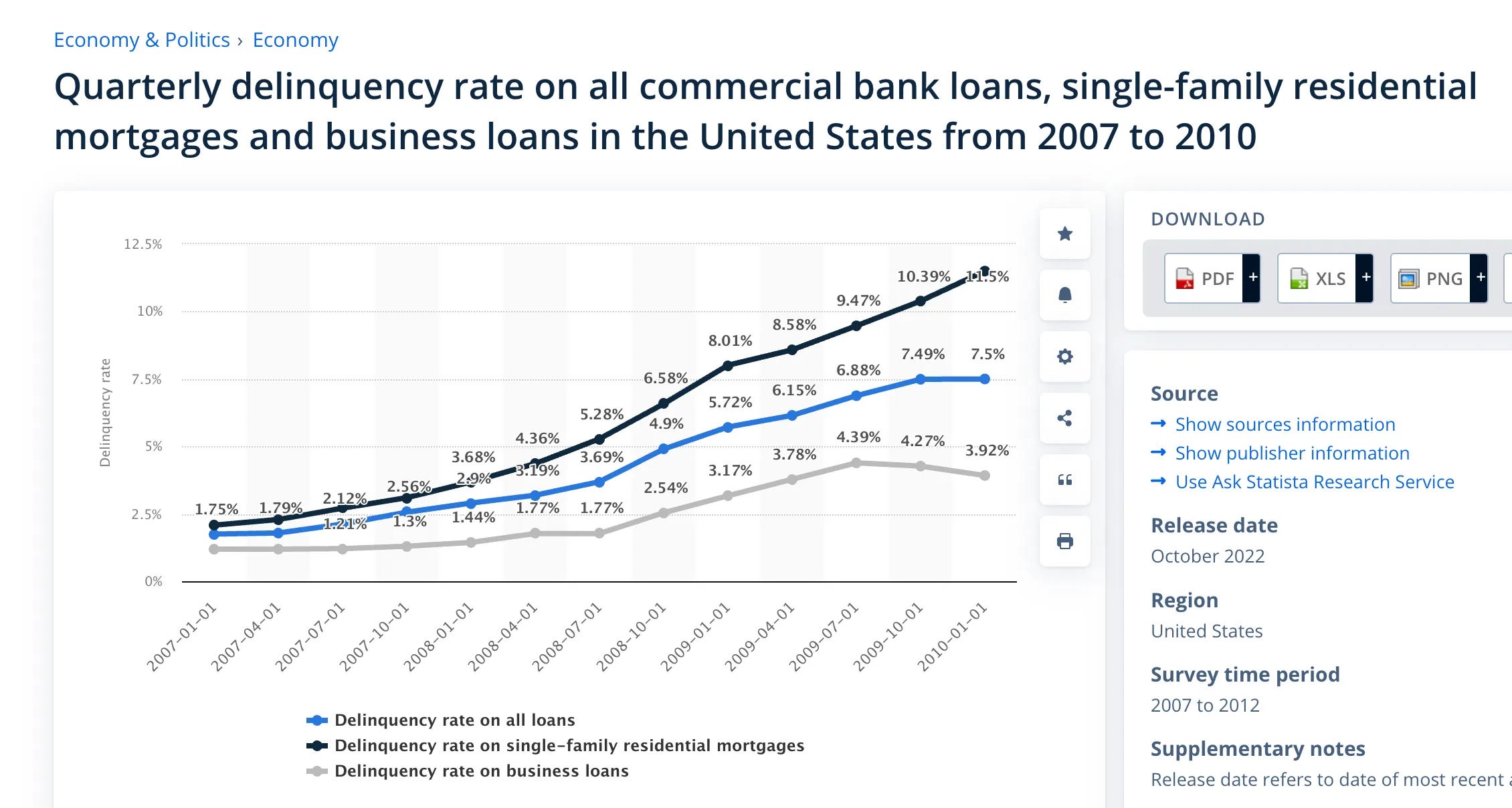
When housing markets crash, defaults don’t trickle in one at a time like car accidents on a Tuesday afternoon. They avalanche. During the 2008 financial crisis, single-family residential mortgage delinquency rates hit 11.5%. That’s not 11.5% of policyholders having isolated problems—that’s a systemic collapse where millions of homeowners simultaneously couldn’t pay.
Here’s why this matters for Essent: In a housing downturn, claims don’t happen in isolation; thousands of policyholders may default simultaneously. Unlike auto insurance where GEICO can spread risk across individual driving incidents, or medical malpractice where claims are driven by specific doctor errors, mortgage insurance is effectively a singular bet on the stability of the U.S. housing market and employment levels.
This is the crucial insight that separates great insurance businesses from dangerous ones. Buffett loves catastrophe insurance with geographic diversity. A hurricane in Florida doesn’t cause an earthquake in California. But a housing downturn in America? That’s a correlated nationwide event.
Part II: How Many Birds Are In The Bush? (The Superficial Attraction)
The Numbers That Make Your Mouth Water
Let’s be honest about what attracted me to ESNT in the first place. The numbers are genuinely impressive:
Financial Snapshot (As of Q3 2025):
For Q3 2025, Essent reported net income of $164.2 million or $1.67 per diluted share, with the Board declaring a $0.31 quarterly cash dividend. The company generated total GAAP revenue of $319.1 million, up 2.0% from $312.9 million in Q2 2024.
Now here’s where it gets interesting—or troubling, depending on your perspective.
The company shows an $855 million EBIT against adjusted working capital of negative $166 million (after accounting for working capital of -$296M, PP&E of $50M, and goodwill of $80M). This yields a theoretical “return on tangible capital” of negative 515%.

In English: The company appears to be printing money with almost no tangible capital required.
This is the kind of metric that makes value investors salivate. It suggests a capital-light business model with extraordinary economics. After all, if you can generate $855 million in earnings with effectively no capital, you’ve found the Holy Grail, right?
The Customer Acquisition Picture: Better Than Most Insurance
One area where mortgage insurers have a genuine advantage over traditional insurance is customer acquisition cost. The insurance industry has the highest customer acquisition costs of any industry, costing seven to nine times more to attract a new customer than to retain one. The average cost of insurance customer acquisition rose to $900 per customer across the industry.
But mortgage insurance works differently. Essent doesn’t hunt for customers—customers come pre-packaged through mortgage lenders. When someone takes out a mortgage with less than 20% down, the lender requires PMI. The “acquisition cost” is essentially relationship management with lenders, not consumer advertising.
This creates attractive unit economics compared to, say, State Farm or Allstate who must spend heavily to acquire individual consumers. Direct insurers like Progressive and Geico paid an average of $487 to acquire a customer, while captive insurers like State Farm and Allstate paid $792 on average.
For Essent, the primary cost is maintaining relationships with mortgage lenders and originators—a B2B model rather than B2C. This is genuinely efficient.
The Lifetime Value Equation: The Holy Grail Metric
Here’s where mortgage insurance gets interesting from an economic standpoint. The customer lifetime value in mortgage insurance is determined by one key metric: persistency rate.
Essent’s persistency rate—the rate at which customers keep their mortgage insurance policies—was 85.8%. In insurance terms, high persistency rate signifies that the product is performing well and retaining customer loyalty.
But here’s the twist: In mortgage insurance, high persistency isn’t always what you want. Let me explain.
PMI (Private Mortgage Insurance) typically gets removed when the homeowner reaches 20-22% equity in their home. Federal regulations require automatic cancellation of PMI at 78% LTV (loan-to-value). This means the “ideal” customer for Essent is someone who:
Keeps paying their mortgage (doesn’t default)
Keeps paying PMI premiums for several years
Eventually builds enough equity to remove PMI
Never makes a claim
The lifetime gross profit per policy depends on:
Premium collected over the life of the policy (usually 3-7 years)
Minus: Claims paid out if the borrower defaults
Minus: Operating costs
With an average FICO score of 746 across the portfolio and 753 for new business, Essent is underwriting high-quality borrowers. These are people likely to keep paying.
Rough Lifetime Value Math:
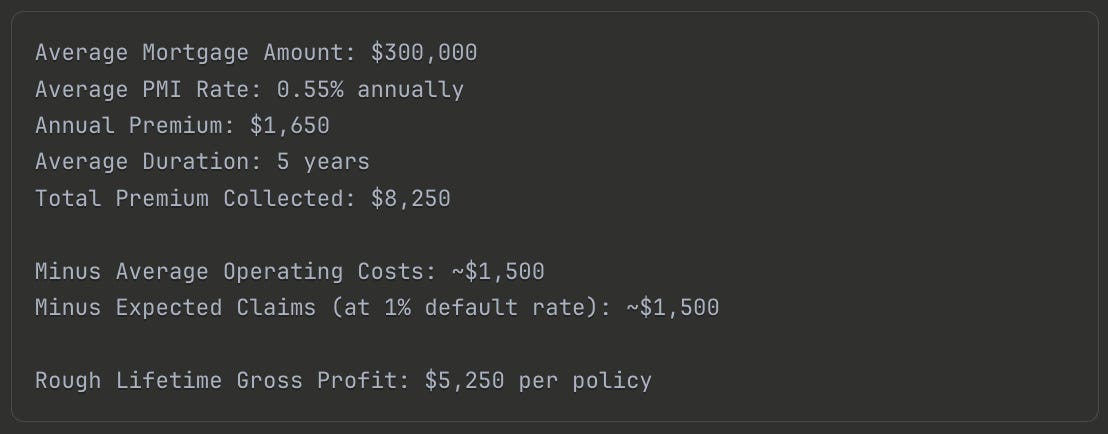
With $12.2 billion in new insurance written in Q3 2025, that’s roughly 40,000+ new policies per quarter. At $5,250 gross profit per policy over time, that’s potentially $210 million in future gross profits from one quarter’s originations alone.
On paper, this is a money-printing machine. Low customer acquisition cost, decent lifetime value, strong credit quality. What’s not to love?
This brings us to our second question—the one that changes everything.
Part III: How Certain Are You? (The Problem With Correlation)
The $28 Billion Problem Nobody Wants to Talk About
Here’s where my analysis hit a wall. Not a small bump—a concrete wall traveling at highway speed.
Let’s do some uncomfortable math.
Essent has $248.8 billion in insurance in force as of September 30, 2025. The company holds $397 million in reserves for losses. Total book value is $5.7 billion.
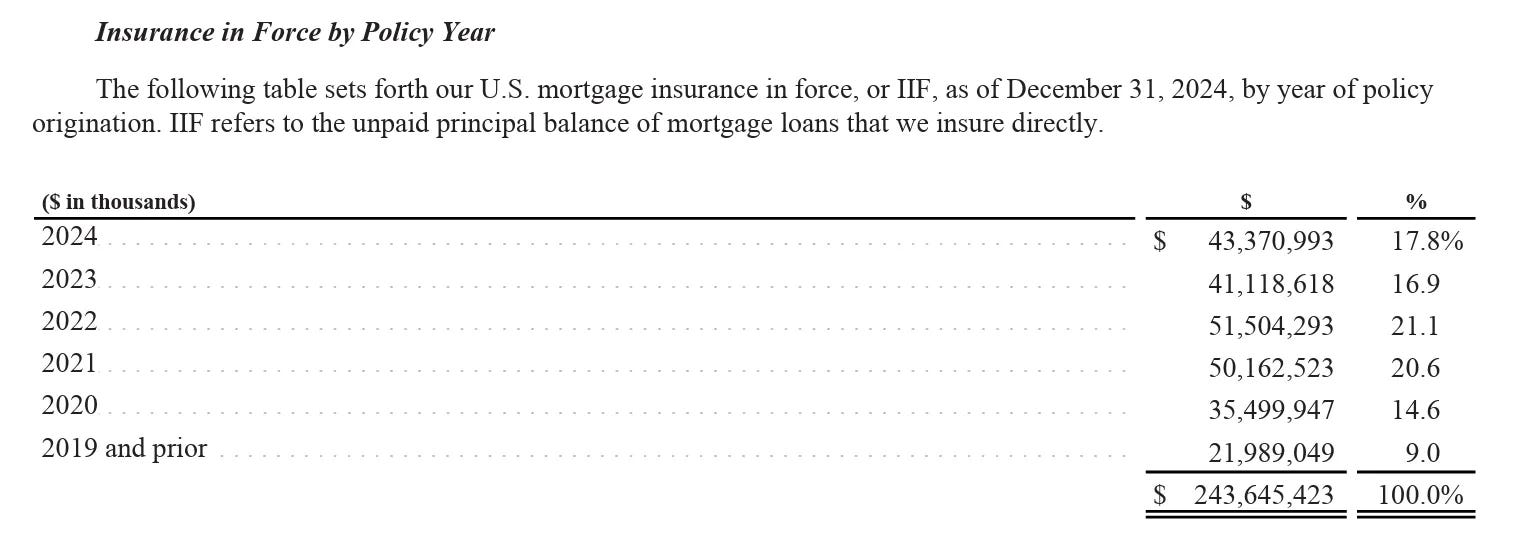
Now, what happens if we get another 2008-style housing crisis?
During the Great Financial Crisis, the delinquency rate for single-family residential mortgages peaked at 11.5%. Let’s be conservative and assume Essent would face a similar scenario.
Crisis Scenario Math:
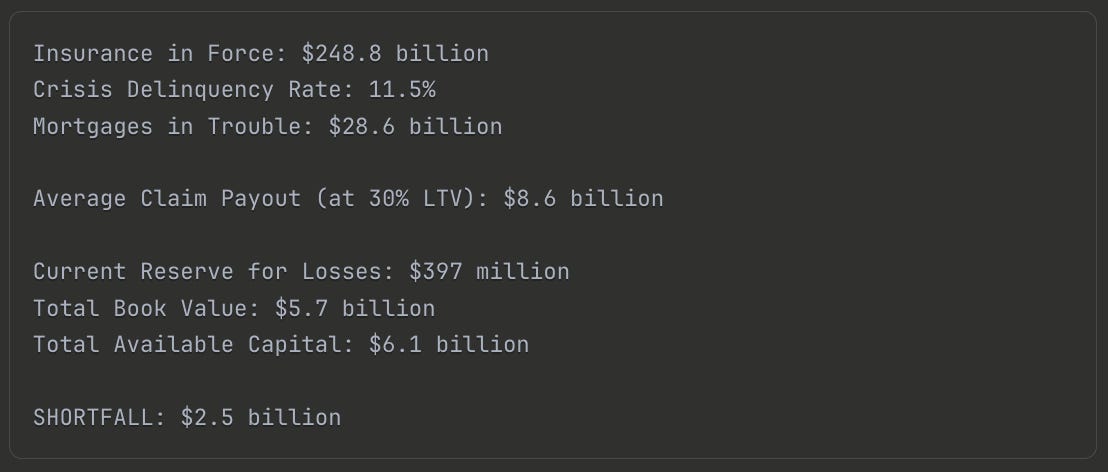
Read that again. In a 2008-style crisis, Essent would be facing potential claims of $8.6 billion against total available capital of $6.1 billion.
The company would be insolvent.
“But wait,” you might say, “surely today’s mortgages are safer than 2008?”
You’d be right. Let’s look at the data.
Credit Quality: Better But Not Bulletproof
As of September 30, 2025, loans with FICO scores ≤679—often associated with subprime risk—represent only approximately 4.7% of Essent’s insurance-in-force portfolio, with the weighted average credit score around 746.
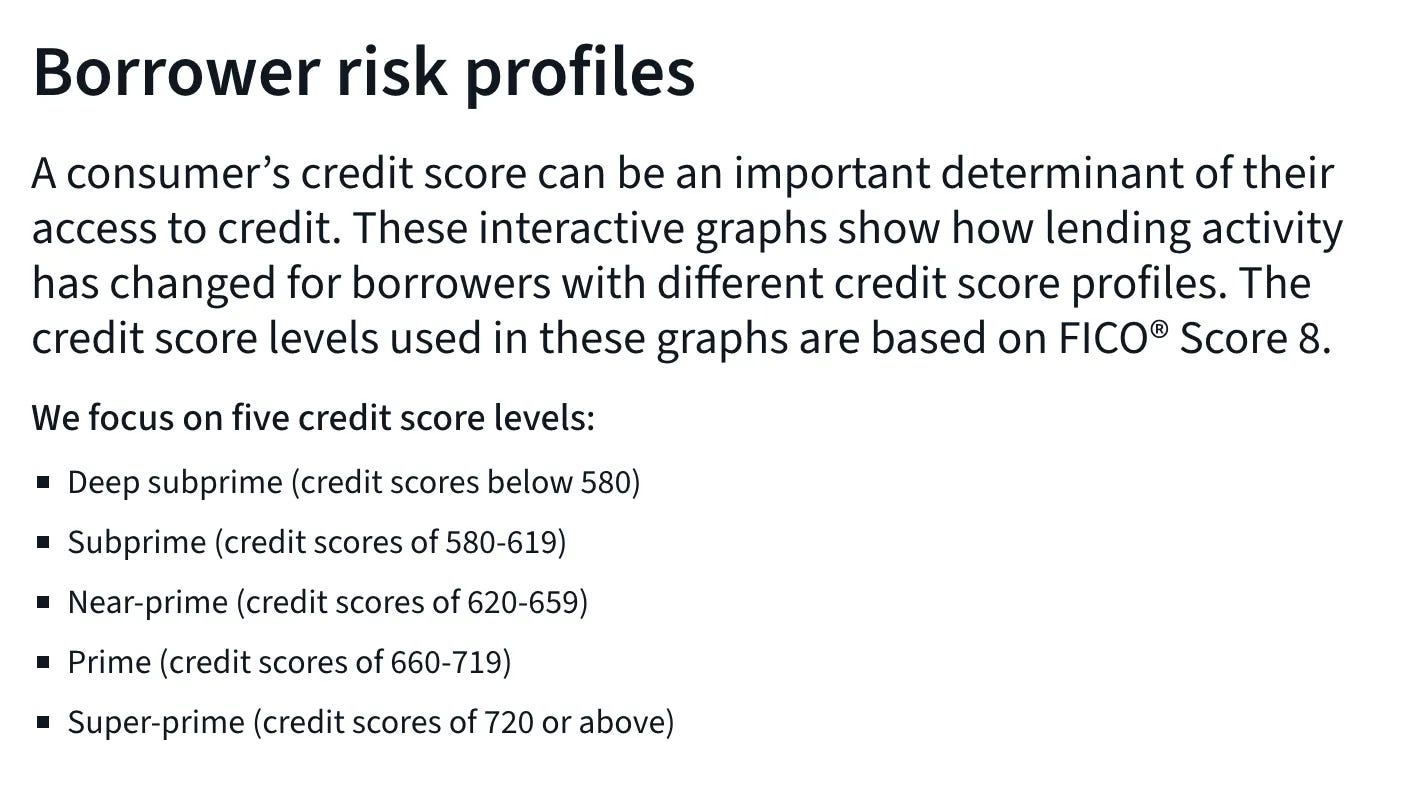
This is genuinely better than pre-2008. The 2008 crisis was fueled by subprime lending—loans to borrowers with FICO scores below 620, often with no documentation, no down payment, and adjustable rates that reset to unaffordable levels.
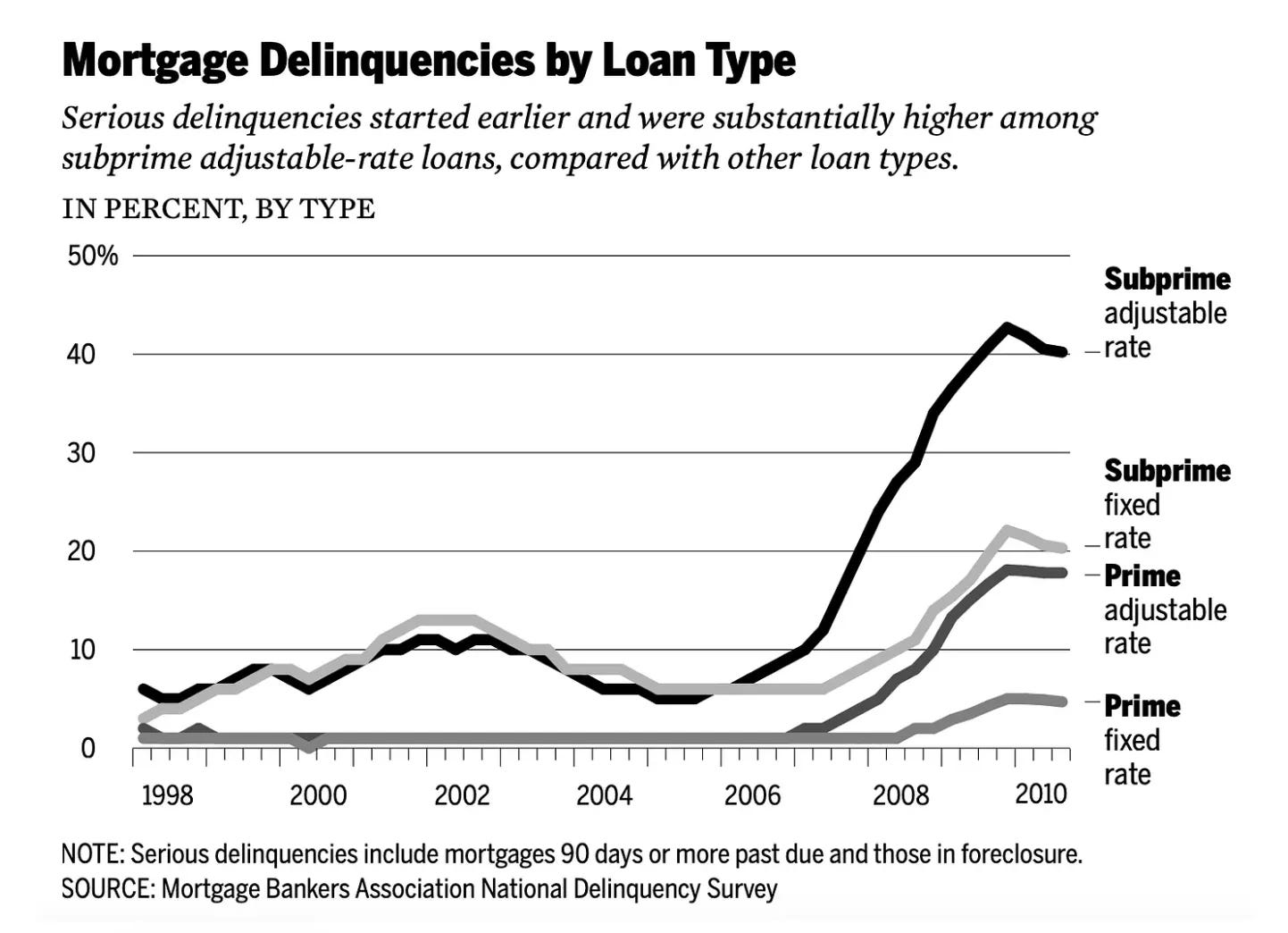
Today’s mortgage market is cleaner. But “cleaner than 2008” is a low bar, like saying “healthier than a pack-a-day smoker.”
The Delinquency Divergence: A Warning Sign
Here’s where things get interesting—and troubling.
In Q3 2025, the delinquency rate for mortgage loans increased to a seasonally adjusted 3.99% of all loans outstanding, up from previous quarters. But look at the breakdown:
Delinquency Rates by Loan Type (Q3 2025):

The FHA (government backed home loan supported by FHA) seriously delinquent rate increased by almost 50 basis points compared to the previous year, while conventional and VA (veteran affairs) seriously delinquent rates remained relatively flat.
Now, here’s the kicker: FHA loans account for about 15% of all mortgages, but over 50% of seriously delinquent mortgages.
But there’s an even more troubling divergence hiding in the data: credit card delinquencies are exploding while mortgage delinquencies remain low.
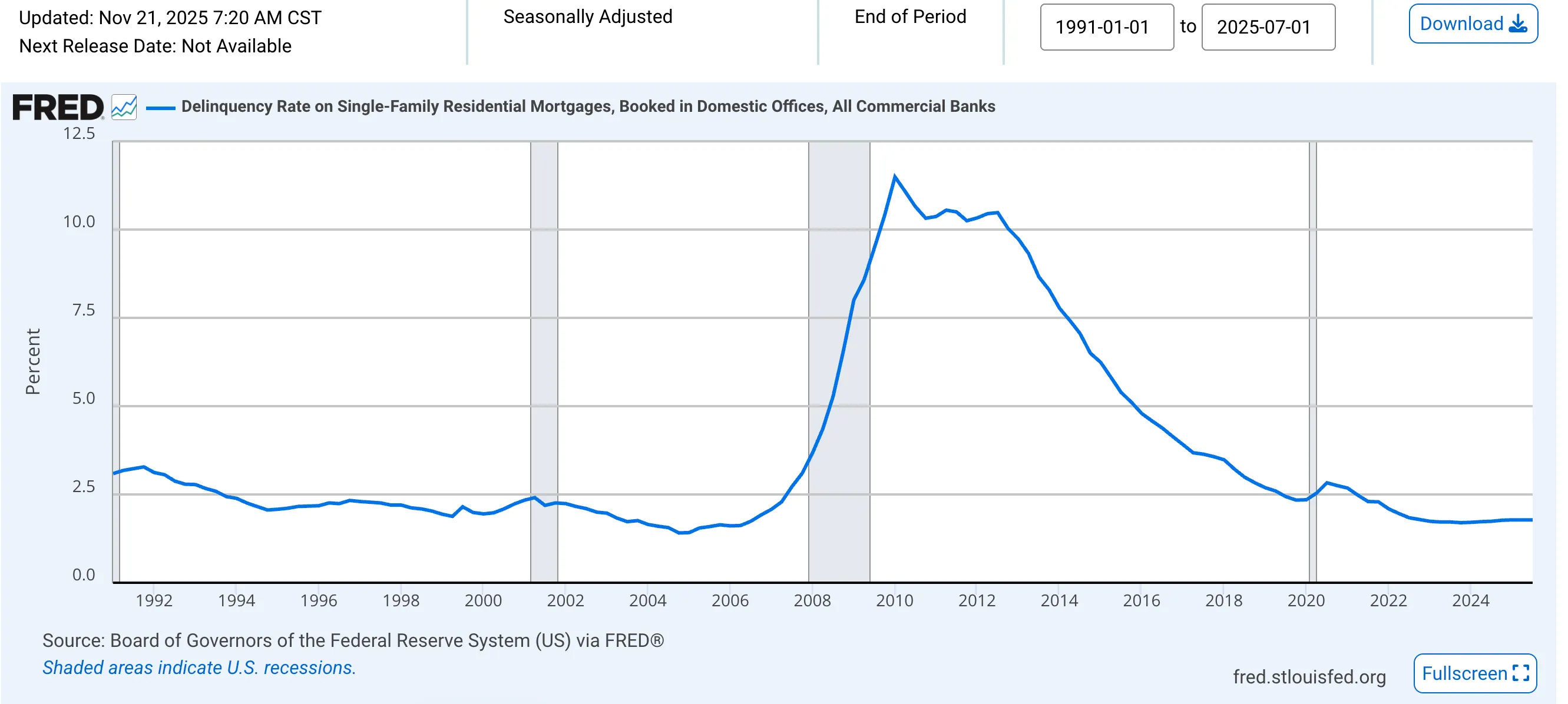
Aggregate delinquency rates remained elevated in Q3 2025, with 4.5% of outstanding debt in some stage of delinquency. Credit card delinquencies are hitting levels we haven’t seen since the Great Financial Crisis.
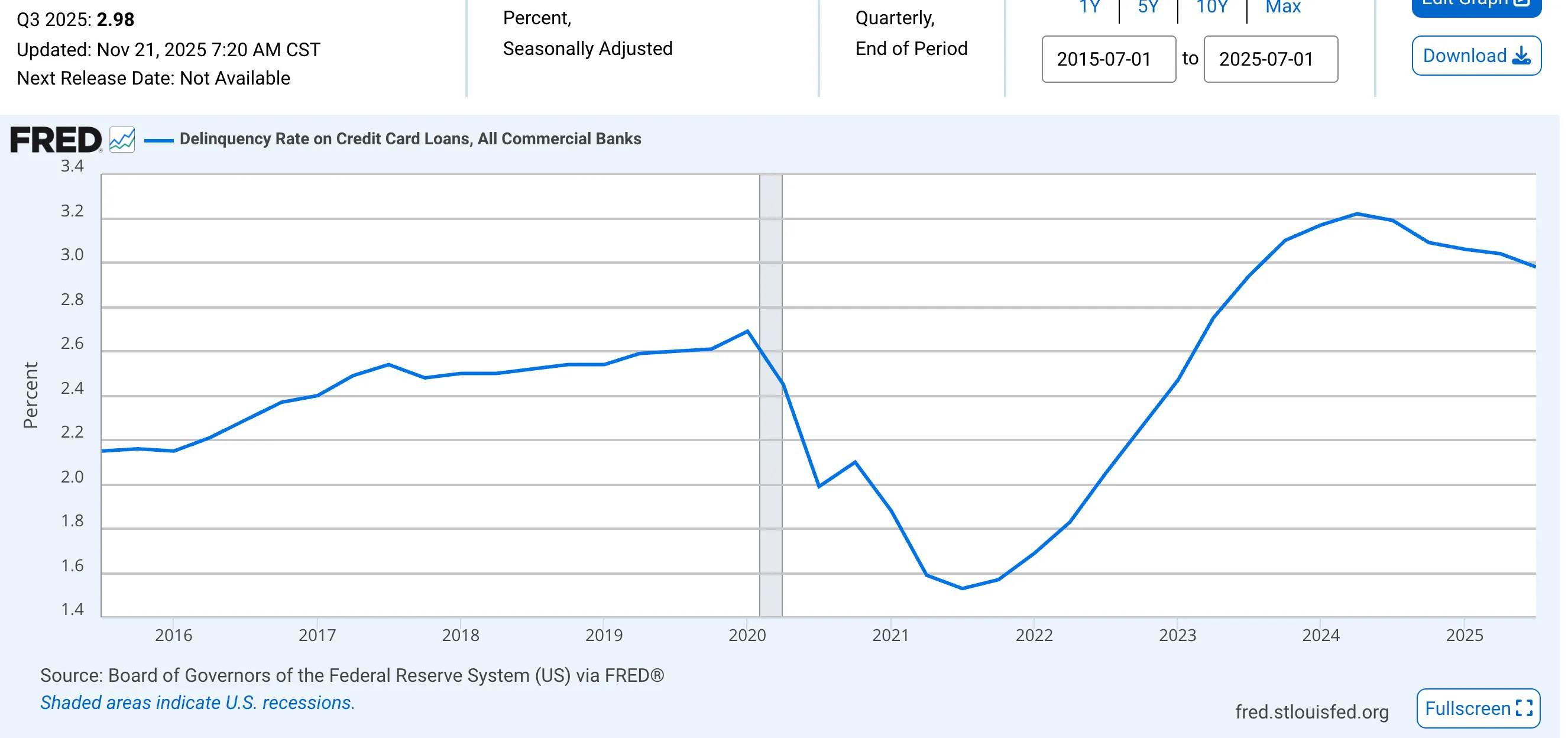
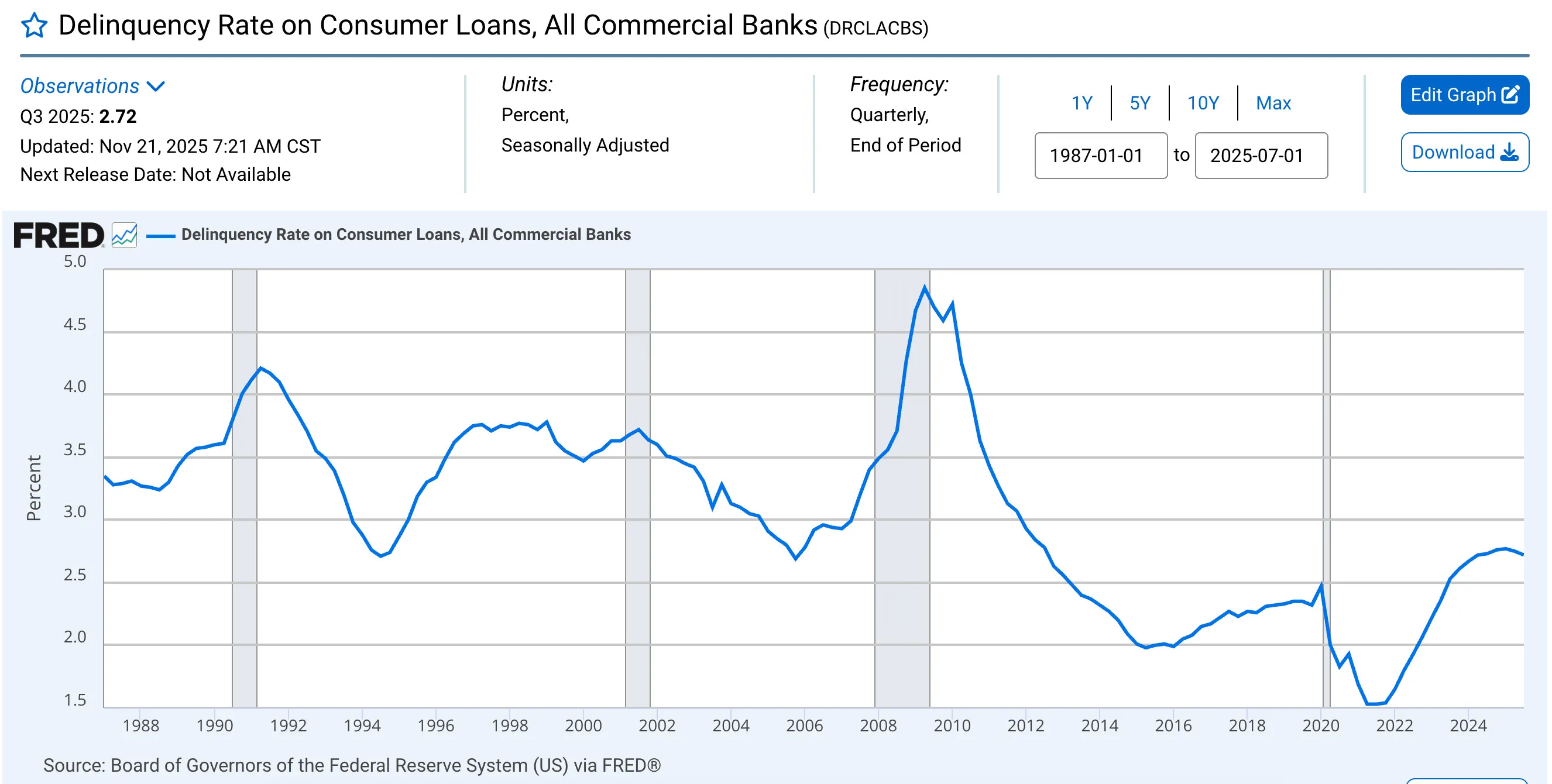
How can credit card delinquencies surge while mortgage delinquencies stay low?
The answer reveals both the strength and the fragility of Essent’s position.
The Lock-In Effect: Blessing and Curse
Homeowners are locked in at low fixed interest rates, have significant home equity, and prioritize housing payments over unsecured debt. Mortgage-delinquency rates are low, and most homeowners have enough equity to avoid falling behind on their mortgage payments.
Translation: People are choosing to pay their mortgages and skip their credit card payments because:
Lock-in effect: Many homeowners refinanced into 3-4% mortgages during 2020-2021. Moving would mean taking on a 6-7% mortgage. They’re economically trapped in their homes—in a good way for Essent.
Equity cushion: The typical mortgaged homeowner had $181,000 in untapped equity as of mid-2025. If you’re struggling financially, you can tap that equity rather than default.
Priority effect: Your house is your shelter. You’ll pay the mortgage before the credit card.
This sounds great for Essent, right? Low defaults, people keep paying.
But here’s the trap: This is not sustainable economics. This is desperation economics.
When people are maxing out credit cards to pay their mortgages, when they’re tapping home equity lines to cover living expenses, when they’re prioritizing housing payments over medical bills—that’s not a healthy economy. That’s a stressed economy living on borrowed time.
The Fannie and Freddie Wild Card
Then there’s the government intervention nobody’s quite sure how to price.
In January 2026, the Trump administration announced plans for Fannie Mae and Freddie Mac to purchase up to $200 billion in mortgage-backed securities to push mortgage rates lower.
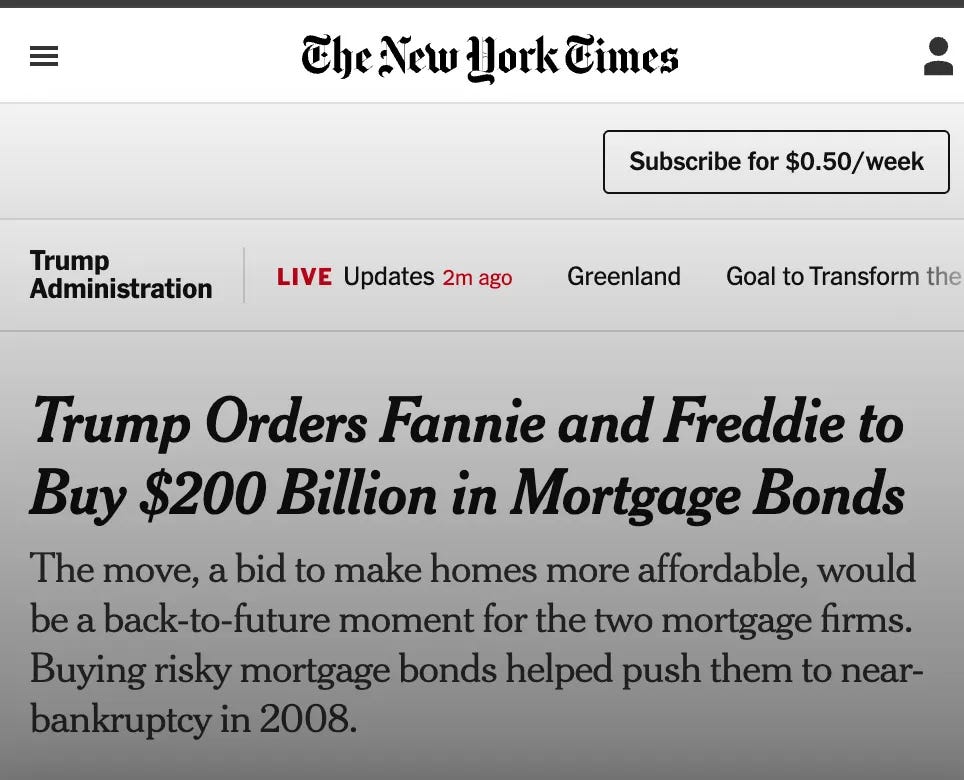
Short term: This makes housing more affordable, reduces default risk, good for Essent.
Long term: This creates moral hazard, inflates housing prices further, increases systemic risk, and kicks the affordability can down the road.
It’s like watching someone take painkillers for a broken leg instead of getting it set. Sure, they feel better now, but the underlying problem is getting worse.
Why Buffett Never Touches This Stuff
Let’s revisit why Warren Buffett—a man who built an empire on insurance—avoids mortgage insurance like it’s contaminated.
Buffett loves insurance that meets these criteria:
Geographic or sector diversification - Catastrophe risks spread across different locations and industries
Uncorrelated claims - One claim doesn’t predict the next
Understandable risks - Can calculate probabilities with confidence
Pricing power - Can adjust premiums as risks change
Minimal government interference - Market-driven rather than regulated
Mortgage insurance fails on nearly every count:
No real diversification - All exposure is to U.S. housing and employment
Highly correlated claims - Systemic events cause simultaneous defaults
Incalculable tail risks - How do you price the probability of the next 2008?
Regulatory constraints - PMIERs (Private Mortgage Insurer Eligibility Requirements) dictate capital requirements
Government entanglement - Fannie, Freddie, FHA, and political intervention are constant factors
If you’re Freddie Mac or Fannie Mae and you’re guaranteeing mortgages for millions of people, you are taking on enormous risks, far beyond what we would ever take on, Buffett noted.
He wasn’t talking about Essent specifically, but the principle applies: Mortgage insurance is a bet that the entire U.S. housing market won’t blow up. And in insurance, the unthinkable always happens.
The Competitive Moat Question
Here’s another problem: Where’s the moat?
Essent competes with:
Arch Capital Group (ACGL)
MGIC Investment Corporation (MTG)
NMI Holdings (NMIH)
Radian Group (RDN)
These companies all do essentially the same thing. They compete primarily on price (premium rates) and service quality. But mortgage insurance is largely a commoditized product. A mortgage insurer is a mortgage insurer.
Since March 2018, Essent has transferred credit risk associated with its U.S. mortgage insurance portfolio’s $68 billion of gross risk in force to reinsurers through quota share and excess-of-loss treaties.
Wait—so Essent is buying insurance to cover its insurance? Sounds like the recent Private equity “dividend recapitalisation” shenanigans right?
This is called reinsurance, and it’s standard practice. But it (the amount) reveals the business reality: Even Essent doesn’t want to hold all this correlated risk on its own books. If the company itself is hedging by buying reinsurance, what does that tell you about the risk?
Part IV: How Long Till You Get Them Out? (The Timeline Problem)
The LEAPs Question
My original interest in ESNT was for a LEAPs (Long-term Equity Anticipation Securities) play—basically, long-dated call options betting on mean reversion in the stock price.
The LEAPs strategy works beautifully when:
A quality company suffers a temporary price dislocation
The underlying business remains sound
You can buy cheap optionality on recovery
Your downside is limited to option premium
But here’s the problem: ESNT hasn’t suffered a major price correction.
At $62.32 vs. book value of $57.90, the stock is trading near fair value. There’s no obvious mean reversion opportunity. The company is valued roughly “correctly” by the market.
None of those exist here. The stock is fairly valued (relative to current risks). And the “catalyst” for upside would be... what exactly? Housing market stabilization? Interest rates falling? Those are macro factors outside management’s control.
The “Sit On Your Ass” Question
Okay, so not a LEAPs play. What about a long-term “Sit On Your Ass” (SOYA) investment—Munger’s famous strategy of buying quality businesses and doing nothing?
For SOYA investing to work, you need:
A durable competitive advantage - Does Essent have one? Not really.
Predictable earnings power - Can you predict mortgage defaults 10 years out? No.
Management you trust for decades - Possible, but irrelevant if the business model is flawed.
Margin of safety in valuation - At 1.08x book value, where’s the margin?
Charlie Munger would ask: “How much do I have to know? And what do I have to know?”
To invest in Essent with confidence, I would need to know for a fact:
U.S. housing market trajectory for 10+ years
Employment levels and wage growth
Interest rate environment
Government policy toward housing finance
Probability of another systemic crisis
Consumer behavior under financial stress
That’s too many unknowns. Way outside my circle of competence.
Part V: The Three Questions Answered
Let’s return to our framework:
Question 1: How Many Birds Are In The Bush?
Answer: Potentially a lot, but they’re all sitting on the same tree branch.
Essent’s business model can generate attractive returns in stable or improving housing markets. The unit economics are sound, the credit quality is decent, and the company is competently managed.
But all those birds—every single one—depend on the U.S. housing market not collapsing. They’re perfectly correlated. One strong wind (recession, employment shock, housing crash) and the entire tree branch breaks.
Question 2: How Certain Are You?
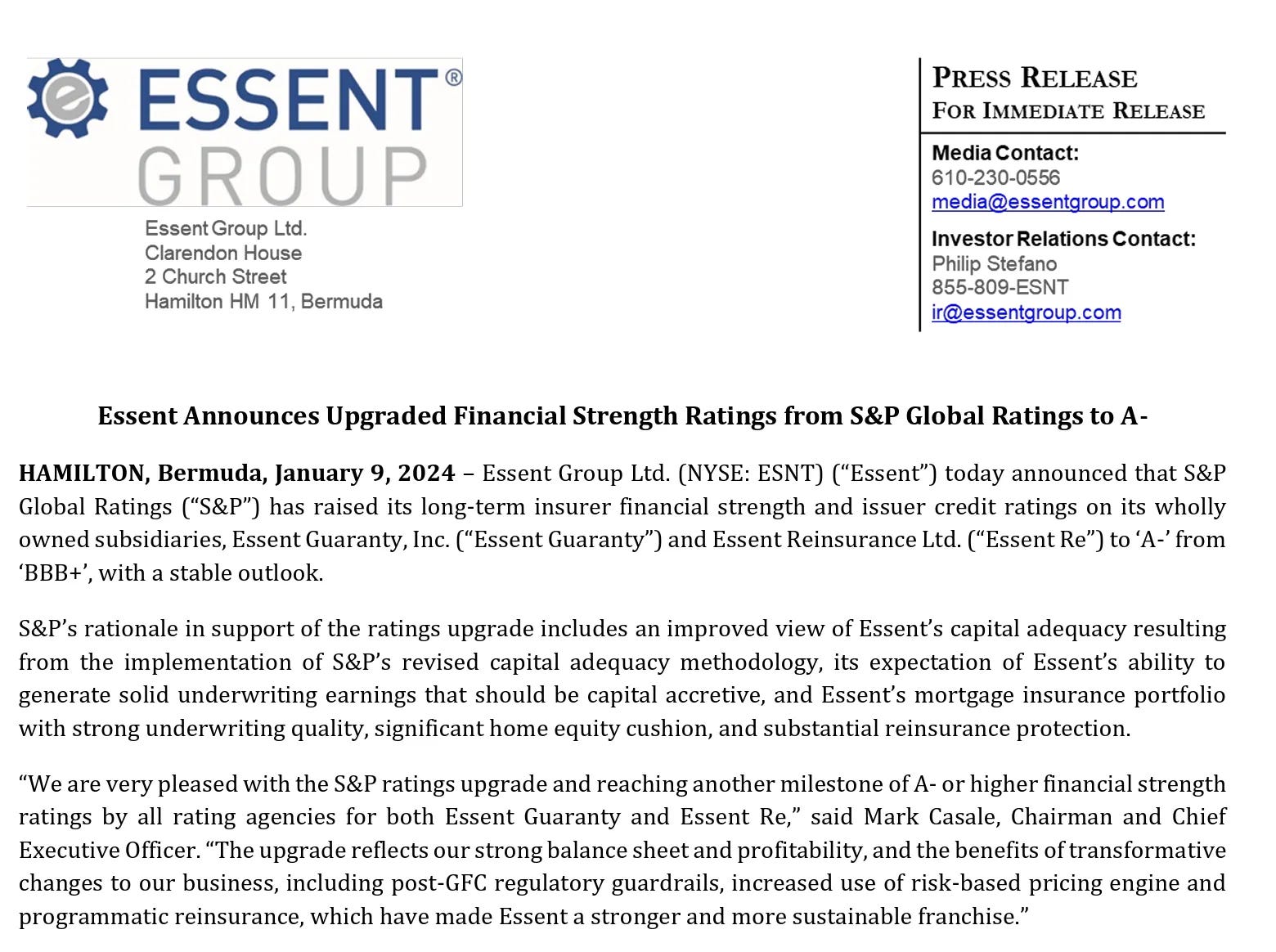

As of their latest report, Essent Group’s rating had even been upgraded. However…
Our answer on “how certain we are”: Not certain enough.
The biggest lesson from the 2008 financial crisis wasn’t that housing crashed. It’s that nobody saw it coming with the magnitude it did. Not the rating agencies. Not the banks. Not the insurers. Not the regulators.
Correlation risk is inherently hard to price because by definition, the events you’re insuring against are rare and extreme. In insurance, the unthinkable always happens.
I’m certain about this much:
Credit quality today is better than 2008 ✓
Regulatory oversight is stronger ✓
Essent is competently managed ✓
But I’m uncertain about:
When the next housing downturn will occur ✗
How severe it will be ✗
Whether $6.1B in capital is enough to survive it ✗
What correlation risk I’m really taking ✗
Too many question marks.
Question 3: How Long Till You Get Them Out?
Answer: Unknown, and possibly never if things go wrong.
In the best case, I’m looking at 7-8% annual returns. That’s the “everything goes right” scenario.
In the worst case—which admittedly may be low probability but is definitely possible—the company faces insolvency in a crisis.
The asymmetry is all wrong. Limited upside, unlimited downside (well, zero, but you get the idea).
Part VI: The Broader Lessons
Insurance companies can show artificially high “returns on capital” because the capital isn’t deployed in traditional business assets. It’s held in reserve for claims. When claims are low (normal times), returns look amazing. When claims surge (crisis times), the company needs that capital immediately.
It’s like a volunteer fire department looking incredibly efficient because there haven’t been any fires. Sure, you’re not spending much on equipment! But when the fire comes...
The Seduction of Cheap P/B Ratios
Trading at 1.08x book value, ESNT looks cheap compared to many stocks trading at 3-5x book.
But book value in financial companies—especially insurance companies—is less meaningful than in traditional businesses. Book value assumes the assets are worth what’s stated. But in a crisis:
Investment portfolios decline in value
Loss reserves prove inadequate
Reinsurance counterparties may fail
The “book value” evaporates
Book value is an accounting construct, not an economic reality. In good times, it understates value. In bad times, it overstates it.
The Difference Between Risk and Uncertainty
Here’s something the academic world gets wrong about insurance investing.
Risk is when you can calculate probabilities. Rolling dice is risky—you know exactly the odds.
Uncertainty is when you can’t calculate probabilities. The next Black Swan event is uncertain—you don’t know the odds because you don’t know what you don’t know.
Modern finance treats uncertainty like risk. They build models, calculate betas, stress test portfolios. But as Nassim Taleb points out, models fail precisely when you need them most—during extreme events.
Mortgage insurance is dressed up as risk (”We’ve modeled the default probabilities!”) but is actually uncertainty (”What’s the probability of the next systemic crisis we haven’t imagined yet?”).
Conclusion: The Hardest Word
My conclusion, after all this analysis:
No.
No LEAPs play. No SOYA investment. Not at this price, not with this risk profile, not with this correlation exposure.
The margin of safety is negative. I would need to be paid—through a substantially lower stock price—to take on this systemic risk. At current valuations, the risk-reward is inverted.
This doesn’t make Essent a “bad” company. The management team is competent. The current credit quality is sound. The business model works in normal times.
But I don’t invest for normal times. I invest to survive abnormal times.
And in abnormal times, when housing markets crater and unemployment spikes, mortgage insurance companies face their reckoning. Several mortgage insurers failed during the 2008-2009 crisis, including PMI Group and Triad Guaranty, unable to withstand the surge in defaults.
Will Essent survive the next crisis? Maybe. Probably, even. They’re better capitalized than pre-2008 players. Credit quality is higher. Regulation is tighter.
But “probably” isn’t good enough when the alternative is compounding capital at adequate returns in businesses I understand better with risks I can quantify.
Charlie Munger said it best: “The first rule of fishing: Fish where the fish are. The second rule: Don’t forget the first rule.”
There are plenty of fish in other ponds. Ponds where the risks are uncorrelated, the moats are wider, and the sleep is sounder.
Essent, for all its attractive metrics, remains in the “too hard” pile.
Sometimes the best investment decision is the one you don’t make.
“The three most important words in investing are: margin of safety. And they’re not three words you apply once and forget. They’re three words you question, daily.”
When the numbers look too good to be true, they usually are. Not because the numbers are wrong, but because they’re measuring the wrong things.
In Essent’s case, the numbers measure performance during normal times. But investment success is determined by survival during abnormal times.
And on that metric, I’ll sit this one out.
Investment Decision: PASS Confidence Level: HIGH Sleep Quality: PRICELESS
As a result, i have also avoided other similar residential insurance companies with amazing numbers that have appeared on my radar; such as Universal Insurance Holdings - revenue is primarily generated from personal residential homeowner insurance premiums. While expanding nationally, a significant, leading portion of their revenue, roughly 78.6% of which is homeowners-related, historically originates from Florida.