
“The difference between successful people and really successful people is that really successful people say no to almost everything.” — Warren Buffett
Introduction: The Power of Subtraction
In the autumn of 1995, Steve Jobs returned to Apple and did something counterintuitive: he killed 70% of Apple’s products. Not because they were bad, but because they distracted from what mattered. This is the central paradox of value creation—the power lies not in what you do, but in what you refuse to do.
Warren Buffett keeps a list of companies he’s studied and rejected. Charlie Munger famously said his success came from “knowing the edge of my circle of competence.” Peter Lynch turned down hundreds of stocks for every one he bought. These aren’t stories about missing opportunities; they’re stories about the disciplined pursuit of only the best opportunities.
Sometimes, the companies we look at are perfectly fine companies at the wrong time or wrong price. A few are fascinating turnarounds that need more time. But all of them failed to answer three brutally simple questions satisfactorily:
1. How many birds are in the bush? (What’s the magnitude of return if the thesis works?)
2. How sure are you? (What’s the probability the thesis actualizes?)
3. How fast till you get them out? (What’s the realistic time horizon?)
For a LEAPs strategy—buying long-dated call options 12-24 months out—I need high conviction on all three. If any answer is unsatisfactory, the idea gets rejected. Period.
What follows is a detailed forensic examination of each rejection, complete with financial analysis, probability assessments, and the specific mechanical failures that killed each thesis. Think of it as a masterclass in what Charlie Munger calls “the psychology of misjudgment”—except here, we catch ourselves before the mistake.
Let’s begin.
DNUT: The Doughnut Company That Almost Made It
Date Analyzed: November 17, 2025
Current Price: ~$4.70 | Market Cap: ~$800M
The Brand We All Know
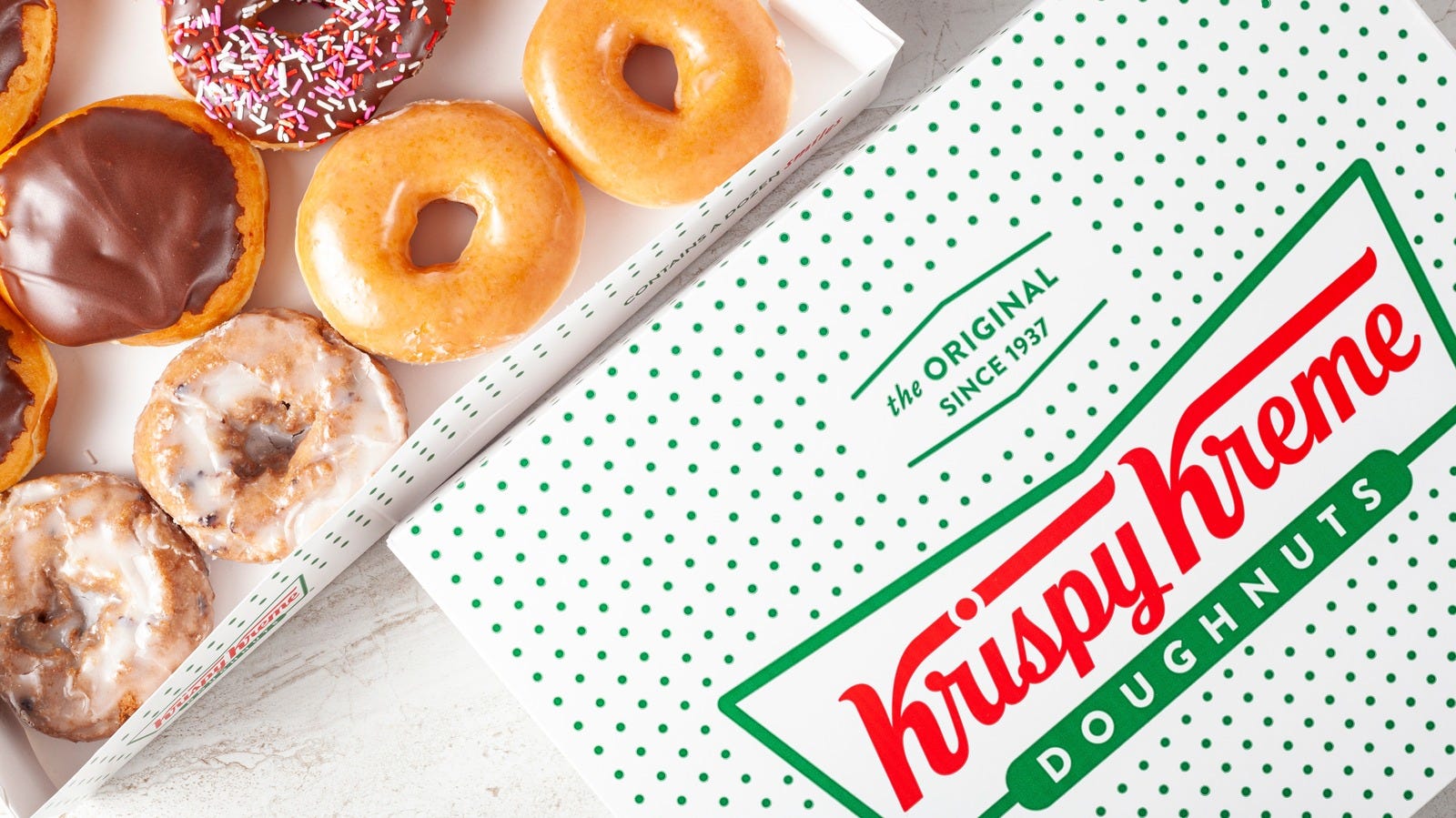
Krispy Kreme needs no introduction. The Original Glazed doughnut is iconic. The “Hot Now” sign is a cultural reference. The brand recognition is universal.
So why is the stock trading at $4.70 when it IPO’d at $21 in 2021?
The Debt Problem
Total Debt: ~$900 million (down from $906M in early 2025)
Interest Rate: 7.5% average
Annual Interest Expense: ~$68 million
Cash Balance: $28 million (as of my analysis; varies quarter to quarter)
The Math: To service $68M in annual interest with only $28M in cash, they need to generate at least $40M in annual net profit—meaning an EBITDA margin of 2.5% minimum.
Historical EBITDA Margins (2023-2024): 8.6% average
So they’re safely above the breakeven rate. But barely.
The Turnaround Plan (August 2024)
Management launched a comprehensive turnaround strategy focused on three pillars:
1. Refranchising
Sell company-owned stores to franchisees
Transition from capital-intensive to asset-light model
Extract cash from asset sales to pay down debt
2. Hub-and-Spoke Model
Produce doughnuts centrally (”hubs”)
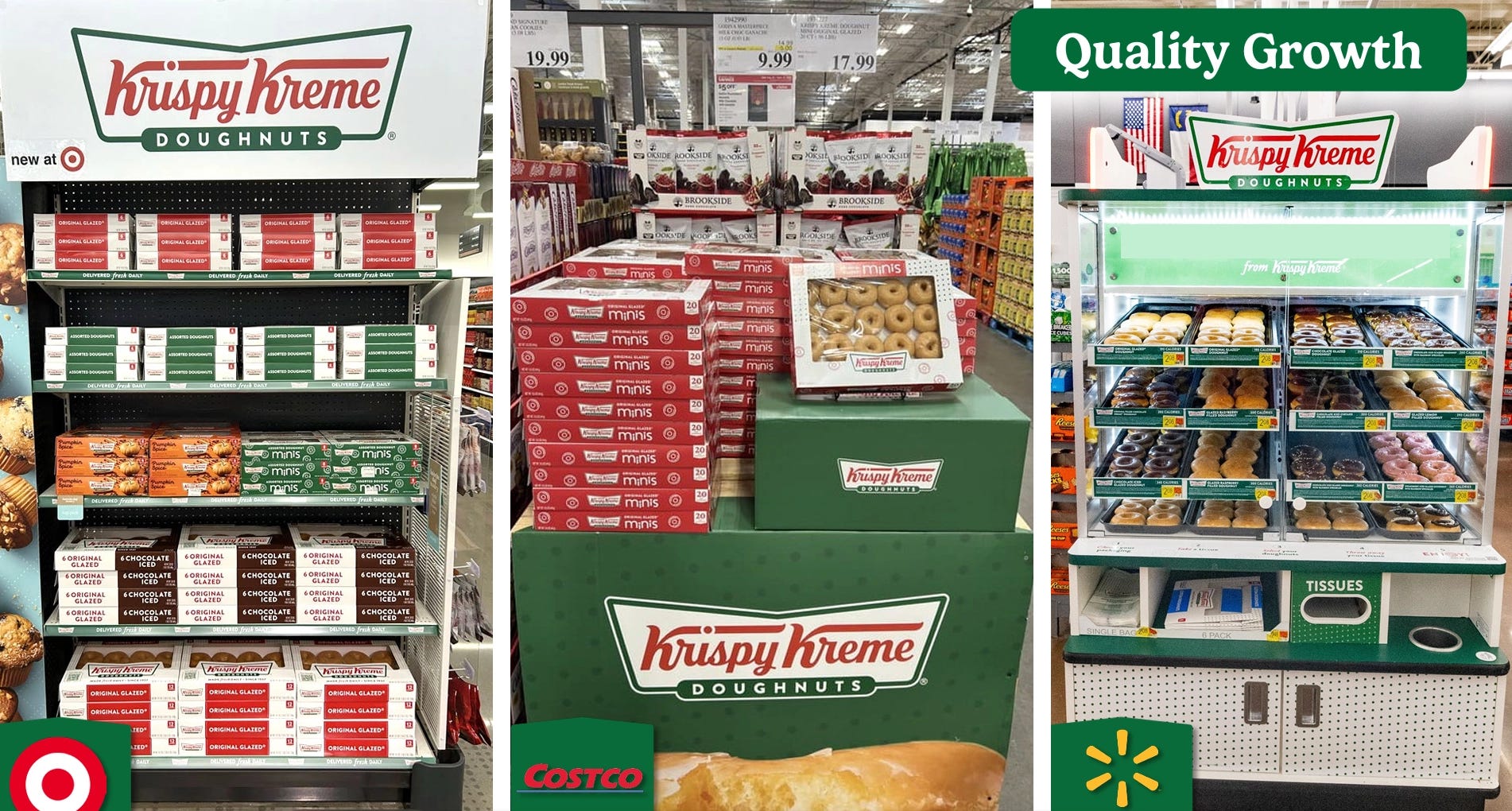
Distribute to retail partners like Walmart (”spokes”)
Lower CAC (customer acquisition cost)
Instant traffic from existing foot traffic
3. Focus on U.S. Markets
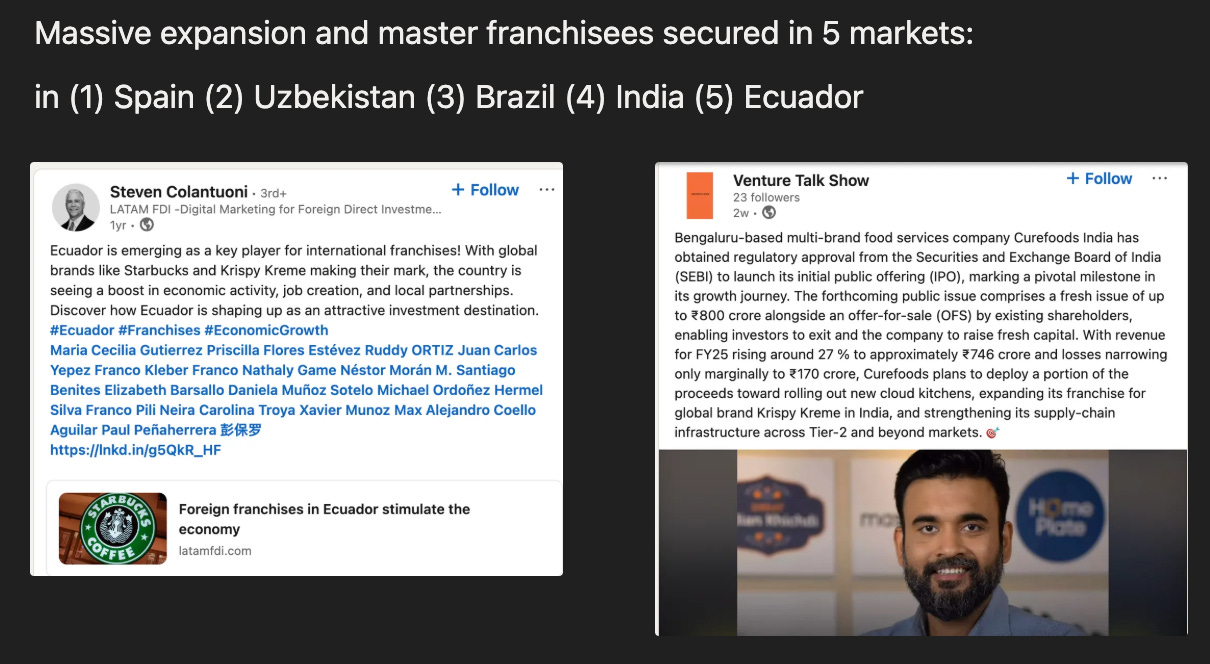
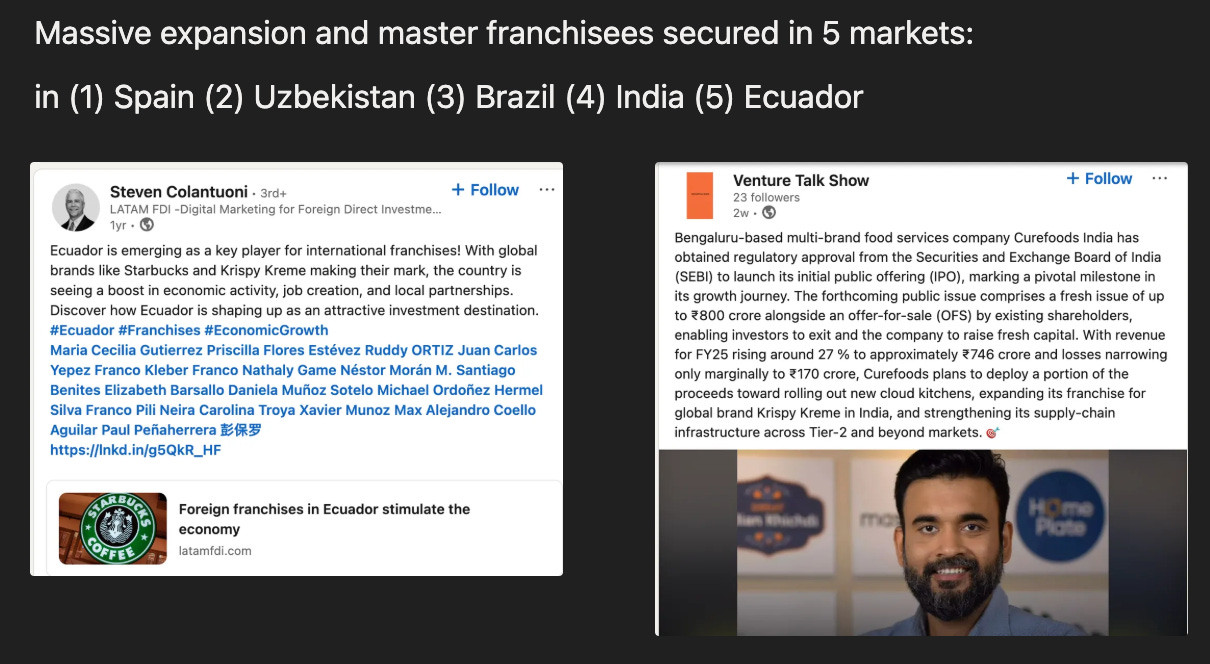
Reduce international complexity by allocating international chains to master franchisees
Concentrate resources on domestic expansion
Improve penetration in existing markets
The Recent Progress (December 2024-2025)
Japan Sale (December 19, 2024):
Buyer: Unison Capital (Japanese private equity firm)
Price: $65 million (dependent on FY2025 Japan financials)
Assets: 89 stores + 300 delivery points in Tokyo, Osaka, major cities
Status: First international refranchising deal since turnaround plan announced
Expected close: Q1 2026
This is meaningful progress—extracting $65M in cash to pay down debt while converting to franchise model.
Insomnia Cookies Sale (June 2025):
Remaining stake sold for $75 million
Proceeds used for debt reduction
Total raised from Insomnia sales: $200 million+
Combined Debt Reduction:
Insomnia sale: $200M
Japan sale: $65M
Total: $265M debt paydown
Updated Debt Position:
Original: ~$900M
After sales: ~$635-640M
Interest expense: ~$48M annually (down from $68M)
The Financial Performance

Company is currently selling about book value. But if we take away goodwill they are selling above book value.
Q3 2025 Results (November 6, 2025):
Revenue: $375.3M (vs. $378.68M expected—missed by 0.9%)
EPS: $0.01 (vs. -$0.06 expected—beat by 116.67%!)
Premarket reaction: Stock fell 28%
Wait, they beat earnings and the stock crashed 28%?
Yes. Because:
Revenue miss signals demand problems
Guidance withdrawn (massive red flag)
Market priced in better refranchising progress
Q1 2025 Results (Earlier in 2025):
EPS: -$0.05 (missed expectations)
Stock reaction: -28% again
Full-Year 2024:
Revenue: $1.4 billion (down from prior year)
Net Profit: Negative (despite positive EBITDA)
Why is Net Profit Negative Despite Positive EBITDA?
Depreciation & Amortization: $133 million annually (2024)
Depreciation: $90M (67% of D&A)
Amortization: $43M (33% of D&A)
Goodwill: ~25% of D&A
Other Amortization: ~75% of D&A
The company carries significant goodwill from past acquisitions (including Insomnia Cookies, which they just sold). This creates non-cash charges that depress net income but don’t affect cash flow.
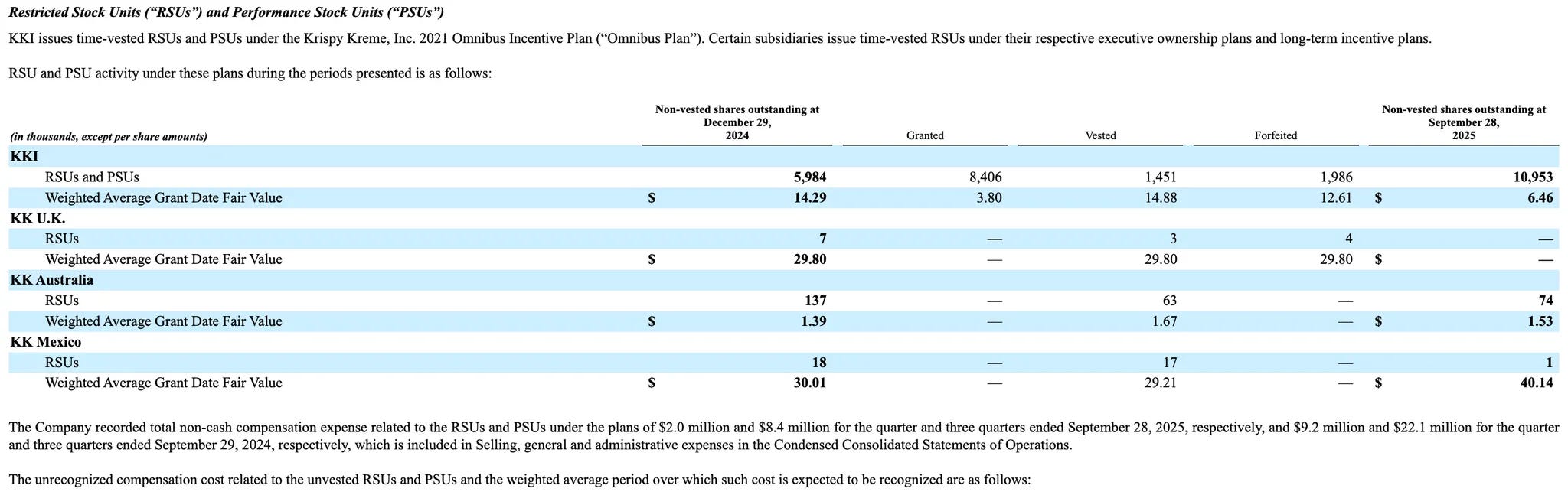
11 million non vested shares outstanding compared to 171 million (a 6.4%)
Adding in options, the amount of dilution is nominal as well
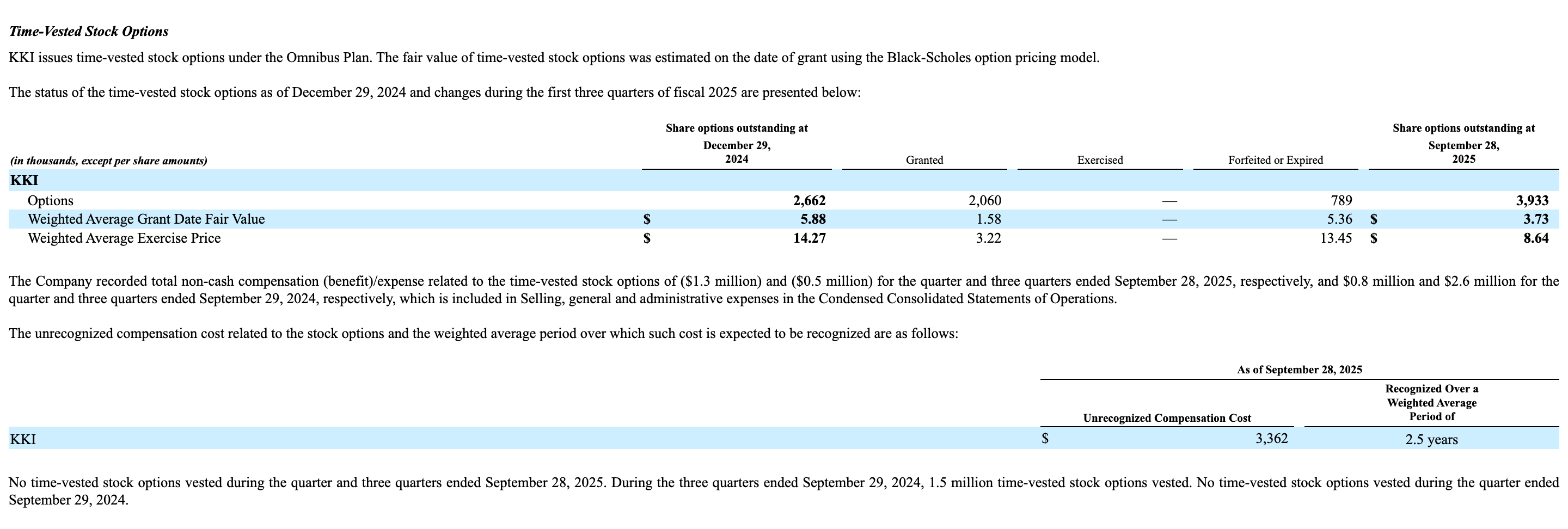

It is interesting that as of the september quarterly report, the weighted average exercise price is $8 whilst in the 2024 full year annual report, the weighted average exercise price is $14. Which, in other words would signify a incentive for management (who are issued such incentives) to hit such targets.
The Hub-and-Spoke Economics
Current Metrics (as of 2024):
Hubs with Spokes: 158 locations in US
Sales per Hub: Key metric management tracks
Fresh Delivery Points: 17,500 globally through 30+ franchise partners
The Model:
Produce fresh doughnuts at central “hub” (doughnut factory)
Distribute to “spokes” (retail partners like Walmart, convenience stores)
Spokes benefit from Krispy Kreme brand without capital investment
Krispy Kreme benefits from instant foot traffic
Why It’s Appealing:
Low CAC: Walmart has 240 million customer visits per week in U.S. alone
No real estate costs: Partner provides the space
Brand amplification: Presence in thousands of locations simultaneously
The Execution Question:
I conducted primary research: “Went to a franchise store in a mall and donuts were cold. This shows quality control is relatively poor still.”
If franchisees aren’t maintaining product quality (hot, fresh doughnuts are the entire brand promise), the model won’t work. Consumers will associate Krispy Kreme with “stale doughnuts from Walmart” rather than “hot, melted-in-your-mouth Original Glazed.”
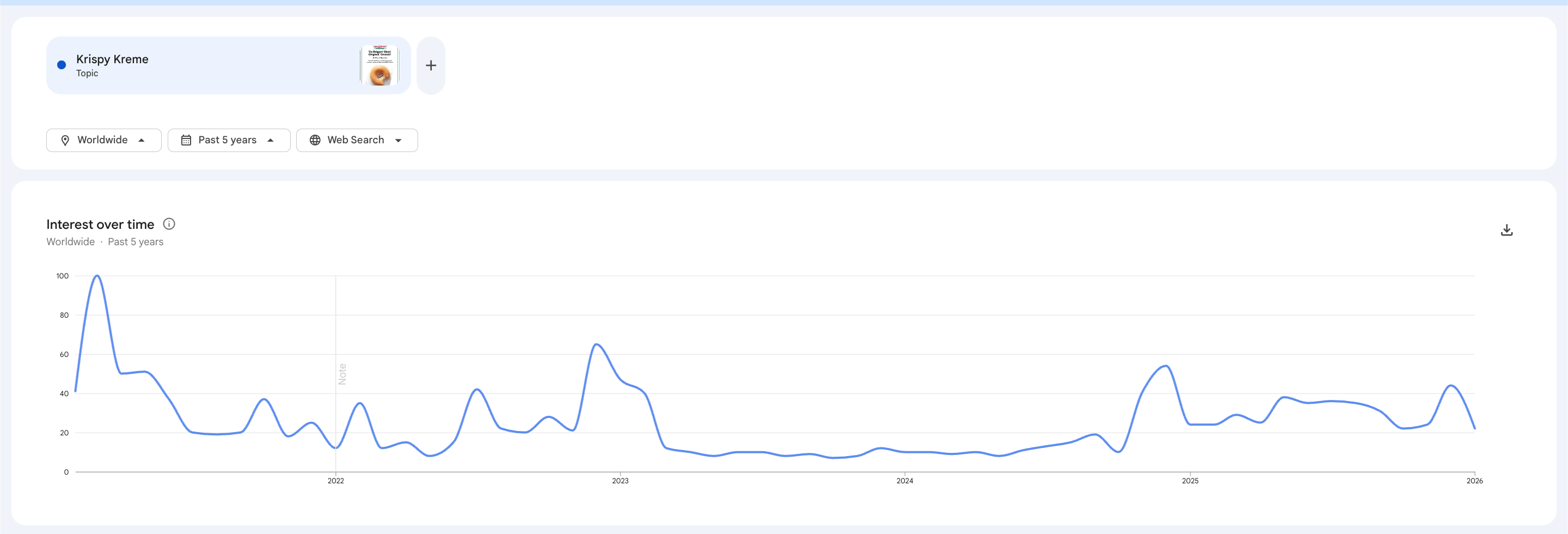
Update as of 2026, we do see the search term slowly inching upwards
The Comparable Company Analysis
Dunkin’ Donuts (private, but last known metrics):
Market Cap (when public): ~$11 billion
Revenue: Similar to Krispy Kreme (~$1.4B for DNUT)
Net Margin: ~13%
If Krispy Kreme Achieved Dunkin’ Margins:
Revenue: $1.4B
Net profit at 13% margin: $182M
Current market cap: $800M
Implied P/E: 4.4x

That’s deeply cheap if they can achieve those margins. But historically, Krispy Kreme has never averaged positive net margins. The $182M target is pure speculation contingent on successful:
Refranchising execution
Asset-light model transition
Cost structure optimization
Quality control maintenance
The McDonald’s Partnership Failure
One reason for the stock’s decline was the failed partnership with McDonald’s, announced with great fanfare and terminated unceremoniously. Krispy Kreme had planned to place doughnuts in thousands of McDonald’s locations—instant distribution.
The termination suggested either:
Sales didn’t meet McDonald’s hurdle rates
Operational complexity was too high
Margin economics didn’t work for McDonald’s
Any way you slice it, this was a strategic setback that eroded confidence in management’s execution ability.
The Debt Sustainability Analysis
Current Situation (Post Asset Sales):
Debt: ~$635M
Interest Rate: 7.5%
Interest Expense: ~$48M annually
EBITDA: ~$120-140M annually (recent run rate)
Interest Coverage: $130M ÷ $48M = 2.7x
That’s acceptable! Significantly better than the 2.0x when debt was $900M (which is still the case now!)

This means annual interest rate is about 7.5% x $900,903,000 = $67,567,725.

In short, $68 million per annum of interest payable per annum when the cash in balance sheet is only $28 million, which is pretty risky despite revenues being c.$1.6B.

This also means that, to pay for 2025, the company has to have a net profit of $68m interest - $28m cash = $40m, which is at least 2.5% EBITDA margin (which is possible but still risky)
Maturity Schedule:
Term loan and revolving facility mature: March 2028
So they have ~3 years to:
Continue deleveraging (pay down debt)
Improve profitability
Refinance at better terms (if debt markets cooperate)
The Valuation Framework

Asset-Light Model Scenario:
If refranchising succeeds:
Company-owned stores: Minimal (low capex)
Franchise royalties: 4-6% of franchisee sales
Hub production: Capital-intensive but profitable at scale
Spoke distribution: Asset-light, high-margin
Comparable: Dunkin’ Brands (before going private)
Traded at 25-30x earnings when mostly franchised
Profit margins: 12-15%
Bull Case Math:
Revenue: $1.4B (current)
Net margin achieves 10% (conservative vs. Dunkin’s 13%): $140M net profit
P/E multiple: 15x (half of Dunkin’s multiple as discount for execution risk)
Implied market cap: $2.1B
Current market cap: $800M
Upside: 2.6x
Base Case Math:
Margin achieves 6-7% (midpoint to historical): $90M net profit
P/E multiple: 12x
Implied market cap: $1.08B
Upside: 1.35x
Bear Case Math:
Refranchising stalls
Debt burden remains heavy
Margins stay negative to low-single-digit
Multiple de-rates to 8x on minimal earnings
Stock falls to $3
Downside: 0.64x
Why I Rejected It
Birds in the Bush: 2.6x bull case, 1.35x base case
Probability of Success: 40%—refranchising must work, quality must improve, debt must be managed
Time Horizon: 3-5 years for full value realization
The Fatal Flaw: “Perhaps not yet, until they successfully refranchise + achieve cult purchases in United States (or might just be worth holding the equity instead of LEAPS instead)”
This is the classic “good company, wrong time” scenario—again.
What Needs to Happen:
Successfully refranchise significant store count (in progress—Japan done, more coming)
Franchisees maintain quality (currently failing based on my store visit)
Hub-and-spoke model shows profitability (data not yet available)
Debt paydown continues (on track with asset sales)
Consumer demand improves (macro headwind—cost-of-living crisis)
Any one of these failing blows up the thesis. All five need to work.
For a LEAPs play requiring 24-month value realization, the timeline doesn’t match. The value creation happens in years 3-5, not years 1-2.
The Lesson: “Not Yet” Is a Complete Sentence
There’s a psychological trap investors fall into: the “story stock” trap. Krispy Kreme has an amazing story:
Beloved brand (everyone loves the Original Glazed)
Turnaround plan (refranchising is smart strategy)
Asset sales (generating real cash for debt reduction)
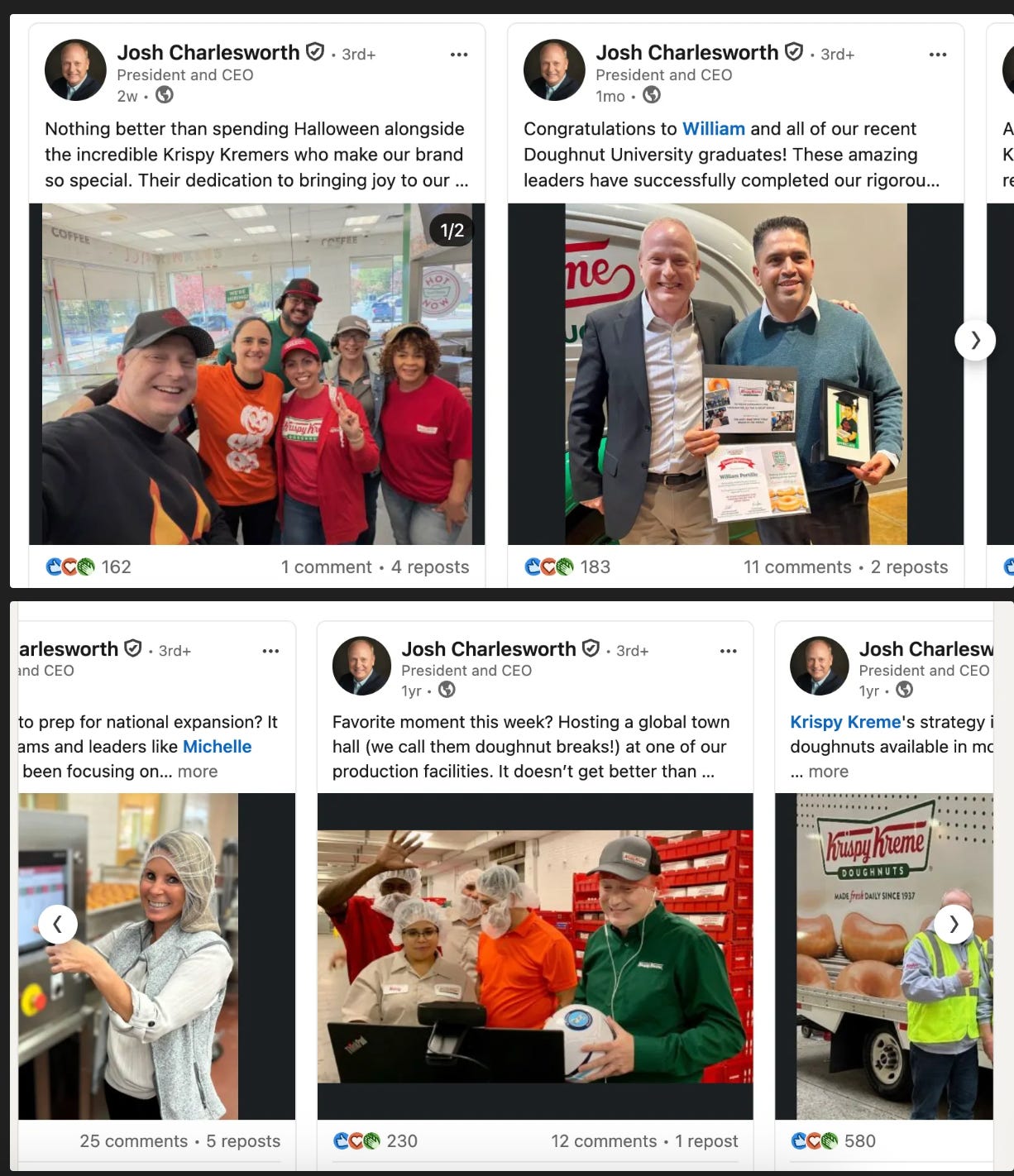
CEO engagement (Josh Charlesworth is active on social media)
But stories don’t equal profits. And timing matters.
The “Not Yet” Framework:
Ask yourself: If I’m wrong about timing, what happens?
Scenario 1: You invest now, stock muddles sideways for 2 years while they execute
LEAPs Result: -100% (expire worthless)
Equity Result: -10% to +10% (time wasted)
Scenario 2: You wait 18 months, see proof of concept, then invest
Missed Gains: Maybe 20-30% if early investors are right
Gained Certainty: Know whether refranchising works
Reduced Risk: See actual execution, not just promises
The Math: Would you rather:
(A) Take a 40% probability bet on 2.6x return = 1.04x expected value
(B) Wait for proof, take a 70% probability bet on 1.5x return = 1.05x expected value
Option B has higher expected value and lower risk.
Buffett’s Wisdom: “The stock market is a device for transferring money from the impatient to the patient.”
In Krispy Kreme’s case, patience means waiting for:
Two quarters of hub-and-spoke profitability data
Successful refranchising with maintained quality
Debt level below $500M (giving comfortable 3.5x+ interest coverage)
When those three conditions are met, then consider the investment. Not before.
Verdict: Rejection for now. This belongs in the “watchlist” category, not the “investment” category. The turnaround story is real, management is executing, but the timeline doesn’t match the strategy. Revisit in 12-18 months when more data is available.
Learnings To Stick To
1. Dilution is Value Destruction
It doesn’t matter if a company has $200 million in cash if they’re issuing $300 million in equity at pennies on the dollar. Per-share value is what matters, not absolute value.
2. Debt is Fragility
Interest coverage below 3x means one bad year could trigger covenant breaches. Below 2x is playing with fire. Below 1.5x is suicidal.
3. Insiders Always Know First
When CEOs, CFOs, and directors sell 60-80% of vested RSUs immediately, they’re voting with their wallets. Listen.
4. Business Models Matter More Than Operations
You can’t cost-cut your way to success if the fundamental value proposition is obsolete.
5. Timing Is Everything (For Options)
e.g. MDU Resources and Krispy Kreme might be great investments... in 2027. But for LEAPs expiring in 2026, the timeline doesn’t work.
6. Regulatory Red Flags Are Never False Alarms
When annual reports are encrypted, when revenue collapses without explanation, when short sellers publish specific fraud allegations—walk away. The risk isn’t worth the reward.
7. Pandemic Winners Are Usually Losers
Mean reversion is brutal. Companies that benefited from temporary behavioral shifts rarely maintain those gains.
The Philosophy of “No”
Charlie Munger said: “The art of being wise is the art of knowing what to overlook.”
In investing, success comes from:
Saying yes to the right opportunities (important)
Saying no to the wrong opportunities (more important)
Saying no to marginal opportunities (most important)
This article is about #3. None of these companies were obviously terrible (well, maybe CHR and WIMI). Most had legitimate businesses, real assets, and plausible turnaround stories.
But “plausible” isn’t “probable.”
And “interesting” isn’t “investable.”
The Buffett-Munger Standard
Before investing, ask:
Do I understand this business? (Circle of competence)
Does it have a sustainable competitive advantage (Moat)/ does it have a legitimate working business model (for LEAPs)?
Is management trustworthy and aligned? (Stewardship)
Is the price attractive relative to intrinsic value? (Margin of safety)
What could go wrong? (Risk analysis)
For LEAPs specifically, add: 6. Will value be realized in 12-24 months? (Timing) 7. Is the expected return 2x+ to compensate for time decay? (Return threshold)
If the answer to ANY of these is “no” or “uncertain,” walk away.
The Opportunity Cost Mindset
Every dollar invested in these marginal opportunities is a dollar not available for exceptional opportunities.
Your capital is finite. Your attention is finite. Your time is finite.
Protect all three zealously.
When I reject companies, I’m not losing opportunities—I was preserving capital and attention for better opportunities yet to come.
In investing, a 0% success rate at finding investments can be a 100% success rate at avoiding disasters.
30 January 2026 Update
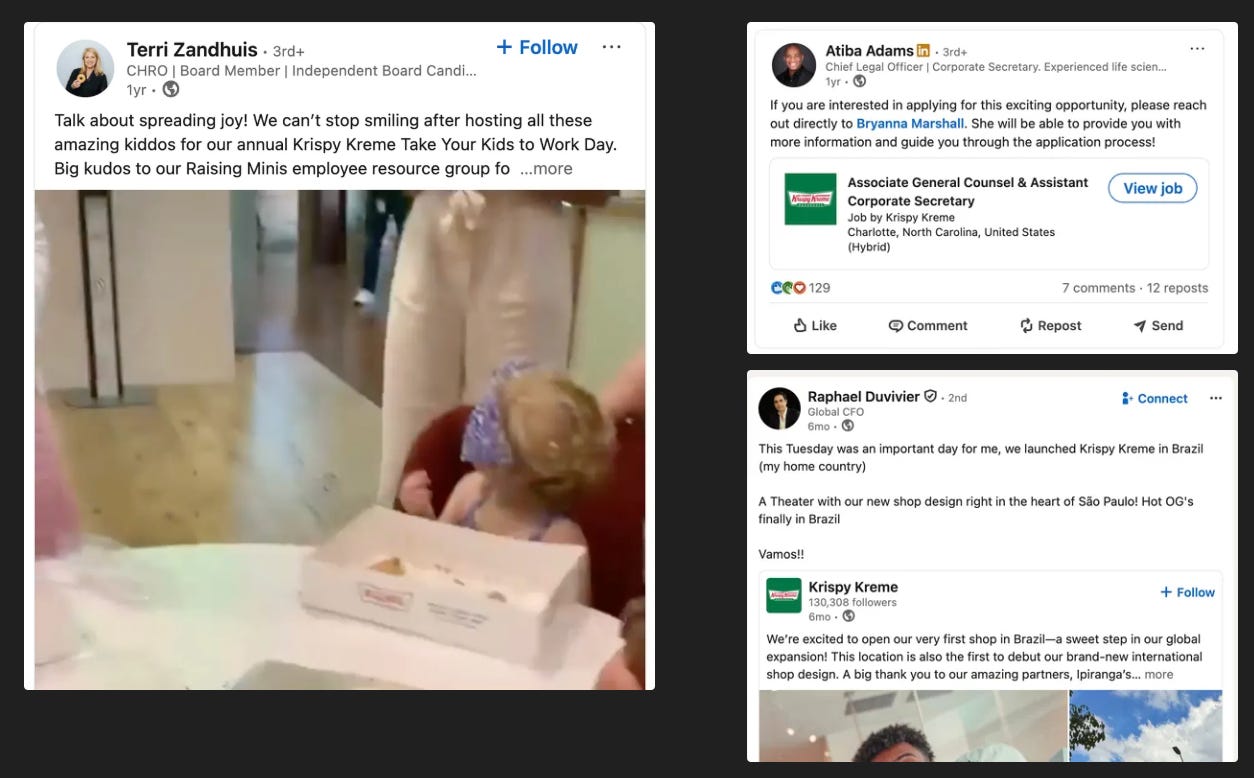
Perspective changed as i was reading Ultrapar’s annual report. The company (through its subsidiary AmPm - one of the largest franchise convenience store) has existing traffic already in place where AmPm is located in (Ipiranga service stations). Not to forget that traffic is also driven by one of the top 8 loyalty app’s traffic - KMV loyalty app (which is owned by Ultrapar and Ultrapar owns both AmPm and KMV). This is essentially secured demand.
Something else to note is that most of Ipiranga’s store locations are in locations where the operators themselves own the land. What this means is that AmPm (and similar concepts like Krispy kreme) typically does not pay rent. Instead, it operates under a licensing + revenue-sharing model, because the station operator usually owns (or leases) the property. This is mentioned in Ipiranga’s 2024 annual report on how AmPm earns its revenues. No leasing fee is mentioned in the revenue structure. Although this is speculative, it does not eliminate the fact that the operators (which now operate AmPm and Krispy kreme) wants to and has (effectively) lower cost to operations.
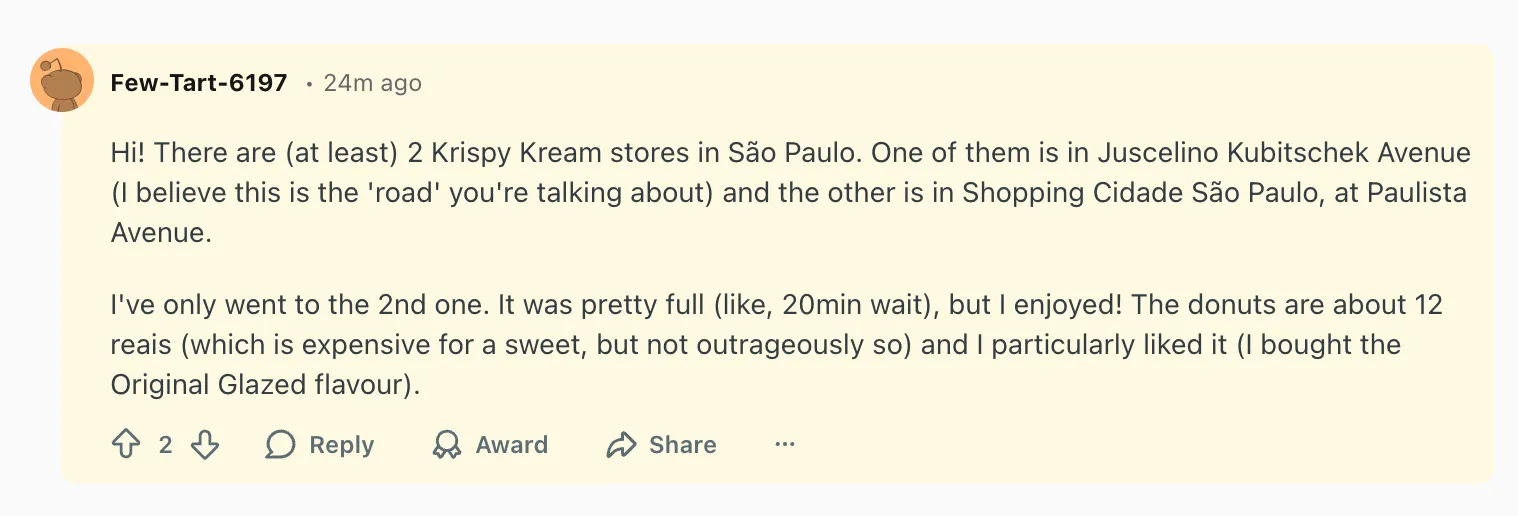
In Brazil: (1) it is expensive and priced at a premium but affordable (2) people still like it
Similar “capital-light” model is seen to be applied to Spain, India (curefoods network), Japan (Unison capital to close in 2026), Germany (3,000+ point of location strategy). Refranchising locations that will produce massive cash and cashflow includes: UK, Ireland, Australia, New zealand, Mexico, and Canada. Such scale would undoubtedly more than double capital and trigger a revaluation especially when the company is trading at such signficant discounts - which includes goodwill in book value (but we will be able to reconsider that as the goodwill is justified by major “capital light” partnerships with companies like AmPm and refranchising in locations like Japan)
Note that recent refranchising of Japan operation (of $65million) will buy them 1 year worth of interest on their debt. Based on current speed, the likelihood of a successful turnaround is high since they have sufficient time and partner leverage to make things work. Especially based on the fact that they need 2.5% EBITDA margin to finance their debt but historically the business model have easily averaged about 8.6% EBITDA margin.
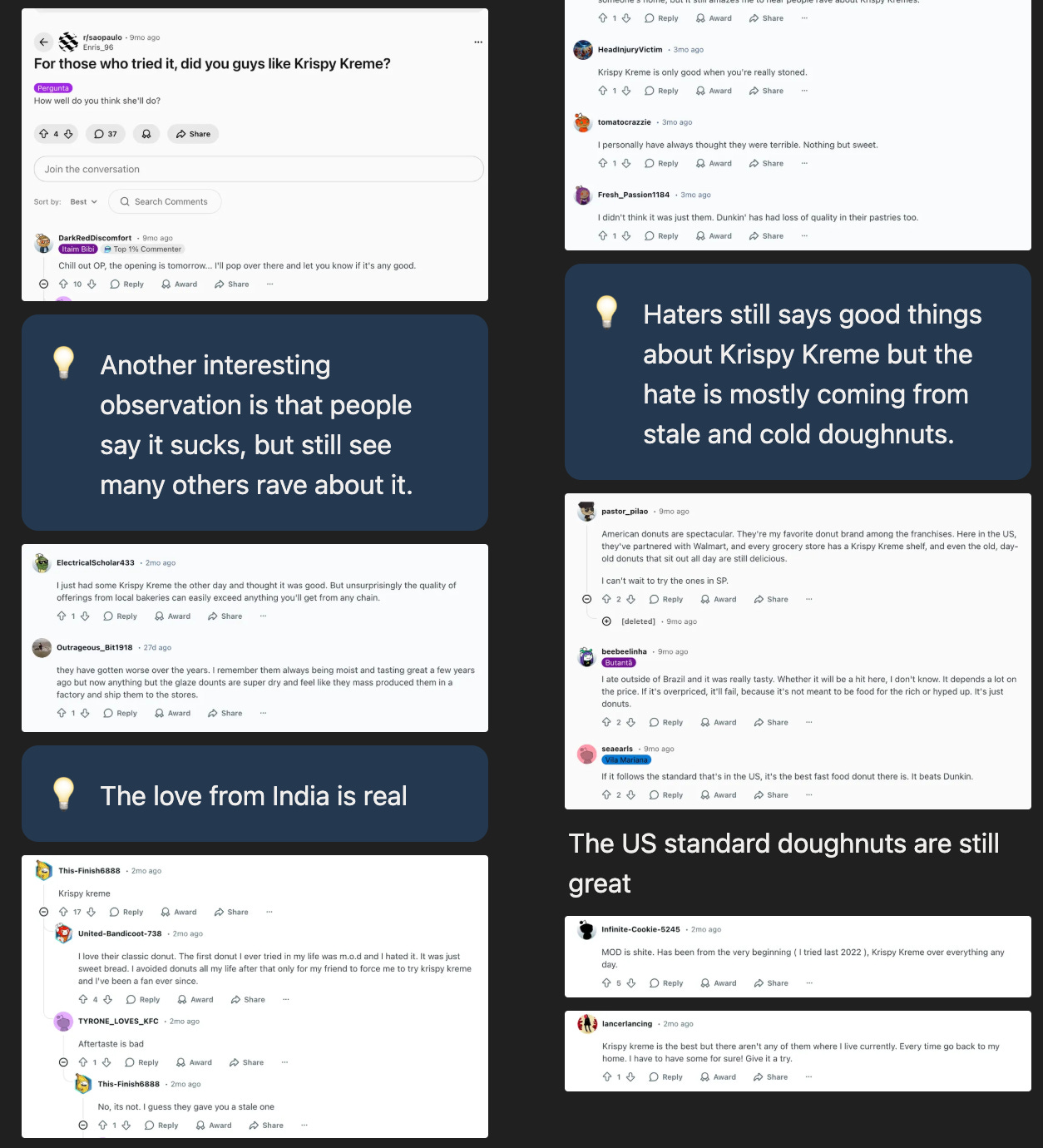
That being said, the way for krispy kreme to fail is to serve cold and stale dougnuts.
Central “Hot Light” theater shops (hubs) produce donuts for nearby smaller shops, grocery stores, and convenience locations (spokes). And so there are 2 cases which lead to cold and stale dougnuts:
1. Delivery from theater shops are too long
2. Doughnuts are left in “spokes” location for too long and no one clears it
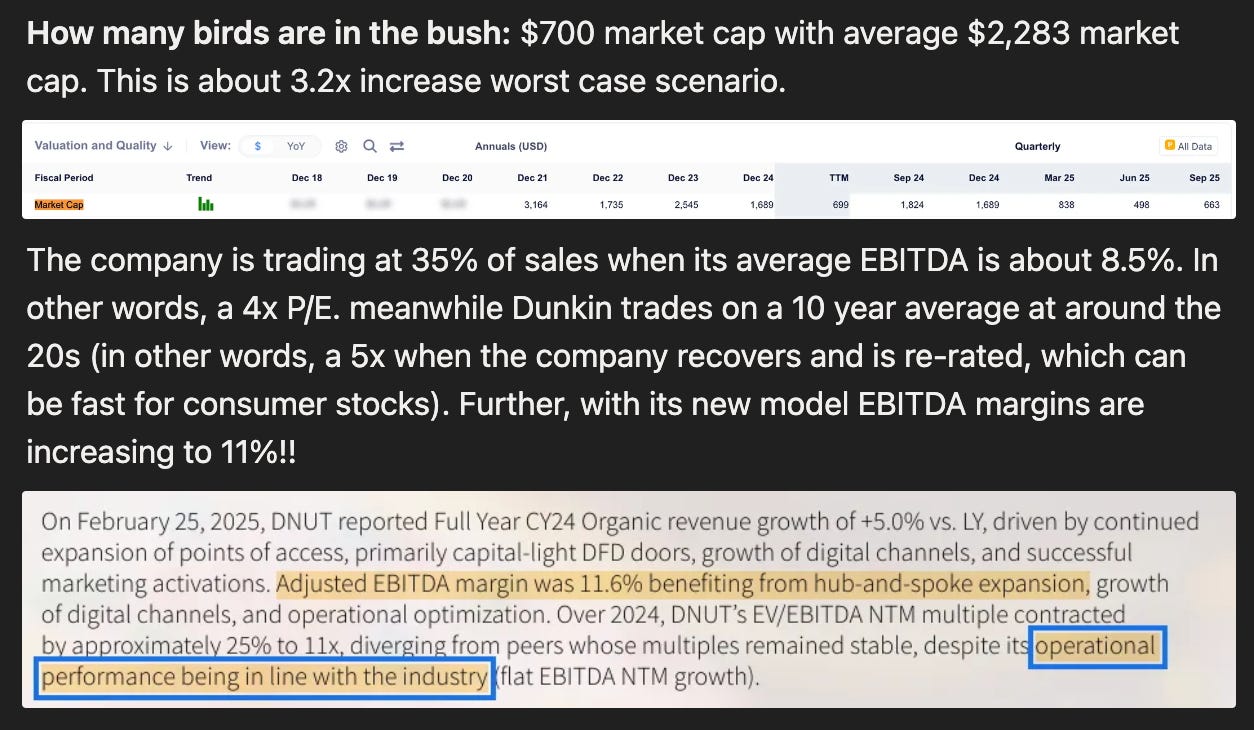
The company is trading at 35% of sales when its average EBITDA is about 8.5%. In other words, a 4x P/E. meanwhile Dunkin trades on a 10 year average at around the 20s (in other words, a 5x when the company recovers and is re-rated, which can be fast for consumer stocks). Further, with its new business model, EBITDA margins are increasing to 11% (based on JAB holdings’ recent annual report)!!

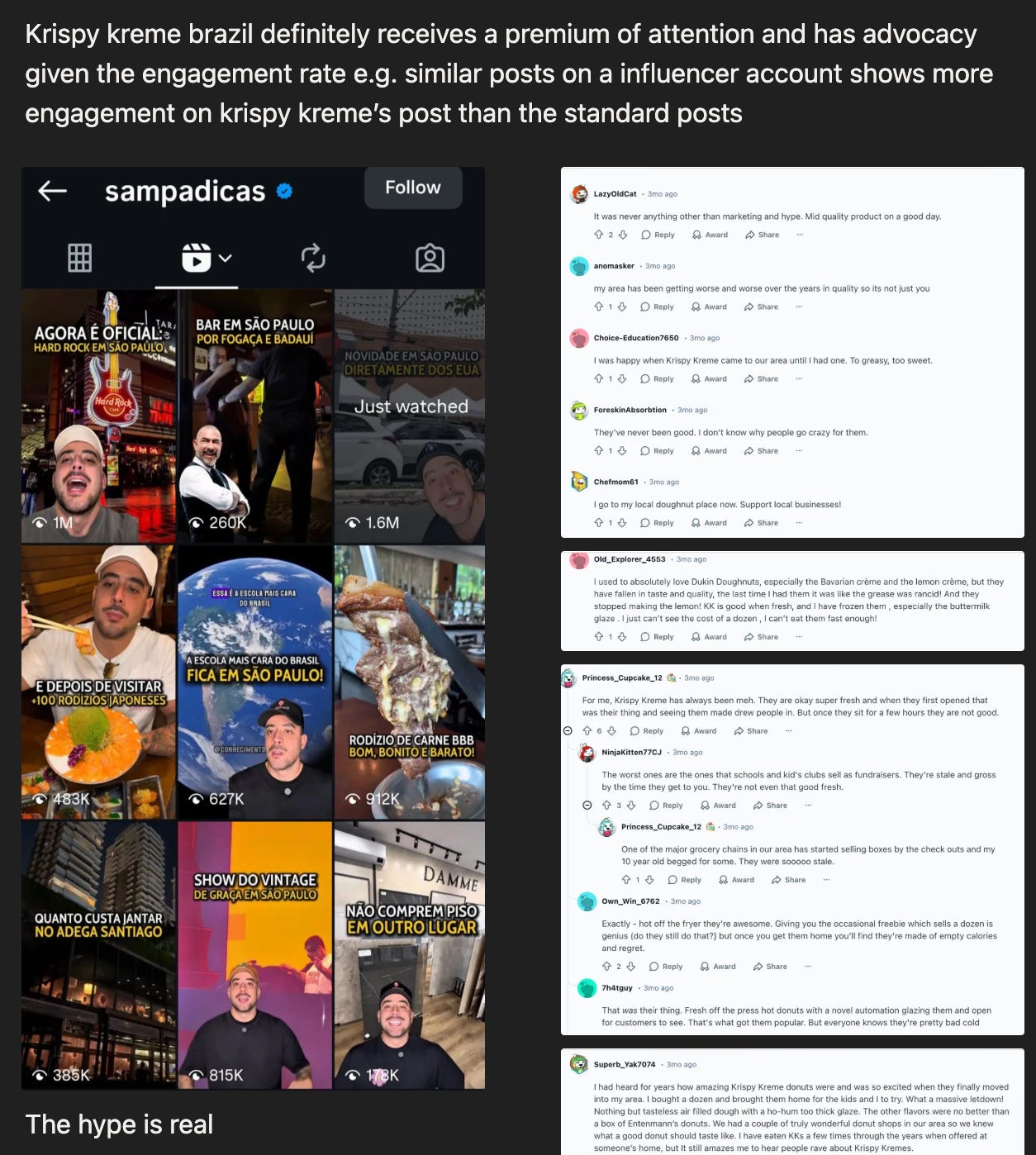
Research was done and I found out that in refranchised and new partnered locations, the hype was real and stores were filled. On socials there are definitely a fair amount of people who hated it. But the ones who loved it? - oh gosh, they were advocates
The company is operationally performing well whilst being sold at a discount on the open market. The company also recognises what they are failing at, and what they are good at, thereby focusing and doubling down on them.
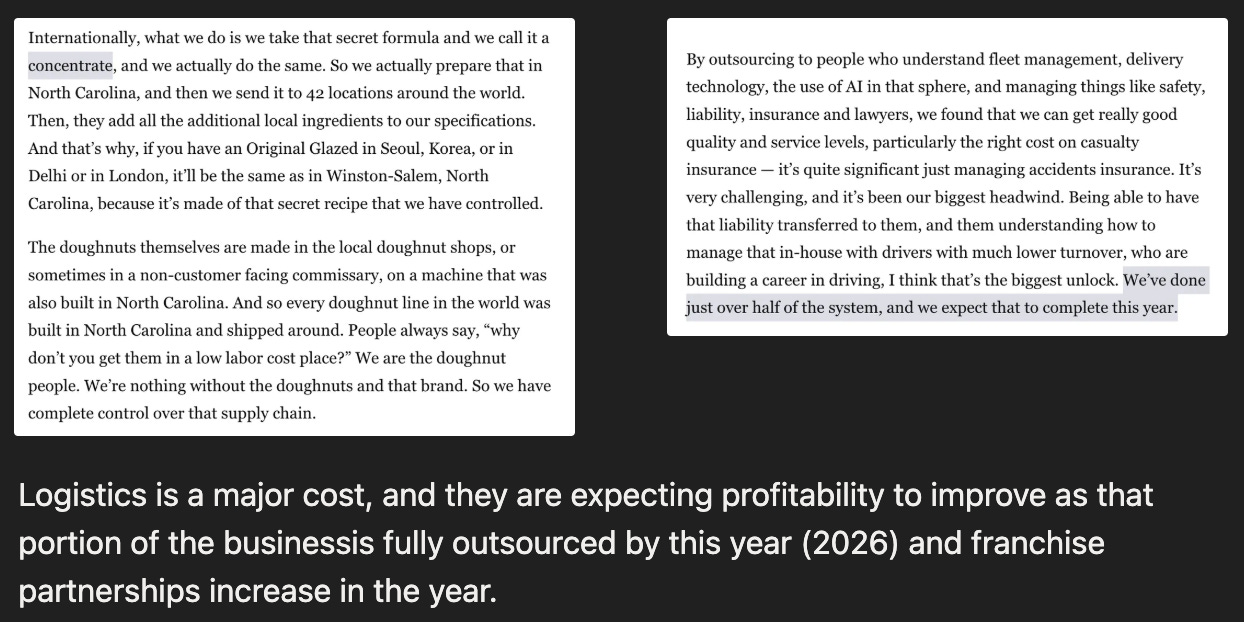
p.s. despite goodwill and intangibles making up more than half its book value, the company (given the information above) is obviously selling for a discount!
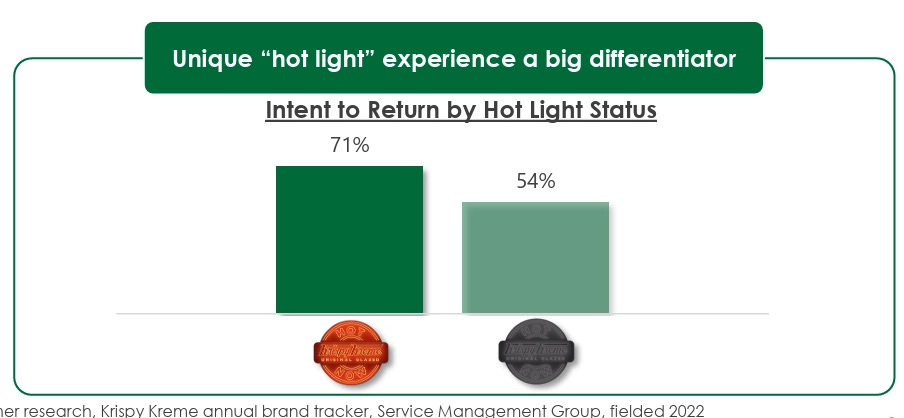
Krispy kreme main USP was actually the experience and the high quality doughnuts in its “hot now” sign. This “limited time” and squeezing of demand into a specific timeframe increased the perceived value for the product. That being said, after conducting a research, surprisingly, “hot light” isn’t significantly a deal killer. Hence, one way they are making their donuts feel more “exclusive” is by introducing limited edition dougnuts by collaborating with multiple IP holders and festive seasons like valentines’ day.
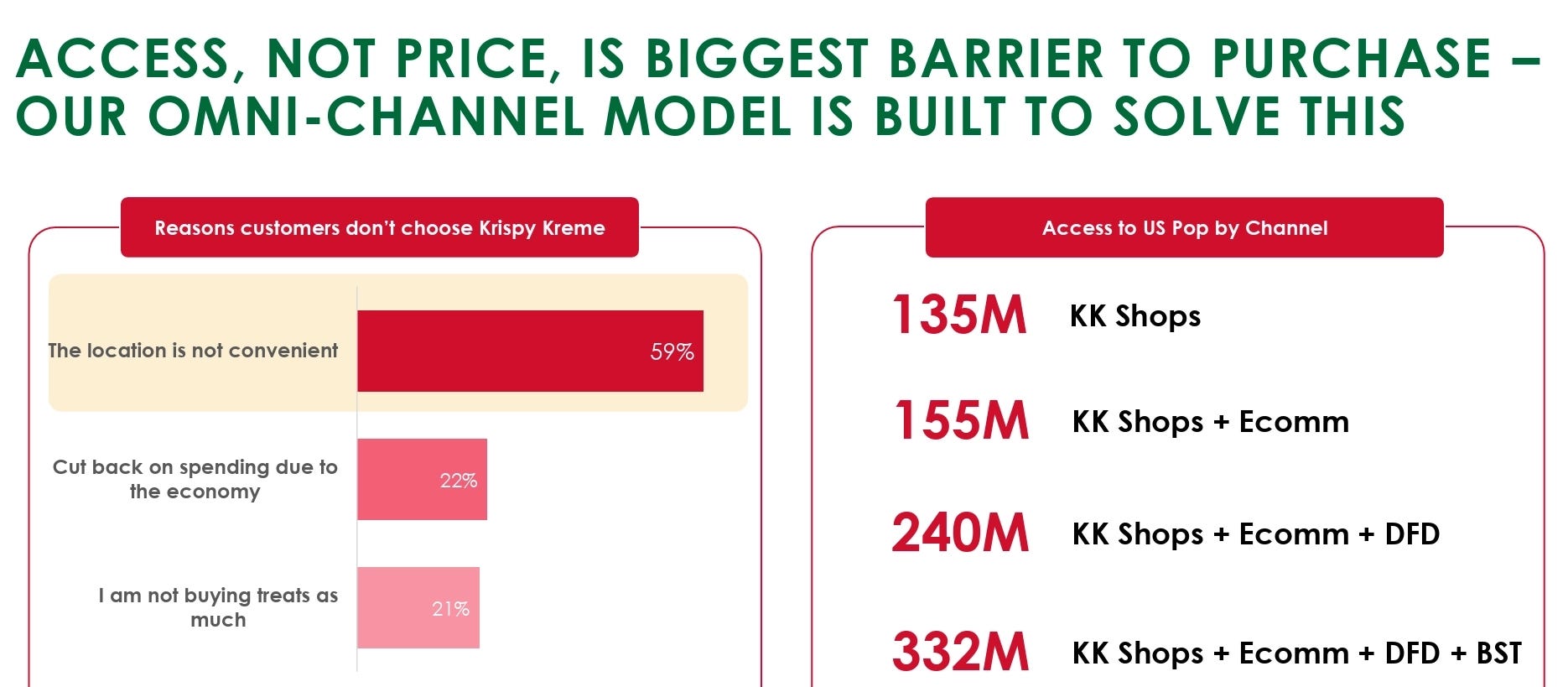
The justification for expanding into Walmart (hub and spoke) with their Delivered fresh daily strategy was that dougnuts are usually bought on impulse and 51% of people surveyed actually indicated location convenience as a barrier. Therefore, by increasing its presence, the business expects to make more (quality) sales.
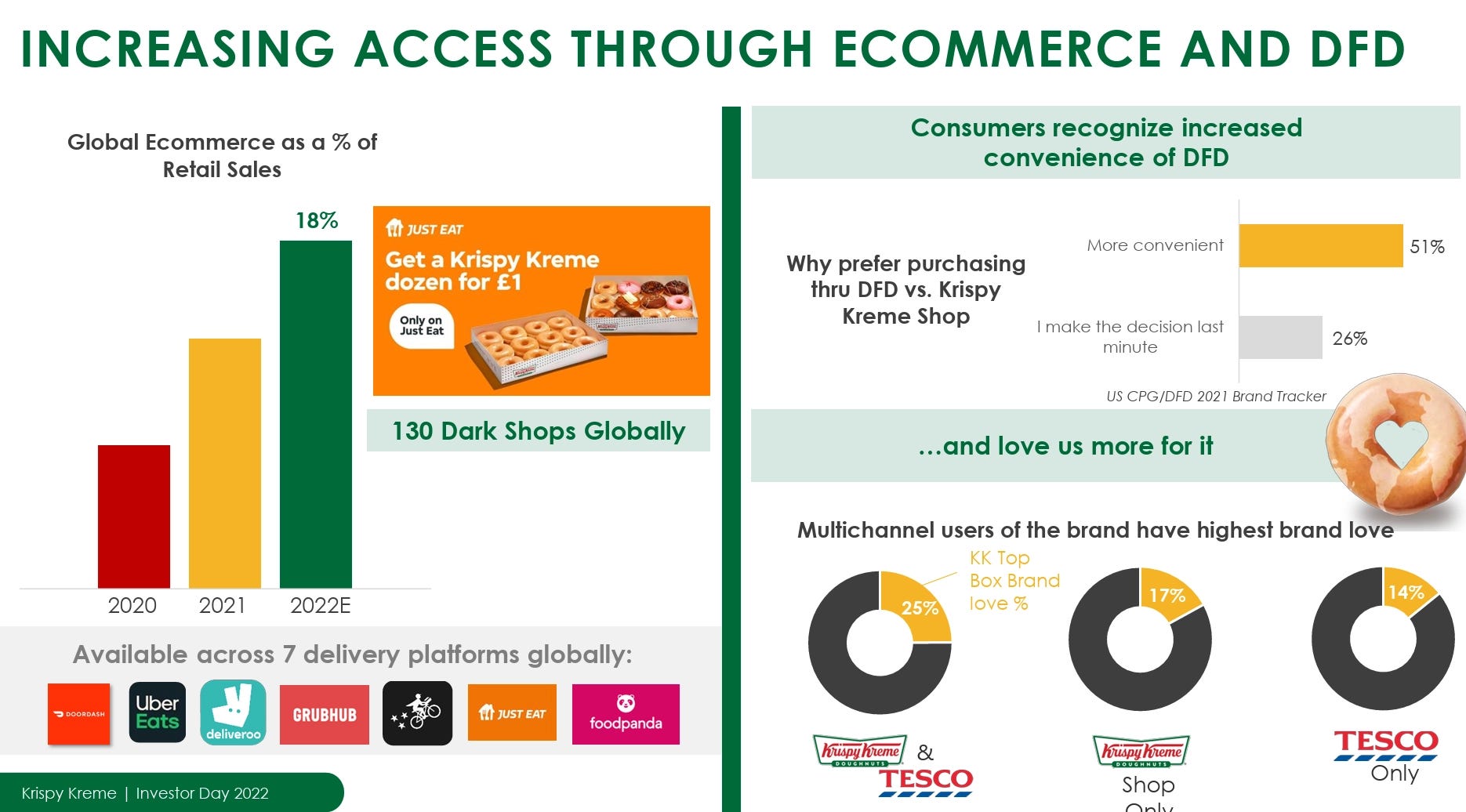
‼️ Advocates/ evangelists are customers who actually purchase omnichannel, which is also one of the biggest reason the company has decided to expand DFD
The only 2 problems were (1) Doughnuts when kept long went stale (2) logistics were expensive and horribly managed. The second problem is resolved now that the CEO recognizes the issue. The first problem is indirectly addressed as the logistics is solved, but we have to do further research as to its real quality during purchase in hub and spoke locations like wWalmart, and weather people are really buying it. One thing for sure is that they are improving perceived value of “fresh doughnuts” — especially the Walmart one.
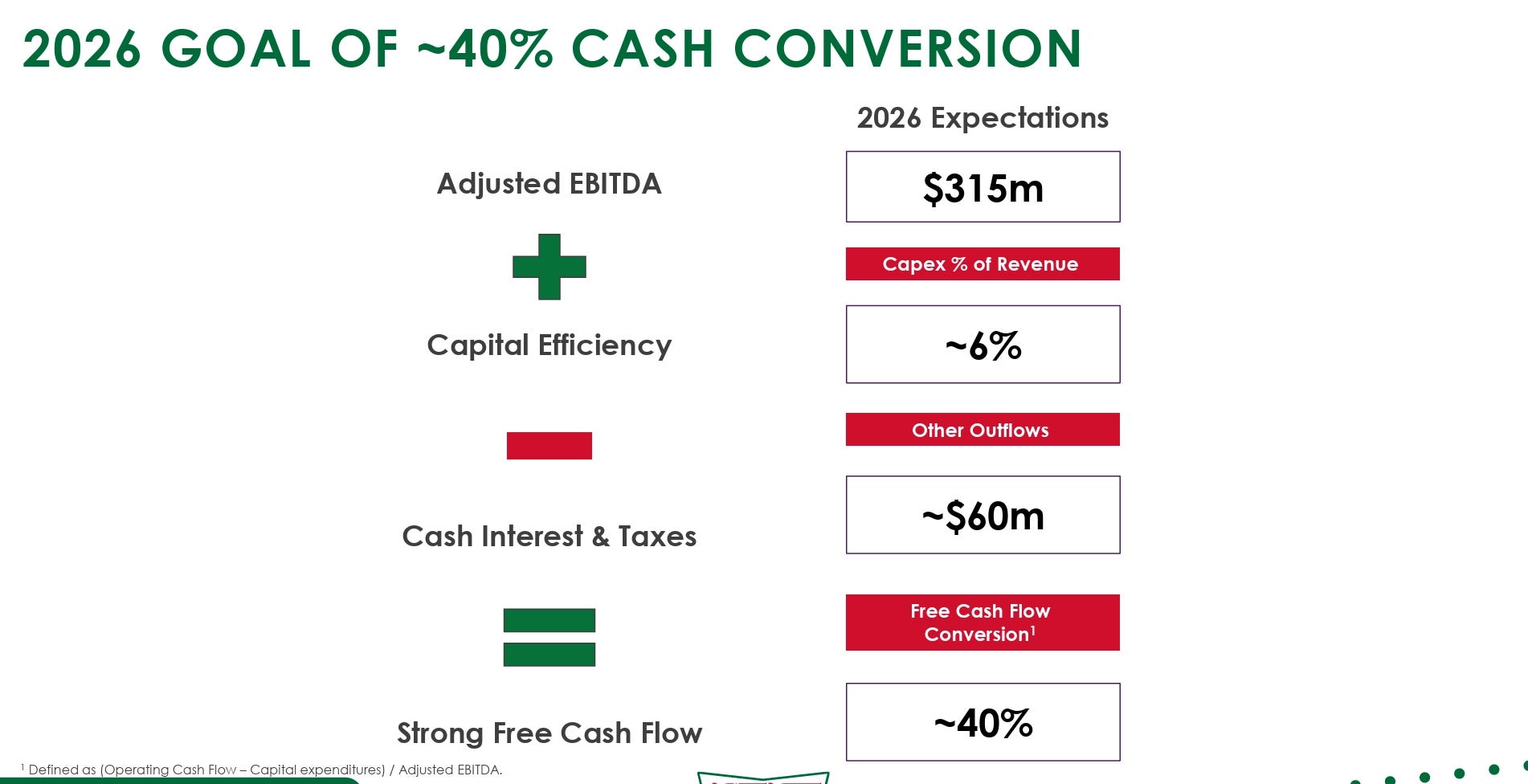
Lastly, like the fact that they are looking at FCF
The company is trading at 35% of sales when its average EBITDA is about 8.5%. In other words, a 4x P/E. meanwhile Dunkin trades on a 10 year average at around the 20s (in other words, a 5x when the company recovers and is re-rated, which can be fast for consumer stocks).
p.s. despite goodwill and intangibles making up more than half its book value
30 Jan 2028 update: Perspective changed as i was reading Ultrapar’s annual report. The company (through its subsidiary AmPm - one of the largest franchise convenience store) has existing traffic already in place where AmPm is located in (Ipiranga service stations). Not to forget that traffic is also driven by one of the top 8 loyalty app’s traffic - KMV loyalty app (which is owned by Ultrapar and Ultrapar owns both AmPm and KMV). This is essentially secured demand.
Something else to note is that most of Ipiranga’s store locations are in locations where the operators themselves own the land. What this means is that AmPm (and similar concepts like Krispy kreme) typically does not pay rent. Instead, it operates under a licensing + revenue-sharing model, because the station operator usually owns (or leases) the property. This is mentioned in Ipiranga’s 2024 annual report on how AmPm earns its revenues. No leasing fee is mentioned in the revenue structure. Although this is speculative, it does not eliminate the fact that the operators (which now operate AmPm and Krispy kreme) wants to and has (effectively) lower cost to operations.
Similar "capital-light" model is seen to be applied to Spain, India (curefoods network), Japan (Unison capital to close in 2026), Germany (3,000+ point of location strategy). Refranchising locations that will produce massive cash and cashflow includes: UK, Ireland, Australia, New zealand, Mexico, and Canada. Such scale would undoubtedly more than double capital and trigger a revaluation especially when the company is trading at such signficant discounts - which includes goodwill in book value (but we will be able to reconsider that as the goodwill is justified by major “capital light” partnerships with companies like AmPm and refranchising in locations like Japan)
Note that recent refranchising of Japan operation (of $65million) will buy them 1 year worth of interest on their debt. Based on current speed, the likelihood of a successful turnaround is high since they have sufficient time and partner leverage to make things work. Especially based on the fact that they need 2.5% EBITDA margin to finance their debt but historically the business model have easily averaged about 8.6% EBITDA margin.