
“The difference between successful people and really successful people is that really successful people say no to almost everything.” — Warren Buffett
Introduction: The Power of Subtraction
In the autumn of 1995, Steve Jobs returned to Apple and did something counterintuitive: he killed 70% of Apple’s products. Not because they were bad, but because they distracted from what mattered. This is the central paradox of value creation—the power lies not in what you do, but in what you refuse to do.
Warren Buffett keeps a list of companies he’s studied and rejected. Charlie Munger famously said his success came from “knowing the edge of my circle of competence.” Peter Lynch turned down hundreds of stocks for every one he bought. These aren’t stories about missing opportunities; they’re stories about the disciplined pursuit of only the best opportunities.
Sometimes, the companies we look at are perfectly fine companies at the wrong time or wrong price. A few are fascinating turnarounds that need more time. But all of them failed to answer three brutally simple questions satisfactorily:
1. How many birds are in the bush? (What’s the magnitude of return if the thesis works?)
2. How sure are you? (What’s the probability the thesis actualizes?)
3. How fast till you get them out? (What’s the realistic time horizon?)
For a LEAPs strategy—buying long-dated call options 12-24 months out—I need high conviction on all three. If any answer is unsatisfactory, the idea gets rejected. Period.
What follows is a detailed forensic examination of each rejection, complete with financial analysis, probability assessments, and the specific mechanical failures that killed each thesis. Think of it as a masterclass in what Charlie Munger calls “the psychology of misjudgment”—except here, we catch ourselves before the mistake.
Let’s begin.
CHR: The E-Commerce Nightmare That Couldn’t Stop Diluting
Date Analyzed: September 15, 2025
Current Price: ~$0.05 | Market Cap: ~$4.2M (post-split)
The Spectacular Collapse
Cheer Holding’s story is one of breathtaking value destruction. On January 1, 2025, CHR traded at $2.49 per share. By December 23, 2025—as I write this—the stock trades at $0.05 after a 1-for-50 reverse split executed yesterday. That’s a 99.8% decline in less than twelve months.
The Original Thesis That Never Was
When I analyzed CHR in September, the numbers seemed almost comically attractive:
Market Cap: $8 million
Cash: $197 million (yes, twenty-five times the market cap)
Total Receivables: $77 million
Total Liabilities: $41 million
Net Liquidation Value: $233 million
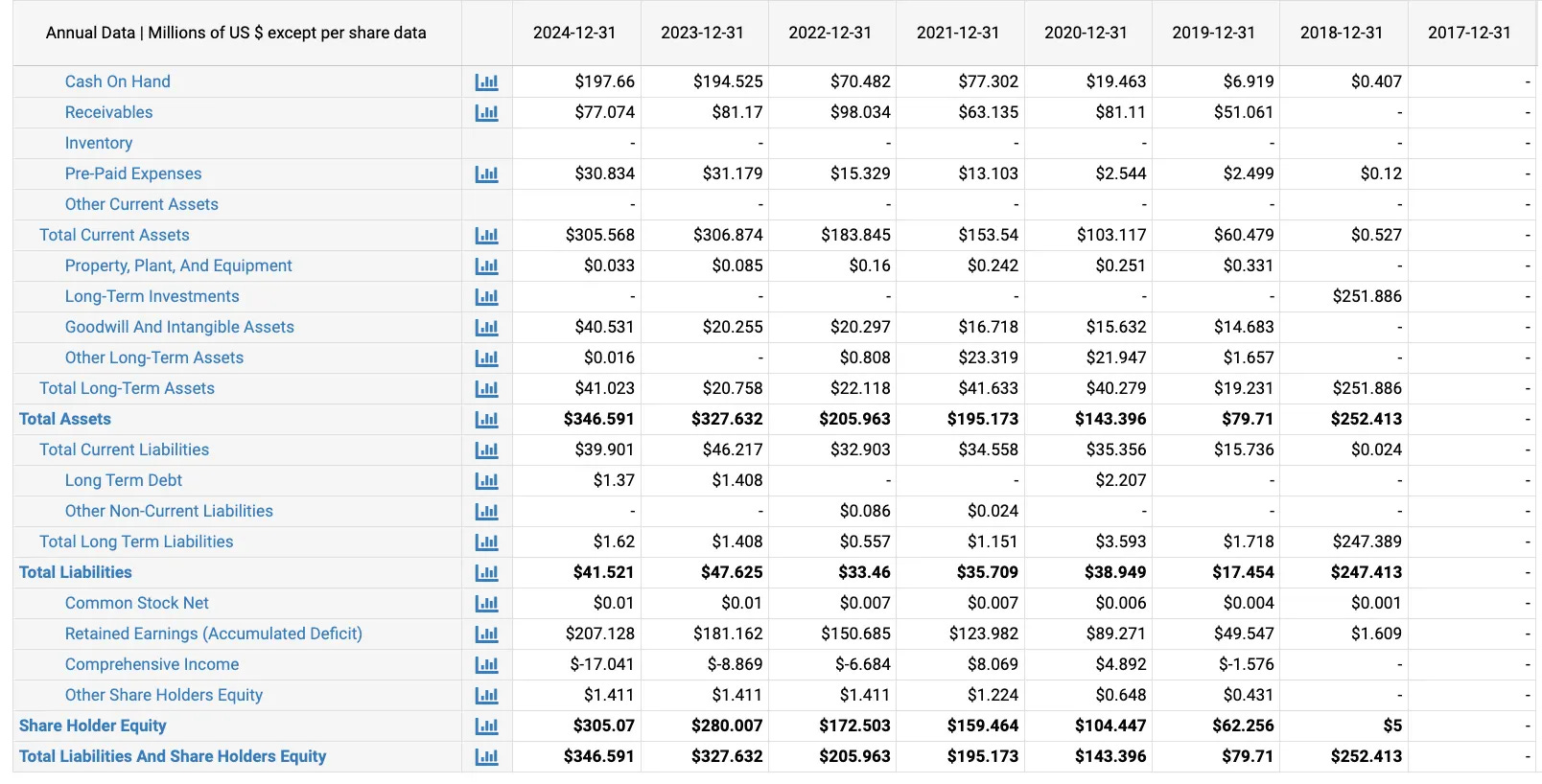
That’s a 29x return just to reach liquidation value. The company operates multiple platforms in China:
CHEERS Video: Short-video app (51.1 million MAUs)
CHEERS e-Mall: Integrated e-commerce with livestreaming
CHEERS Telepathy: AI content creation platform
CheerReal: NFT digital collectibles
Multiple other apps: CheerCar, CheerChat, etc.


They even have their own TV series and drama shows
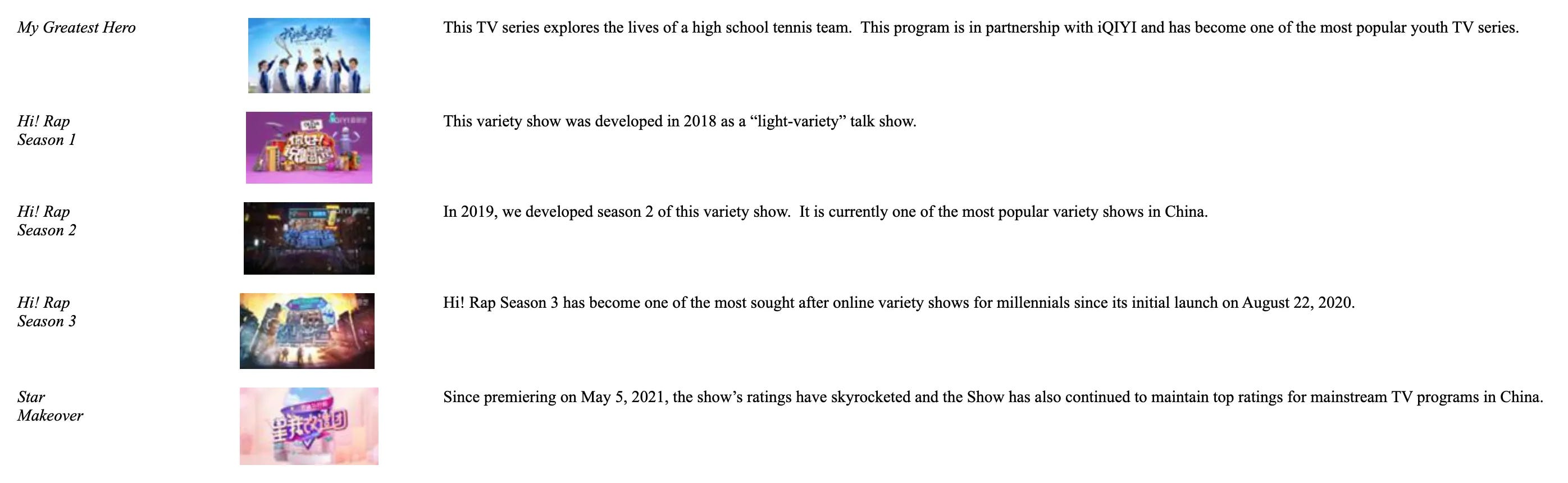
This is the “everything plus the kitchen sink” approach to business—throw enough spaghetti at the wall and see what sticks. Except the wall is in China, the spaghetti is blockchain-enabled, and nothing is sticking.
The Dilution Death Spiral: A Timeline
August 2025: Just months after announcing a $50 million stock buyback program (which should have been my first red flag—why announce a buyback if you’re sitting on $197M cash?), the company issued warrants with catastrophic terms:
Units Offered: Up to 8 million
Price per Unit: $1.50
Each Unit Contains:
1 Class A Share
1 Series A Warrant (exercise price $1.58, 1-year expiry)
1 Series B Warrant (exercise price $1.58, 1-year expiry, OR zero exercise price option)
The “zero exercise price option” is where this becomes theater of the absurd. Holders can receive 8.1 shares for free by exercising the zero-price feature. No cash required. Just dilution delivered.
Worst Case Dilution Math (August):
Current shares: 11.6 million
Potential new shares: 92.6 million
Dilution factor: 8x
October 2, 2025: The company raised $8.5 million in a “best efforts” offering, issuing 12.7 million units at $0.67 each. Each unit included one share plus two warrant series. The Series B warrant’s “zero exercise price” option could deliver 5.1235 shares per warrant—potentially 65 million additional shares.
The stock dropped 34.78% that day, falling from $0.185 to $0.117.
November 5, 2025: Cheer issued 187.5 million Class A shares (or pre-funded warrants) at $0.08 per share, raising $15 million. This single offering represented more shares than the total outstanding at the start of the year.
November 18, 2025: The company received two non-binding acquisition offers:
Offer 1: $0.56 per share
Offer 2: $0.52 per share
The stock traded at $0.31 briefly (+100% spike) before reality set in. Nobody believes these offers are real, given the company’s history and capital structure chaos.
November 19, 2025: Nasdaq issued a delisting notice. The stock had traded below $1.00 for 30 consecutive days (minimum bid rule) AND below $0.10 for 10 consecutive days (low-price rule). The company has until April 14, 2026 to regain compliance or face delisting.
December 22, 2025: Executed 1-for-50 reverse stock split. The company went from 234.3 million shares to 4.7 million shares. The stock price adjusted from ~$0.001 to ~$0.05, still nowhere near the $1.00 minimum bid requirement.
The Capital Structure Catastrophe
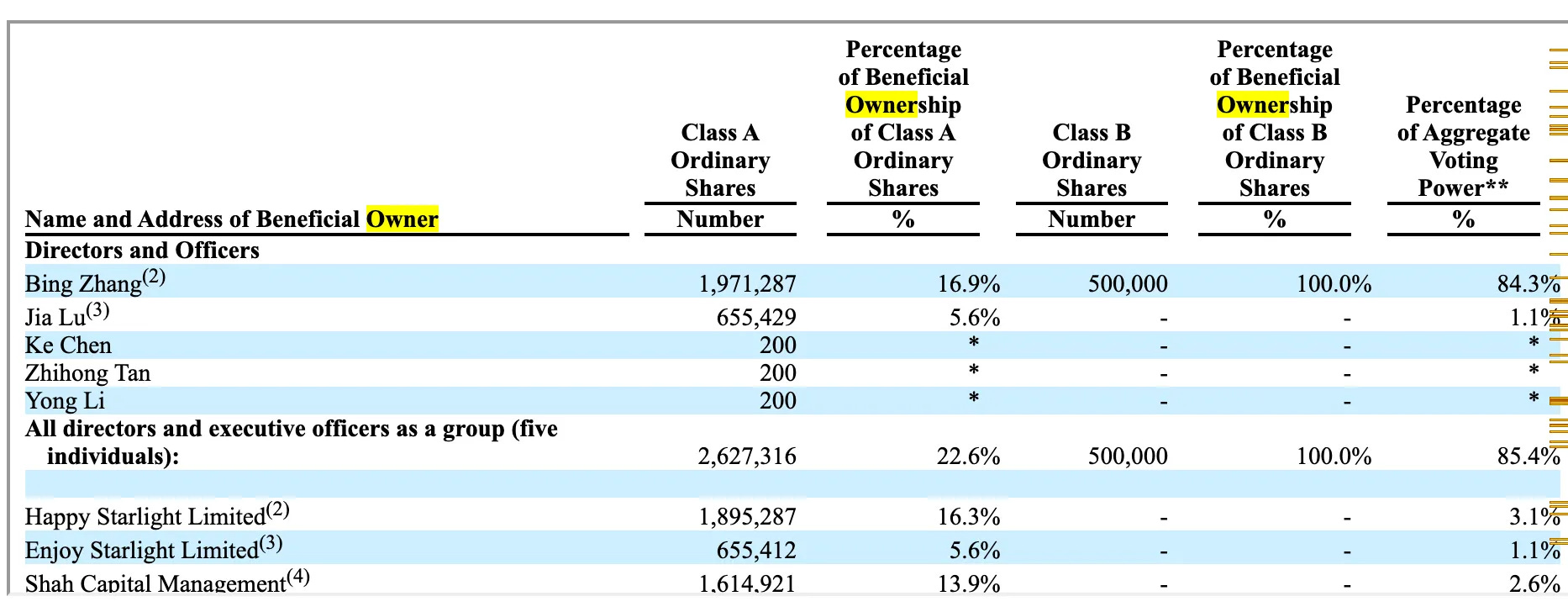
Let me map out what happened to shareholder equity:
January 1, 2025:
Shares outstanding: ~45 million
Stock price: $2.49
Market cap: $112 million
November 5, 2025 (pre-reverse-split):
Shares outstanding: 234.3 million
Stock price: $0.08
Market cap: $18.7 million
December 23, 2025 (post-reverse-split):
Shares outstanding: 4.7 million (adjusted)
Stock price: $0.05
Market cap: $4.2 million
Shareholder Value Destruction: From $112M to $4.2M = 96.25% evaporation
And remember: the company still reports $203.2 million in cash (as of June 30, 2025). Where did it go? Let’s track it:
Known Cash Outflows:
October offering: +$8.5M
November offering: +$15M
Estimated burn rate (based on H1 2025): -$50M annually
Total net: -$26.5M
So they should have around $176.7 million in cash remaining. Yet the market cap is $4.2 million. This is either:
The market pricing in complete destruction of shareholder value
The market believing the cash is inaccessible or unreliable
Both
The Chinese VIE Problem (Again)
Like WIMI, Cheer operates through VIE structures. The cash sits in China-based operating entities. Foreign shareholders own contracts, not assets. If Beijing decides to intervene—or if management decides to “restructure”—that cash could be untouchable.
Recent Precedent: Luckin Coffee (2020) reported $310 million in fabricated cash. Shareholders discovered the cash never existed. Cheer’s cash may be real, but it’s also potentially unreachable.
The Buyback That Never Happened
On December 3, 2024, Cheer announced a $50 million buyback program over 36 months. As of December 23, 2025: zero shares repurchased.
This is management insulting your intelligence. They announce a buyback to signal confidence, then immediately issue 200+ million shares at pennies per share. It’s the corporate equivalent of saying “trust me” while picking your pocket.
Birds in the Bush: 42x (on paper—liquidation value vs market cap)
Probability of Success: <5%—the capital structure is unsalvageable
Time Horizon: Never; company will likely be delisted or acquired for nominal value
The Lesson
When a company with substantial cash trades at a 95%+ discount to liquidation value, the market is telling you something. Usually, it’s telling you that cash isn’t yours. This is especially true for Chinese VIE structures where “ownership” is a polite fiction maintained by contracts that may be unenforceable.
More fundamentally: a company that responds to low stock prices with relentless dilution rather than buybacks is telling you exactly whose interests they serve. And it’s not yours.
Verdict: This is financial disaster porn, not an investment opportunity.
Learnings To Stick To
1. Dilution is Value Destruction
It doesn’t matter if a company has $200 million in cash if they’re issuing $300 million in equity at pennies on the dollar. Per-share value is what matters, not absolute value.
2. Debt is Fragility
Interest coverage below 3x means one bad year could trigger covenant breaches. Below 2x is playing with fire. Below 1.5x is suicidal.
3. Insiders Always Know First
When CEOs, CFOs, and directors sell 60-80% of vested RSUs immediately, they’re voting with their wallets. Listen.
4. Business Models Matter More Than Operations
You can’t cost-cut your way to success if the fundamental value proposition is obsolete.
5. Timing Is Everything (For Options)
e.g. MDU Resources and Krispy Kreme might be great investments... in 2027. But for LEAPs expiring in 2026, the timeline doesn’t work.
6. Regulatory Red Flags Are Never False Alarms
When annual reports are encrypted, when revenue collapses without explanation, when short sellers publish specific fraud allegations—walk away. The risk isn’t worth the reward.
7. Pandemic Winners Are Usually Losers
Mean reversion is brutal. Companies that benefited from temporary behavioral shifts rarely maintain those gains.
The Philosophy of “No”
Charlie Munger said: “The art of being wise is the art of knowing what to overlook.”
In investing, success comes from:
Saying yes to the right opportunities (important)
Saying no to the wrong opportunities (more important)
Saying no to marginal opportunities (most important)
This article is about #3. None of these companies were obviously terrible (well, maybe CHR and WIMI). Most had legitimate businesses, real assets, and plausible turnaround stories.
But “plausible” isn’t “probable.”
And “interesting” isn’t “investable.”
The Buffett-Munger Standard
Before investing, ask:
Do I understand this business? (Circle of competence)
Does it have a sustainable competitive advantage (Moat)/ does it have a legitimate working business model (for LEAPs)?
Is management trustworthy and aligned? (Stewardship)
Is the price attractive relative to intrinsic value? (Margin of safety)
What could go wrong? (Risk analysis)
For LEAPs specifically, add: 6. Will value be realized in 12-24 months? (Timing) 7. Is the expected return 2x+ to compensate for time decay? (Return threshold)
If the answer to ANY of these is “no” or “uncertain,” walk away.
The Opportunity Cost Mindset
Every dollar invested in these marginal opportunities is a dollar not available for exceptional opportunities.
Your capital is finite. Your attention is finite. Your time is finite.
Protect all three zealously.
When I reject companies, I’m not losing opportunities—I was preserving capital and attention for better opportunities yet to come.
In investing, a 0% success rate at finding investments can be a 100% success rate at avoiding disasters.