
Cashflow Optimization
We will be skipping everything that only has a paper effect (e.g. how we treat income and cost) since that is not our intention here. We want to see real concrete improvements in the business instead.
The Cash Triage
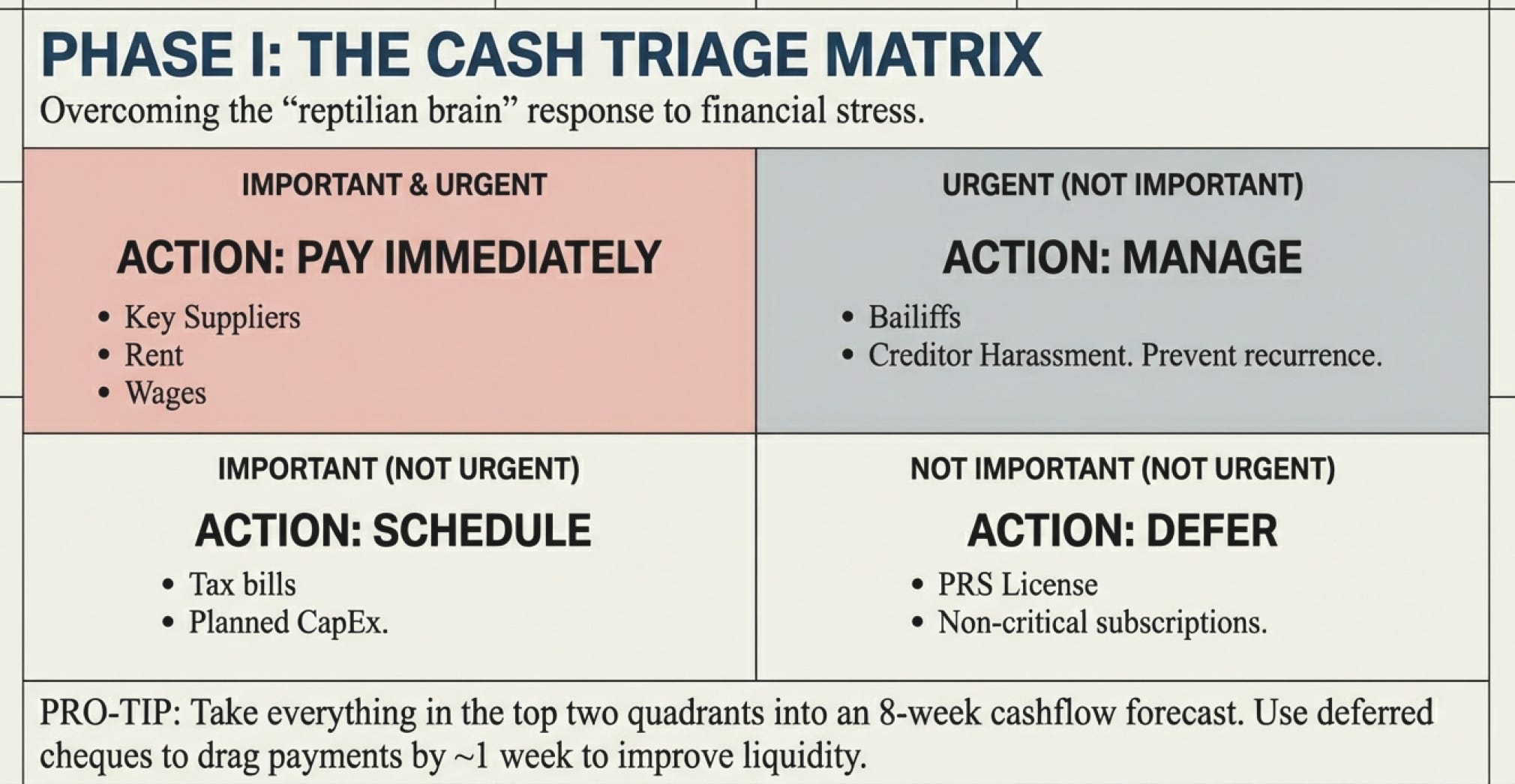
Many times, owners prioritize payments based on what they think or feel is best due to the immense stress from their business daily. By needing to make a decision quickly, our reptilian brain tends to take control (stress influence psychological bias) and results in us making poor decision. The cash triage matrix is a tool to help you prioritize payments and manage cash flow practically, especially in times of financial stress. It divides your expenses into four categories based on urgency and importance, helping you decide what to pay first when cash is tight.
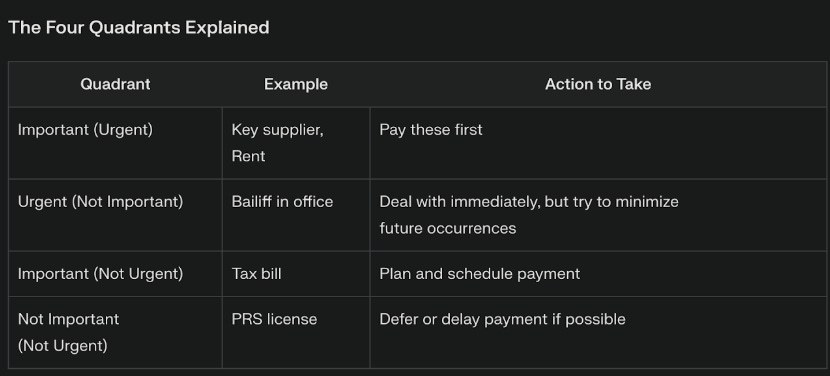
To use the cash triage matrix, start by listing all your upcoming expenses and then sort each one into the four quadrants: Important (Urgent), Urgent (Not Important), Important (Not Urgent), and Not Important (Not Urgent), as shown in the image.
Pay the Important (Urgent) items like key suppliers and rent first, since these are critical to your business survival.
Next, address Urgent (Not Important) issues such as a bailiff in the office to avoid immediate disruption, but try to prevent these situations in the future.
For Important (Not Urgent) expenses like tax bills, schedule payments so they don’t become urgent.
Finally, defer Not Important (Not Urgent) items, such as a PRS license, until your cash flow improves.
Regularly review and update your matrix as your situation changes.
Pro-tip: Take everything in the “important (urgent)” and “urgent (not important)” into a 8 weeks cashflow. This should show you everyone important that you need to pay
The key is to move everything around in the cashflow via deferred payment and splitting the payments
Use deferred cheques to drag on payment for about 1 week. This helps to improve cashflow
Now that you have nailed down your cashflow, arrange and systemize the repayment with creditors
Strategic Cashflow Metrics
These three metrics help manage cash flow by focusing on inventory, receivables, and payables. Be mindful that focusing on these metrics can drive unintended changes in business practices.
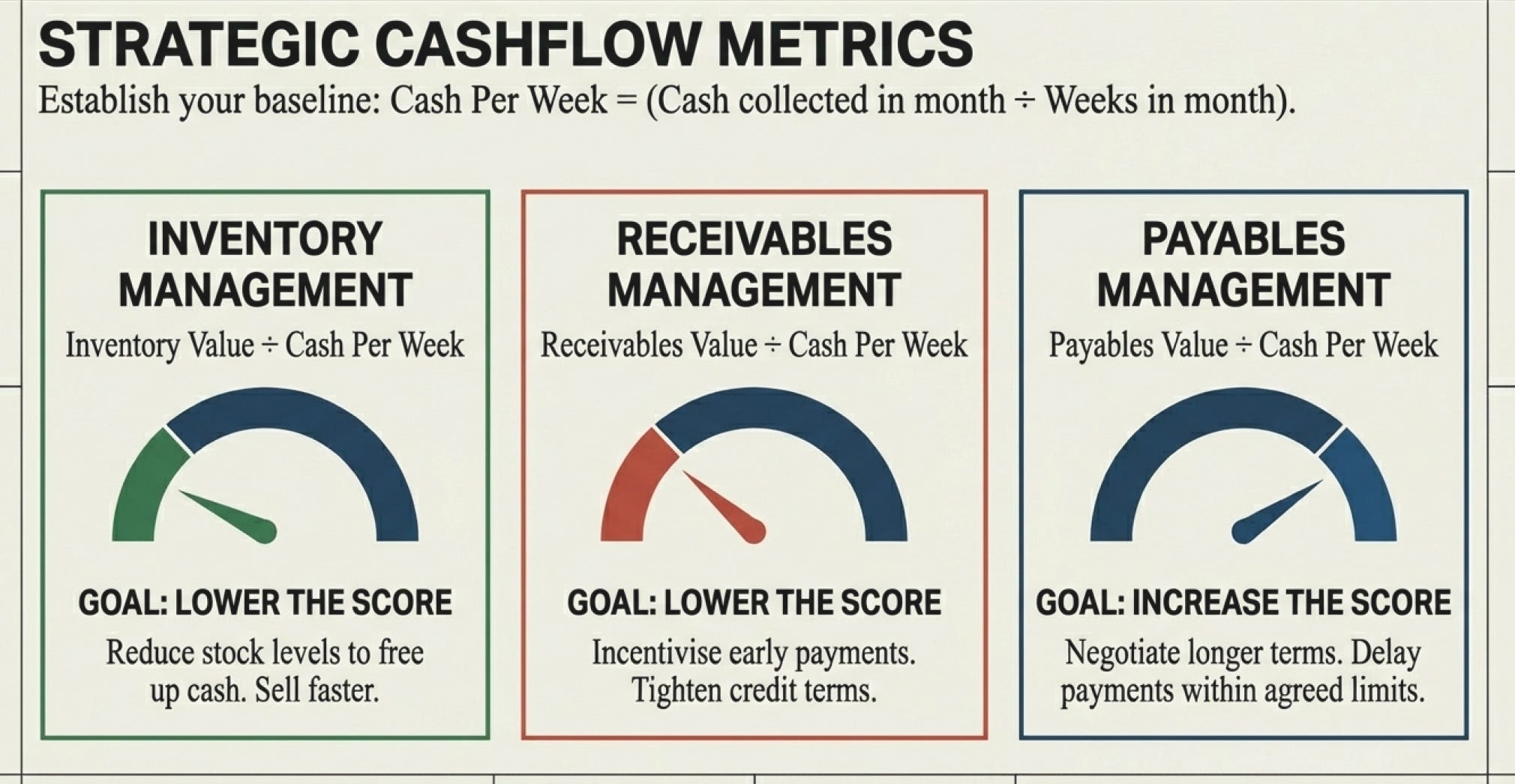
Cash Per Week
Formula: Cash per week = (Cash collected in that month, incl tax) ÷ (Weeks in that month)
This metric establishes your baseline weekly cash intake. Calculate this first to contextualize the other two metrics.
Inventory Management
Formula: Cash score = Inventory value ÷ Cash per week
Goal: Lower this score. Reducing inventory levels frees up cash.
How: Analyze slow-moving items and implement strategies to reduce stock levels, such as sales or improved inventory management.
Receivables Management
Formula: Cash score = Receivables value ÷ Cash per week
Goal: Lower this score. Collecting receivables faster increases cash.
How: Offer incentives for early payment, tighten credit terms, or improve your collection process.
Payables Management
Formula: Cash score = Payables value ÷ Cash per week
Goal: Increase this score. Delaying payments to creditors (within terms) can free up cash.
How: Negotiate longer payment terms with suppliers. Be careful not to harm supplier relationships.
By monitoring these cash flow metrics, your business can make informed decisions to optimize its cash position. If the four quadrants of the cash metrics is tending to the output, this would be addressing the input.
The Cash Conversion Cycle
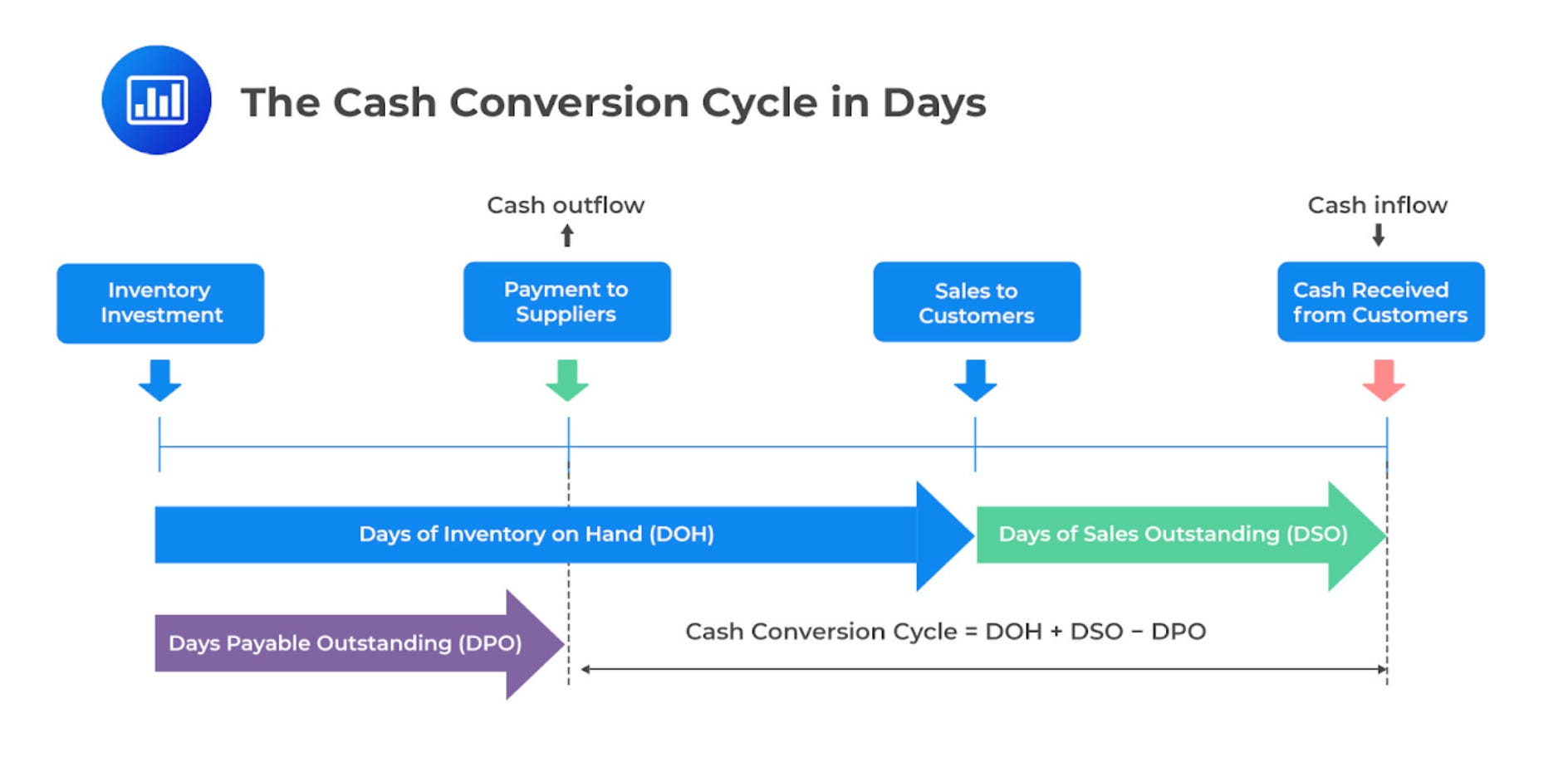
Similarly to the strategic cashflow metrics, the cash conversion cycle (CCC) also helps optimizes cashflow. You can pick which one you prefer the most. The CCC measures how many days it takes for a company to convert its investments in inventory and other resources into cash flows from sales. It combines how long inventory sits before being sold, how long it takes to collect receivables, and how long the company can delay paying its suppliers.
“The Best Time To Sell Your Business, Is When You Don’t Have To”
True success lies in building value, not urgency
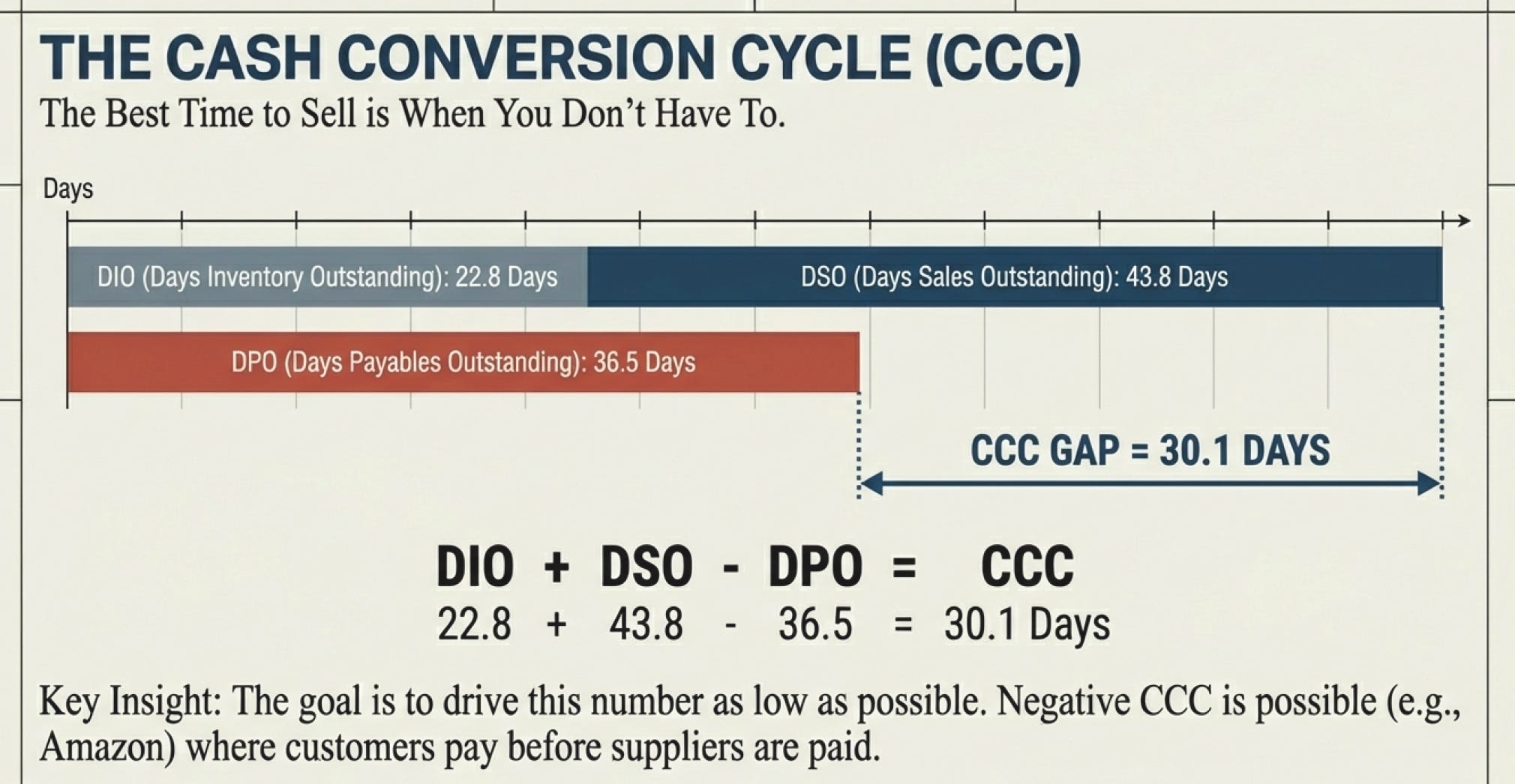
CCC = Days Inventory Outstanding (DIO) + Days Sales Outstanding (DSO) − Days Payables Outstanding (DPO)
DIO (Days Inventory Outstanding): Average number of days inventory is held before being sold.

DSO (Days Sales Outstanding): Average number of days to collect payment after a sale.

DPO (Days Payables Outstanding): Average number of days the company takes to pay its suppliers.

Example, If a company has:
DIO = 22.8 days
DSO = 43.8 days
DPO = 36.5 days
Then, CCC = 22.8+43.8−36.5 = 30.1 days
This means it takes about 30 days for the company to turn its inventory investment into cash. The main intention is to reduce the CCC value to as low as possible.
Note: There are companies that have achieved negative CCC values. These tends to be companies where a majority of cost is paid upfront before the product is delivered e.g. e-commerce dropshipping, and Amazon where they receive payment from customers before paying third-party sellers
It is important to take note that both the CCC and the strategic cashflow matrices can be permanently optimized in the long-term depending on
The terms between you and your customers (e.g. 50% deposit, retainer, 20% of revenue, 100% upfront.etc)
The value-ladder (e.g. high operating leverage products with high fixed cost but take low operating costs to deliver tend to ease cashflow in the long-term/ asset light products tend to generate better cashflow and have more flexibility of terms/ if your lead magnet takes employees to deliver, are you able to move customers up the value-ladder fast enough and at enough volume so it compensates for wages?)
Financial Engineering - Low Hanging Fruits
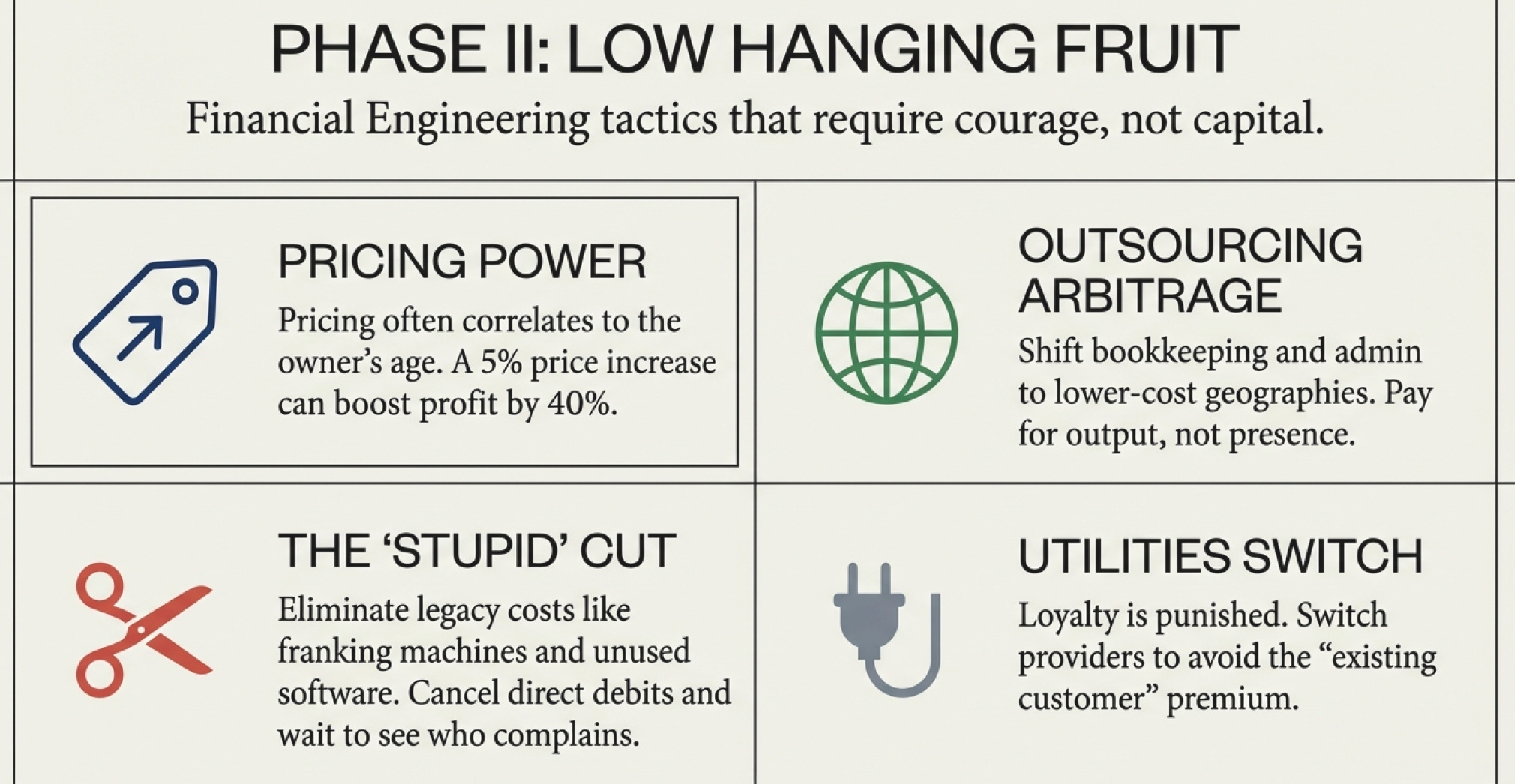
🏷️ Increase prices
Usually the price that the business charge tends to be correlated to the Owner’s age; but we’ve got inflation. Usually the older the owner the more discrepancy
A 5% price increase can help to increase profits by 40%
Single digit % increase in price every 2-3 years will usually result in **no** change in customers (Harvard study). Even if you lose the customer, the increase will prices will offset that. Alternatively use GBB pricing
Can consider playing with prices that people are not very well aware off e.g. costs of calling cyprus from belgium, because very little people do this, no one knows
📤 Outsourcing capabilities
Can you outsource any of the functions of your business or services to people online from 3rd world countries who are cheaper?
e.g. Bookkeeping and accountants change
Make sure just to get the basics and bare minimum services, don’t overspend
Don’t immediately discmiss this, due to the fact that you have been in the industry for long. Continue digging through networks and connections to identify such possibilities. The world is huge and there are tons of discrepancies out there
💰 Stupid expenses
Watercoolers, Photocopier, Franking machine to put stamps even when no one uses that nowadays with Email, Photorendering software that no one uses.etc. The steps below are a little extreme but it helps
Cancel all the direct debits
Cancel all the Standing orders
Cancel all the credit cards and get and new one
Wait for people to get in touch and decide what is an essential
💦 Utilities
Utility companies tend to “reward” their best customers with the highest prices. Use comparison website; there is always a better rate when you switch over
⬆️ Asset disposal
Old assets that are not used and can be disposed. Sell everything on eBay (carousell in singapore). Can use the money to treat employees to a meal and brainstorm session for especially the Cashflow metric planning
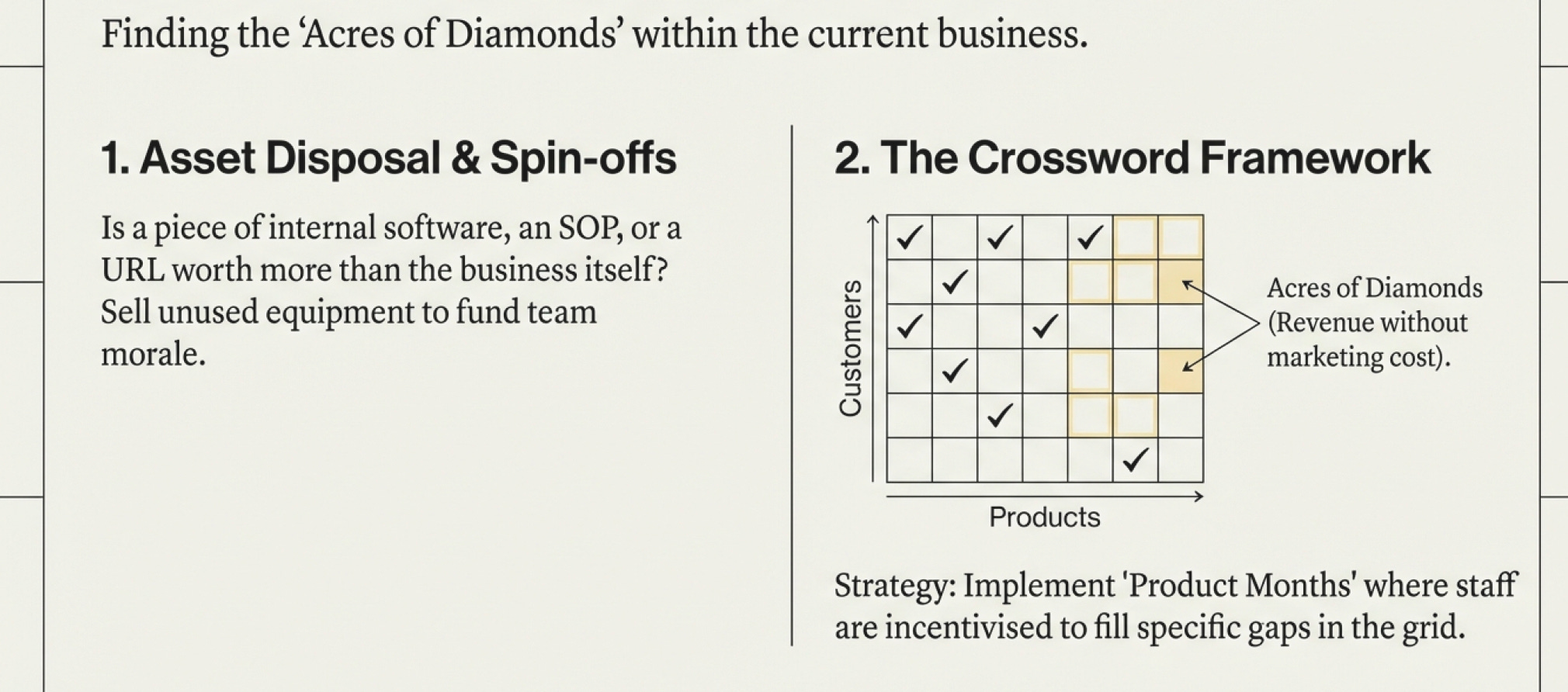
🔑 Is anything in the business worth more than the business?
Is there any service or software that the business have that can be “spin-off” as another business OR product OR service that can be monetized?
Software that can automate the business process. This can then be sold to other similar businesses
Website URL that other brands are not using. You can then use the URL and your marketing ability to charge them for a business service
Other examples: Marketing systems, SOPs.etc
❎ Cross selling crossword (focus on acres of diamond)
Most businesses are obsessed with following the trend or looking for new customers. They forget that they are “sitting on a Acre of diamonds” - they forget to focus on existing customers - this is very similar to the value-offer we did
This reduces marketing & sales cost while increasing revenue
Below is an example of how the crossword framework works, you want to access your product penetration to your customers
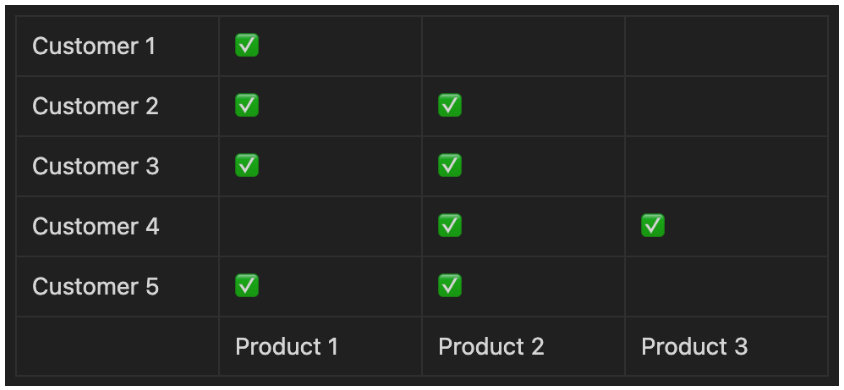
The “empty untick” boxes are actually the opportunities/ additional revenue that you potentially can get out without marketing and sales cost
What you can do to sell more: implement “product months” where salesperson will get incentives like double commission in that month if they sold that specific “empty untick products”
You can get rid of your sales team and use employees to cross-sell.
Aligning Managers with Compensation Plans
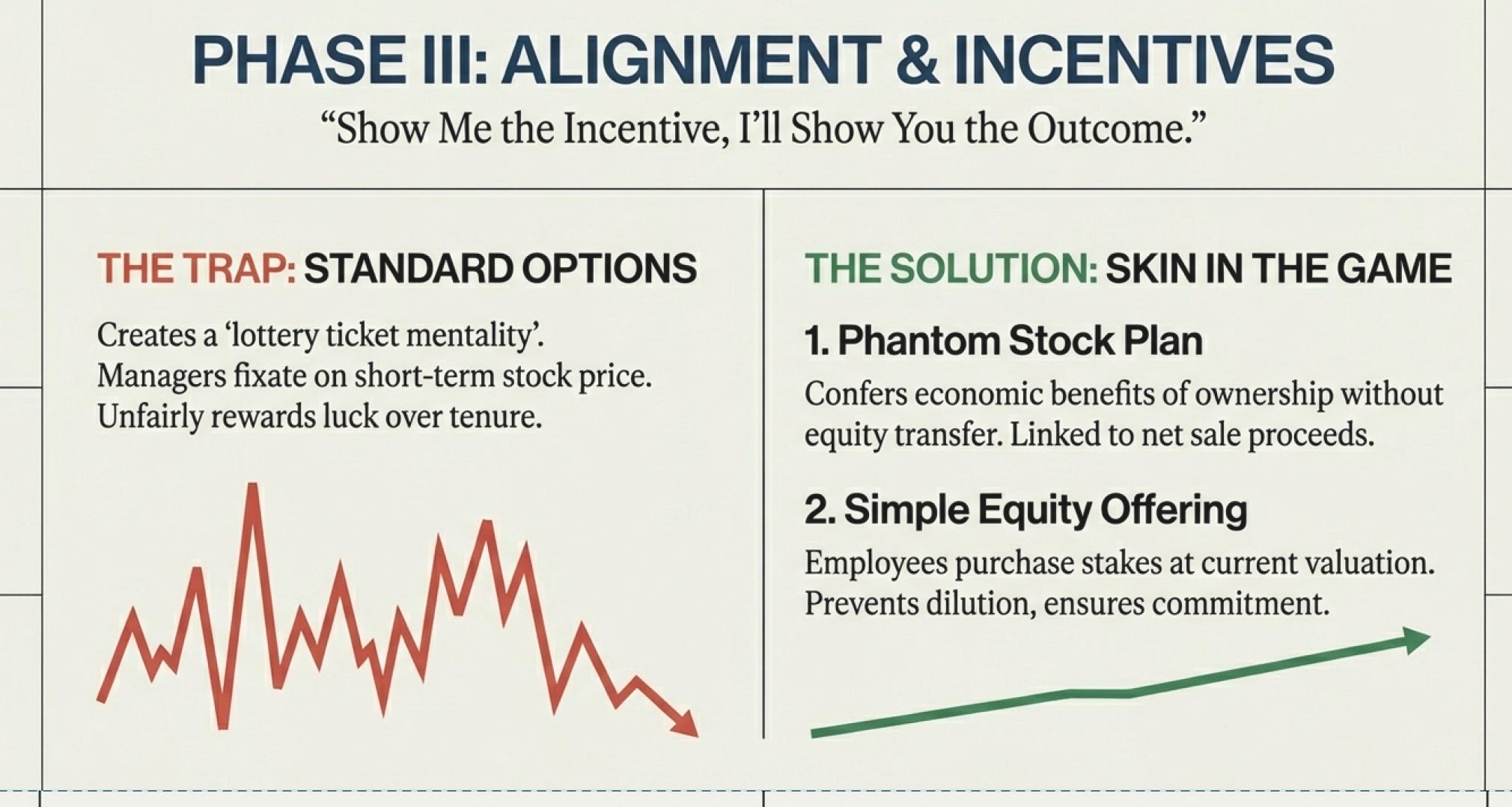
1. Phantom stock plan
compensation offered to upper management that confers the benefits of owning company stock without actual ownership e.g. manager do not own the stock but get 20% of the net sale proceeds. Since the business valuation is based on earnings and assets, the manager is incentivized to run the company well
2. Simple equity offering
Employees given the option to purchase equity stake in the company (at current valuation to prevent dilution)
But The Most Important Thing….
Warren Buffett has deep reservations about using stock options as compensation, and his thinking on this is both straightforward and profound.
“When you hand out fancy derivatives like stock options to your team,” Buffett might say, “you’re setting up a game where everyone’s playing by different rules.” He worries that options create a tempting lottery ticket mentality. Managers start fixating on next quarter’s stock price rather than building something that will stand the test of time.
His concern extends beyond just corporate strategy. He sees a fundamental fairness issue. Picture this: The stock market has a good year, and suddenly a handful of executives are cashing in million-dollar option packages while the receptionist who’s been with the company for 20 years gets nothing. How does that build a culture where everyone feels they’re in it together?
A case example of Garantia (a company of Jorge Paulo Lemann)
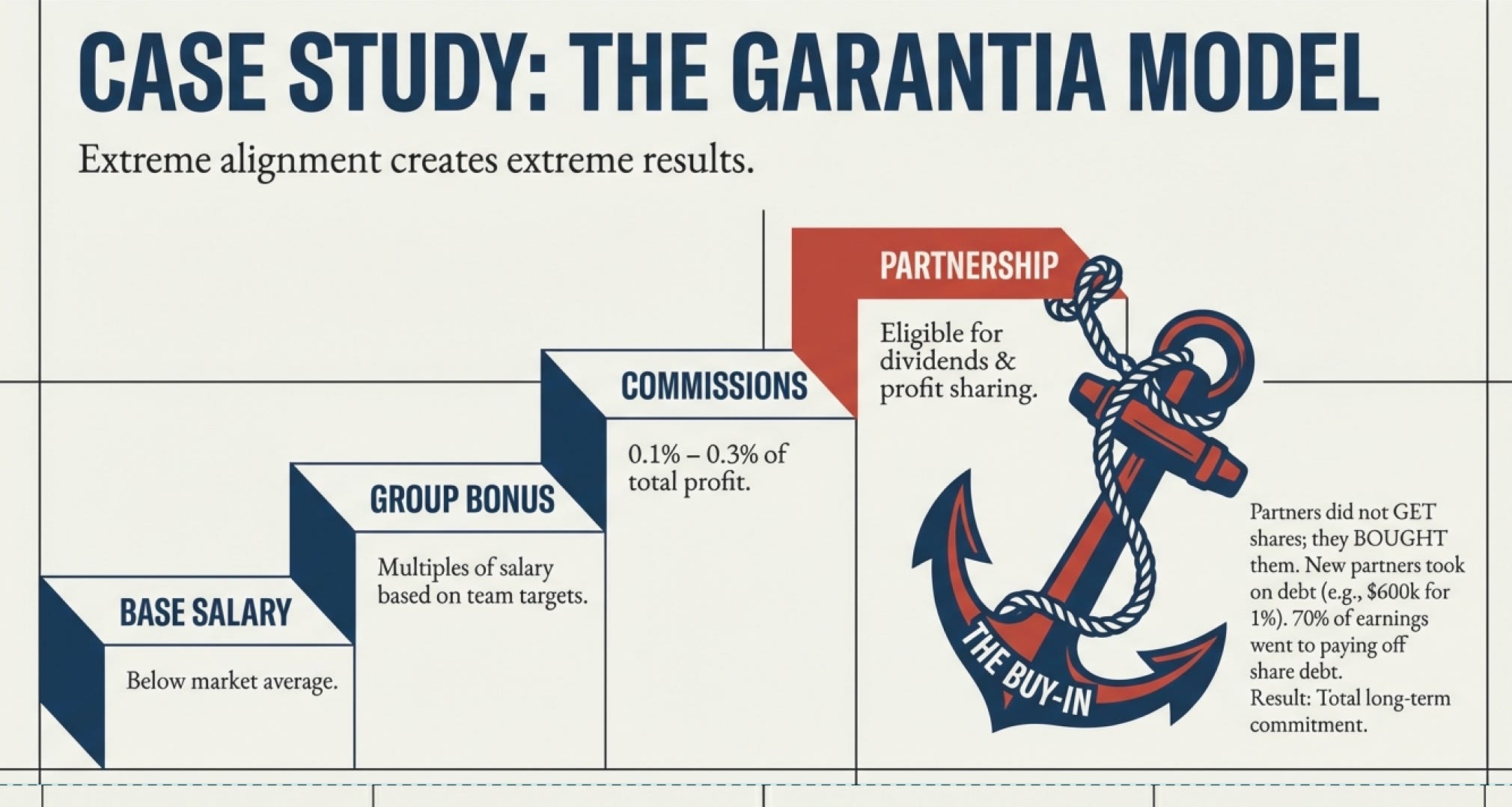
Garantia paid salaries that were below the market average but the bonus could amount to four or five extra salaries, a potentially huge amount of money at that time. Of course, this was conditional on the employees beating their targets. It was a clear and simple rule that was valid even for the office boys: work well and you will be rewarded.
Level 1 - eligible for group bonus (multiples of their salary)
Level 2 - eligible for commissions (small percentage of the company’s total profit; usually 0.1-0.3% of total profit)
Level 3 - partner, eligible for banks earnings: 25% was distributed as profit sharing, 15% as dividends and 60% was capitalized. Their stakes wasn’t given but earned as well 👇
While Garantia staff could become owners, reaching the top came at high price. The bank did not give an equity stake to the new partner but sold it. On average, 70% of the new partner’s earnings were allocated to pay for these shares over two or three years. In quantitative terms, 1% of shares could mean an initial debt of US$ 600,000 for the new partner, which would be paid off from profit sharing, commissions and dividends at annual interest rates of 6% in dollar terms.” Only 30% of the variable remuneration was actually paid to the partners at the time. This was how it became the most successful investment bank in Brazil.
I’d love to end of this section with an important note: Qui Bono - as munger quoted “Show me the incentive and I’ll show you the outcome”.
The Obvious Solution Is Franchising
McDonald’s sells inventory, demand, and operating capacity to its franchisees. They don’t need to run all locations or manage the stuffs, they simple need to optimize the product - the Business itself, a platform. Imagine a similar setup that replaces fries with software 🚀
Taking Leverage to The Next Level
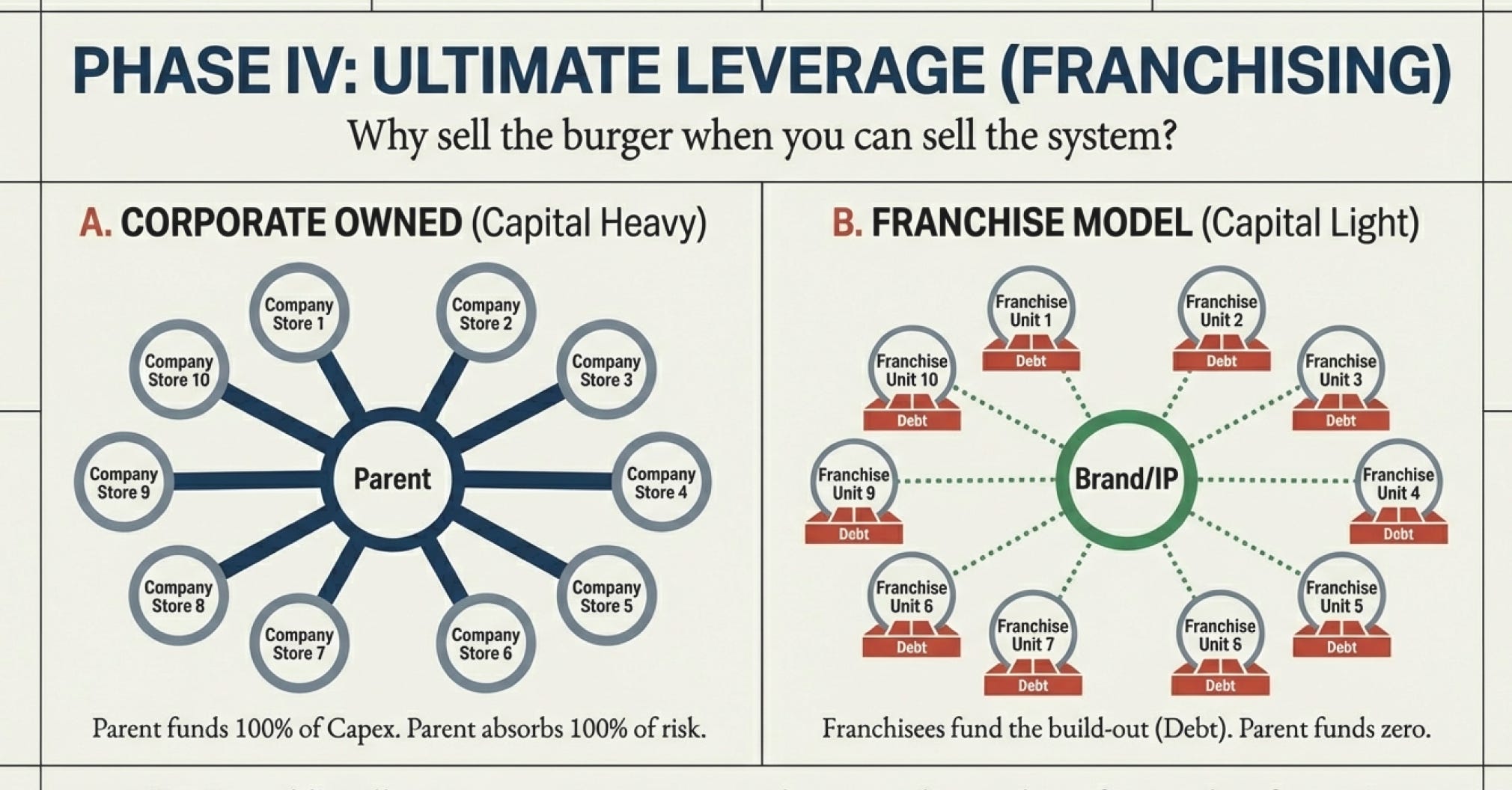
The franchise model is a genius strategy for high returns at low cost. It has evolved into one of the most brilliant business strategies for generating exceptional returns with minimal capital requirements. Here’s why it’s so powerful:
🦋 Evolution to a Capital-Efficient Machine
What began as a simple distribution strategy has transformed into a sophisticated business model that excels at mass-producing small and medium businesses at scale. This evolution has created a category of remarkable cash-generating enterprises that operate with extraordinary capital efficiency.
🧮 Capital Efficiency Through Risk Distribution
Franchises represent an often-overlooked category of cash-generating machines, especially to those outside private equity circles. The model is rapidly expanding beyond traditional sectors, with private franchises increasingly applying this framework to scale even the most specialized niche services. The genius of franchising extends beyond just being asset-light—franchisees secure their own financing for buildouts, effectively distributing capital requirements across the network.
Example: A company wants to open 100 locations. If they own all locations themselves, they need to raise 100% of the capital. If each franchisee funds the build-out with debt, the company funds zero.
Why it Works: By leveraging external capital, the franchisor can allocate resources to branding, marketing, and innovation.
You might then ask, what about the profits since its shared? Well, this is where the magic happens. The key is not in the profits but in creating a delta, creating a competitive moat with the resources that the franchisees now enable you with.
You now have more niche specific data/ assets (intangible and tangibles) which you woudn’t have if you were to go at it alone. Depending on how you engineer the franchise system, you could capitalize on these assets (think both intangible and tangibles).
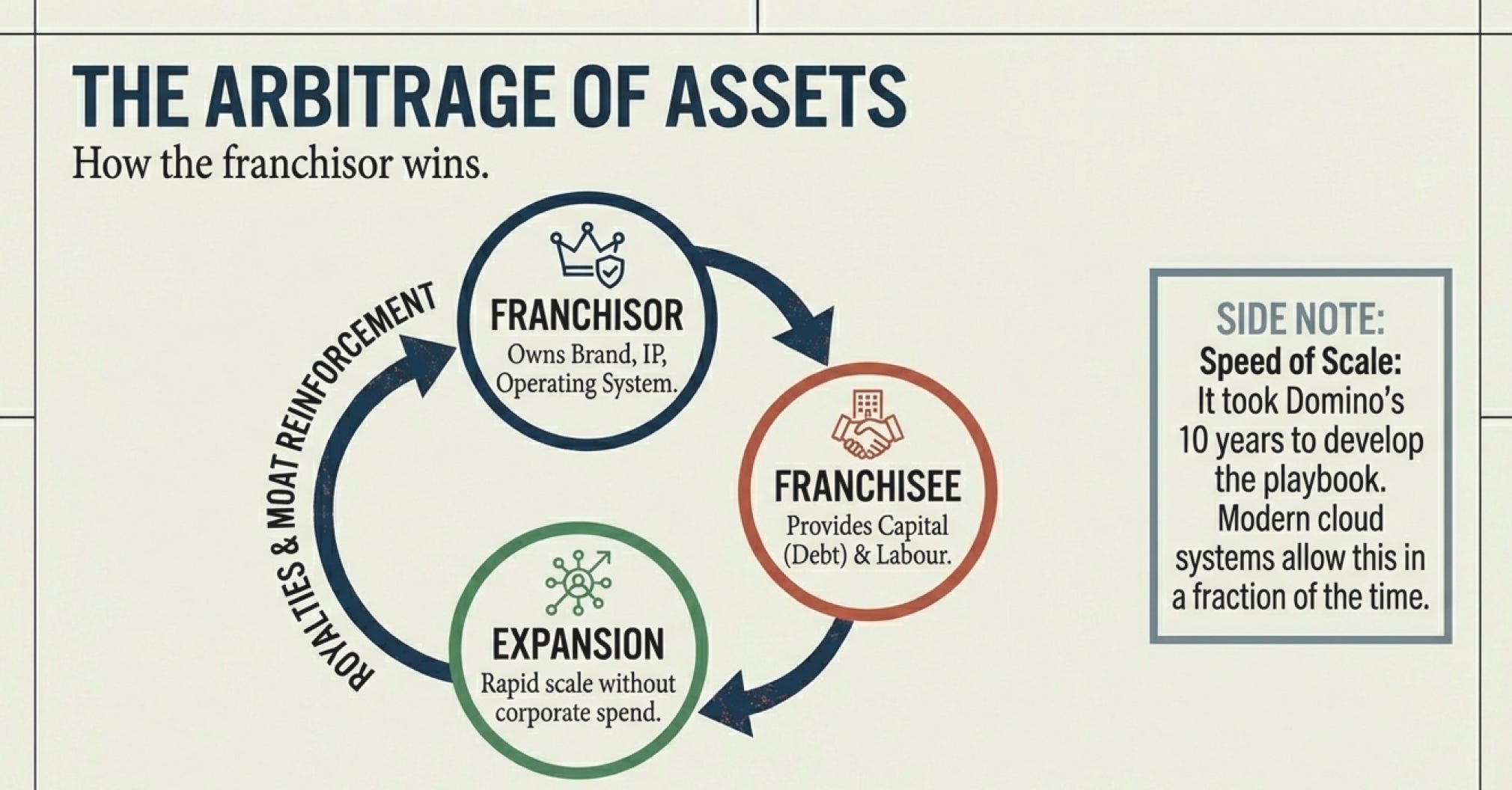
McDonald’s recognized that their system and location are the assets that are the most valuable to its brand, therefore, they used the financing from the franchisees to reinvest and upgrade those assets - of which they own and lease out to the franchisees. A true arbitrage between long-term gains vs short-term gains.
This structure creates an antifragile system where a single failure doesn’t threaten the entire organization, providing remarkable stability compared to traditional business models. If one franchise location fails, the impact is limited to that specific franchisee’s investment, rather than jeopardizing the entire company.
👥 The Power of External Entrepreneurs
The franchise sector is currently experiencing a powerful convergence of industry momentum, favorable regulatory conditions, and access to entrepreneurial talent—creating an ideal environment for innovative franchise brand development.
The Franchise model allows a business to engage highly motivated owner-operators who are personally invested in the success of their business unit.
Example: Franchisees, as small business owners, can provide better customer service and run leaner operations than employees. A happy customer is likely to return, therefore increase return on investment.
🚀 Retaining Brand Assets for Long-Term Value
Jumping back to our McDonald’s example above, franchisors retain ownership of key brand assets, including trademarks, operating systems, and marketing strategies. This allows them to maintain consistency and drive long-term value.
Example: McDonald’s and Domino’s retain control over brand standards, recipes, real estate, resources, and marketing campaigns, allowing them to drive brand value. And whilst brand value is a result of a competitive edge (Moat), so it the value of a company - just watch at this video 👇
🤖 Technology-Driven Efficiency Revolution
A new era of operational efficiency is emerging in franchising, powered by specialized technology stacks and service platforms that optimize every aspect of the franchise operation. This enables business to not just create a franchise based on tangible assets but intangible assets as well e.g. platforms built of specific data, systems built of specific resources. Now, its up to you to catch the opportunity, or watch others succeed.
The History
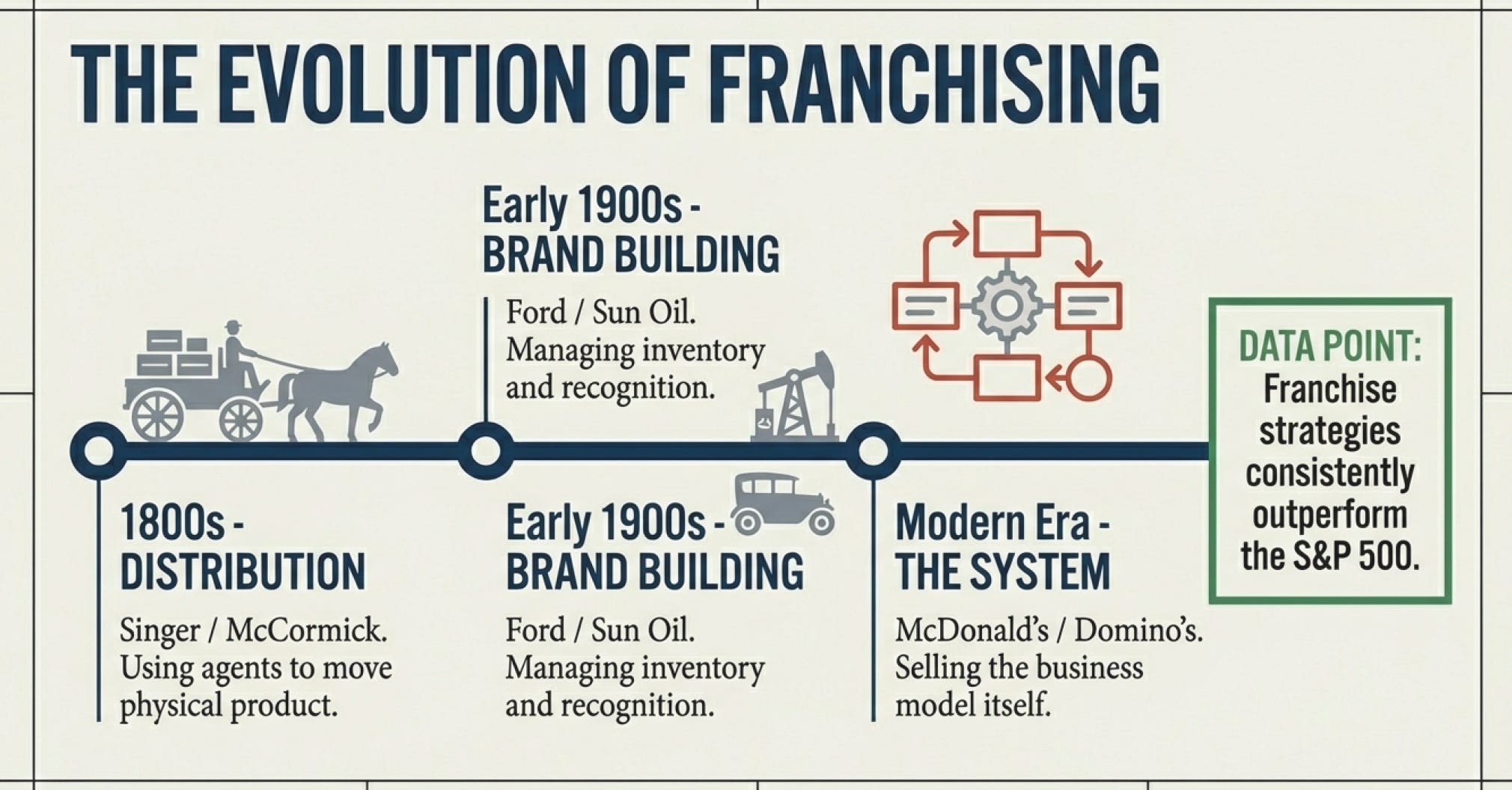
The Early Days: Franchising as a Way to Distribute (1800s-Early 1900s)
Imagine you’re selling spices (McCormick), or making sewing machines (Singer) in the 1800s. You can produce a ton of goods, but how do you get them to everyone? That’s where franchising started. It was a way to get products out there using other people. The brand benefited from expansion, while the individual benefited from being a distributor.
In the early 1900s, Harper Salons faced a similar problem. Their salon concept was a hit, and there was high demand for it across the country, and franchising allowed them to do that.
Building a Brand and Managing Inventory (Early 1900s)
Later, companies like Ford (cars) and Sun Oil (gas) used franchising for more than just distribution. They wanted to create a recognizable brand and efficiently manage where their products were stored. Franchising allowed them to do that, by relying on individuals who invested in their own stores.
Expanding with Limited Cash (Mid-1900s)
Howard Johnson’s restaurants faced a different challenge: they wanted to grow, but didn’t have a lot of cash. Franchising allowed them to expand using other people’s money. In return, the individual would share the profits with the brand and also pay royalties.
Franchising as a Business Model (Late 1900s - Present)
Finally, McDonald’s, Domino’s, and KFC realized something big: the real money in selling hamburgers, pizzas, or chicken. It was in selling the system for running a successful business. They perfected franchising as a way to duplicate their entire business model, from operations to marketing, with individual operators running each location.
Think Tech is The Biggest Boom? Think Again
Among a sample of 41 major public franchises, the average FY 2022 net income was $674 Million (8.9%), while the average YoY Revenue growth was 28.9%. Compare this with Shopify, a venture SaaS favourite, it generated a $3.46 Billion net loss and only 21.4% revenue growth over the same period. Shocking right?!?
Here’s something even more amazing 👇
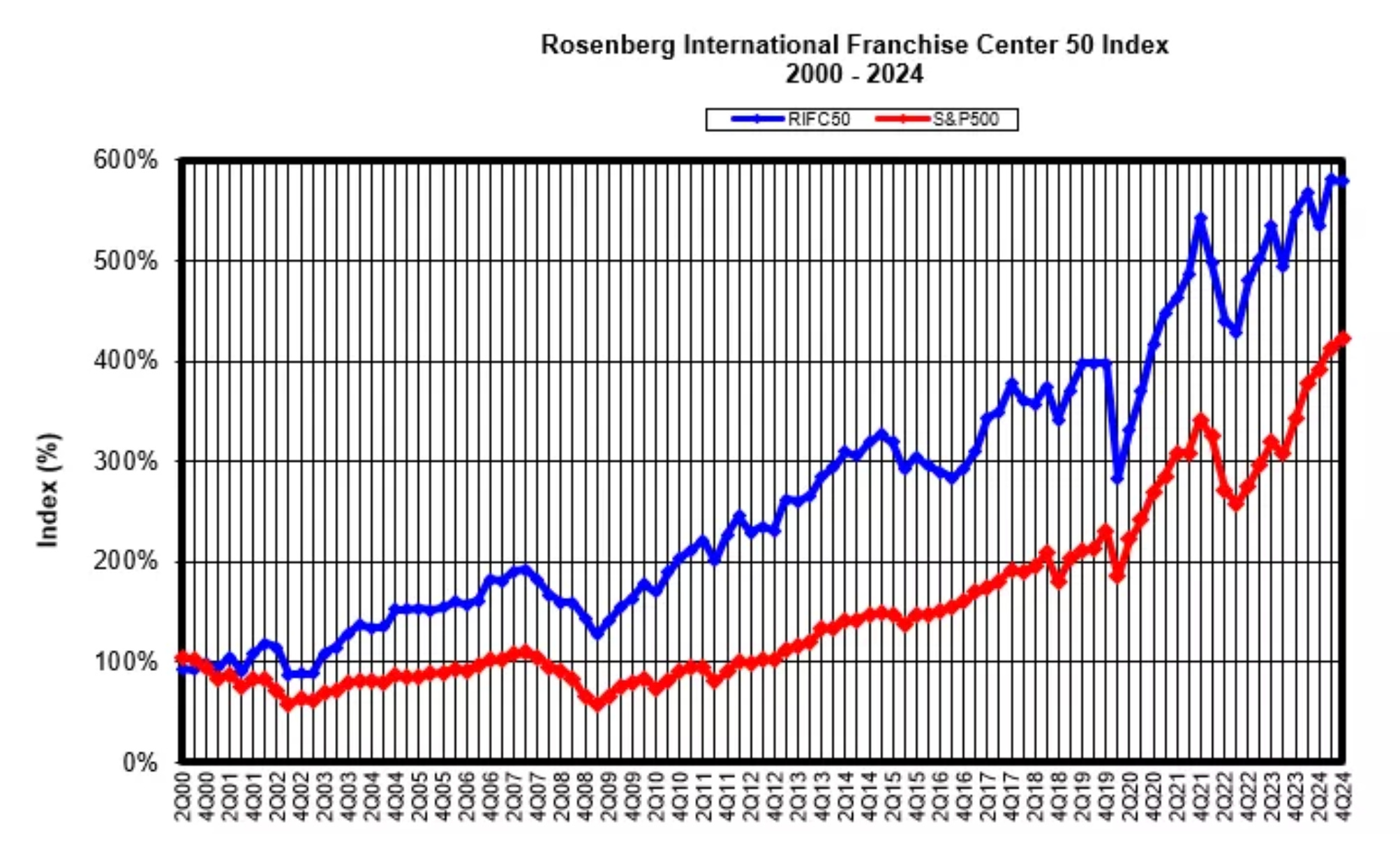
Franchises far outperform the S&P top 500 companies - I wonder why isn’t anyone making this known 🤔
Hidden Profit Centers in the Private Sector
Private franchise operations represent a remarkably overlooked segment of highly profitable business models. The evidence supporting this assertion is compelling, with several notable examples:
Sweet Delights Bakery: Established in 2017, this franchise has experienced extraordinary growth to over 650 locations in just five years. In 2022, they reported system-wide sales exceeding $1 billion, with estimated net profits surpassing $50 million. What makes this achievement particularly noteworthy is that they accomplished this expansion without securing any venture capital funding.
Fitness Fusion: Founded in 2010, this fitness concept has expanded to more than 1,500 locations nationwide. Their performance metrics are equally impressive, with average per-location revenue reaching $1.14 million in 2019, pushing their system-wide revenue well beyond the $1 billion threshold.
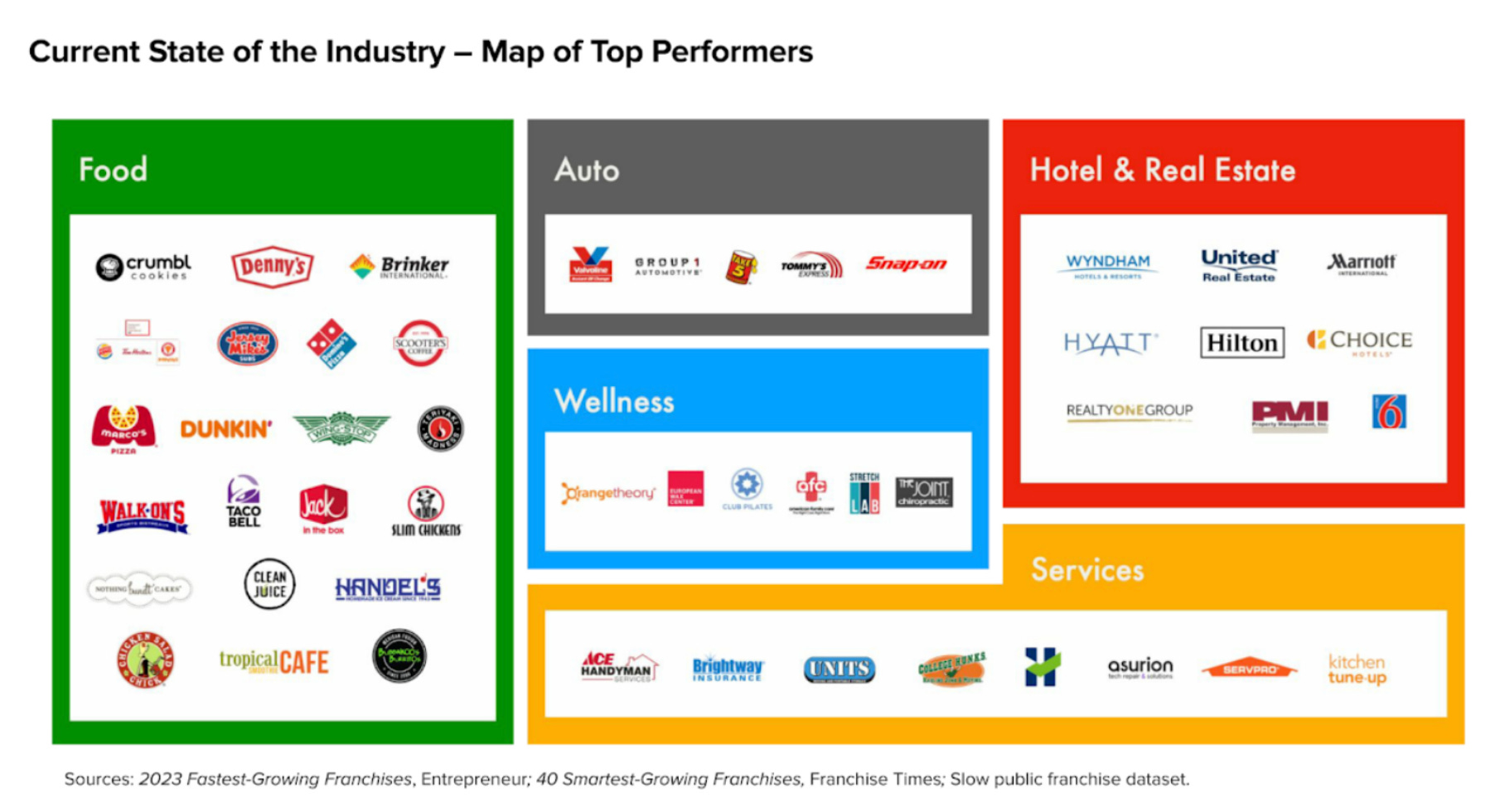
Evolution Beyond Traditional Quick-Service
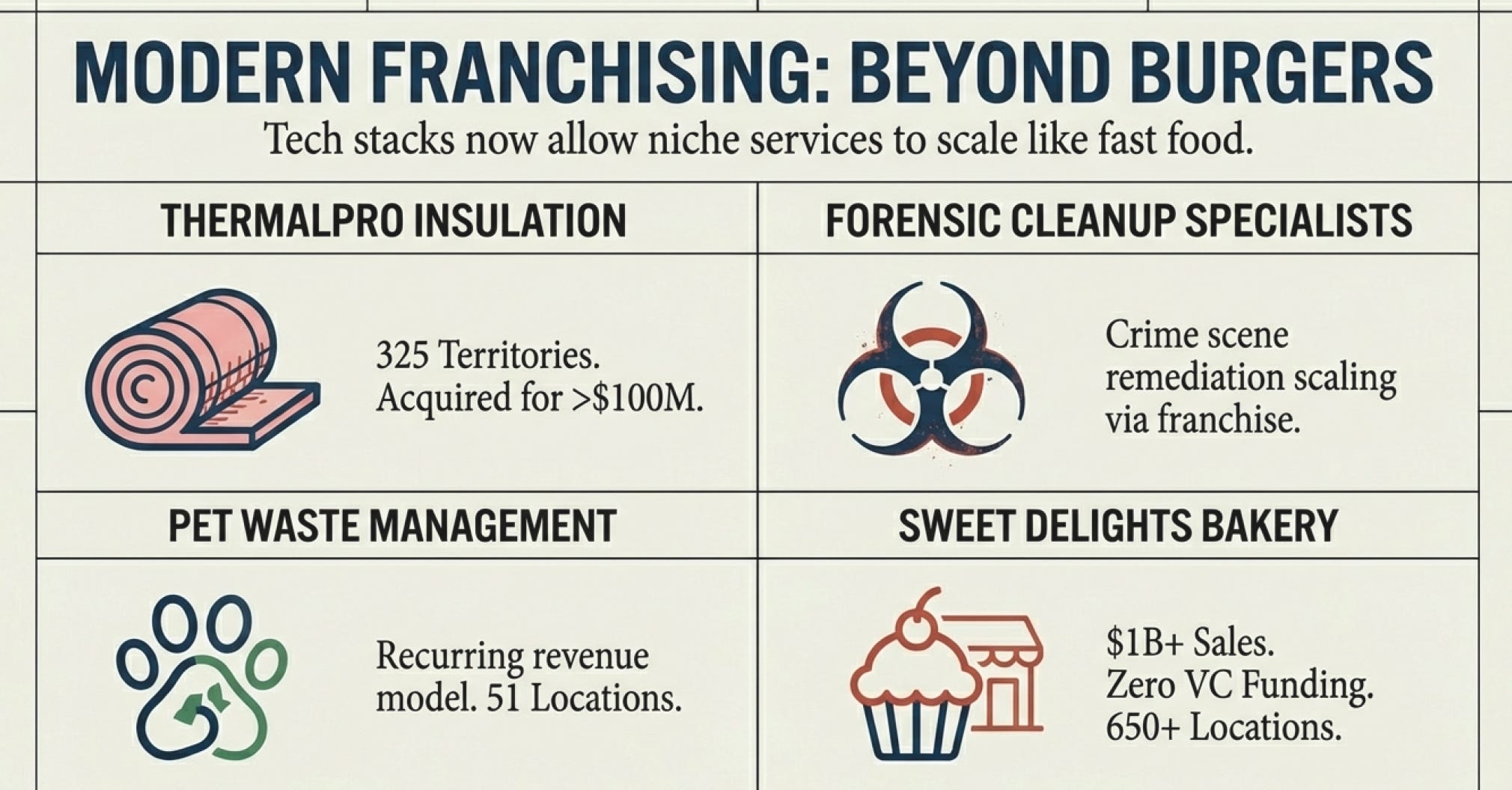
While quick-service restaurants (QSR) historically dominated franchising, an emerging class of franchise businesses is applying this model to address specialized market segments:
ThermalPro Insulation: Founded in 2018 and began franchising in 2020, this company has already expanded to 325 territories and was acquired for over $100 million despite being entirely self-funded.
Wellness Extract Retail: Established in 2018 with franchising operations commencing in 2020, they have rapidly expanded to 291 locations.
Restoration Masters (water damage restoration): Founded in 2014, began franchising in 2020, and now operates in 111 territories.
Forensic Cleanup Specialists (crime scene remediation): Established in 2005, initiated franchising in 2015, and currently operates 39 locations.
Pet Waste Solutions (pet waste management): Founded in 2000, began franchising in 2004, and now maintains 51 locations.
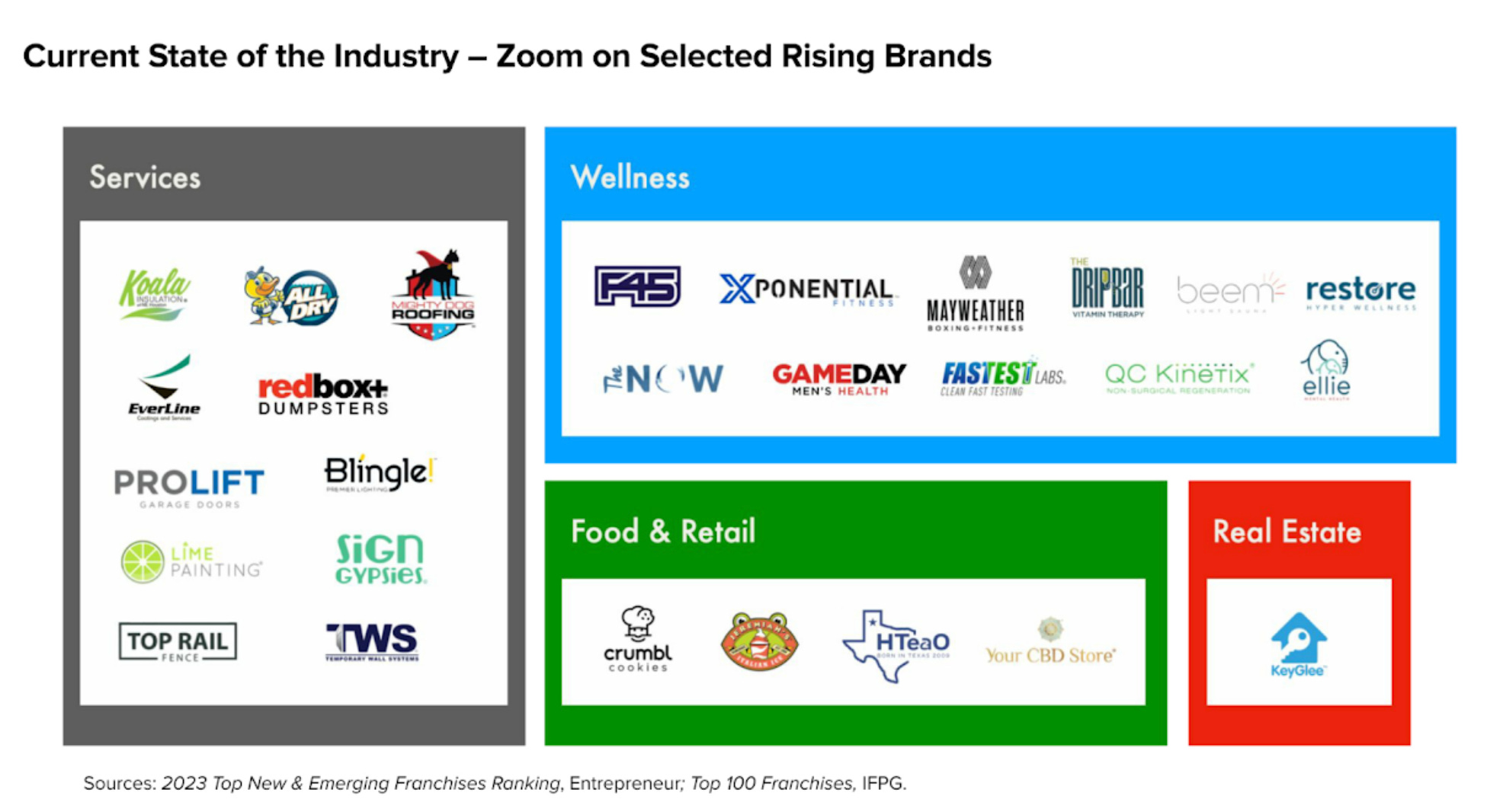
‼️ One Last Important Thing To Note
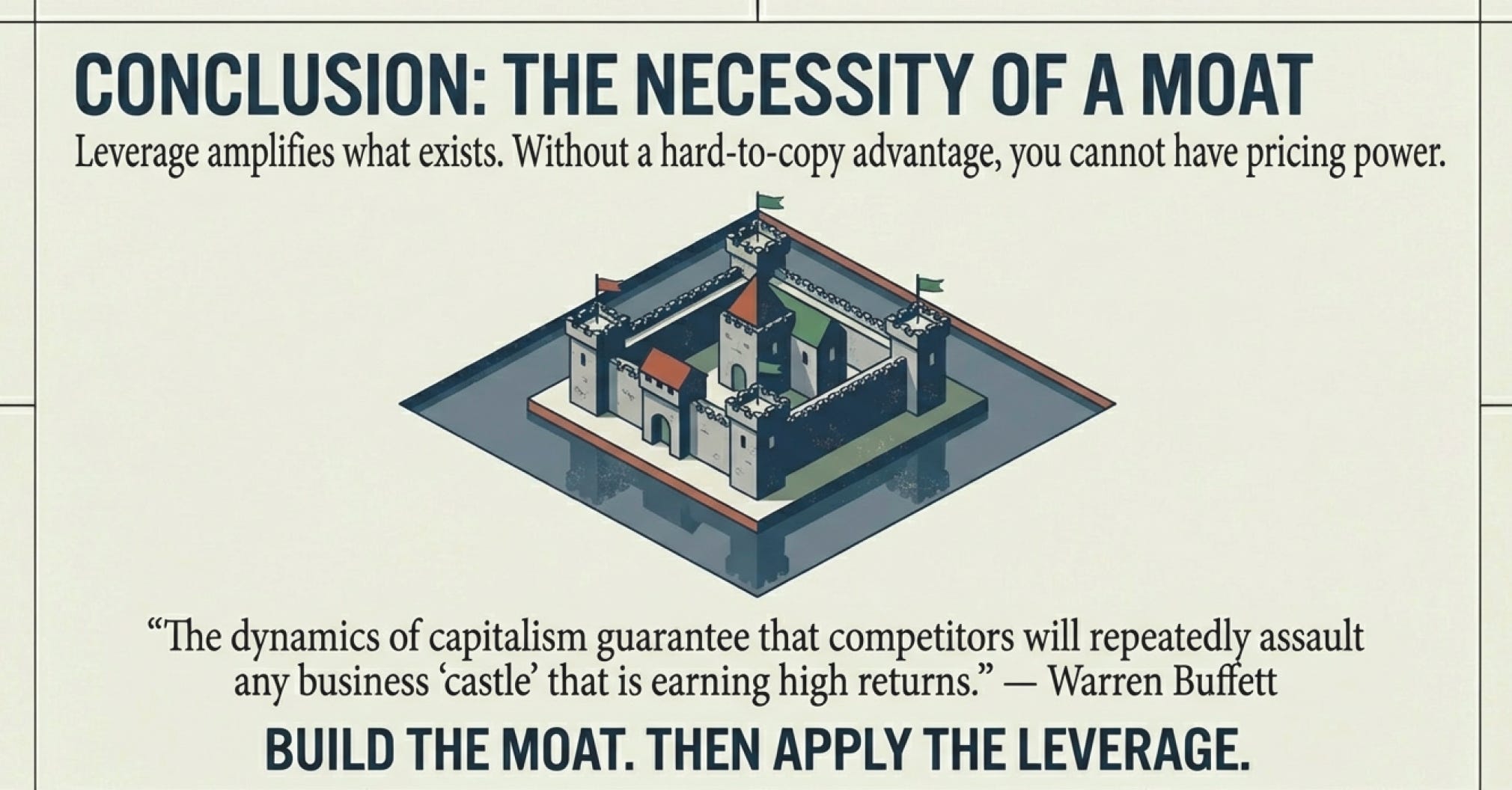
A company must have a strong dominant offer that is underwritten by a “hard-to-copy/ replicate” Moat (or also known as competitive edge). Without a Moat, a company will NEVER be able to acquire pricing power and a real working business model
“A truly great business must have an enduring ‘moat’ that protects excellent returns on invested capital,” this is because “The dynamics of capitalism guarantee that competitors will repeatedly assault any business ‘castle’ that is earning high returns. Therefore a formidable barrier … is essential for sustained success.” - Warren Buffet
Domino’s Decade Long Expansion Can Now Be Accomplished In a Fraction Of The Time
It took Domino’s ten years to develop the operational playbook that enabled them to open one store per day in the early 1980s. With today’s integrated, cloud-based systems and franchise management platforms, achieving similar or greater scale in a fraction of the time is now a realistic prospect.
References
Hormozi, Alex. $100M Offers: How To Make Offers So Good People Feel Stupid Saying No. Acquisition.com Publishing, 2021
Hormozi, Alex. $100M Leads. Acquisition.com Publishing, 2023. ASIN: B0CFDR3TYV.
Brunson, Russell. DotCom Secrets: The Underground Playbook for Growing Your Company Online. Morgan James Publishing, 2015. ISBN: 9781630474775.
Koch, Charles G. Good Profit: How Creating Value for Others Built One of the World’s Most Successful Companies. Crown Business, 2015. ISBN: 9780804189323.
Sullivan, Dan, and Hardy, Benjamin. The Laws of Lifetime Growth: Always Make Your Future Bigger Than Your Past. Berrett-Koehler Publishers, 2006.
Munger, Charles T., edited by Peter D. Kaufman. Poor Charlie’s Almanack: The Wit and Wisdom of Charles T. Munger. Donning Company Publishers, 2005.
Priestley, Daniel. 24 Assets: Create a Digital, Scalable, Valuable and Fun Business That Will Thrive in a Fast Changing World. Rethink Press, 2016.
Collins, Jim. Good to Great: Why Some Companies Make the Leap... and Others Don’t. HarperBusiness, 2001.
Godin, Seth. Purple Cow: Transform Your Business by Being Remarkable. Portfolio, 2003.
Godin, Seth. This is Marketing: You Can’t Be Seen Until You Learn to See. Portfolio, 2018.
Suby, Sabri. Sell Like Crazy: How to Get As Many Clients, Customers and Sales As You Can Possibly Handle. King Kong, 2019.
Priestley, Daniel. Oversubscribed: How to Get People Lining Up to Do Business with You. Capstone, 2015.
Greenwald, Bruce, and Judd Kahn. Competition Demystified: A Radically Simplified Approach to Business Strategy. Portfolio, 2005.
Slow Ventures. “Franchising Thesis - Why Venture Should Care About Franchises.” DocSend, accessed May 7, 2025. https://docsend.com/view/68uxgs3jawk2szrv