
Creating An Irresistible Offer
Now that we have identified the Dream Customer, and roughly got a sense of their “story”, let’s start to crystallise this by deep-diving into their problem/ pain-points. And hence, allowing us to deliver more value to them (more value = they will pay more $$$).
Before we jump into brainstorming new products & solutions, it is important to note that most people solve problems using logical solutions (because its logical) thereby resulting in most logical problems solved. The only problems left unsolved are the psychological ones which require psychological solutions.
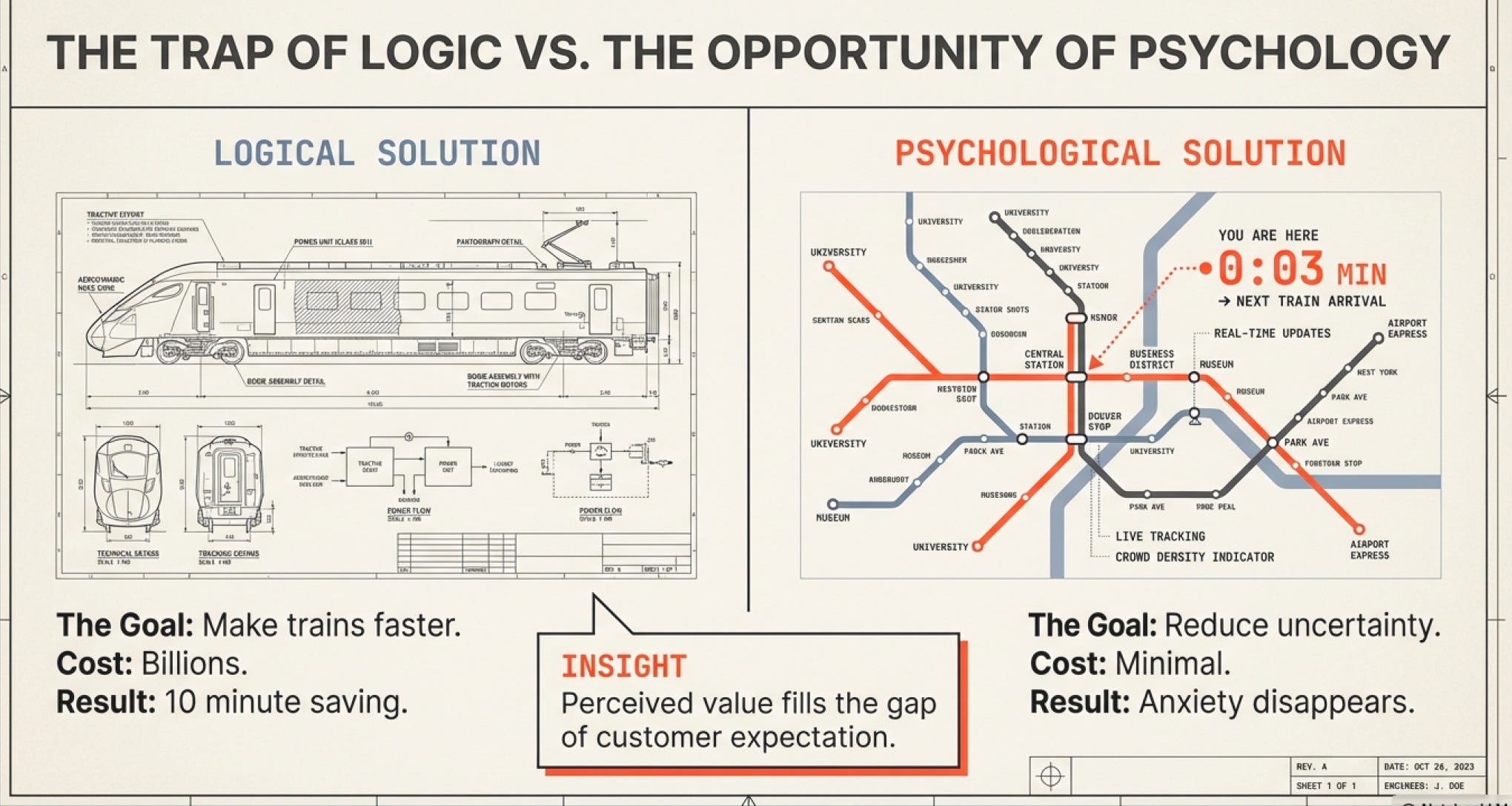
Example 1: Train is slow and boring
Psychological solution: Decrease the pain of waiting by adding a dotted map (In subway stations, it has been proven that the biggest rider satisfaction was never from faster rides but rather a dotted map showing where the train was and how long it will take to arrive. This costs little, meanwhile making trains faster costs billions)
Psychological solution: Pay models to be the hostesses on the trip (people would wish it took longer to get to their destination!)
Logical solution: Make trains faster
Example 2: Elevator is slow
Psychological solution: Add floor to ceiling mirrors so people are distracted staring at themselves and forget how long they were on the elevator
Psychological solution: Make fewer of them and raise the price which causes people to want it more.
Logical solution: Make it cheaper & make it faster
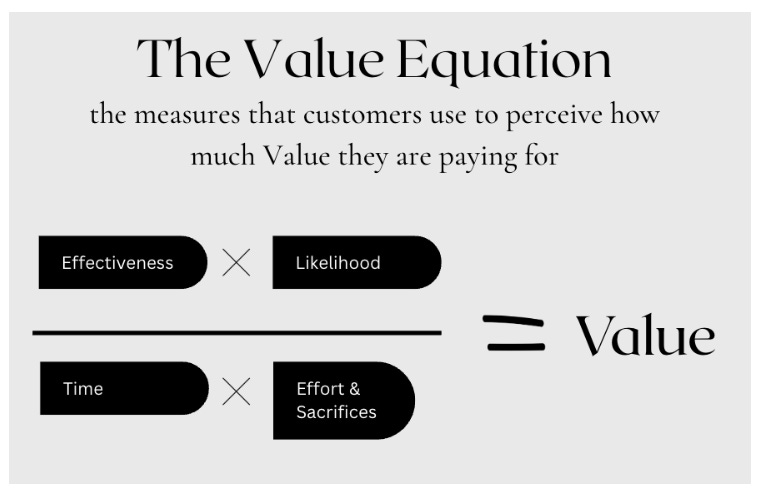
And this is where we can develop a framework of how customers perceive the value of a product/ service they get from you. There are 4 main value drivers that customers tend to look for in ANY business/ product/ service they engage with
How useful/ Effective (quality) is the outcome to help solve the problem
What is the Likelihood they can achieve that outcome
How much Time does it take to receive the outcome
What are the Efforts and sacrifice required to achieve the outcome
Remember, perceived value is important because it helps to fill the gaps of customers expectation - Price is what you pay value is what you get.
The best companies in the world focus on decreasing the the bottom elements of the equation (Time and Efforts & sacrifice). When bottom = 0, anything divide by 0 is infinity. Hence, you can have infinity value.
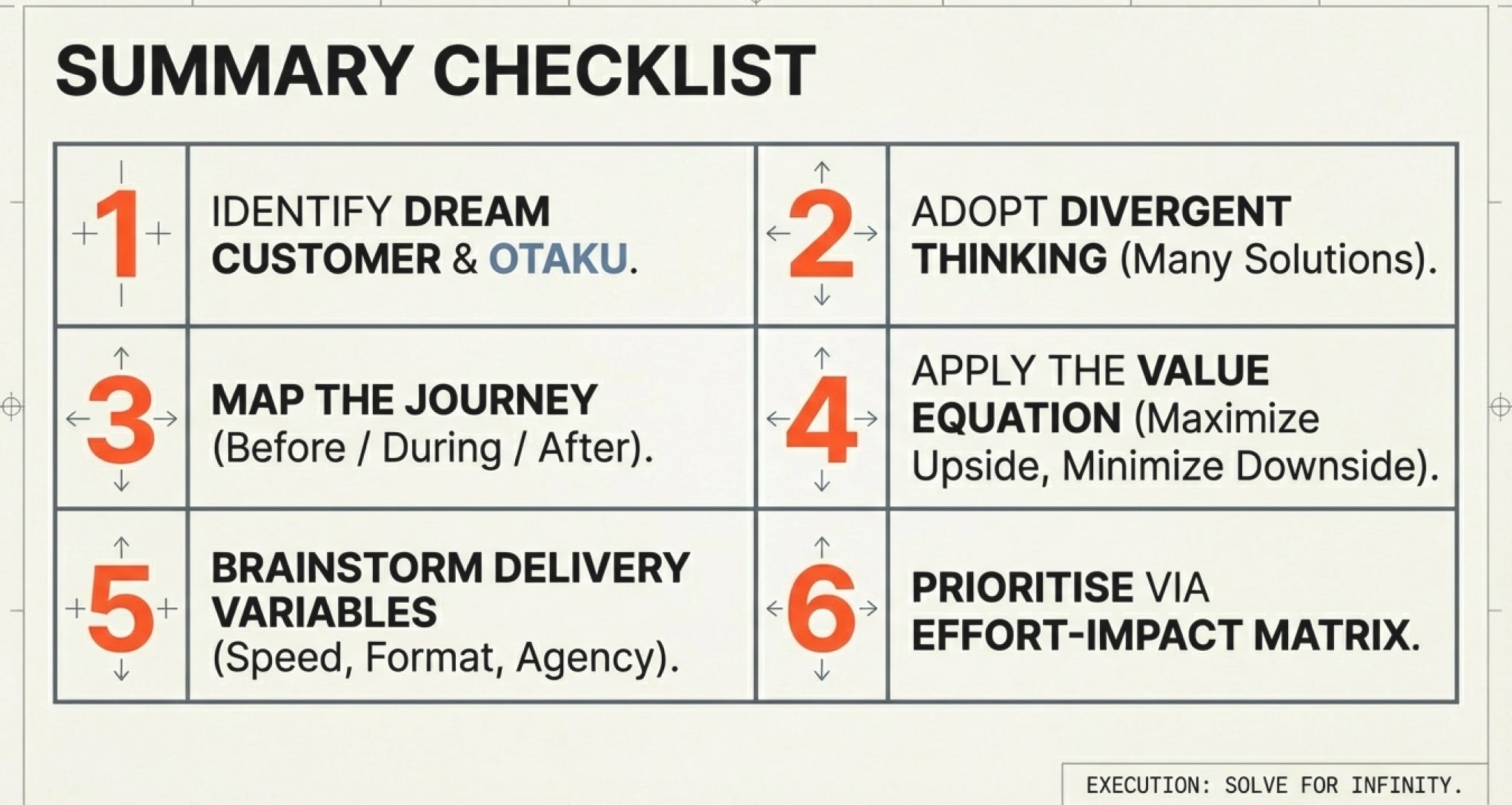
An offer only becomes valuable once the prospect perceives the increase in effectiveness, perceives the decrease in time to receive the outcome, and perceives the decrease in effort and sacrifice. So breakdown, what causes perception of achievement (effectiveness), time delay, and efforts & sacrifice. Before, we dive into the 4 value drivers, it is important to first establish a Divergent mindset instead of a Convergent one (that we’ve always been taught in school and society)👇
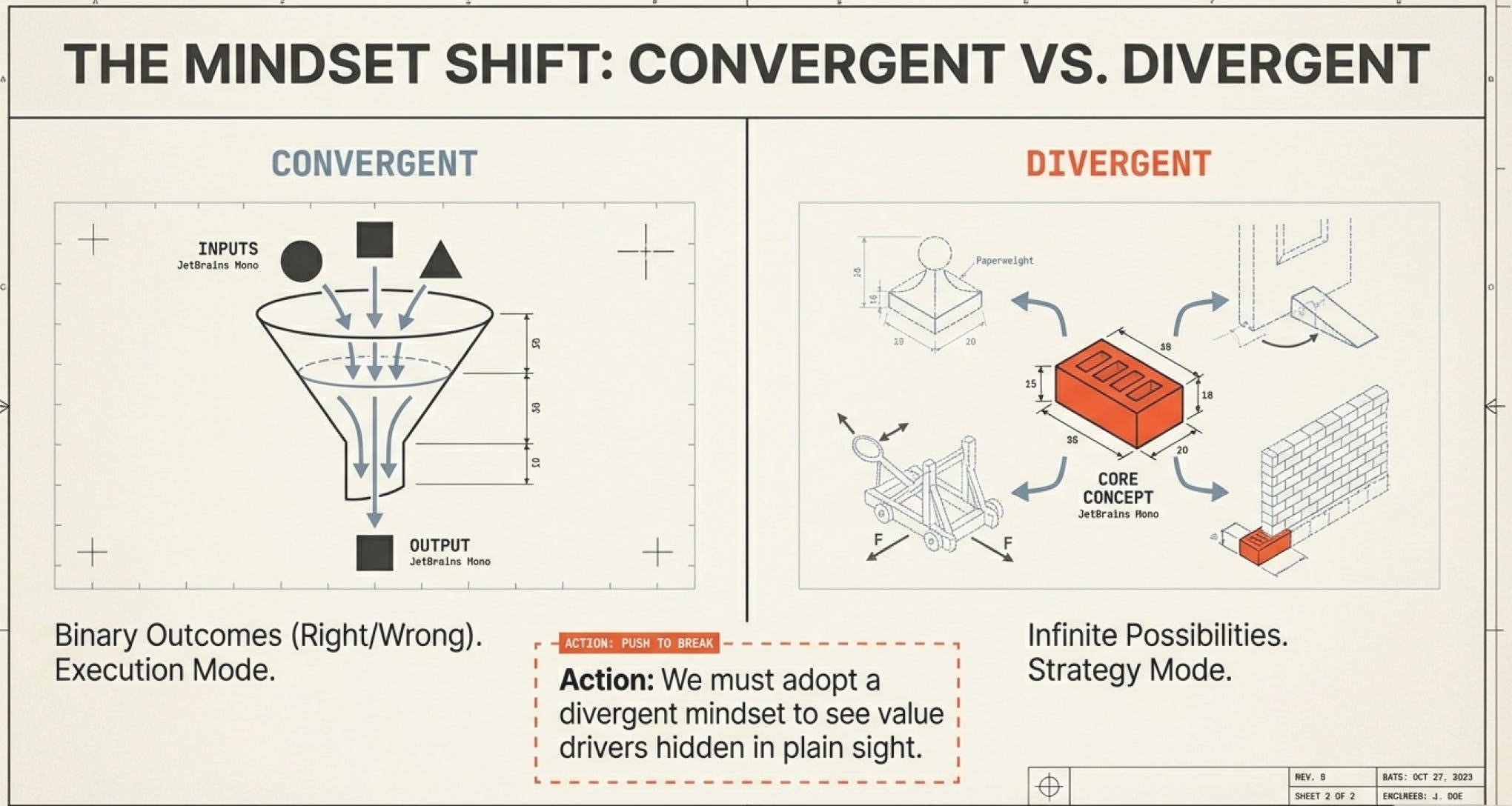
⛔️ Convergent thinking: like math equation, take different variables and combine to form a singular answer - things are always binary
How to get 100 calls: 100 calls/ 4 calls to close = 25 closes per sales rep per month. 110 closes/ 25 closes = 4.4 sales rep. Since you can’t hire .4, you have to have a total of 5 sales rep, so you have to hire 2 more.
✅ Divergent thinking: one problem has multiple solution. Solutions are not binary; only right or wrong. They are a scale of best to worse solution
Think of the features of a brick > then brainstorm as many use cases of a brick as possible
Now that you’ve understand what is Divergent thinking, let’s dive into the 4 value drivers...
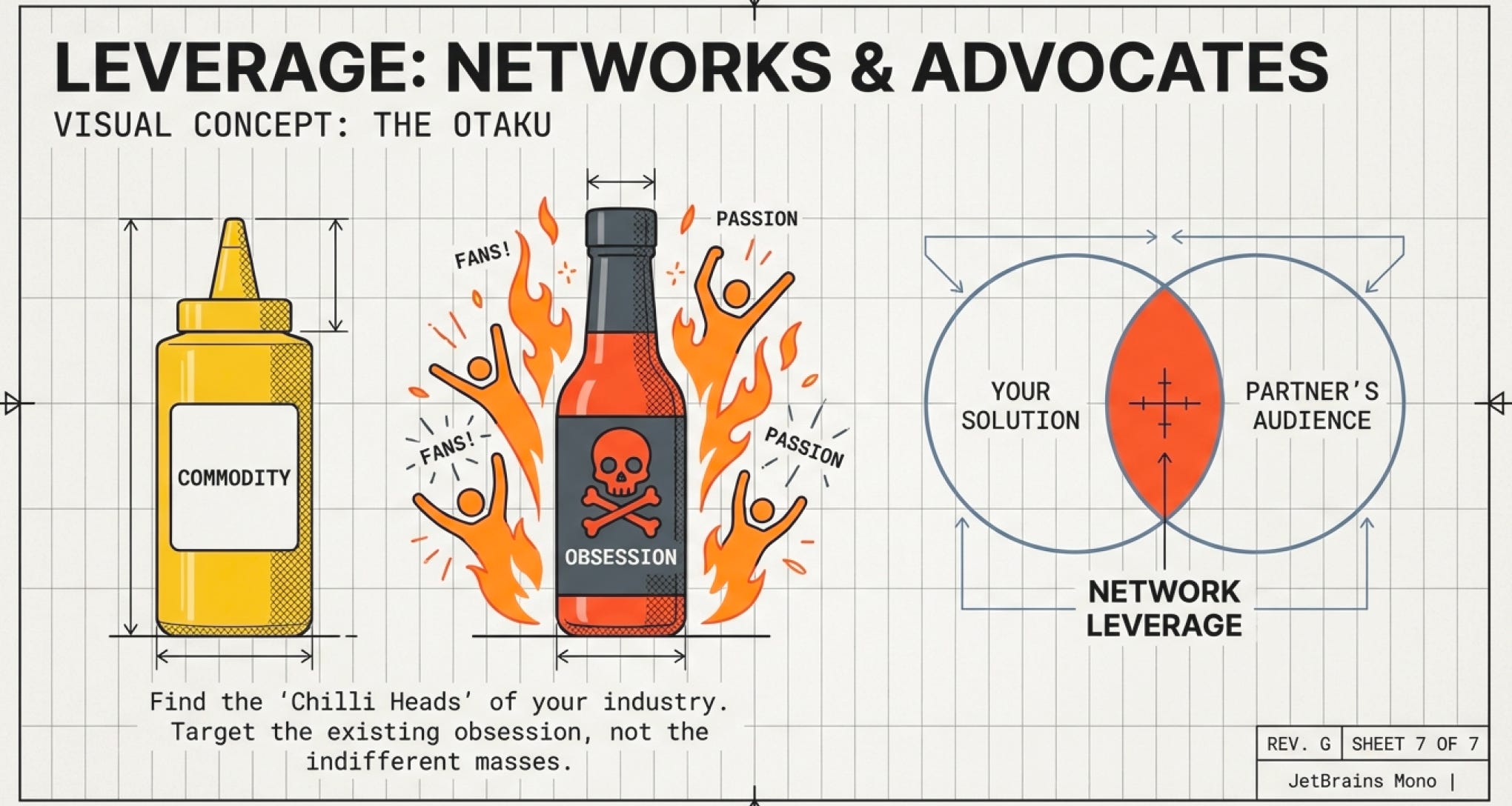
Smart Businesses Target Markets Where There is Already Otaku (Advocates)
e.g. Hot sauce is a business and mustard isn’t because there are chilli heads (otakus) in search of ever hotter elixrs
The 4 Value Drivers
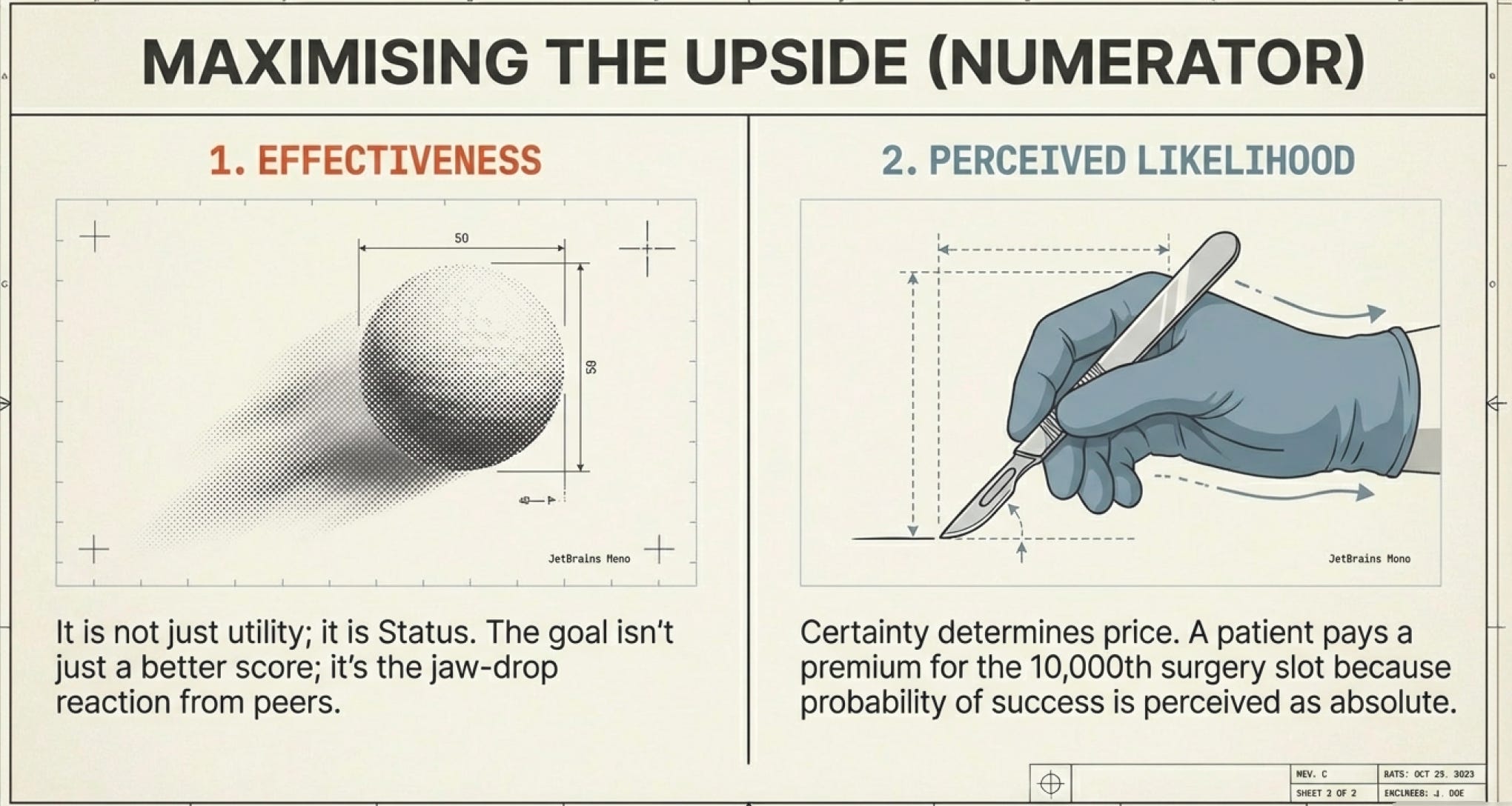
🛌 Value Driver 1: How useful/ Effective (quality) is the outcome to help solve the problem
How people will perceive their achievement (connect the dots for them) e.g. will they hold a higher social standing? will they be able to live less stressfully? Will they get more money and save more money?
This value is further segmented into economical, social, experiential, functional. How effective is your solution to each aspect?
e.g. If you buy this gold club, your drive will increase 40 yards. Your gold buddies’ jaws will drop when they see your ball soar 40 yards pass theirs…..they’ll ask you what changed……only you will know
What is the best possible result your customer wants to achieve—the ideal feelings, experiences, or status they envision when their problem is solved or their desire is fulfilled. It’s not just about the practical benefit, but about the emotional and aspirational state the customer hopes to reach.
💡 However, when comparing two products of the same value, customers will not consider “Effectiveness” as it achieves the same value. Instead, they will look at the other 3 variables - that will drive the difference in perceived value and ultimately price
🤔 Value Driver 2: What is the Likelihood they can achieve that outcome
Likelihood or certainty of being able to achieve a specific outcome - or the outcome (product) that the business has marketed for
Prospects need to know that your offer will actually work for them/ they will receive the “effectiveness/ quality (value)” of the product
The probability that will achieve a certain quality/ standard/ effectiveness of the solution you promise
e.g. how much would you pay to be a plastic surgeon’s first patient (crazy) compared to their 10,000th patient (safer). The surgeon is probably charging higher and completes the surgery faster on the 10,000th patient. People believe that if an expert does it, then they are more likely to achieve the outcome
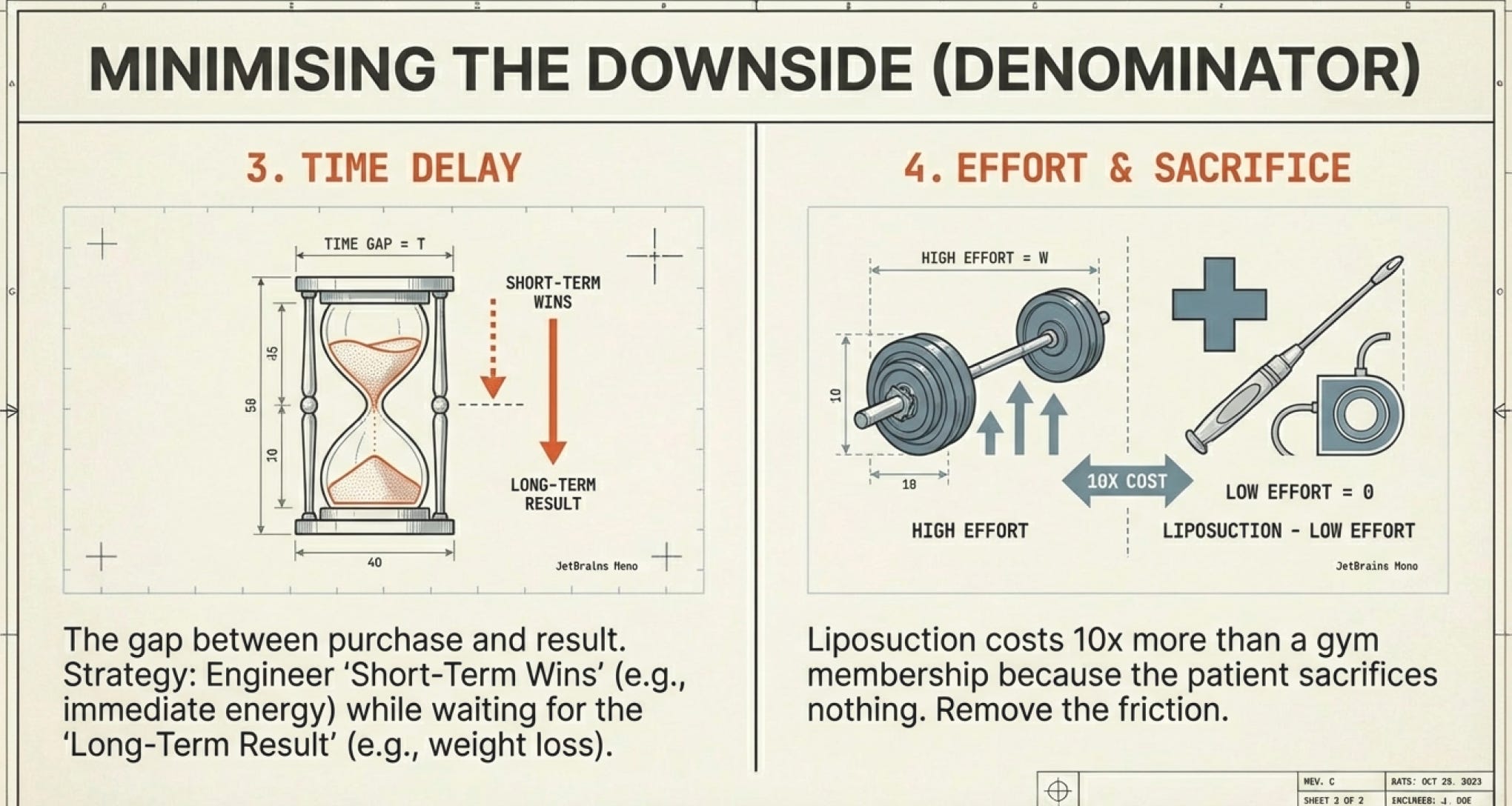
⏳ Value Drive 3: How much Time does it take to receive the outcome
The time between a client buying and receiving the benefit; the shorter the better. The next best way to beat price is speed. Time delay is driven by 2 value
Short-term experiences: value that occurs along the way (little milestones that show them they’re on the correct path)
2. Long-term outcome: value that people buy
It is important to create short-term experiences for ”immediate wins” - be creative. It has been scientifically proven that people who experience victory early are most likely to continue than those who do not

E.g. When you sell a “bikini body program” it will take 12 months or even longer to achieve. However, along the way, they may experience higher sex drive, more energy, and increased community of friends.etc - all of these can be taken as benefits, short-term experiences
💡 The strategy here is to provide value to “shorten” the time-to-value. But there are also times where people pay a premium/ additional fee to skip the queue and shorten the time-to-value e.g. FedEx vs UPS, Uber vs Subway trains
😰 Value Driver 4: What are the Efforts and sacrifice required to achieve the outcome
It is important to reduce the tangible/ intangible costs that individuals have whilst they receive the value (or product solution) that your business marketed
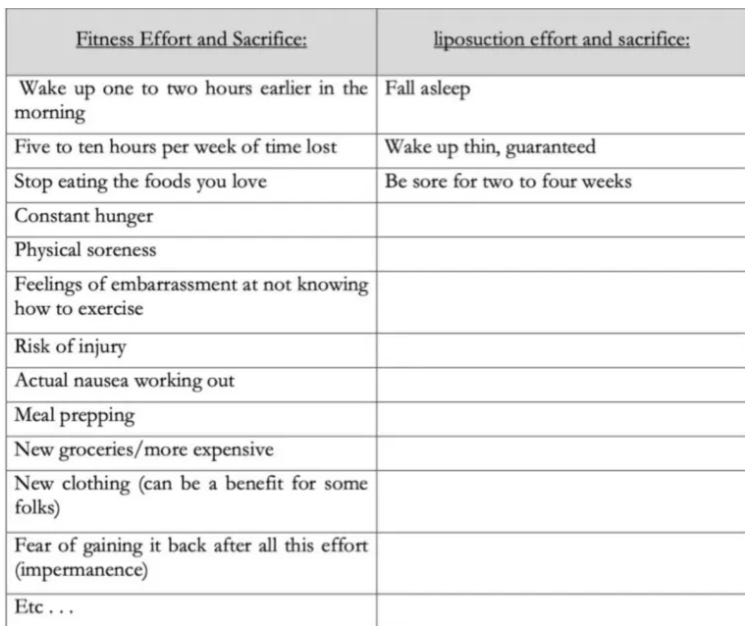
This is why people go for liposuction instead of going for fitness solutions. Liposuctions offers more ease and less sacrifice
Experiments and Getting Your Audience Involved
Instead of trying to use your technology and expertise to make a better product for your [specific user’s standard behaviour], experiment by inviting users to change their behaviour to create a remarkable product (remarkable = outrageous w/o being annoying).
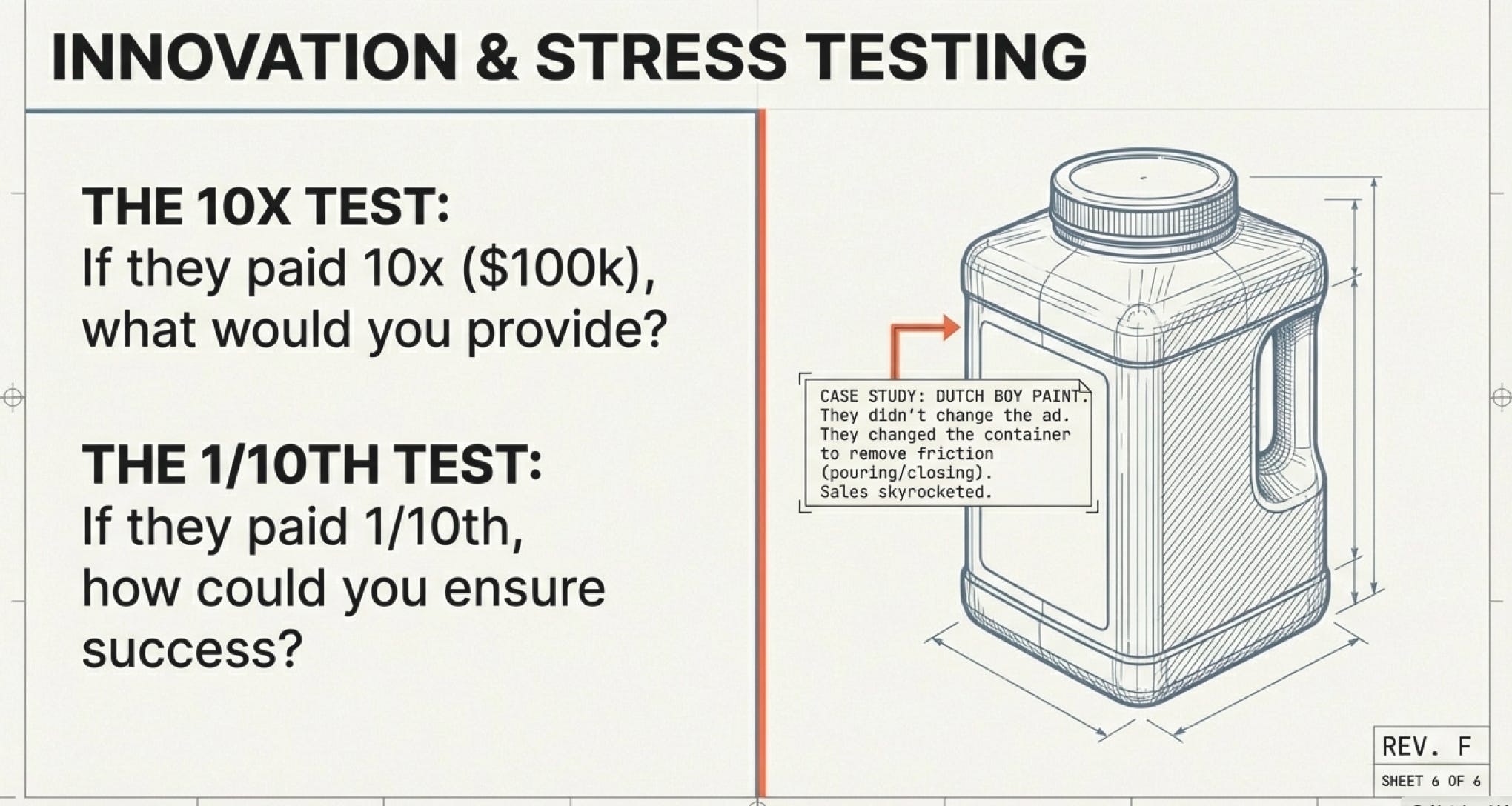
Paint cans are hard to carry and they’ve been around for a long time. Dutch boy realized that the can was an integral part of the product and the can makes the painting process much easier. They introduced an easier to carry, pour, and close - paint jug. This increased sales & distribution partners. The perfect example of marketing done right where the marketer changes the product, not the ads
Slowly adapt the product once “sneezers” (advocates) spread the product to users of other niches
Innovate But Don’t Mess With The Winning Formula
e.g. blackberry failed by asking singer Alicia Keys to advertise her use of the phone. However it failed miserable because
(1) her tweets carry iPhone meta tags
(2) blackberry focus has always been “security” hence selling directly to companies where “blackberry can only be gotten from the HR department”
4 Value Drivers Across Time
Now that we have got the values in “space” right, its time to extrapolate them in the “time” continuum (as Einstein’s relativity theory suggested “space and time are not separate, absolute entities, but rather interconnected and relative” - called spacetime). For my reptilian brain to digest this, i like to tell myself that we’ve got to look at the whole lifecycle/ customer journey.
Think of the problems that customer will face in timeline order, throughout their journey what problem they face first, second, third…so on. To do this, we further breakdown value delivered to customers in their journey to
Before using your existing product
When using your existing product
After using your existing product
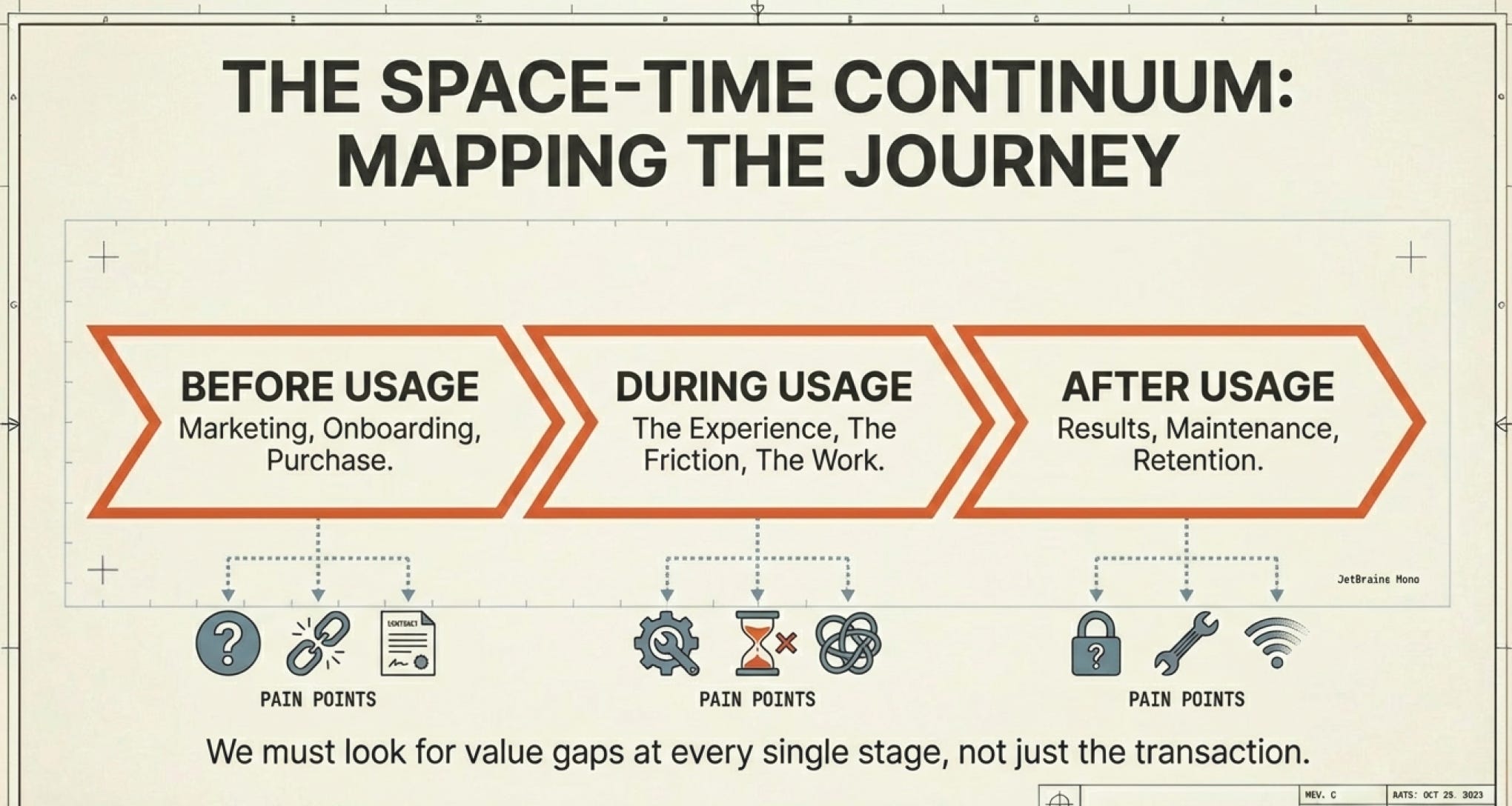
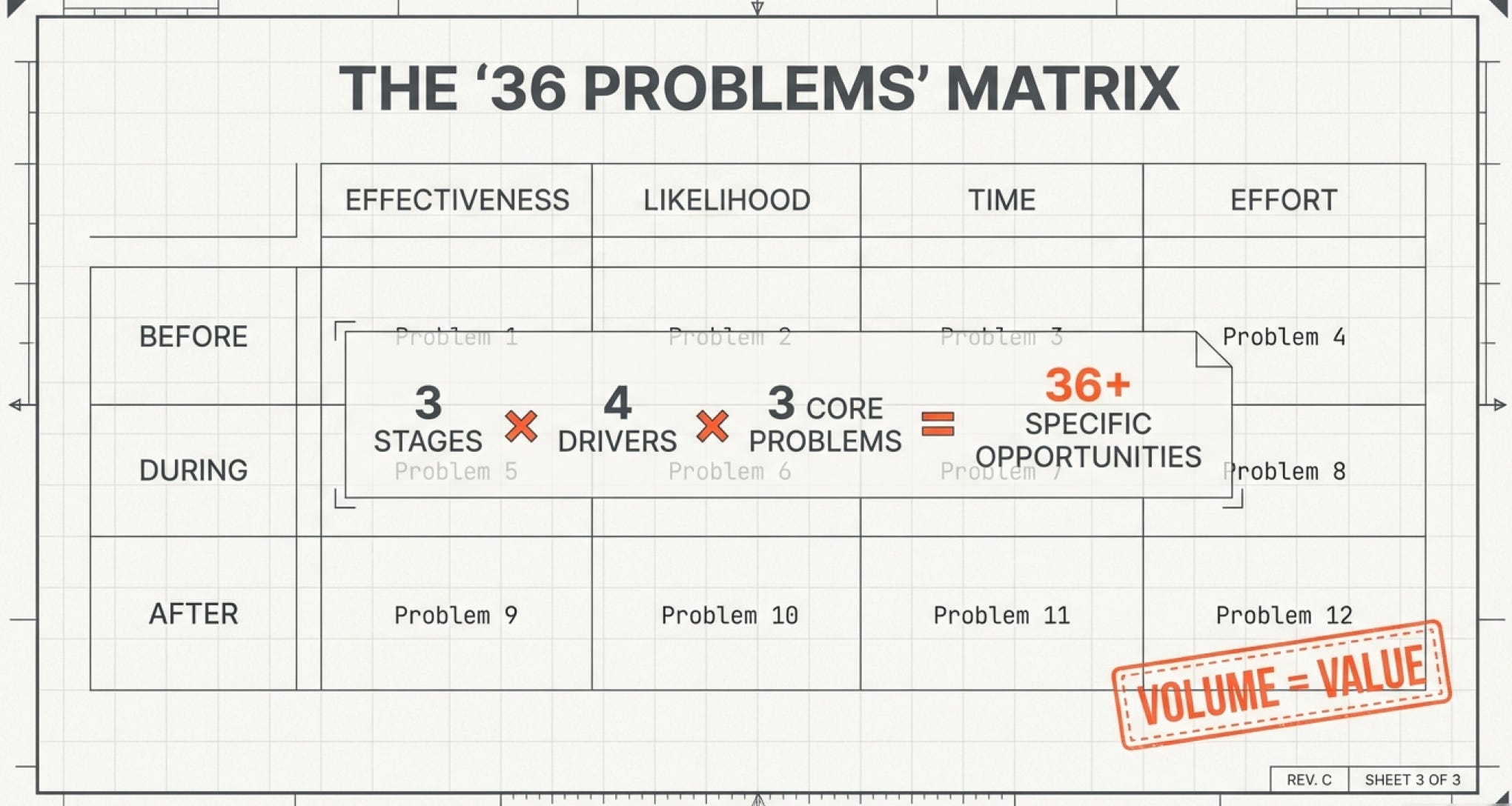
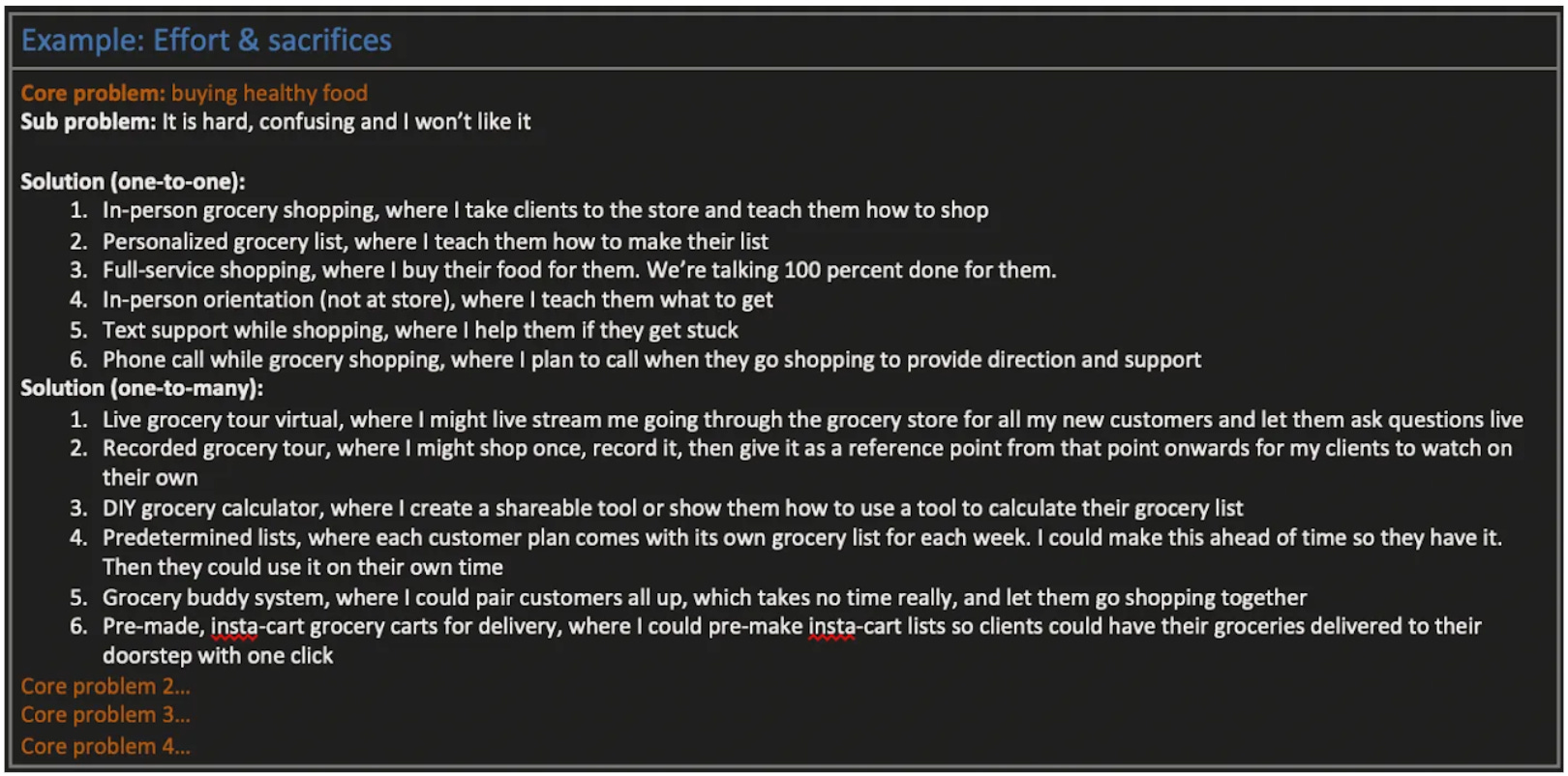
List the main problems your dream customer face. Each of the listed problems will have their own respective 4 sub-problem which aligns with the 4 value drivers. e.g. the problem of buying healthy food is actually 4 problems in each type of “value” (or what we call sub-problems)
This will multiply problems by: 3 Main problem x 4 Sub-problem each x 3 Customer journey segments = at least 36 problems to solve. That is a good problem to have! Good news since more problem = more solution = more value = more $$$! This is how it roughly looks like (and i hope you’re starting to see the magic in this ☺️);
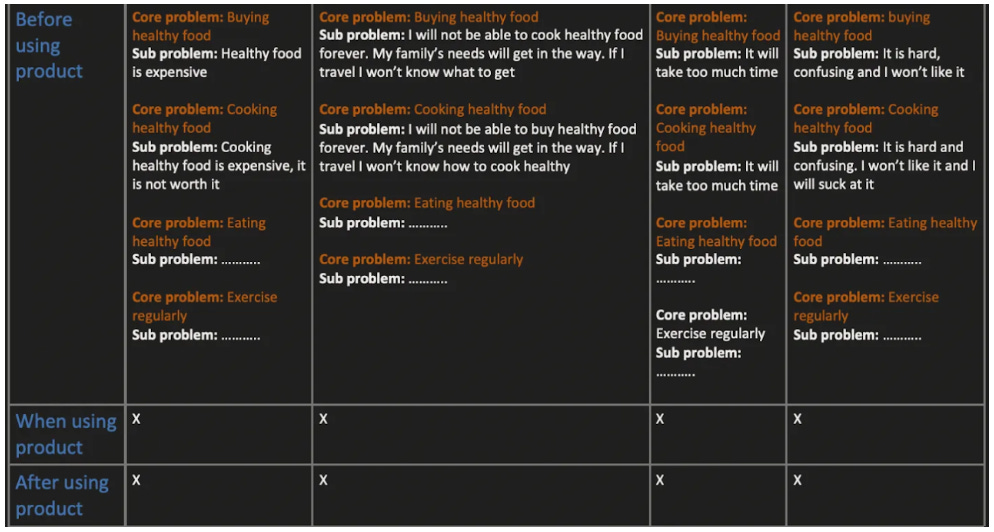
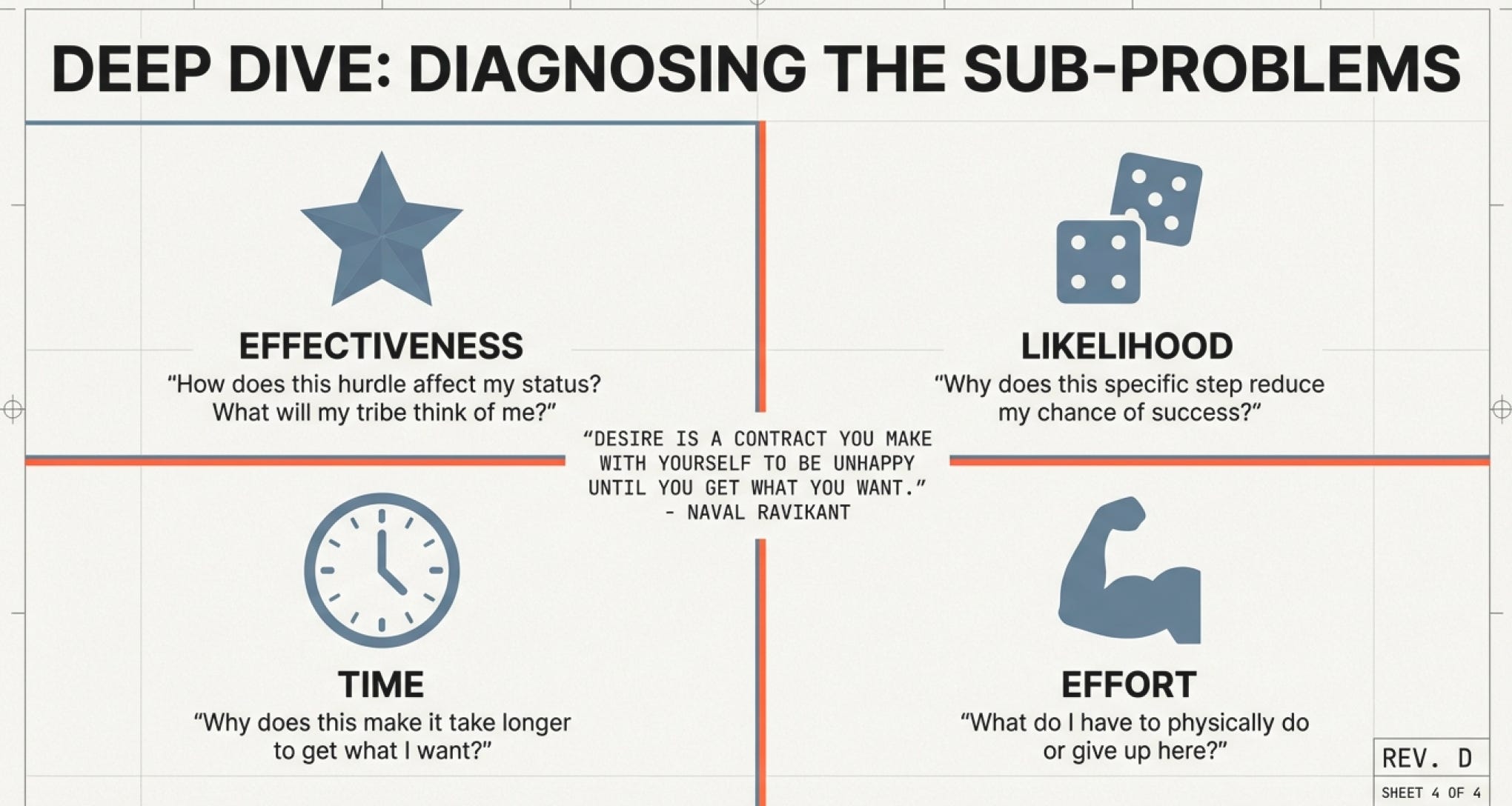
Useful/ effectiveness (Quality): the second column would be related to the main outcome you want to get to solve your problem.
👉 Ask yourself in the shoes of the Dream customer
“Based on the main problem; what will be the hurdle for me to cross in order to reach the status/ aspiration I want? How will this [main problem] influence other’s (my tribe’s) perception of me?”
Likelihood: the third column would be the problems related to probability of achieving the outcome
👉 Ask yourself in the shoes of the Dream customer
“Based on the main problem; why will this reduce my chance of achieving the outcome i want (maybe even compared to substitutes)”
Time: the fourth column would be the problems related to the long time required to achieve the outcome
👉 Ask yourself in the shoes of the Dream customer
“Based on the main problem; why will this take me longer to achieve the outcome i want (maybe even compared to substitutes)”
Effort & Sacrifices: the fifth column would be the problems related to the efforts and sacrifices your dream customer have to make to achieve the outcome
👉 Ask yourself in the shoes of the Dream customer
“Based on the main problem; what do i need to do (more) of or give-up in order to achieve the outcome i want (maybe even compared to substitutes)”
The more problems you are able to solve, the better. Because as we’ve mentioned: More problems = more solutions = more value = more $$$ 🤑
“Desire is a Contract You Make With Yourself to be Unhappy Until You Get What You Want” - Naval Ravikant
This means we only want things we do not have. As soon as we have them, desire disappears. Hence, we must decrease (supply) or delay (demand) satisfying the desires of our prospects to increase demand - the key is to do this transparently so people SEE the “oversubscription”
Crafting Your Solutions
Now that you have determined the type of solution you want, its time to really identify how you want to deliver it. Ask yourself “what do I need to show someone to solve this problem?”- what you are going to deliver?
Here are some elements you can consider to design your solution
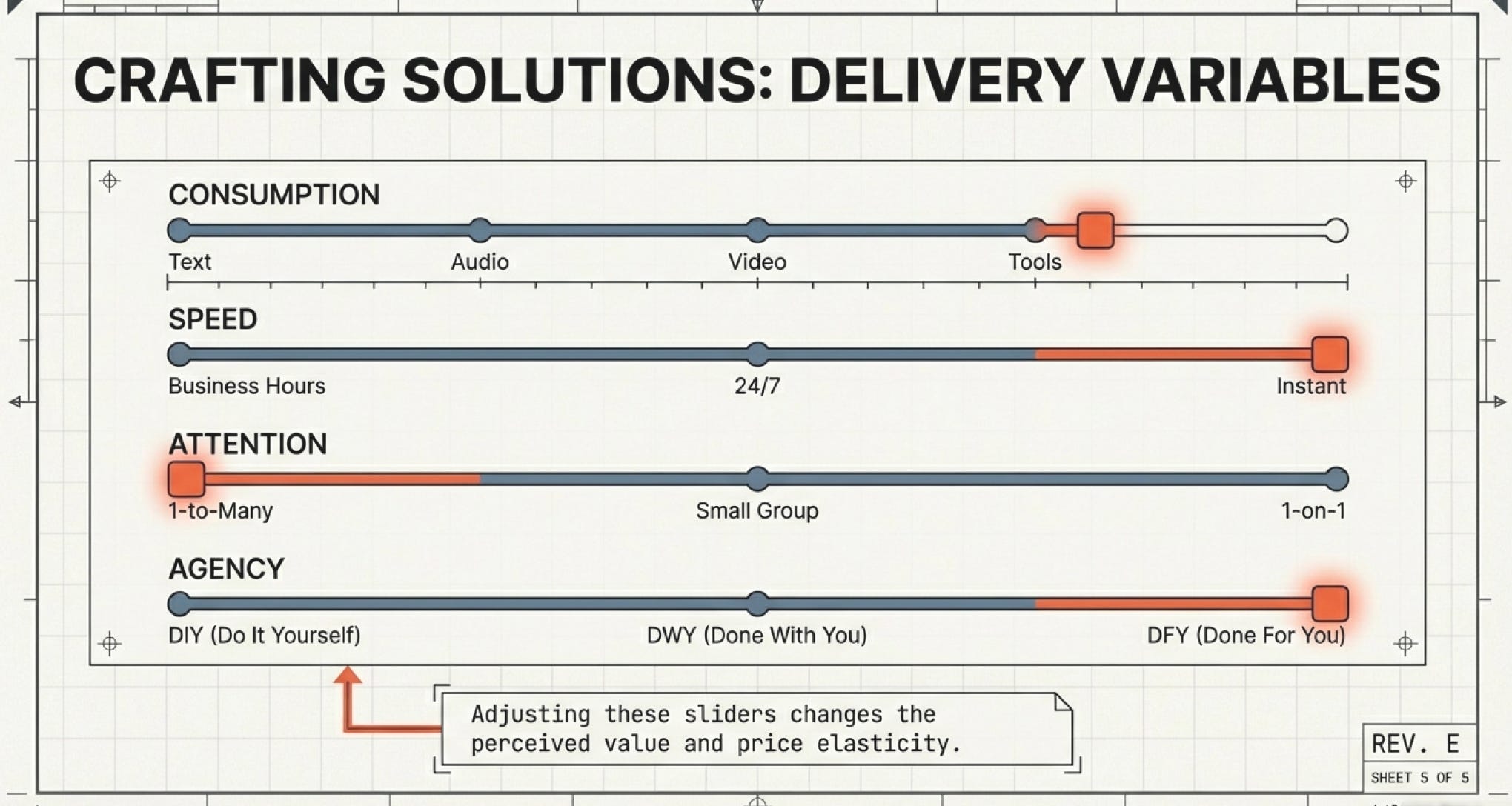
Consumption: When delivering a product/ service, how do I want them to consume (or use) it to best bring out its value relative to the price paid?
E.g. audio, video, written checklists, quiz, script, templates, tools, swipe file
Speed & convenience: How quickly do we want to reply? On what days? During what hours? The quicker you can deliver/ improve perceived value delivery, the more you can charge
E.g. 24/7, 9am-5pm, within 5mins, within 1 hour, within 24hr
1-1, Sm Gr, 1-Many: What level of personal attention do I want to provide?
E.g. one-on-one, small group, one to many
DIY-DWY-DFY: What level of effort is expected from them? The more effort expected of them, the lower value and so the lesser you can charge vice versa
E.g. do-it-themselves (DIY)/ do-it-with-them (DWY)/ do-it-for-them (DFY)
Support: If going something live, what environment/ medium do I want to deliver it in? The more support you give, the more value you deliver and hence the more you can charge
E.g. in-person, phone support, email support, text support, zoom support, chat support
10x & 1/10th Test
If customers paid you 10x current price or only 1/10th of current price, how can you still make them successful?
E.g. If customers paid me 10x my price (or $100,000) what will I provide? If they paid me 1/10th the price and I had to make my product valuable than it already is, how would I do that? How could I still make them successful for 1/10th the price? Stretch your mind in either direction and you’ll come up with widely different solutions
BONUS: Network leverage
You can not only utilize “networks”/ business/ platforms (that has your dream customer) for marketing/ selling. Think of collaborating with other business to utilise their product to solve your customer’s problem. In exchange, they get exposure to your clients for free, or even better, your client’s clients - especially if those are their main audience (free marketing for them while adding high value for you by outsourcing a value chain element at no cost).
If you really want to be a Jedi, negotiate a group discount and get a commission to yourself. e.g.
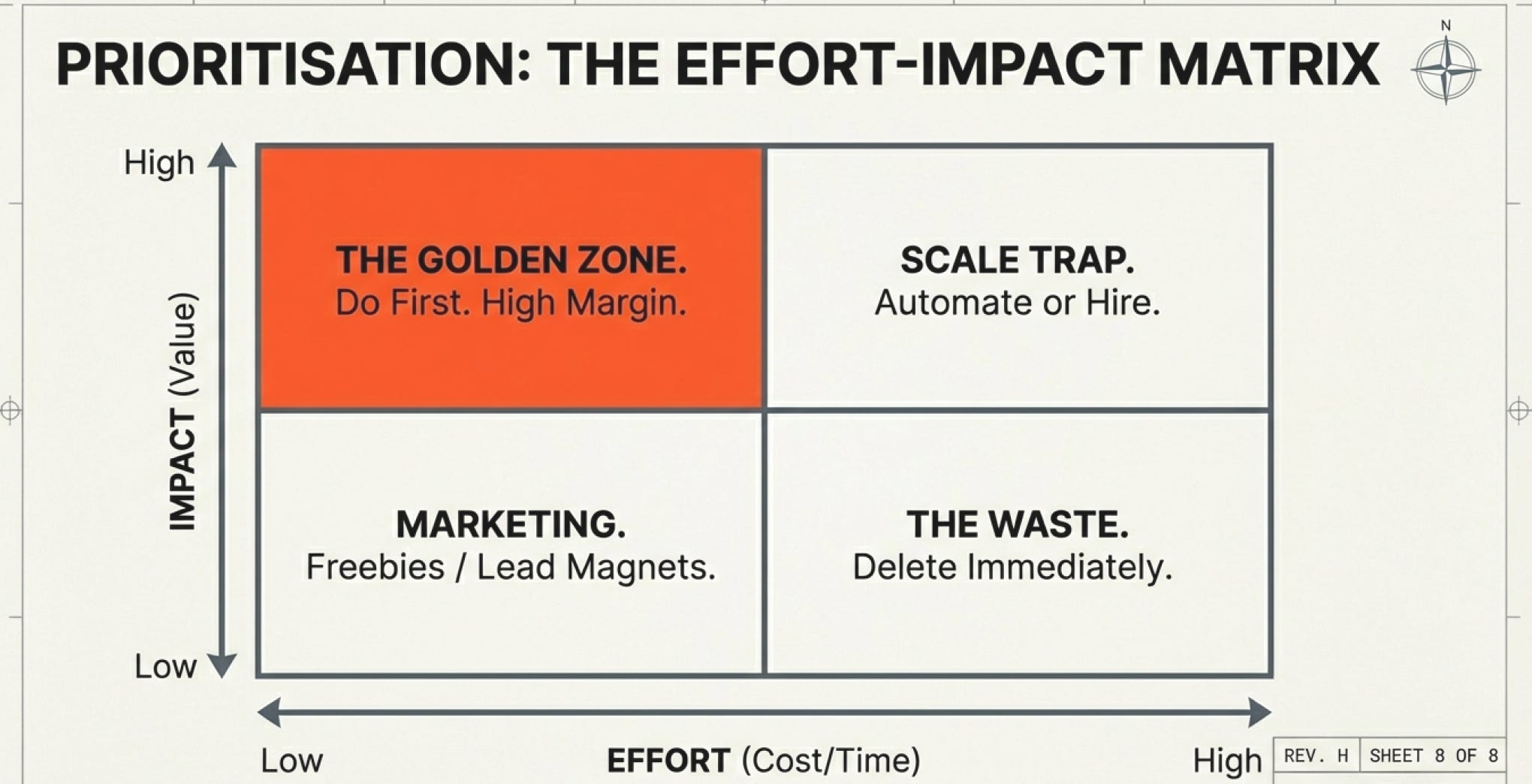
Prioritise analysis effort-importance table
High value items addresses the problems in the value equation:
Financially valuable
Cause them to believe they will be likely to succeed
Make them feel like they can do it with much less effort and sacrifice
Help them accomplish the goal and see the results they want with far less time investment
For high cost items, take one step back & think
Reduce: How to reduce time commitment & cost such that it becomes viable (usually via software)
Scale: Is there a lesser experience you can deliver at scale (one-to-many solution)
Is the value you are delivering so great that you aren’t able to “reduce” & “scale”
High operating leverage: is there anything that takes 100 hours to make (high cost) but takes only 15 minutes to generate it subsequently - high value, low cost (high effort on creation but subsequently low effort)
In summary
“High effort, Low impact“ - Remove solutions
“High effort, Low impact” - Consider to place solutions to the front of your Value Ladder IF you do not have enough “Low effort, Low impact” solutions
“Low effort, Low impact” - Usually best placed at the front-end of your Value Ladder
“Low effort, High impact” - Focus on these, they should be the ones driving the highest margins. If these are relatively easier for you to deliver compared to competitors, you might consider to place this at the front-end of the Value Ladder as a “lost leader” to drive traffic and market share to your business.
Determining Solutions For Each Sub-problem
Add a “How to” in-front to solve it. Solve 100% of it, because if any one of these needs are not addressed, it can cause someone not to buy.
💡 [Note: it is normal if sub-problems & solutions are repetitive]
E.g. Core problem = Cooking healthy food
Sub problem = It will take too much time
Determined solution: How to make sure cooking healthy food doesn’t take too much time?
References
Hormozi, Alex. $100M Offers: How To Make Offers So Good People Feel Stupid Saying No. Acquisition.com Publishing, 2021
Hormozi, Alex. $100M Leads. Acquisition.com Publishing, 2023. ASIN: B0CFDR3TYV.
Brunson, Russell. DotCom Secrets: The Underground Playbook for Growing Your Company Online. Morgan James Publishing, 2015. ISBN: 9781630474775.
Koch, Charles G. Good Profit: How Creating Value for Others Built One of the World’s Most Successful Companies. Crown Business, 2015. ISBN: 9780804189323.
Sullivan, Dan, and Hardy, Benjamin. The Laws of Lifetime Growth: Always Make Your Future Bigger Than Your Past. Berrett-Koehler Publishers, 2006.
Munger, Charles T., edited by Peter D. Kaufman. Poor Charlie’s Almanack: The Wit and Wisdom of Charles T. Munger. Donning Company Publishers, 2005.
Priestley, Daniel. 24 Assets: Create a Digital, Scalable, Valuable and Fun Business That Will Thrive in a Fast Changing World. Rethink Press, 2016.
Collins, Jim. Good to Great: Why Some Companies Make the Leap... and Others Don’t. HarperBusiness, 2001.
Godin, Seth. Purple Cow: Transform Your Business by Being Remarkable. Portfolio, 2003.
Godin, Seth. This is Marketing: You Can’t Be Seen Until You Learn to See. Portfolio, 2018.
Suby, Sabri. Sell Like Crazy: How to Get As Many Clients, Customers and Sales As You Can Possibly Handle. King Kong, 2019.
Priestley, Daniel. Oversubscribed: How to Get People Lining Up to Do Business with You. Capstone, 2015.
Greenwald, Bruce, and Judd Kahn. Competition Demystified: A Radically Simplified Approach to Business Strategy. Portfolio, 2005.
Slow Ventures. “Franchising Thesis - Why Venture Should Care About Franchises.” DocSend, accessed May 7, 2025. https://docsend.com/view/68uxgs3jawk2szrv