
The Stock Market Is Telling You a Story. It Is the Wrong One.
There is a company trading at roughly $20 a share. Its book value is $32.70 a share. It generates over one billion dollars in free cash flow every single year — without fail, through recessions, through pandemics, through every headwind the economy has thrown at it. Warren Buffett’s Berkshire Hathaway owns 35% of it and has been buying aggressively in the open market for months. And the stock has lost half its value in the past year.
That company is SiriusXM. And the reason the market is pricing it this way has almost nothing to do with the business.
This is a story about how a single non-cash accounting event — a goodwill impairment charge of $3.36 billion (due to a spin-off) — created one of the more interesting mispricings on the market today. But more importantly, it is a story about a business model so structurally advantaged that once you understand how it actually works, the headline numbers become almost irrelevant.
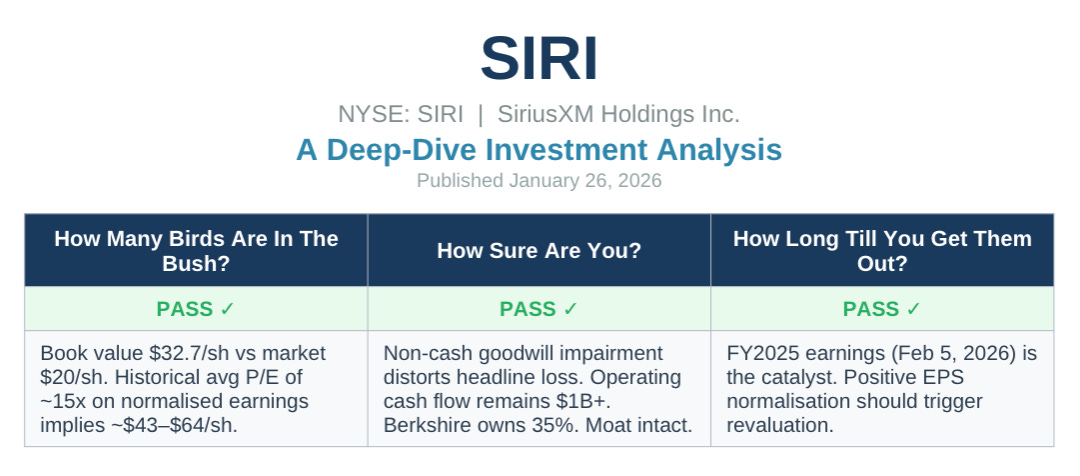
I use a simple three-part framework to evaluate every investment I consider. First: how many birds are in the bush — meaning, what is the company actually worth? Second: how sure am I — meaning, is this a durable business or a house of cards? And third: how long until I get my money out — meaning, when does the market catch up to reality? If any one of these fails, I walk away. For SiriusXM, all three pass. Here is why.
p.s. Ironically, a spin-off is done to highlight and allow a great business segment to thrive
Part One: How Many Birds Are In The Bush?
What is this company actually worth — and what is the market paying for it?
The $3.36 Billion Smoke Screen
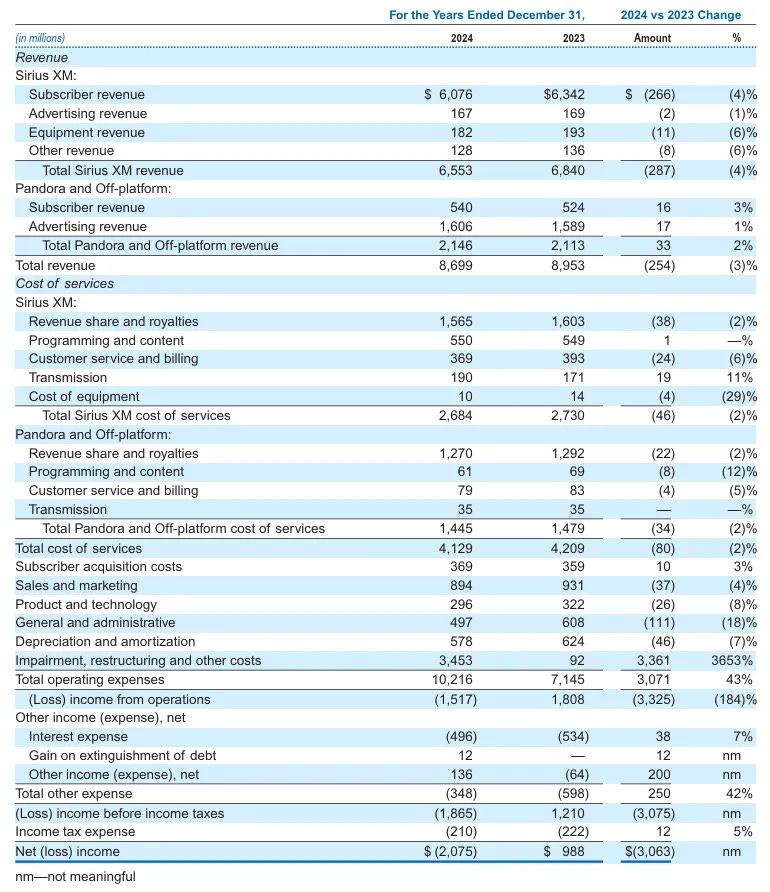
To understand SiriusXM’s valuation today, you first need to understand what happened in Q3 2024. The company reported a net loss of $2.08 billion for the full year. That number stopped a lot of investors in their tracks. It looks catastrophic. But peel back one layer and the picture changes entirely.
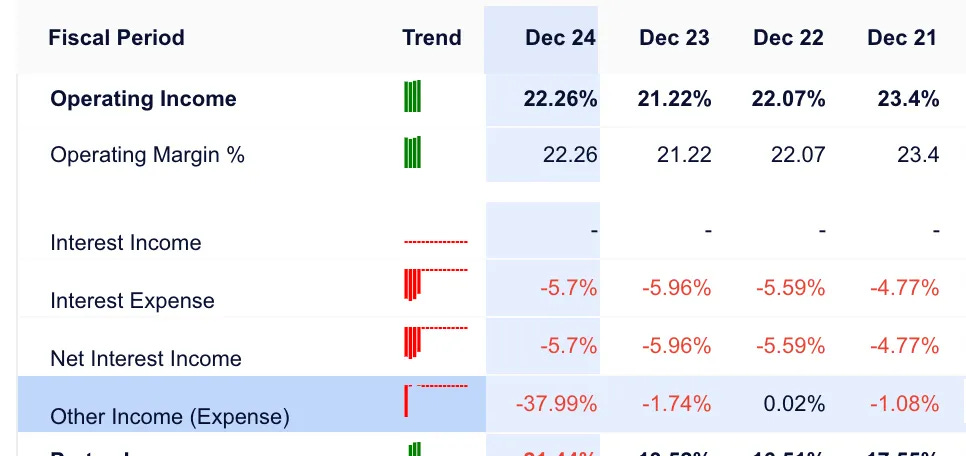
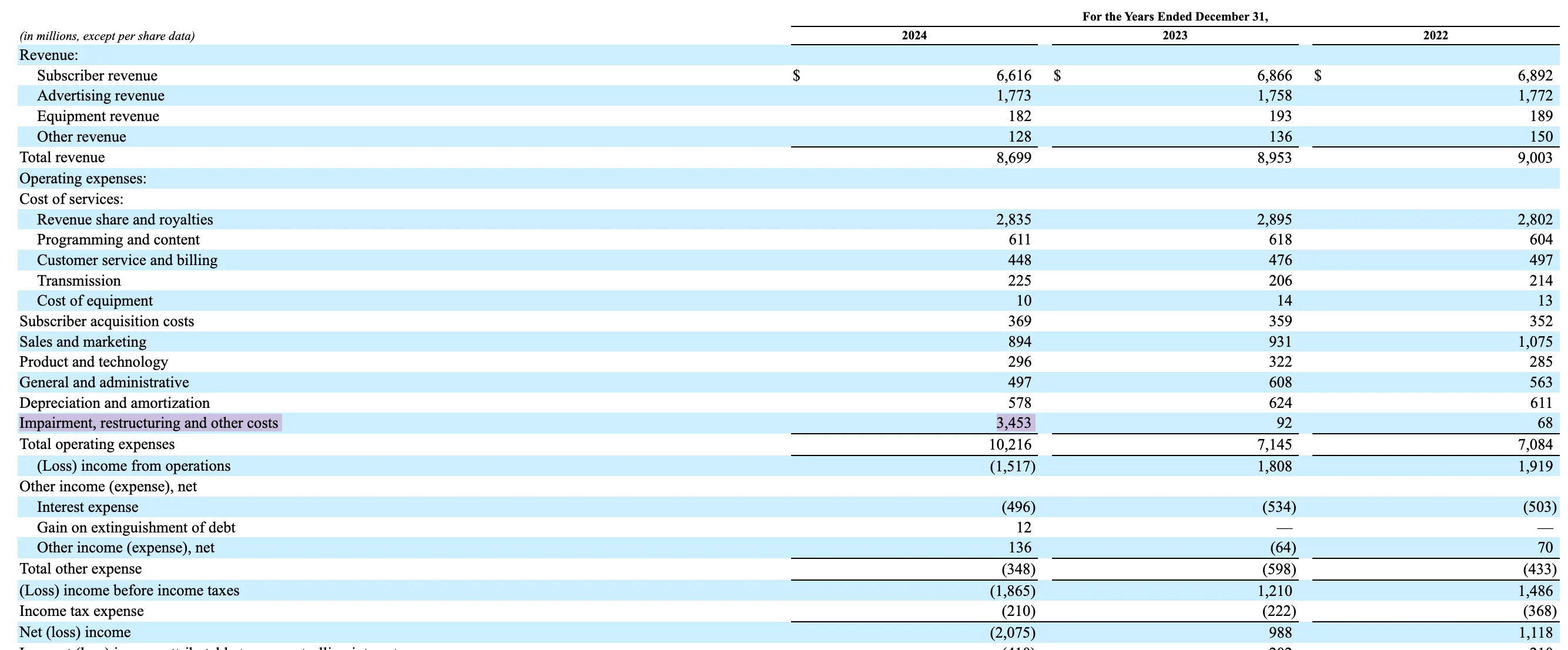
The loss was driven almost entirely by a single event: a non-cash goodwill impairment charge of approximately $3.36 billion. This was not money that left the company. No cash changed hands. No operations were shut down. No significant customers were lost. What happened was an accounting requirement — when a company’s stock price drops below the carrying value of its goodwill on the balance sheet, auditors require a write-down to reflect the new market reality. In SiriusXM’s case, this was triggered by the convergence of the stock price during the Liberty Media split-off transaction.

“The full-year 2024 net loss reflects a non-cash impairment charge of approximately $3.36 billion... This non-cash charge does not impact the company’s cash flow, ongoing operations, or liquidity.”
— SiriusXM Q4 2024 Earnings Release, January 30, 2025
Strip out that impairment charge, and the company posted net income of $287 million in Q4 2024 alone. The business is profitable. It has always been profitable. The headline loss is an artifact of accounting, not a reflection of economic reality.
Cash Is King — And Cash Never Lies
If you want to know what a business is truly worth, ignore the income statement for a moment and look at the cash flow statement. Cash flow cannot be impaired. It cannot be written down. It is the most honest number a company reports.
The table below tells the real story of SiriusXM’s financial health over the past four years. Notice the column that matters most: Free Cash Flow. It has stayed above $1 billion every single year — even in 2024, the year the headline said the company lost $2 billion.
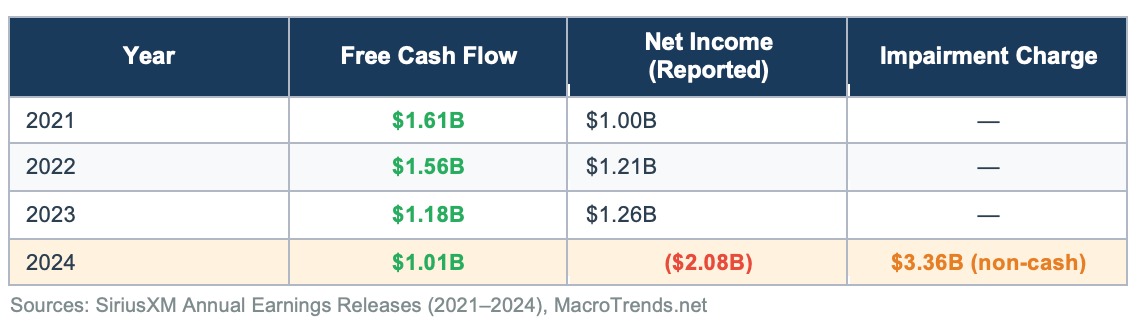
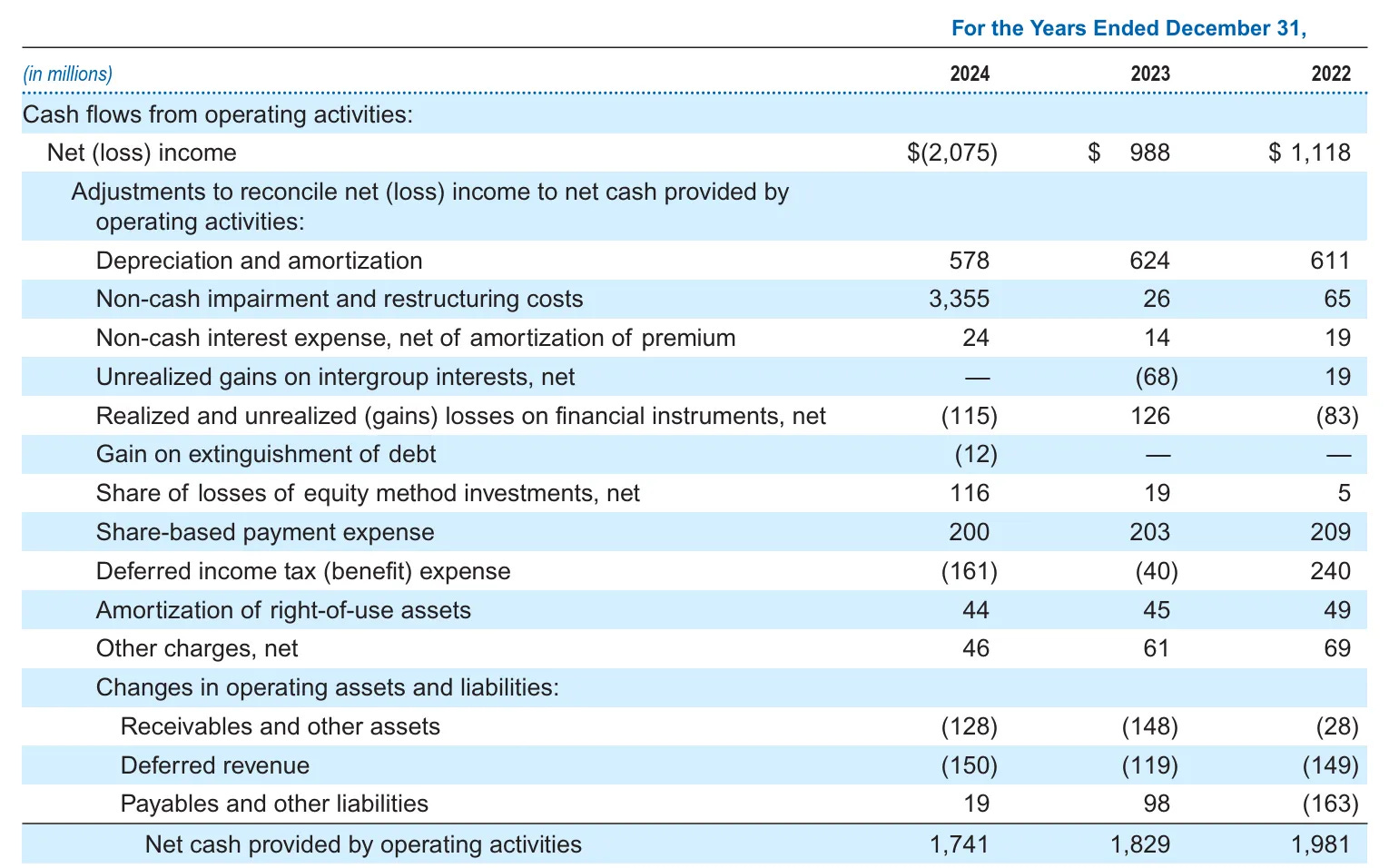
This is the fundamental disconnect the market is pricing in. The income statement says the company is hemorrhaging money. The cash flow statement says it is generating over a billion dollars a year in free cash in like clockwork. For an investor, the cash flow statement is the one that pays the bills.
Additionally:
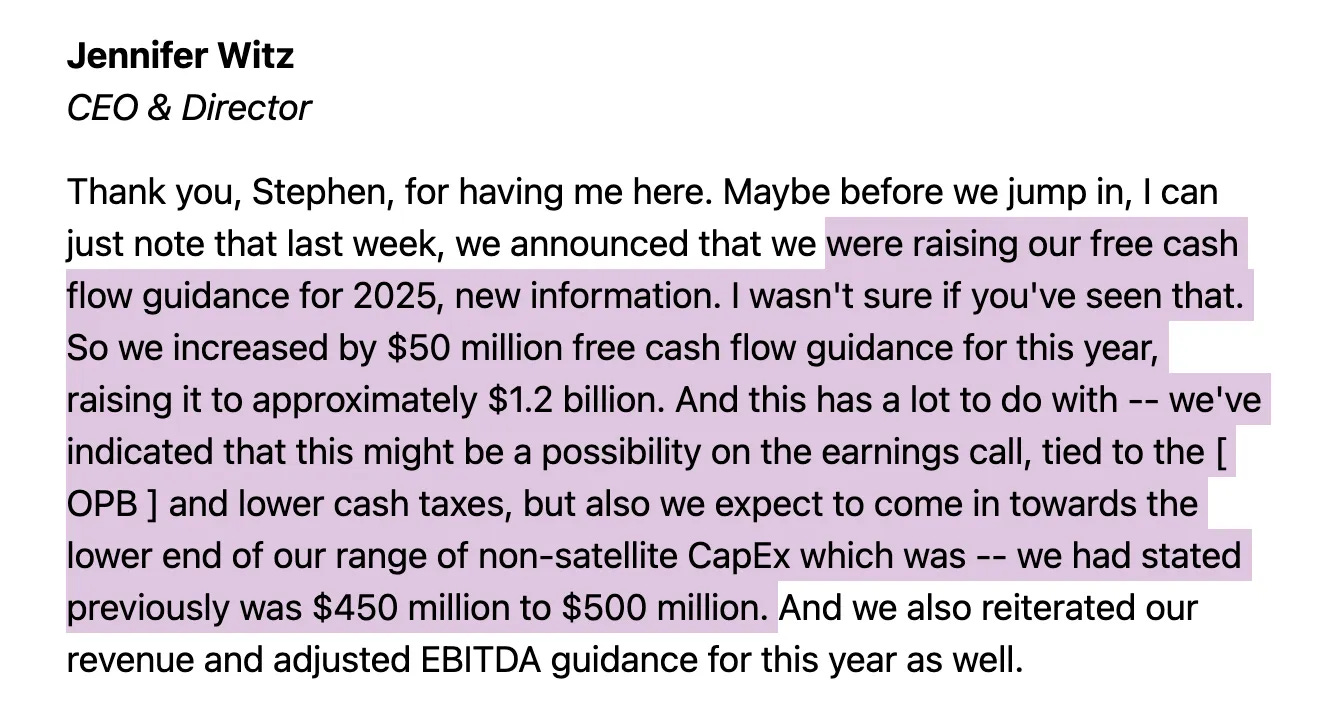
Book Value vs. Market Price: The Simplest Math
On a superficial but instructive level, SiriusXM’s book value — the total assets minus total liabilities — stands at approximately $11.07 billion. With roughly 339 million shares outstanding, that translates to a book value of about $32.70 per share. The stock is trading at roughly $20. In other words, the market is handing you a dollar’s worth of book value for sixty cents.
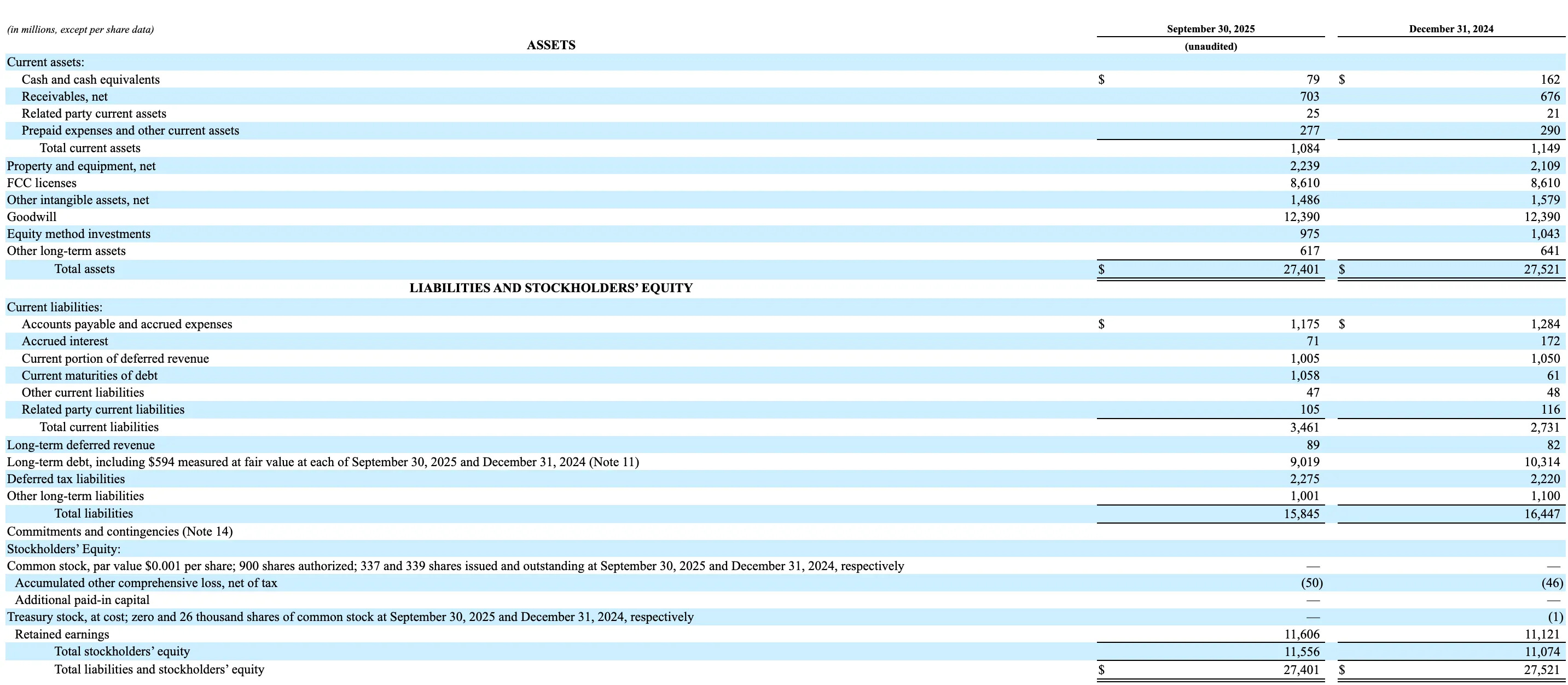
Yes, a significant portion of that book value is goodwill — $12.39 billion in total, before the impairment. Goodwill is the premium a company pays when it acquires another business above the value of its tangible assets. Critics rightly point out that goodwill is only worth something if the acquired business continues to generate returns. We address this question head-on in Part Two. For now, note that even after the $3.36 billion write-down, the book value still exceeds the market price by over 60%.
What The Numbers Actually Imply
Rather than relying on forward projections or financial models, let us anchor to facts we already have: the company’s historical earnings and the multiples at which it has historically traded.
SiriusXM’s normalised net income — stripping out one-time charges — over the prior three years averaged approximately $1.0 billion annually. On 339 million shares, that is roughly $2.95 in earnings per share. The company’s P/E ratio over the three years prior to the impairment event averaged approximately 15x (ok, perhaps more, but let’s be conservative).

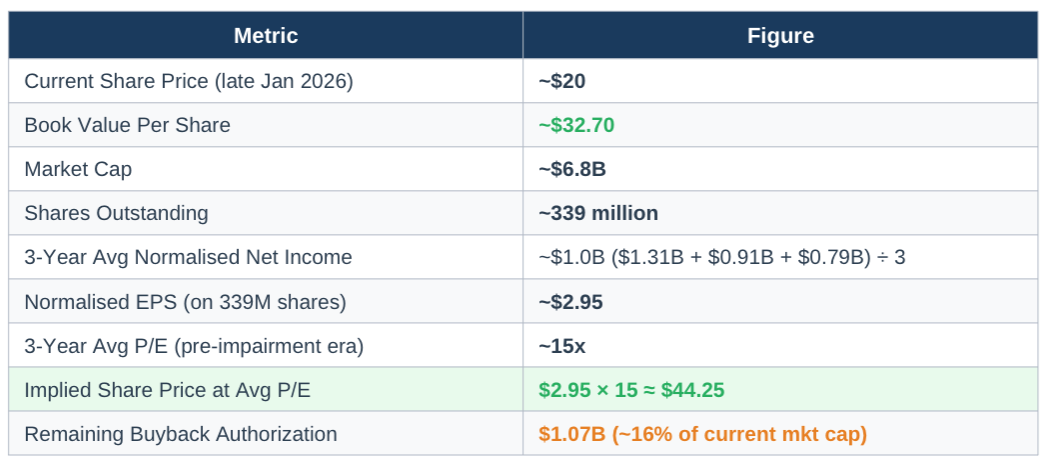
At a 15x multiple on normalised earnings, the implied share price is $44.25. At the current $20, you are buying at less than half that implied value. Even at a deeply discounted 10x multiple — well below historical norms — the implied price would be $29.50, still a 47% premium to where the stock sits today.

Additionally, management has $1.07 billion in remaining buyback authorization. At the current market capitalisation of roughly $6.8 billion, that represents potential accretion of approximately 16% of outstanding shares. Buybacks at these prices are not just capital allocation — they are a direct, mechanical way to increase earnings per share without the business needing to grow at all.
Part Two: How Sure Are You?
Is this a durable business, or will it erode?
The Unit Economics Nobody Is Talking About
Every subscription business lives and dies by two numbers: how much it costs to acquire a customer, and how much that customer is worth over their lifetime. For SiriusXM, these numbers are extraordinary — and they are almost never discussed in mainstream coverage of the stock.
In 2024, SiriusXM’s total subscriber acquisition costs were $369 million. Spread across its approximately 33 million subscriber base, that works out to roughly $11.18 per subscriber. This is an absurdly low customer acquisition cost for a media company. For comparison, streaming services routinely spend $30 to $100+ per subscriber on marketing, content deals, and promotional offers to win a customer. SiriusXM’s cost is a fraction of that — because the automakers are doing most of the heavy lifting.
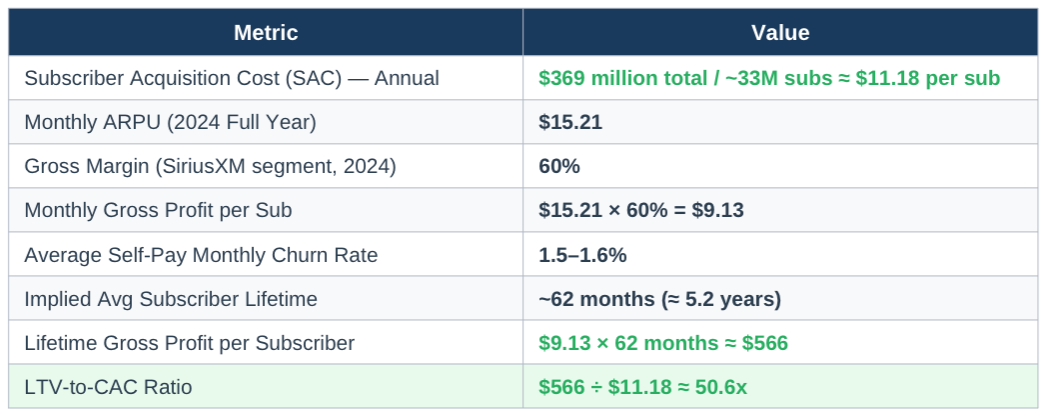
The lifetime value-to-customer acquisition cost ratio of 50.6x is remarkable. For every dollar SiriusXM spends to acquire a subscriber, it earns back roughly $50 in gross profit over that subscriber’s lifetime (and CAC reduces as brand assets like podcasts becomes more valuable and secures demand from advertisers). This is what makes the business model so resilient. Even if revenue per user declined modestly, or churn ticked up slightly, the economics would remain deeply favourable.
The Flywheel Nobody Can Replicate
The reason SiriusXM’s acquisition cost is so low — and the reason it is so defensible — comes down to one structural advantage: SiriusXM does not need to convince you to try it. The automaker does that for free.

Over 80% of new vehicles sold in the United States come with SiriusXM factory-installed as standard or as a primary option. There are now more than 100 million cars on American roads with SiriusXM receivers already built in. When you buy or lease one of these cars, a free trial subscription begins automatically. You do not download an app. You do not search for it. You do not even have to think about it. It is simply there, working from day one, including in the dead zones where cell coverage disappears.
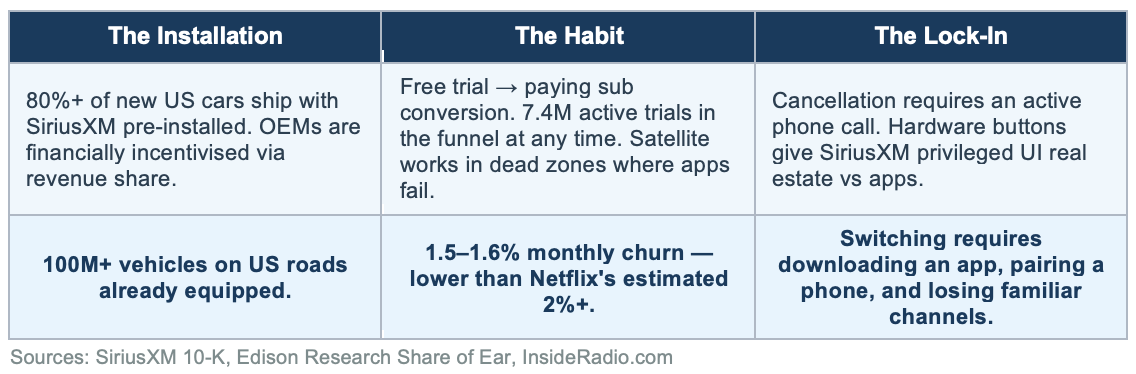
This is not a competitive advantage that can be easily replicated. To compete with SiriusXM in the car, a rival would need to secure installation agreements with every major automaker, invest billions in satellite infrastructure, build content libraries that justify premium pricing, and convince OEMs to sacrifice their own revenue share arrangements. The fixed costs alone — satellites, content rights, OEM integrations — are staggering. SiriusXM spreads those costs across 33 million paying subscribers. A new entrant would be starting from zero.
“SiriusXM is factory-installed in substantially all vehicle makes sold in the United States. The installed base plus trial-to-paid funnel remains hard for pure apps to replicate.” — SiriusXM 2024 10-K Filing
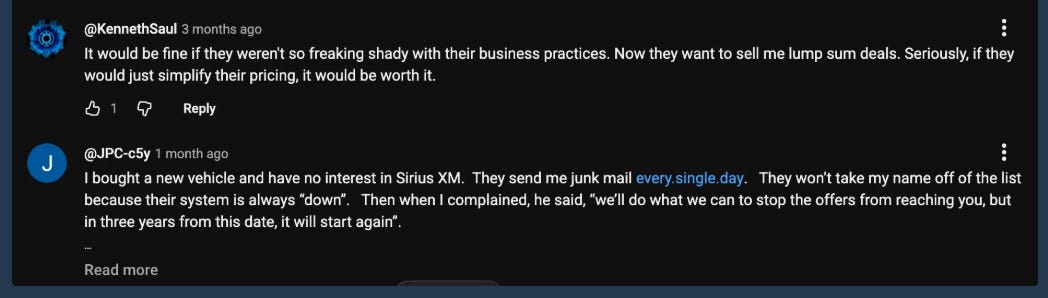
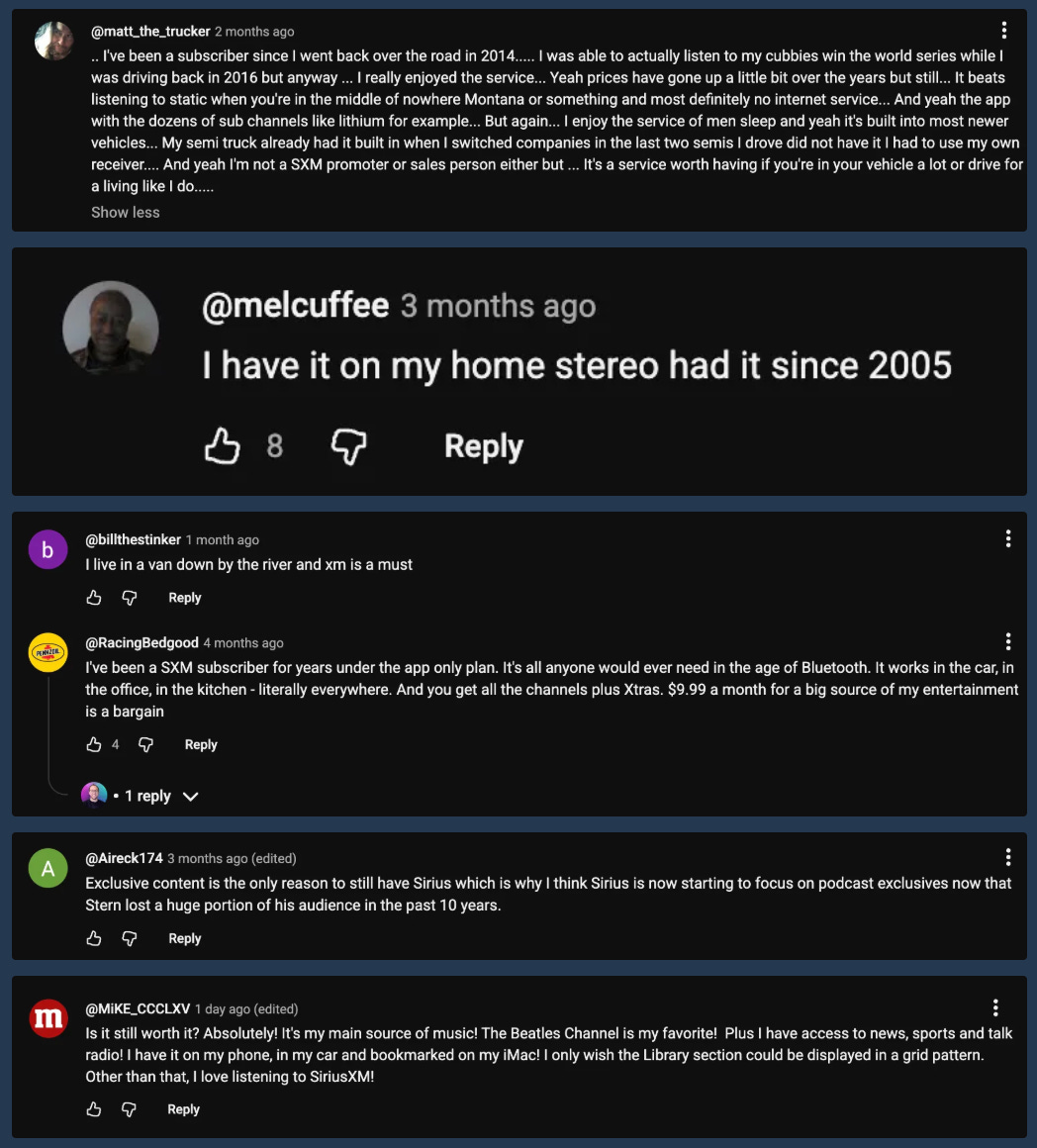
The lock-in and high cost of switching explains the pretty pissed “customers” as well:
The OEM Partnership: A Rare Alignment of Interests
What makes this moat even more durable is that the automakers are not neutral parties — they are active participants in SiriusXM’s success. When a trial subscriber converts to a paying customer, OEMs and dealers receive a share of the subscription revenue. This creates a direct financial incentive for every car dealership in America to promote SiriusXM at the point of sale.
SiriusXM also helps automakers justify higher trim pricing. A vehicle equipped with satellite radio, live sports, traffic, weather, and connected services commands a premium on the lot. The automaker does not need to build a national audio network — SiriusXM provides one. This is not a grudging partnership. It is a mutually beneficial arrangement that has deepened over two decades of operation.
Apple CarPlay and Android Auto are often cited as threats. But these platforms operate on a fundamentally different logic. They are phone-mirroring systems, not native audio platforms. SiriusXM occupies the hardware buttons on the dashboard — the physical controls that drivers reach for instinctively. Displacing that position would require automakers to actively choose to remove a revenue-generating partner in favour of a free service. That is a very different calculus than simply adding a new app to a menu.
The Podcast Empire Nobody Expected
SiriusXM’s podcast network is one of the most underappreciated assets in the company. Through acquisitions — Stitcher, Simplecast, AdsWizz, and commercial agreements with some of the biggest names in podcasting — SiriusXM has built one of the largest podcast advertising networks in North America.
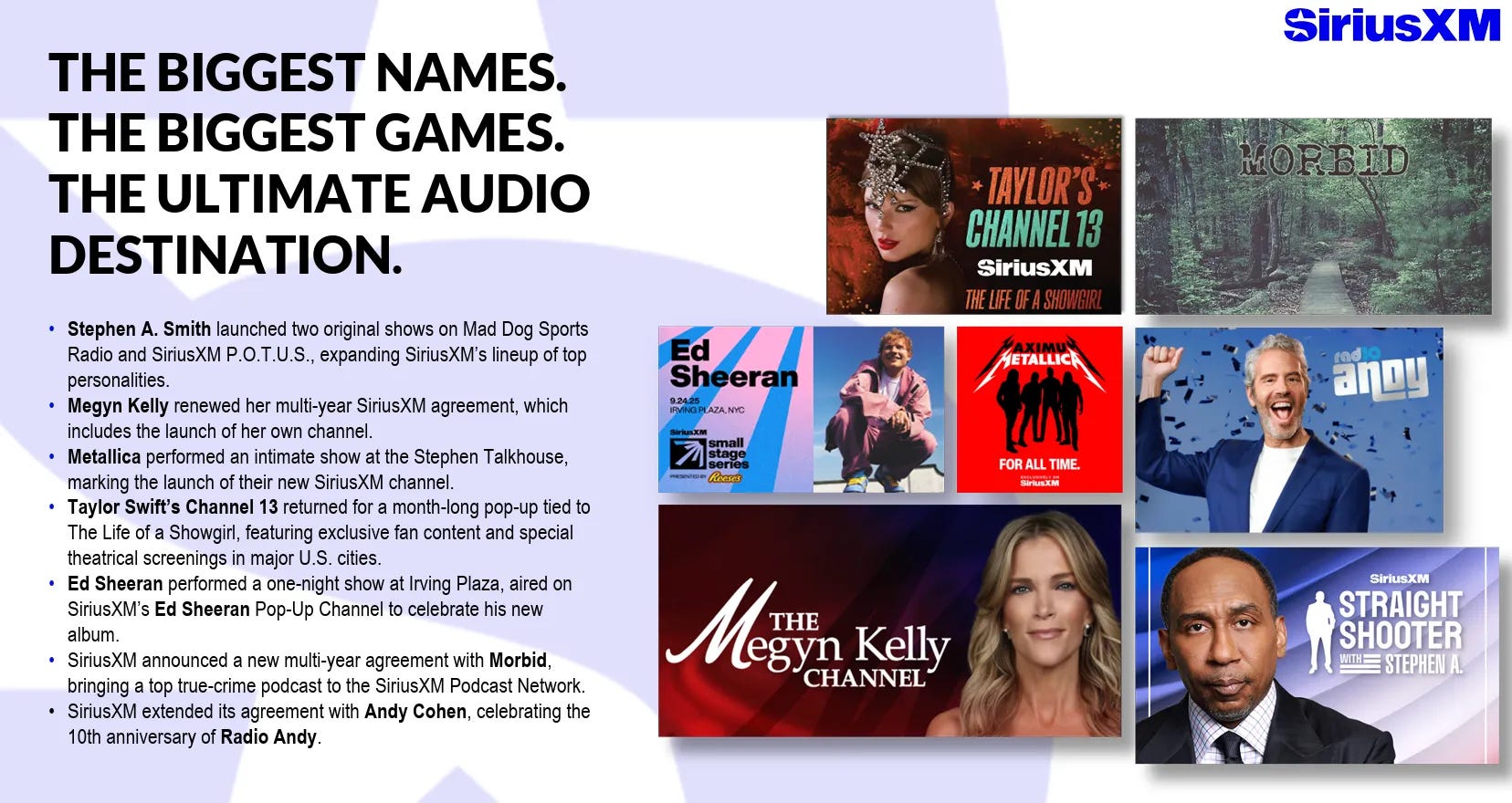
In 2024, the SiriusXM Podcast Network ranked as the number two sales network in the US by downloads, behind only iHeart. By Q1 2025, Edison Research confirmed that Spotify, SiriusXM, and iHeartPodcasts remained firmly entrenched in the top three positions for weekly reach. SiriusXM holds commercial agreements with 26 of the top 100 podcasts on Triton Digital’s rankings — more than any other single network. Its podcast network reaches an audience of 60 million monthly listeners.
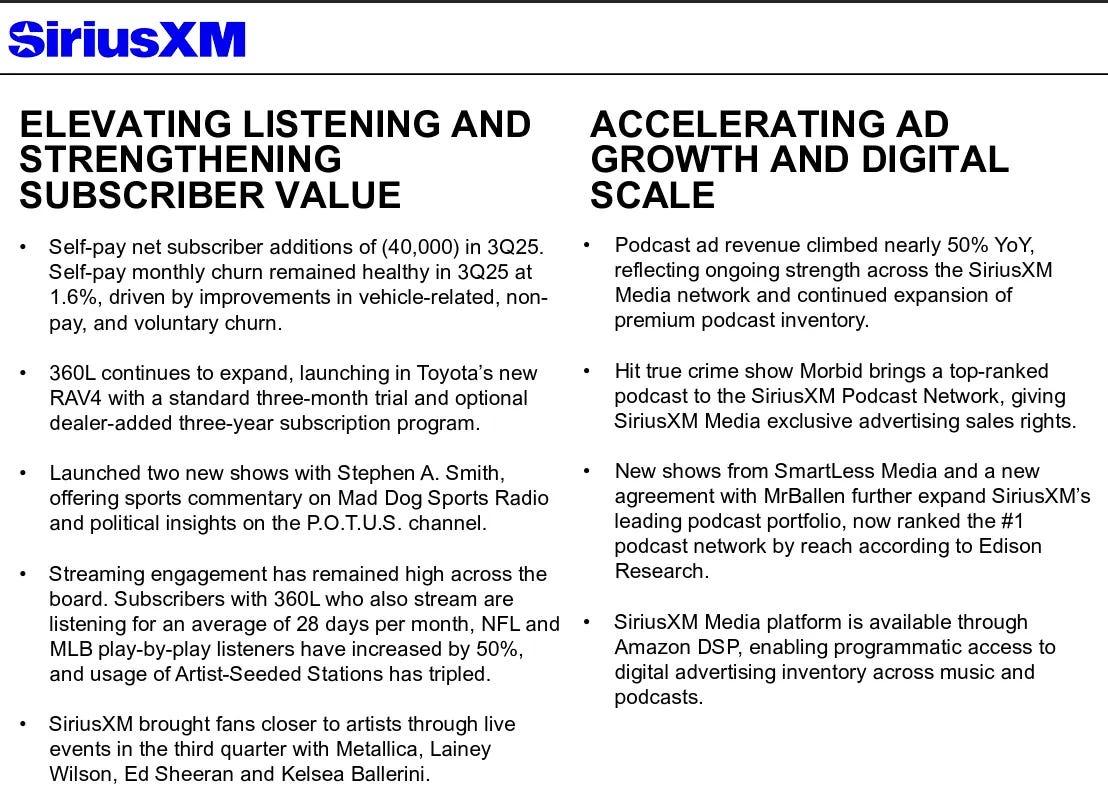
This matters for durability because podcasts are the fastest-growing segment of audio advertising. SiriusXM’s podcast IP — the exclusive distribution rights and ad sales agreements it holds with top-tier shows — represents a long-duration asset that generates revenue regardless of what happens to satellite radio penetration rates. It also deepens the data advantage: SiriusXM can analyse listener behaviour across satellite, streaming, and podcast platforms simultaneously, allowing it to curate higher-value content and sell more targeted advertising.
The Question of Goodwill: Does the Moat Justify the Premium?
We flagged earlier that a large portion of SiriusXM’s book value is goodwill. The capital reinvestment rate — a measure of how efficiently a company deploys capital to generate returns — comes in at 7.9%, which is not exceptional. This is an honest limitation and one worth acknowledging.
However, goodwill is only worthless if the underlying business it represents stops generating returns. The evidence here is clear: the churn rate has held steady at 1.5–1.6% for years. The installed base continues to grow. The podcast network is expanding. The OEM relationships are deepening. The goodwill that was written down was specifically tied to the SiriusXM satellite radio segment — and that segment continues to generate $3.9 billion in gross profit annually at a 60% margin. The moat is real. The impairment was an accounting event, not a business event.
Berkshire Hathaway: The Sharpest Signal in the Room
No analysis of SiriusXM’s durability would be complete without addressing the elephant in the room: Warren Buffett’s Berkshire Hathaway owns 35.4% of the company.
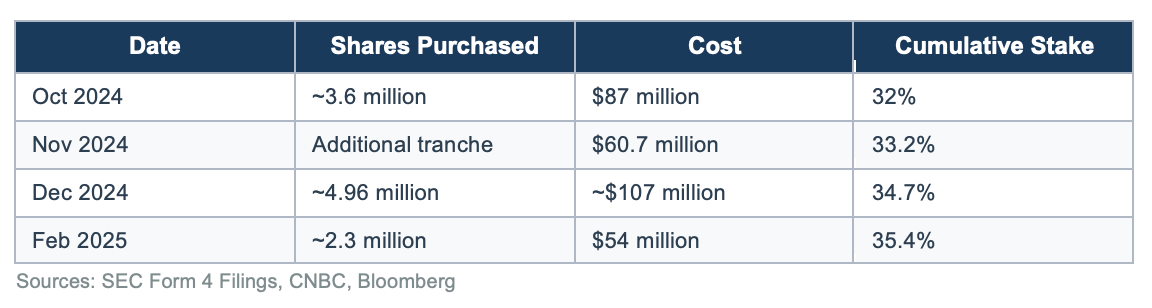
Berkshire did not stumble into this position. It built it methodically over months, purchasing shares in the open market through repeated SEC filings — at $21, at $24, at prices consistently below book value. The table below documents the buying pattern:
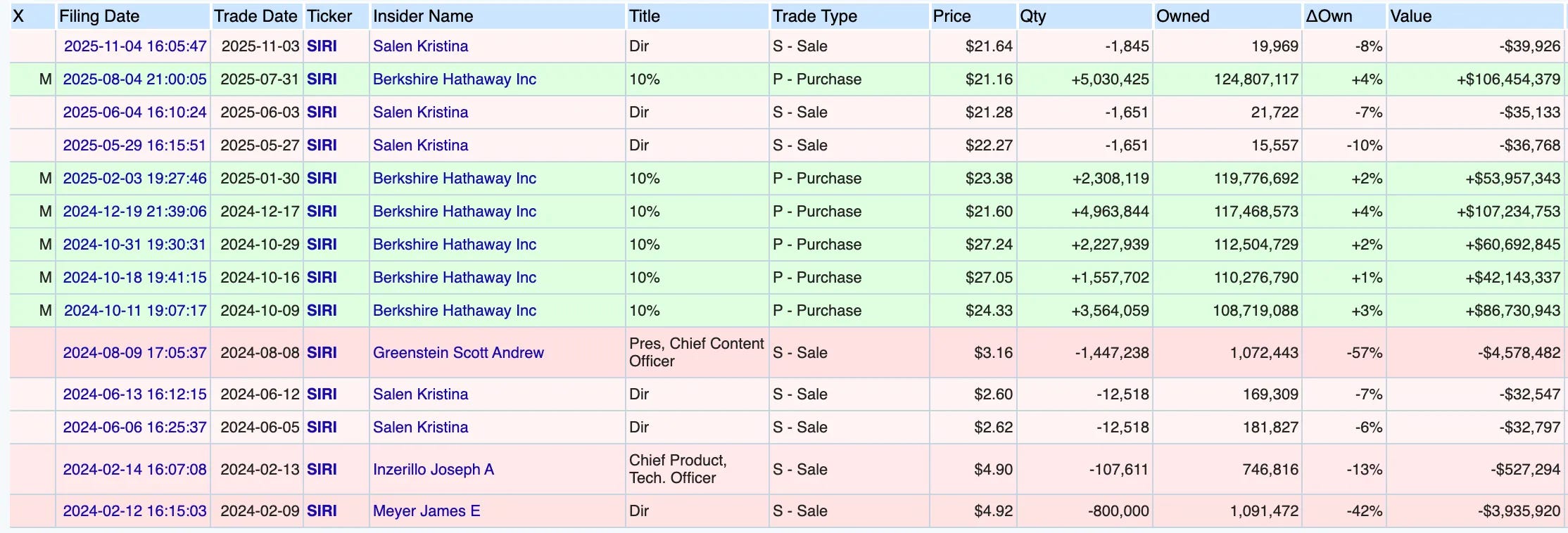
Yes, there are insider sales of recent. However, these are small relative to their total position.
Berkshire’s investment philosophy is well-documented: it buys businesses with durable competitive advantages at prices below intrinsic value, and it holds them for years or decades. The fact that it is accumulating SiriusXM at these levels — while the rest of Wall Street is cautious — is not proof that the investment will succeed. But it is a powerful data point about how the world’s most disciplined capital allocator views this business.
Munger’s “cheap current cash flows plus Massive Optionality” — 5G and the emerging 6G network architectures require dramatically more spectrum diversity than previous generations. The FCC's spectrum reallocation policy — systematically repurposing lower-frequency broadcast spectrum for wireless broadband — has already yielded the 2017 broadcast incentive auction. The same dynamic will recur: as 6G standardization advances (anticipated 2030+), demand for mid-band and lower-band spectrum will increase.
Note however, that due to oustanding convertible notes, there will likely be a c.5% dilution that will happen once sale price of stock trades at ≥ $42. This is to an affiliated company (the parent which spun it off at end 2024) - Liberty Media, and was issued during 2023 March.

Management Alignment: Skin in the Game
CEO Jennifer Witz’s compensation was restructured in 2024 to be heavily performance-based. Of her total package, 87% is variable, tied to stock performance, free cash flow generation, and relative total shareholder return. Performance-based restricted stock units that did not meet targets expired unvested. Annual bonuses were funded at only 43% of target because the company missed revenue and subscriber goals.
Additionally:
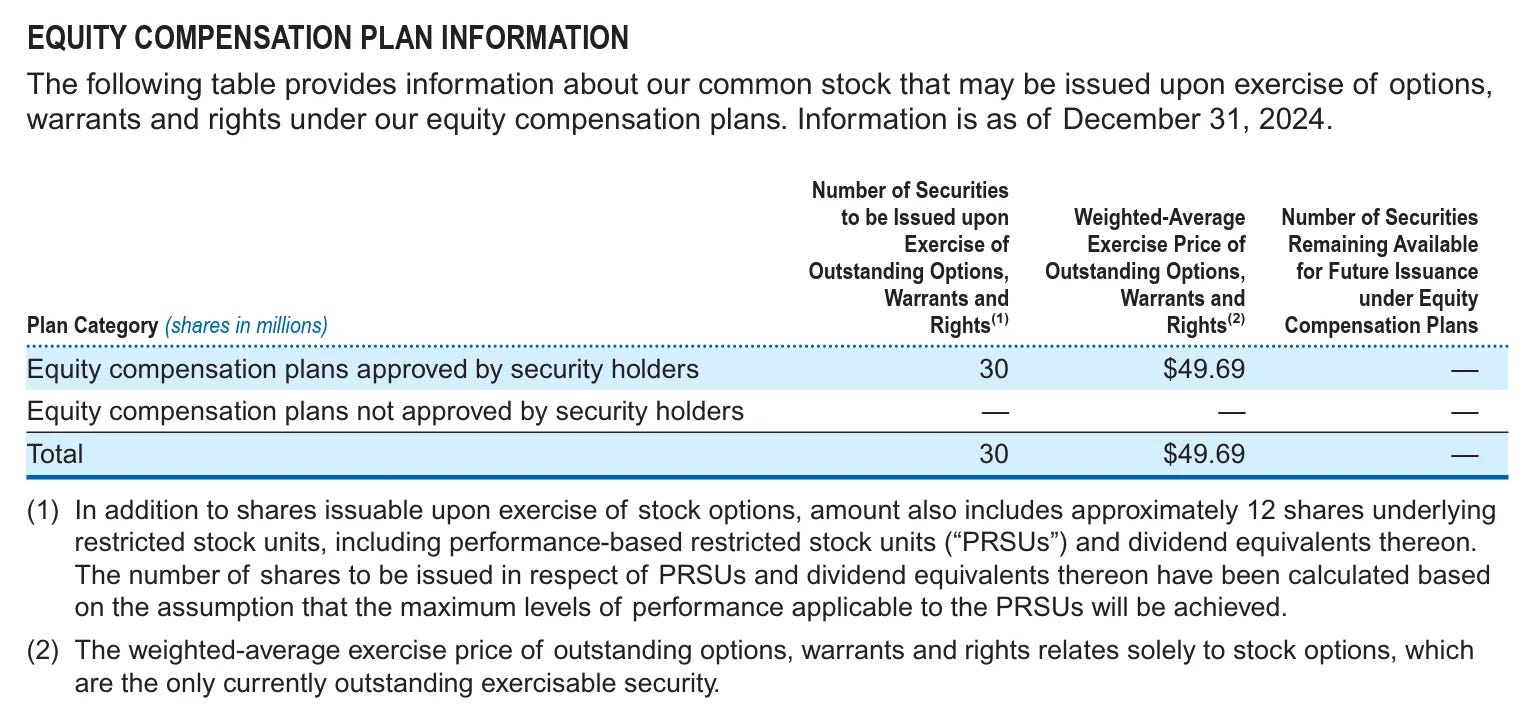
This is exactly what you want to see: management is not being rewarded for showing up. They are being rewarded — or not — based on whether the stock price goes up and whether the business generates cash. The incentives are aligned with shareholders in the most direct way possible.
Part Three: How Long Till You Get Them Out?
When does the market realise what the business is actually worth?
The Catalyst: Earnings Normalisation
The single most important event on the near-term horizon is SiriusXM’s FY2025 earnings report, scheduled for Thursday, February 5, 2026. This is the first full-year earnings report since the Liberty Media transaction closed and the goodwill impairment was recorded. If the company reports positive net income — which the underlying cash flow trajectory strongly suggests it will — it removes the single biggest narrative overhang on the stock. If it does not, it does not affect our confidence in the business moving forward as well.
The market has been pricing SiriusXM based on the headline loss. Once that headline flips back to positive, the conversation shifts from ‘is this company losing money?’ to ‘how much is it actually worth?’ That is a very different conversation, and it tends to attract a very different class of investor.
The ARPU Story: Small Numbers, Large Implications
Management has explicitly stated that Average Revenue Per User will increase in the second half of 2026. For context, ARPU moved from $15.16 to $15.19 in Q3 2025 — a change of three cents that sounds trivial until you multiply it across 33 million subscribers.

Every single cent of ARPU increase flows almost entirely to the bottom line. The marginal cost of serving an existing subscriber is near zero — there is no additional satellite capacity consumed, no additional content licensed. An ARPU increase is, in effect, pure margin expansion. Management’s focus on repositioning subscribers into higher-value product mixes — rather than chasing raw subscriber growth and raw ARPU growth — is also a sign of a business that has matured and is optimising for profitability rather than scale.
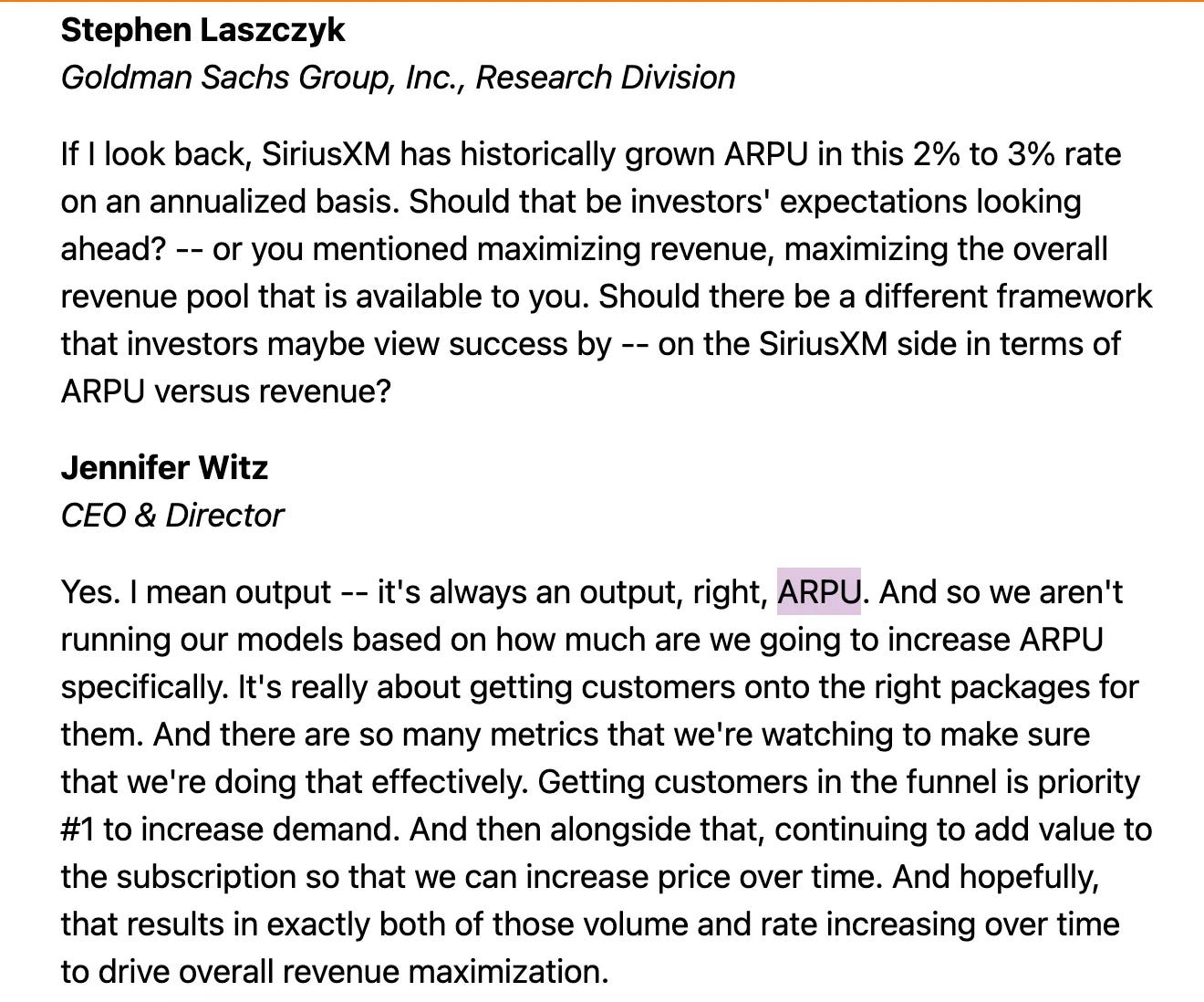
If we take a closer look at subscribers, we can also observe that there are highly satisfied customers in specific audience poors e.g. drivers

Why This Is Not A Melting Ice Cube
The bear case on SiriusXM has always been demographic: satellite radio is for boomers, and boomers are aging out. This narrative has a kernel of truth but misses two critical points.
First, boomers remain the largest and wealthiest consumer demographic in developed economies. They have the disposable income to pay for subscriptions. They drive the most miles. They are the core customer for the in-car audio experience. The ‘boomer problem’ is, in reality, a boomer advantage for the foreseeable future.
Second, the installed base is self-renewing. Every year, millions of new car buyers — including younger drivers — receive a SiriusXM trial as part of their vehicle purchase. The question is not whether young people will voluntarily download satellite radio. It is whether they will keep it after it is handed to them for free in a new car. The conversion funnel remains stable, with 7.4 million active trials at any given time.
Edison Research data from 2024 confirms that in vehicles from the 2019 model year and newer, SiriusXM captures 22% of in-car listening time — compared to just 5% in cars from 2010 or older. Newer cars drive more SiriusXM listening, not less. The trend is moving in the right direction.
The Buyback Engine
SiriusXM has $1.07 billion in remaining buyback authorisation. In December 2024 alone, the company repurchased 4.37 million shares at an average price of $21 per share — spending $96 million. At the current share price, the remaining authorisation could retire approximately 16% of all outstanding shares.
Share buybacks at prices below intrinsic value are one of the most reliable ways for a company to create shareholder value without requiring any operational improvement. They reduce the share count, which mechanically increases earnings per share, which — all else being equal — should increase the stock price. In SiriusXM’s case, the company is buying back stock at prices that appear to be 40–60% below fair value based on normalised earnings. Every dollar spent on buybacks at these levels is, in effect, a value transfer from the market to remaining shareholders.
Conclusion: The Bird In Hand
SiriusXM passes all three tests. The valuation is compelling: book value exceeds market price by 60%, normalised earnings imply a fair value between $29 and $64 per share, and $1.07 billion in buyback capacity provides a built-in floor. The business is durable: the installed base of 100 million vehicles, the OEM partnerships, the podcast network, and the 1.5% monthly churn all point to a moat that is structural, not aspirational. And the timeline is clear: FY2025 earnings on February 5, 2026, followed by ARPU growth in H2 2026, provide concrete catalysts for revaluation.
The market is currently paying $20 for a business that generates over $1 billion in free cash flow annually, has a lifetime gross profit of $566 per subscriber on an acquisition cost of $11, and has the world’s most disciplined capital allocator buying aggressively at the same prices. The headline loss is a ghost — a non-cash accounting event that has no bearing on the company’s ability to generate cash, retain customers, or grow over time.
This is not a bet on SiriusXM inventing something new. It is a bet on the market eventually noticing what the cash flow statement has been saying all along.
Sources & References
SiriusXM Q4 2024 Earnings Release (Jan 30, 2025) — investor.siriusxm.com
SiriusXM Q1 2025 Earnings Release (May 1, 2025) — SEC EDGAR
SiriusXM Strategic Update (Dec 10, 2024) — investor.siriusxm.com
SEC Form 4 Filings — Berkshire Hathaway / SiriusXM (Oct 2024 – Feb 2025)
CNBC, ‘Warren Buffett’s Berkshire Hathaway scoops up more Sirius XM’ (Feb 4, 2025)
Edison Research — Share of Ear Q1 2024; Podcast Network Rankings Q1 2025
Triton Digital — 2024 U.S. Podcast Report (Jan 28, 2025)
HiddenValueGems.com — ‘Investment Notes #8: Sirius XM’ (Subscriber LTV Analysis)
MacroTrends.net — SiriusXM Free Cash Flow History (2010–2025)
SiriusXM 2024 10-K Filing — SEC EDGAR
RadioInk.com — ‘Will SiriusXM’s Radio With Ads Shift The Balance Of In-Car Audio?’ (Aug 2024)
Panabee.com — SiriusXM CEO Compensation Analysis (Apr 2025)
StockAnalysis.com — SIRI Financial Statistics & Valuation Metrics
Not my play, too many smart people
Catalyst: there is significant activity in the radio spectrum market as of mid-2026, driven by the need for more capacity to support 5G and future 6G services, as well as the rapid rise of satellite-to-device (direct-to-device/D2D) technology. The FCC has a major pipeline of spectrum auctions and sales scheduled or in progress, totaling over 800 MHz of mid-band spectrum slated for release by the end of 2027