I Knew What I Was Meant To Do At 19. Then I Listened To Everyone Else.
At 19, I found value investing.
Warren Buffett. Charlie Munger. Benjamin Graham. It clicked like nothing ever had before — think independently, understand businesses deeply, be patient, have conviction. This was my game.
Then I put it down. Because every adult around me said the same thing: get a good job, climb the ladder, follow the system. And I was young enough to believe them.
That decision cost me Eight years and $90,000!
The System Doesn’t Work For Everyone. It Was Never Designed To.
I graduated from University College Dublin with Second Class Honours. Respectable. But not Harvard. Not Oxford. Not the name that gets your CV pulled from the pile.
I was middle class. No family connections, no network, no one who could make a phone call on my behalf.
And here’s what they don’t put in the brochure: the credentials arms race is largely a fraud.
At Harvard, 60% of grades given are now A’s — up from 40% a decade ago. At Stanford, 38% of undergraduates are registered as having disabilities, mostly mental health conditions that conveniently appear post-admission, giving them extra test time. One professor put it plainly: “It’s not kids in wheelchairs. It’s rich kids gaming the system.”
The elite pipeline isn’t producing exceptional thinkers. It’s producing exceptional credential-holders — people who are very good at performing intelligence within a system designed by people exactly like them.
Meanwhile: 52% of college graduates are underemployed when they enter the workforce. 45% are still underemployed ten years later. In Singapore — where I live — 60% of workers are living paycheck to paycheck while food prices have surged nearly 60% since 2022.
The middle class isn’t being squeezed. We’re being slowly crushed while the system tells us to work harder and network better.
But I still tried.
Eight Years. $90,000. And A Namecard Folded In Half.
When the job doors stayed closed, I did what every entrepreneurship guru tells you to do: build your own door.
So I did. Again and again and again.
E-commerce. Fitness ventures. Property courses. Stock trading. Educational programs. MLM. You name it, I tried it — because I genuinely believed that if I just worked hard enough, the effort would compound into something real.
The e-commerce business? It went decently well, but I couldn’t align incentives or build the relationships needed to make it a real cash machine.
The fitness ventures? It was fairly sustainable, but acquisition costs destroyed the scalability.
The courses? Overpromised. Underdelivered. Mine and others’.
The stock trading? We both know how that story ends.
My first $150 of capital came from selling a Balesk Baj, the Timeburner Duel Masters card when I was 12. That was a recess money worth 6 months to me at that point of time. I then spent twenty years carefully building that savings up to $90k by the age of 24 (yea, i was pretty much a minimalist and saved almost everything). And I watched it drain away, $10,000 at a time, trying to become someone I was never designed to be.
And through all of it, I kept getting dismissed.
There was one meeting — I’d spent weeks sourcing the deal, researching, preparing, sending letters, speaking to prospects. I finally sat across from the man. I extended my namecard with both hands, showing respect.
He took it. Glanced at it for half a second.
Then he folded it in half. Right in front of me. Three folds. Set it on the table. And moved on.
I sat there looking at my creased card and felt Eight years of rejection compressed into a single moment. The message was clear: you are not worth remembering.
I left that meeting with $10,000 left to my name.
The Ones Who Win Aren’t The Ones Who Climbed Higher. They’re The Ones Who Stopped Climbing Trees.
Einstein said it best: “Everyone is a genius. But if you judge a fish by its ability to climb a tree, it will live its whole life believing that it is stupid.”
For eight years, I was a fish who kept trying to climb trees.
And then — at my lowest — I came back to value investing. Not as a desperate pivot. As a return. To the thing I’d known at 19 was right for me, and abandoned because the world told me it wasn’t practical.
What I found when I came back changed how I understood everything.
Value investing doesn’t care which school you attended. It doesn’t care if you’re an extroverted networker or an introverted analyst. It doesn’t reward charm or pedigree or the right surname. It asks exactly one question:
Can you be right about the value of a business?
And suddenly, every “weakness” the system had used against me became an edge.
Being contrarian? Essential. The crowd is usually wrong. Going against it is the job.
Being an introvert? Perfect for deep, patient, obsessive research — exactly what investing demands.
Hating conventional systems? Independent thinking? Good. Real investing isn’t textbook theory. It’s understanding why a business actually makes money and whether it’ll still be making money in ten years.
Losing $90,000 across real ventures? I now understand how businesses actually operate — how incentives get misaligned, how partnerships collapse, how contractors overpromise, how cash flow disappears faster than spreadsheets predict. Most analysts learn investing from models. I learned it from both the books, (but most importantly) the wreckage.
As for the 88-90% of elite fund managers who fail to consistently beat the market — those are the tree climbers. Pedigreed, credentialed, and precisely wrong.
What I Actually Do — And Why Most Of Wall Street Won’t Like It
The financial world worships precision. Discount rates, terminal multiples, seventeen-tab models. Change one input and the valuation moves by billions. It looks like science. It isn’t.
As Buffett said: “It’s better to be approximately right than precisely wrong.”
I run zero financial models. Zero.
Instead, I invest in two ways:
Deep Value — the Graham approach. Forensic, skeptical, margin-of-safety driven. Finding the “dirty,” “disgusting” companies that Wall Street ignores because they’re unglamorous. These are often the ones nobody wants to be seen holding at a dinner party. Good. That’s where the mispricing lives.
SOYA — Sit On Your Ass Investing — the Munger approach. When a business is genuinely exceptional — durable advantages, honest management, real earnings power — the best move is to buy at a fair price and do nothing. Let the compounding work. Patience isn’t a soft skill. It’s the whole game.
Ted Williams batted .400 by refusing to swing at bad pitches — even at the risk of striking out. He divided the strike zone into 77 cells and only swung at balls in his best spots. That’s my approach. Fewer swings. Much better contact.
I don’t diversify to feel safe. I concentrate when I know I’m right. I protect the downside first, always — because when you’ve lost $90,000, capital preservation stops being theory and becomes instinct.
This Is The Journey Nobody Talks About
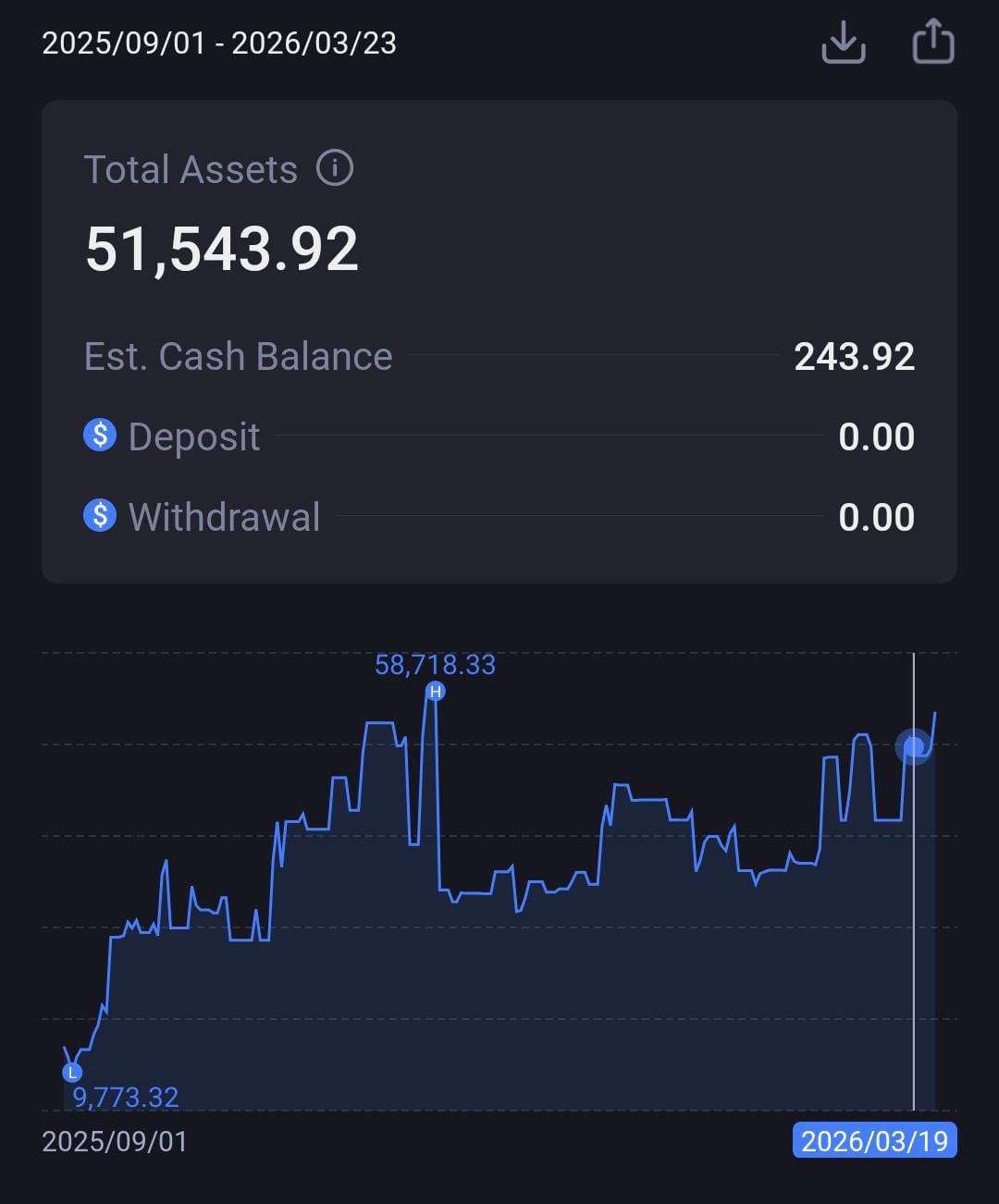
At my lowest, I had $10,000 left.
Today, I’m back standing strong. Slowly. Consistently. Without noise.
This Substack is the real story — not the polished LinkedIn version, not the highlight reel, not the guru course. Just the work: the analysis, the mistakes, the reasoning, the evolution of someone learning to invest in a way that’s honest, rigorous, and built entirely around being who I actually am.
No tips. No predictions. No viral content. Just thinking done carefully and written plainly.
If you came up without the right surname, the right school, or the right connections — and you’re tired of being a fish asked to climb trees — this is for you. Welcome to my journey, my investing diary.
Track Record
2024 - Left with my last SGD$10,000
2025 - IMPP 0.00%↑ Recouped to SGD$39,000
2026 - CNC 0.00%↑ and DNUT 0.00%↑ Recouped to SGD$51,000
2026 - CRC 0.00%↑ Recouped to SGD$76,000 fluctuating (not exited)